
Quick Answer Box
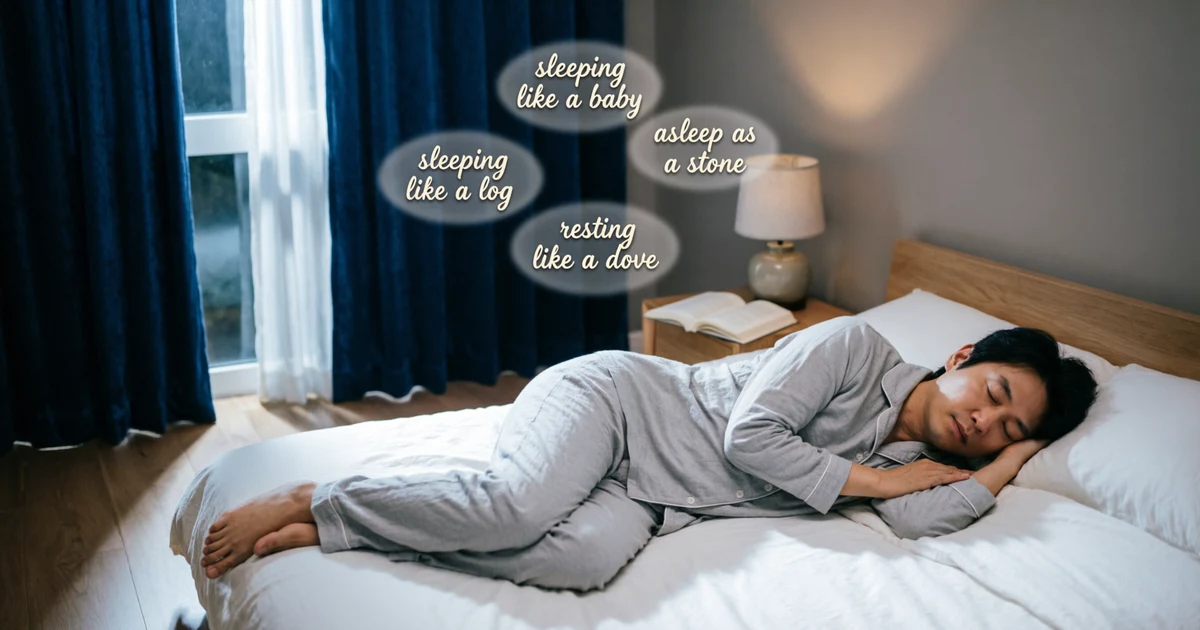
A sleep simile is a comparison that describes sleep, rest, or tiredness by using words such as like or as. Sleep similes help writers create vivid images and make descriptions more engaging.
Common examples include “slept like a baby,” “slept like a log,” and “slept like a rock.” These expressions help readers easily understand how deeply, peacefully, or soundly someone slept.
Introduction
Have you ever heard someone say, “I slept like a baby” or “He slept like a log”? These expressions paint a clear picture of how someone slept. They are examples of sleep similes.
A sleep simile compares sleep or tiredness to something else using words such as “like” or “as.” Writers, students, teachers, and storytellers use sleep similes to make descriptions more vivid and memorable.
In this guide, you will learn what sleep similes are, how they work, why writers use them, and how to create your own. You will also find plenty of examples, exercises, and practical tips that can improve your writing.
What Is a Sleep Simile in English Writing?
A sleep simile compares sleep, rest, or tiredness to another object, person, or situation.
Similes use comparison words such as:
- Like
- As
Examples:
- She slept like a baby.
- He slept like a log.
- The child was as quiet as a sleeping kitten.
These comparisons help readers understand the quality or depth of sleep through familiar images.
How Sleep Similes Help Create Better Descriptions
Simple statements often sound plain.
For example:
- He slept well.
A sleep simile adds detail:
- He slept like a log after the long hike.
The second sentence creates a stronger image. Readers can instantly imagine deep and uninterrupted sleep.
Benefits of sleep similes include:
- More vivid descriptions
- Stronger emotional connection
- Better storytelling
- More engaging writing
The Difference Between a Sleep Simile and a Sleep Metaphor
Many people confuse similes and metaphors.
A simile compares two things directly using “like” or “as.”
Example:
- She slept like a baby.
A metaphor states that one thing is another thing.
Example:
- She was a sleeping angel.
Comparison:
| Simile | Metaphor |
|---|---|
| He slept like a log. | He was a log in bed. |
| She slept as peacefully as a kitten. | She became a peaceful kitten in sleep. |
Similes usually sound more natural in everyday writing.
Why Writers Use Sleep Similes in Stories and Poems
Writers want readers to see scenes clearly.
Sleep similes help them:
- Show exhaustion
- Describe comfort
- Create mood
- Add creativity
Example:
- After the exam, Jake slept like a bear through winter.
This sentence tells readers that Jake felt extremely tired without explaining every detail.
Poets often use sleep similes to create beauty and emotion.
Common Sleep Similes Used in Everyday Conversations
Many sleep similes appear in daily speech.
Popular examples include:
- Slept like a baby
- Slept like a log
- Slept like the dead
- Slept like a rock
- As peaceful as a sleeping child
People use these expressions because listeners immediately understand them.
Famous Sleep Simile Examples You May Already Know
Here are some classic sleep similes:
- She slept like a baby all night.
- He slept like a log after work.
- The dog slept like a rock beside the fireplace.
- The traveler slept as peacefully as a child.
- They slept like bears after the long journey.
These examples show different ways to describe rest and tiredness.
Sleep Similes for Students and Beginners
Students often start with simple similes.
Examples:
- I slept like a baby.
- My cat slept like a tiny angel.
- Dad slept like a log after mowing the lawn.
- The puppy slept as quietly as a mouse.
- Sarah slept as peacefully as a cloud floating in the sky.
These examples help beginners understand comparison techniques.
Easy Sleep Simile Sentences with Meanings
Slept like a baby
Meaning: Slept peacefully.
Sentence:
- Emma slept like a baby after her busy day.
Slept like a log
Meaning: Slept very deeply.
Sentence:
- I slept like a log after the football match.
Slept like a rock
Meaning: Did not wake up easily.
Sentence:
- Tom slept like a rock despite the storm outside.
As calm as a sleeping kitten
Meaning: Very peaceful.
Sentence:
- The room felt as calm as a sleeping kitten.
Funny Sleep Similes That Make Readers Smile
Humorous similes add personality to writing.
Examples:
- He slept like a phone with a dead battery.
- She slept like a student during a boring lecture.
- I slept like a potato on the couch.
- He slept like a bear after eating an entire pizza.
- She slept like a cat that owned the house.
These comparisons create lighthearted images.
Creative Sleep Similes for Story Writing
Creative writing benefits from unique comparisons.
Examples:
- She slept like a feather drifting across the sky.
- He slept like the ocean on a windless night.
- The child slept like a star resting among clouds.
- She slept like a flower closing at sunset.
- He slept like a boat floating on calm water.
Original similes make stories stand out.
Sleep Similes That Describe Deep Sleep
Sometimes writers need to emphasize very deep sleep.
Examples:
- Slept like a log
- Slept like the dead
- Slept like a hibernating bear
- Slept like a rock
- Slept like a stone at the bottom of a lake
These comparisons suggest complete rest and little awareness of surroundings.
Sleep Similes That Describe Peaceful Rest
Peaceful sleep feels gentle and calming.
Examples:
- As peaceful as a sleeping child
- Slept like a kitten in the sunshine
- Slept like a cloud drifting across the sky
- As calm as a quiet lake at dawn
- Slept like a bird in a safe nest
These similes create soothing imagery.
Sleep Similes That Describe Extreme Tiredness
Some similes focus on exhaustion before sleep.
Examples:
- As tired as a runner after a marathon
- As sleepy as an owl at sunrise
- As worn out as an old engine
- As exhausted as a worker after a long shift
- As drained as a battery at one percent
These comparisons help readers understand fatigue.
Sleep Similes for Children and Classroom Activities
Teachers often use fun examples for younger learners.
Examples:
- Slept like a teddy bear.
- Slept like a kitten.
- Slept like a puppy after playtime.
- As quiet as a sleeping bunny.
- Slept like a baby bird in its nest.
Classroom activities may include:
- Matching similes and meanings
- Writing original sleep similes
- Completing unfinished comparisons
How to Create Your Own Sleep Simile Step by Step
Creating a sleep simile is easy.
Step 1
Think about the type of sleep.
Examples:
- Deep
- Peaceful
- Restless
Step 2
Choose something with a similar quality.
Examples:
- Log
- Baby
- Bear
- Kitten
Step 3
Connect them using “like” or “as.”
Example:
- He slept like a bear after the hike.
Step 4
Read it aloud and check whether it sounds natural.
Common Mistakes to Avoid When Writing Sleep Similes
Avoid these common errors:
Using confusing comparisons
Bad example:
- He slept like a pencil.
Readers may not understand the connection.
Overusing clichés
Classic similes work well, but too many can make writing predictable.
Mixing comparisons
Avoid combining unrelated images.
Making similes too long
Keep comparisons clear and easy to understand.
Sleep Simile Practice Exercises with Answers
Exercise 1
Complete the simile:
He slept like a ________.
Answer:
- Log
Exercise 2
Choose the best comparison:
She slept as peacefully as a:
- Thunderstorm
- Sleeping kitten
- Race car
Answer:
- Sleeping kitten
Exercise 3
Write your own sleep simile.
Sample answer:
- I slept like a bear after camping all day.
Sleep Similes in Poetry and Creative Literature
Poets use sleep similes to express emotion and atmosphere.
Example:
- She slept like moonlight resting upon a silent lake.
This comparison creates a peaceful and artistic image.
Literary writers often use sleep similes to:
- Build mood
- Develop characters
- Add symbolism
- Create memorable scenes
Strong imagery helps readers connect with the story.
Best Sleep Similes for Descriptive Writing Assignments
These examples work well in essays and creative projects:
- Slept like a baby
- Slept like a log
- Slept like a rock
- As peaceful as a sleeping child
- Slept like a bear after winter hunting
- As calm as a still lake
- Slept like a kitten by the fire
- As quiet as a sleeping bird
- Slept like a cloud floating through the sky
- As restful as a calm evening breeze
Choose the simile that best matches the situation.
Conclusion
Sleep similes bring life to writing by turning ordinary descriptions into vivid images. Whether you write stories, poems, essays, or classroom assignments, these comparisons help readers picture deep sleep, peaceful rest, or complete exhaustion.
From familiar phrases such as “slept like a baby” to creative comparisons that reflect your own style, sleep similes offer endless possibilities. Learn the basics, practice often, and create original comparisons that make your writing more memorable and engaging.
Frequently Asked Questions About Sleep Similes
What is a sleep simile?
A sleep simile compares sleep or tiredness to something else using words such as “like” or “as.”
What is the most common sleep simile?
“Slept like a baby” remains one of the most common examples.
Is “slept like a log” a simile?
Yes. It compares a person’s sleep to a log using the word “like.”
Why do writers use sleep similes?
They make descriptions clearer, more vivid, and more interesting.
Can children learn sleep similes easily?
Yes. Simple examples help children understand comparisons quickly.
Are sleep similes useful in creative writing?
Yes. They add imagery and improve storytelling.
What is the difference between a sleep simile and a metaphor?
A simile uses “like” or “as,” while a metaphor makes a direct comparison.
Can I create my own sleep simile?
Yes. Choose a familiar object and compare it to sleep using “like” or “as.”
Do sleep similes appear in poetry?
Yes. Poets frequently use them to create emotion and imagery.
What makes a good sleep simile?
A good sleep simile feels clear, relevant, and easy for readers to imagine.
