
Quick Answer Box
What is a time simile?
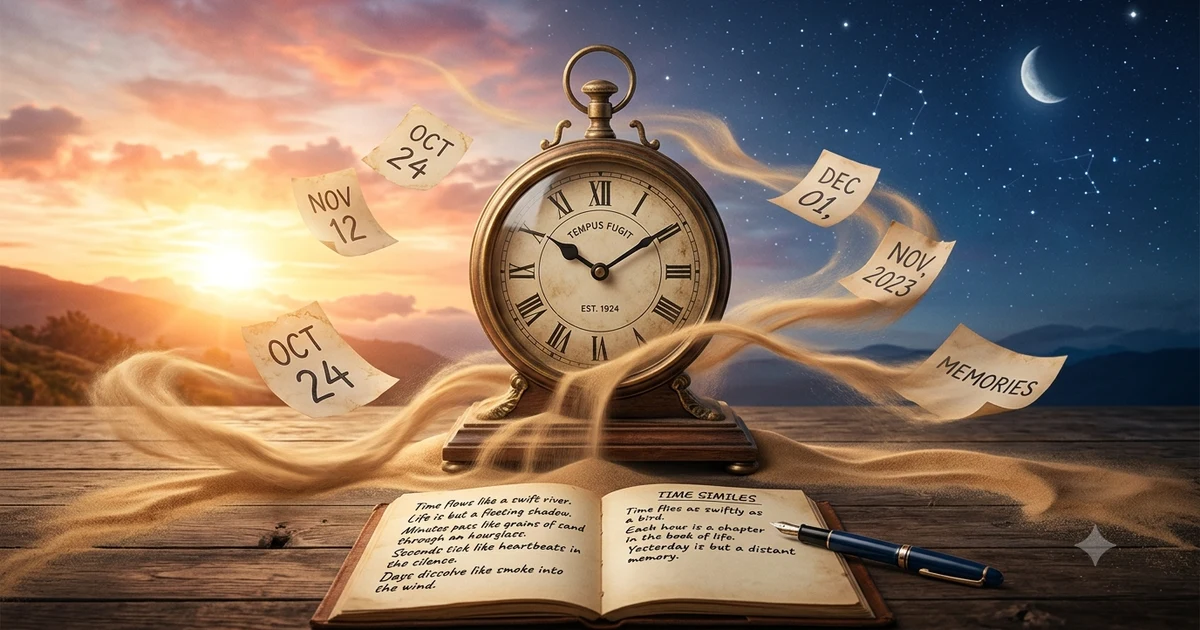
A time simile compares time to another object or action using words like “like” or “as” to make the passage of time easier to imagine. For example, “Time flew like a bird” shows that time passed very quickly, while “Time crawled like a snail” describes time moving very slowly. Time similes make writing more vivid, engaging, and memorable in stories, essays, poems, and everyday conversations.
Introduction
Time shapes every part of life. People often describe it as moving quickly, slowly, or in unexpected ways. Simple words can explain these feelings, but a well chosen simile makes them far more vivid. Instead of saying time passed quickly, a writer might say, “Time flew like a bird.” That comparison helps readers picture the experience and connect with it.
A time simile compares time to another object or action by using words such as like or as. These comparisons make writing more engaging and easier to understand. They appear in conversations, stories, poems, speeches, and school assignments because they create clear mental images.
What Is a Time Simile
A time simile compares time to something familiar by using the words like or as. The comparison helps readers understand how time feels instead of simply telling them about it.
For example:
- Time flies like a bird.
- Time moved as slowly as a turtle.
- The afternoon disappeared like smoke.
- The years rolled by like waves.
Each example creates a picture in the reader’s mind. Instead of reading a plain statement, the reader imagines movement, speed, or emotion.
A strong time simile should:
- Compare time with something easy to imagine.
- Match the feeling you want to express.
- Sound natural in the sentence.
- Help the reader understand the idea quickly.
Simple Example
Instead of writing:
The meeting felt very long.
You could write:
The meeting stretched on like an endless road.
The second sentence gives readers a stronger sense of how the speaker experienced the passage of time.
Why Writers Use Time Similes
Time remains invisible. People cannot see or hold it, so writers often compare it with familiar objects, animals, or natural events.
Time similes help readers:
- Visualize abstract ideas.
- Feel emotions more deeply.
- Understand pacing in a story.
- Remember important scenes.
- Enjoy richer and more expressive writing.
For example:
Without a simile
The holiday ended quickly.
With a simile
The holiday disappeared like a snowflake in the sun.
The second sentence creates emotion and leaves a stronger impression.
Everyday Uses
People naturally use time similes in daily conversations.
Examples include:
- Time flew like the wind.
- Minutes crawled like tiny insects.
- The weekend vanished like magic.
- Summer passed like a dream.
These comparisons make ordinary speech more colorful and memorable.
How a Time Simile Creates Stronger Imagery
Imagery allows readers to picture what they read. A time simile transforms an invisible idea into something readers can easily imagine.
Consider these examples.
Plain Sentence
The evening ended quickly.
Better Sentence
The evening slipped away like water through open fingers.
The second sentence encourages readers to picture water escaping through their hands. That image makes the passage of time feel real.
More Examples
- Time raced like a speeding train.
- Memories faded like footprints in the sand.
- Childhood passed like a summer breeze.
- The hours drifted like clouds across the sky.
- Seconds fell like drops of rain.
Each comparison creates a different mood.
A speeding train suggests excitement.
Clouds suggest calm movement.
Rain suggests a steady rhythm.
The image you choose changes how readers experience your writing.
Time Simile Versus Time Metaphor
Many people confuse similes with metaphors because both compare two things. The difference lies in how the comparison appears.
Time Simile
A simile uses like or as.
Examples:
- Time is like a flowing river.
- Time passed as quickly as lightning.
- The years rolled by like leaves in the wind.
Time Metaphor
A metaphor makes a direct comparison without using like or as.
Examples:
- Time is a river.
- Time is a thief.
- Time became an endless road.
Quick Comparison
| Simile | Metaphor |
|---|---|
| Time flew like an eagle. | Time was an eagle. |
| Time moved as slowly as a snail. | Time became a snail. |
| Years drifted like clouds. | Years were clouds. |
When writing for beginners or students, similes often work better because the comparison stays clear and easy to understand.
Common Time Similes Used in Everyday English
Many time similes appear regularly in conversations, books, and speeches.
Here are some popular examples.
| Time Simile | Meaning |
| Time flies like the wind. | Time passes very quickly. |
| Time moves like a snail. | Time feels very slow. |
| Time slips away like sand through fingers. | Time disappears before you notice. |
| Time rolls on like the sea. | Time never stops moving. |
| Time shines like the morning sun. | A happy period feels bright and hopeful. |
| Time disappears like smoke. | Moments vanish quickly. |
| Time flows like a river. | Time continues without stopping. |
| Time rushes like a racing horse. | Events happen very fast. |
| Time drifts like clouds. | Time passes gently and quietly. |
| Time melts like ice in the sun. | Precious moments disappear quickly. |
Short Time Similes for Students
Students often need simple comparisons for homework, essays, and creative writing.
Here are easy examples.
- Time flew like a bird.
- Time ran like the wind.
- Time moved like a turtle.
- Time flowed like water.
- Time vanished like smoke.
- Time shined like gold.
- Time rolled like waves.
- Time drifted like clouds.
- Time passed like a dream.
- Time sparkled like stars.
Example Sentences
- During the game, time flew like a bird.
- Waiting for the bus felt as slow as a turtle.
- Our vacation passed like a dream.
- The school year rolled by like ocean waves.
- The holiday disappeared like smoke.
These examples use simple vocabulary, making them ideal for young learners.
Easy Time Similes With Meanings
The best time similes use familiar images that readers understand immediately.
| Simile | Meaning | Example |
| Time flies like an arrow. | Time passes quickly. | The weekend flew like an arrow. |
| Time crawls like a snail. | Time moves slowly. | The final hour crawled like a snail. |
| Time flows like a river. | Time never stops. | Life flows like a river. |
| Time slips away like sand. | Time disappears easily. | Childhood slipped away like sand. |
| Time races like lightning. | Events happen very fast. | The afternoon raced like lightning. |
| Time drifts like clouds. | Time passes quietly. | Winter drifted like clouds. |
| Time melts like ice. | Moments disappear little by little. | Summer melted like ice. |
| Time spreads like sunlight. | Time brings gradual change. | Hope spread like sunlight through the years. |
Tips for Choosing the Right Time Simile
Keep these points in mind when writing:
- Match the comparison with the mood.
- Choose images your readers know.
- Keep the wording simple.
- Avoid using too many similes in one paragraph.
- Read your sentence aloud to check if it sounds natural.
Strong writing depends on clear comparisons that help readers imagine the passage of time without slowing the story.
Time Similes for Creative Writing
Creative writing comes alive when readers can picture what the writer describes. Since time has no physical form, similes help transform it into something readers can easily imagine.
A well chosen time simile can build suspense, show emotion, or reveal how a character experiences an event.
Examples for Creative Writing
- Time flowed like a quiet river beneath the moon.
- The afternoon faded like the last glow of sunset.
- The hours raced like wild horses across an open field.
- Time drifted like autumn leaves in the wind.
- The night stretched like an endless blanket across the sky.
- The days fluttered by like butterflies in a garden.
- Time echoed like distant church bells.
- The years slipped away like melting snow.
Creative Writing Example
Plain sentence
She waited for her friend.
Improved sentence
She waited while time crawled like a tired snail across the garden path.
The second sentence creates a stronger image and helps readers feel the character’s impatience.
Tips for Creative Writers
- Match the simile to the mood of the scene.
- Use fresh comparisons instead of common clichés when possible.
- Keep the comparison short and easy to picture.
- Let the simile support the story instead of distracting from it.
Time Similes for Essays and School Assignments
Teachers often encourage students to make their writing more descriptive. Time similes help students explain ideas without using complicated words.
Useful Time Similes
- Time passed like a gentle breeze.
- The lesson moved as slowly as a turtle.
- The school year flew like a bird.
- Summer disappeared like melting ice.
- The holiday ended like a candle burning out.
- Minutes ticked by like tiny footsteps.
Essay Example
Instead of writing:
The examination ended quickly.
Write:
The examination ended like a flash of lightning.
Instead of writing:
Waiting felt slow.
Write:
Waiting felt as slow as winter during a cold night.
These simple comparisons make school essays more interesting while keeping the meaning clear.
Where Students Can Use Time Similes
- Narrative essays
- Personal experiences
- Descriptive writing
- Short stories
- Speeches
- Classroom presentations
Time Similes for Stories and Fiction
Stories depend on pacing. Sometimes events move quickly, while other moments seem to last forever. Time similes help readers experience those changes naturally.
Examples
- Time danced like sunlight on water.
- The evening disappeared like smoke into the sky.
- Hours marched like soldiers toward dawn.
- Time rolled forward like ocean waves.
- Days floated like feathers in the air.
- The seasons changed like turning pages in a book.
- The years faded like old photographs.
- Time wandered like a traveler without a map.
Fiction Example
The old man sat beside the window. Time drifted like dust floating through the afternoon sunlight as he remembered his childhood.
This sentence creates atmosphere while showing that time feels gentle and reflective.
Choosing the Right Mood
Different similes create different emotions.
Happy moments
- Time flew like a happy song.
- Time sparkled like morning dew.
Sad moments
- Time dragged like heavy chains.
- Time faded like a forgotten photograph.
Suspense
- Time crept like a shadow across the floor.
- Seconds moved like silent footsteps behind the door.
Time Similes That Express Fast Passing Time
Everyone experiences moments that seem to disappear almost instantly. These similes capture that feeling.
Common Examples
- Time flew like an eagle.
- Time rushed like a waterfall.
- Time vanished like smoke.
- Time raced like a sports car.
- Time disappeared like a shooting star.
- Time darted like a fish through water.
- Time flashed like lightning.
- Time escaped like a bird from an open cage.
- Time swept by like a strong wind.
- Time leaped like a deer through the forest.
Example Sentences
- Our vacation flew like an eagle across the sky.
- Childhood disappeared like a shooting star.
- The concert rushed by like a waterfall.
- The afternoon flashed like lightning.
Best Situations for Fast Time Similes
Use these comparisons when writing about:
- Holidays
- Weddings
- Birthday celebrations
- Sporting events
- Exciting adventures
- Family gatherings
- Fun classroom activities
Fast moving similes create excitement and remind readers how quickly joyful moments can pass.
Time Similes That Describe Slow Moving Time
Some situations make every minute feel longer than usual. Slow time similes help readers feel boredom, patience, worry, or anticipation.
Examples
- Time crawled like a snail.
- Time moved like thick honey.
- Time crept like a shadow at sunset.
- Time stretched like an endless road.
- Time drifted like a lonely cloud.
- Time walked like an old traveler.
- Time lingered like morning fog.
- Time settled like dust on an empty shelf.
- Time moved as slowly as a sleepy turtle.
- Time unfolded like a very long story.
Example Sentences
- While waiting for the doctor, time crawled like a snail.
- During the storm, time stretched like an endless road.
- The final minutes before the race moved like thick honey.
When to Use Slow Time Similes
These comparisons work well for:
- Waiting rooms
- Examination days
- Long journeys
- Hospital visits
- Suspenseful scenes
- Difficult conversations
- Emotional goodbyes
Slow time similes help readers share the character’s feelings instead of simply reading about them.
Emotional Time Similes for Love, Loss, and Memories
Strong emotions often change how people experience time. Happy memories may seem to pass in seconds, while painful moments can feel endless.
Love
- Time bloomed like a spring flower.
- Time danced like music in the air.
- Days passed like bright sunshine.
Example:
Every moment with her passed like a beautiful melody.
Loss
- Time felt like a heavy stone.
- Days moved like endless rain.
- Time dragged like a broken cart.
Example:
After the farewell, every hour moved like endless rain.
Memories
- Memories returned like waves upon the shore.
- The years faded like old letters.
- Time rested like dust on forgotten books.
- Childhood floated back like a gentle breeze.
Example:
His childhood returned like a gentle breeze through an open window.
Why Emotional Similes Matter
Emotional comparisons help readers connect with characters because they describe feelings through familiar images. Instead of telling readers that someone feels sad or happy, the simile allows them to experience the emotion themselves.
Funny Time Similes That Make Readers Smile
Not every time simile needs to sound serious. Humorous comparisons add personality to stories, speeches, classroom activities, and social media captions.
Funny Examples
- Time ran like a child chasing an ice cream truck.
- Time disappeared like cookies at a family party.
- Time hopped like a rabbit on a sugar rush.
- Time escaped like a cat avoiding bath time.
- Time bounced like popcorn in a hot pan.
- Time raced like a puppy chasing its tail.
- Time vanished like pizza at a birthday party.
- Time skipped like a playful monkey.
- Time jumped like a frog after rain.
- Time hurried like students when the final bell rang.
Funny Example Sentences
- Saturday vanished like pizza at a party.
- My lunch break ran like a puppy chasing its tail.
- The weekend escaped like a cat avoiding bath time.
Tips for Using Funny Similes
- Choose comparisons that most readers recognize.
- Keep the humor natural.
- Match the tone of your audience.
- Avoid jokes that distract from your main message.
A lighthearted time simile can make writing more enjoyable and help readers remember your words long after they finish reading
Famous Time Similes From Literature
Writers have used time similes for centuries to make their stories and poems more expressive. While every author has a unique style, the strongest comparisons share one quality. They help readers picture the passage of time through familiar images.
Many classic and modern works compare time to rivers, birds, seasons, shadows, or changing weather. These images feel natural because everyone understands how they move and change.
Examples Inspired by Literary Style
- Time flowed like a river that never turned back.
- The years drifted like autumn leaves across the ground.
- Moments slipped away like water through open hands.
- Time moved as gently as falling snow.
- Days vanished like mist beneath the morning sun.
When reading novels or poems, notice how authors describe time. Studying these comparisons can improve your own writing and help you discover new ways to express ideas.
What Makes Literary Time Similes Effective
- They create a clear mental picture.
- They match the emotion of the scene.
- They fit naturally into the sentence.
- They avoid forced or confusing comparisons.
- They strengthen the story instead of distracting from it.
How to Create Your Own Time Simile
Writing your own time simile becomes easier with practice. Start by thinking about how time feels in a particular situation.
Ask yourself questions such as:
- Does time feel fast or slow?
- Does it feel joyful or painful?
- What object or event reminds you of that feeling?
Then combine the ideas with like or as.
Step by Step Method
Step 1
Choose the feeling.
Example:
Time feels fast.
Step 2
Think of something that moves quickly.
Examples include:
- Lightning
- A racing bird
- Wind
- A waterfall
Step 3
Build the comparison.
- Time rushed like the wind.
- Time flashed like lightning.
More Original Examples
- Time curled like smoke into the evening sky.
- Time shimmered like sunlight on a lake.
- Time wandered like a traveler across distant hills.
- Time rolled like gentle waves along the shore.
- Time unfolded like a blooming flower.
The best similes come from careful observation of everyday life.
Common Mistakes to Avoid When Writing Time Similes
Even experienced writers sometimes choose comparisons that sound awkward or unclear.
Avoid these common mistakes.
Using Confusing Comparisons
Poor example:
Time moved like mathematics.
Better example:
Time moved like a slow river.
Readers can easily picture a river, but mathematics does not create a clear image.
Mixing Different Images
Poor example:
Time flew like a bird and melted like thunder.
The comparison changes direction and becomes confusing.
Using Too Many Similes
One strong simile often has more impact than several weak ones.
Instead of filling every sentence with comparisons, place them where they add the most value.
Choosing Unfamiliar Objects
Use comparisons your audience can recognize.
For example:
- Time flowed like water.
- Time disappeared like smoke.
These images remain easy for most readers to understand.
Forgetting the Mood
A cheerful scene needs cheerful imagery, while a sad scene benefits from softer or slower comparisons.
Always choose a simile that matches the emotion of your writing.
Practice Exercises to Improve Time Simile Skills
Practice helps you create stronger comparisons.
Try these simple activities.
Exercise One
Finish each sentence.
- Time flew like __________.
- Time crawled like __________.
- The afternoon disappeared like __________.
- The years rolled by like __________.
Exercise Two
Replace the plain sentence with a time simile.
Plain sentence:
The vacation ended quickly.
Possible answer:
The vacation disappeared like a shooting star.
Exercise Three
Write one time simile for each emotion.
- Happiness
- Sadness
- Excitement
- Fear
- Hope
Exercise Four
Describe these situations with your own time simile.
- Waiting for a birthday
- Watching a sunset
- Finishing school
- Reading an exciting book
- Meeting an old friend
The more you practice, the more natural your comparisons will become.
Frequently Asked Questions About Time Similes
Can time be used in a simile?
Yes. Writers often compare time with rivers, birds, wind, shadows, or many other familiar images to make their writing more vivid.
What words usually appear in a time simile?
Most time similes use like or as to connect the comparison.
Are time similes suitable for school writing?
Yes. They work well in essays, stories, speeches, and descriptive assignments.
Can time similes appear in poems?
Yes. Poetry often uses time similes to create emotion and rhythm.
What makes a good time simile?
A good time simile feels natural, creates a clear image, and matches the mood of the writing.
Best Time Similes to Remember
Here are some of the most useful time similes for everyday writing.
- Time flies like a bird.
- Time flows like a river.
- Time slips away like sand through fingers.
- Time races like lightning.
- Time crawls like a snail.
- Time drifts like clouds.
- Time disappears like smoke.
- Time rolls like ocean waves.
- Time melts like ice in the sun.
- Time shines like the morning sun.
These comparisons work in stories, essays, conversations, and creative writing because readers understand them immediately.
Conclusion
A time simile does much more than describe the passing of hours. It helps readers see, feel, and remember moments that would otherwise seem ordinary. Whether time rushes like the wind, flows like a river, or crawls like a snail, the right comparison adds depth and emotion to every sentence.
The strongest time similes stay simple, clear, and meaningful. They match the mood, fit naturally into the writing, and create images that readers can easily picture. As you read more and practice creating your own comparisons, you will develop a stronger writing style and learn how to describe the passage of time with confidence.
Frequently Asked Questions
1. What is a time simile?
A time simile compares time with another object or action by using words such as like or as.
2. What is the most common time simile?
One of the most common examples is Time flies like a bird or Time flies like the wind.
3. Why do writers use time similes?
They help readers imagine the passage of time and make writing more interesting and emotional.
4. Can students use time similes in essays?
Yes. Time similes improve descriptive writing and make essays more engaging.
5. What is the difference between a time simile and a time metaphor?
A simile uses like or as, while a metaphor makes a direct comparison without those words.
6. Are time similes useful in storytelling?
Yes. They help control pacing, build emotion, and create vivid scenes.
7. Can a time simile express slow movement?
Yes. For example, Time crawled like a snail shows that time felt very slow.
8. Can a time simile express fast movement?
Yes. Time raced like lightning suggests that time passed very quickly.
9. How can I write a better time simile?
Think about how time feels, choose a familiar image, and create a simple comparison that fits the mood.
10. Where can I use time similes?
You can use them in essays, poems, stories, speeches, blog posts, journals, and everyday conversations.
