
Quick Answer
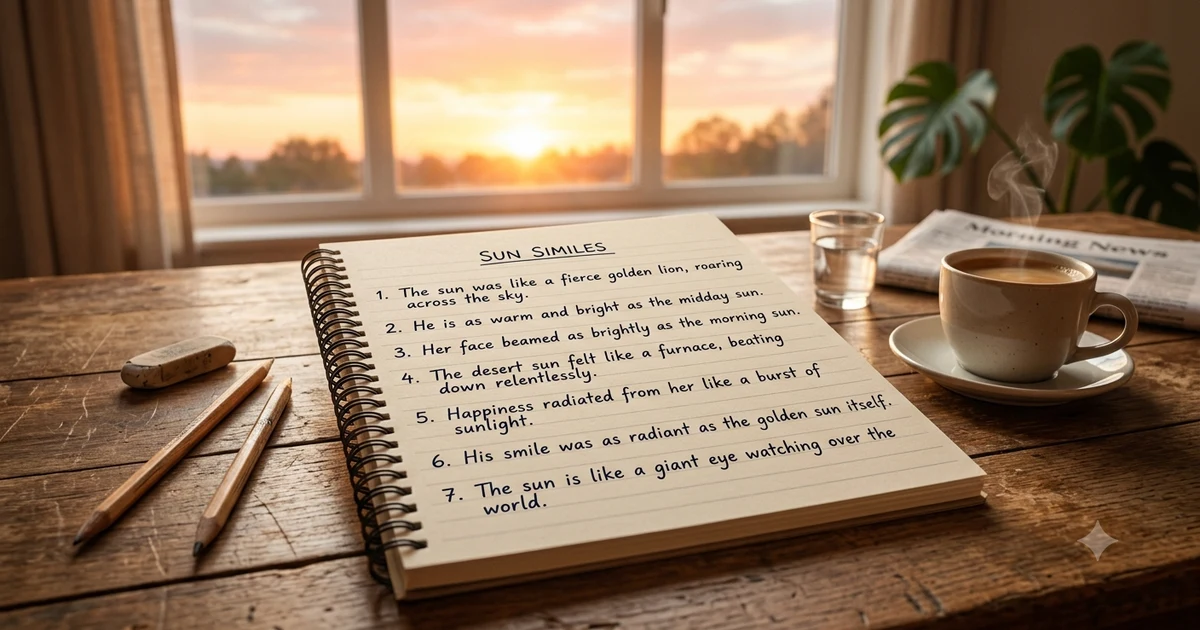
A sun simile is a figure of speech that compares something to the sun using the words “like” or “as.” Writers use sun similes to describe brightness, warmth, beauty, happiness, and hope. Examples include “Her smile was as bright as the sun” and “His kindness spread like sunshine on a cold day.”
Introduction
The sun inspires writers more than almost any other part of nature. It represents warmth, light, hope, beauty, and energy. Because of these qualities, writers often compare people, feelings, and objects to the sun through similes.
A sun simile can turn an ordinary sentence into a vivid image that readers remember. Whether you write poetry, stories, essays, or school assignments, learning how to use sun similes can make your writing stronger and more creative.
In this guide, you will learn what a sun simile means, why writers use it, and how to create your own memorable examples.
What Is a Sun Simile in Simple Words
A sun simile compares something to the sun by using the words “like” or “as.”
Examples include:
- Her smile was as bright as the sun.
- The child ran like the morning sun across the field.
- His happiness shone like the sun after the rain.
The comparison helps readers picture a quality such as brightness, warmth, or joy.
Why Writers Often Compare Things to the Sun
The sun holds strong meaning in human life. It gives light and warmth and marks the beginning of each day.
Writers compare things to the sun because it can represent:
- Happiness
- Beauty
- Hope
- Strength
- Energy
- New beginnings
A single comparison to the sun can communicate many emotions at once.
How a Sun Simile Creates Strong Visual Imagery
Good writing helps readers see scenes in their minds. A sun simile creates powerful images because everyone understands how the sun looks and feels.
Consider these examples:
- Her golden hair glowed like the sun.
- The room felt as warm as the afternoon sun.
These comparisons immediately create clear pictures and emotions.
Difference Between a Sun Simile and a Sun Metaphor
A simile and a metaphor both compare two things, but they do so in different ways.
Simile
Uses “like” or “as.”
Example:
- His face was as bright as the sun.
Metaphor
Makes a direct comparison.
Example:
- His face was the sun in the dark room.
A simile sounds softer, while a metaphor sounds stronger and more direct.
Common Emotions Expressed Through Sun Similes
Sun similes often express positive feelings.
They can show:
- Joy
- Love
- Optimism
- Excitement
- Comfort
- Peace
Example:
- Her laugh spread through the room like sunshine.
This sentence creates a feeling of happiness and warmth.
Easy Sun Simile Examples for Beginners
Here are simple examples that anyone can understand:
- As bright as the sun
- Like the rising sun
- As warm as the summer sun
- Like sunshine after a storm
- As golden as the evening sun
- Like the sun breaking through clouds
These examples work well in school assignments and beginner writing.
Sun Similes That Describe Warmth and Happiness
Writers often use the sun to describe kind people and happy moments.
Examples:
- Her hug felt as warm as the midday sun.
- His smile spread like sunshine across the room.
- Their friendship glowed like the morning sun.
These comparisons create positive emotions in readers.
Sun Similes Used to Describe Beauty and Brightness
The sun often symbolizes beauty and radiance.
Examples:
- Her eyes sparkled like the sun on water.
- The necklace shone like the afternoon sun.
- The bride looked as radiant as the sunrise.
These similes make descriptions more vivid and memorable.
Creative Sun Similes for Poetry Writing
Poetry depends on strong imagery.
Creative examples include:
- Hope rose like the sun above the mountains.
- Her voice drifted across the room like sunlight through leaves.
- Memories burned like the summer sun.
Poets use sun similes to add emotion and rhythm to their work.
Sun Similes That Make Stories More Descriptive
Stories become more engaging when readers can picture the scene.
Examples:
- The hero entered the village like the rising sun.
- The treasure gleamed like sunlight on the sea.
- The child’s excitement burst forth like the first rays of dawn.
These comparisons help scenes come alive.
How to Write Your Own Sun Simile Step by Step
Creating a sun simile is simple.
Step 1
Choose the quality you want to describe.
Step 2
Think about how the sun represents that quality.
Step 3
Build the comparison with “like” or “as.”
Example:
Quality: Happiness
Sentence:
- Her happiness shone like the morning sun.
Practice makes your comparisons more original.
Mistakes to Avoid When Creating Sun Similes
Many writers repeat the same ideas.
Avoid these mistakes:
- Using clichés too often
- Comparing unrelated things
- Making comparisons too long
- Adding unnecessary words
Instead of writing:
- She was as bright as the sun.
Try:
- She smiled like sunrise after a long storm.
The second example feels fresher and more vivid.
Sun Simile Examples for Students and Classroom Activities
Students can practice with simple exercises.
Examples:
- The flower looked as cheerful as the morning sun.
- The classroom buzzed like sunlight after winter.
- The trophy gleamed like the summer sun.
Teachers can ask students to create their own comparisons using nature.
Famous Literary Examples of Comparisons Involving the Sun
Writers throughout history have used the sun to symbolize beauty, hope, and power.
Many poems and stories compare:
- Faces to the sun
- Love to sunshine
- Heroes to sunrise
- Happiness to bright daylight
These comparisons remain popular because readers instantly understand them.
How Sun Similes Improve Creative Writing Skills
Sun similes encourage writers to think in pictures instead of plain statements.
Instead of saying:
- She looked happy.
You can write:
- She looked like the sun had risen inside her.
This approach makes writing more interesting and emotional.
Sun Similes for Describing People and Personalities
Certain personalities naturally connect with sun imagery.
Examples:
- He was as cheerful as the summer sun.
- She entered every room like sunshine.
- Her kindness spread like warm sunlight.
These descriptions create strong first impressions.
Sun Similes That Express Hope and New Beginnings
Sunrise often symbolizes fresh starts.
Examples:
- Opportunity appeared like the first rays of dawn.
- Her confidence returned like the rising sun.
- Peace came like sunshine after endless rain.
These comparisons inspire readers and create optimism.
Funny and Unique Sun Similes to Inspire Writers
Humorous comparisons can make writing memorable.
Examples:
- He smiled like the sun had won the lottery.
- She glowed like sunshine on a polished spoon.
- The dog ran around like a tiny sun with four legs.
Creative similes often surprise readers.
Practice Exercises to Create Better Sun Similes
Try these exercises:
- Describe happiness with a sun simile.
- Compare a friend to the sun.
- Write a sunrise simile.
- Create three original comparisons without using “bright.”
The more you practice, the easier creative comparisons become.
Conclusion
A sun simile uses the qualities of the sun to create powerful comparisons. It can describe happiness, beauty, hope, and warmth in a way that readers immediately understand.
Whether you write poetry, stories, or school assignments, learning to use sun similes can transform simple sentences into memorable images. Practice creating your own comparisons and experiment with different emotions and situations. The more you write, the more naturally these bright and meaningful expressions will appear in your work.
Frequently Asked Questions About Sun Similes
Is “as bright as the sun” a simile?
Yes. It compares brightness using the word “as.”
Can I use sun similes in essays?
Yes. They work well in descriptive and creative essays.
Are sun similes only for poetry?
No. Stories, speeches, and articles can also use them.
Why do writers use sun imagery?
Because it represents warmth, hope, beauty, and energy.
Can a sun simile describe a person?
Yes. Writers often compare smiles and personalities to sunshine.
What makes a good sun simile?
A clear and original comparison.
Should I avoid common sun similes?
Not always, but fresh comparisons usually sound more interesting.
Can children learn sun similes easily?
Yes. They are simple and easy to visualize.
Do sun similes create emotion?
Yes. They often create feelings of happiness and comfort.
Can I create my own sun similes?
Absolutely. Original comparisons make writing stronger.
