
Quick Answer
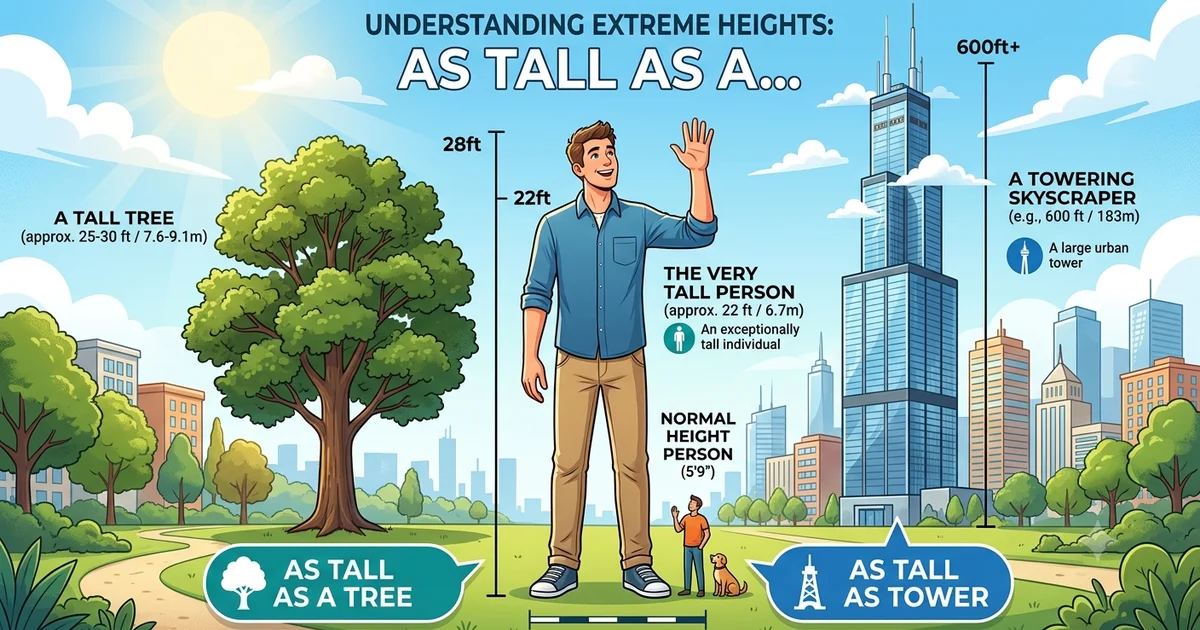
A tall simile is a figure of speech that compares someone’s height or the height of an object to something else using the words like or as. It helps readers imagine height more clearly and makes writing more descriptive.
Examples of tall similes:
- As tall as a tree
- As tall as a giraffe
- As tall as a tower
- Like a giant standing in the crowd
Writers use tall similes in stories, poems, and everyday conversations to create strong visual imagery and make descriptions more interesting.
Introduction
Tall similes help writers describe height in a way that feels clear, vivid, and memorable. Instead of simply saying someone is tall, a simile compares that person or object to something familiar, such as a tree, mountain, or skyscraper, using words like “as” or “like.”
These comparisons create strong mental images that make writing more engaging and easier to imagine. Tall similes appear in stories, poems, classroom assignments, conversations, and even everyday descriptions. They can add humor, drama, or emphasis depending on the context.
Whether you are a student learning figurative language or a writer looking to improve your descriptions, understanding tall similes can make your writing more expressive. This guide explains what tall similes are, shares practical examples, and shows you how to create your own with confidence.
What Is a Tall Simile in Simple Words
A tall simile compares a person, animal, or object to something known for its height.
Examples include:
- As tall as a tree
- As tall as a giraffe
- As tall as a tower
The goal of a tall simile is simple. It helps readers imagine height quickly and clearly.
Sentence example:
“The basketball player stood as tall as a pine tree.”
Even if you have never seen the player, you can picture someone very tall.
Why Writers Use Similes to Describe Height
Height can be difficult to describe with numbers alone.
Compare these sentences:
- The man was six feet five inches tall.
- The man was as tall as a lamppost.
The second sentence creates a stronger image.
Writers use tall similes because they:
- Make descriptions memorable
- Add emotion and personality
- Help readers picture scenes
- Improve storytelling
How a Tall Simile Creates Strong Visual Imagery
A good simile paints a picture.
For example:
“The castle rose like a giant reaching into the sky.”
Readers instantly imagine something enormous.
Strong visual imagery helps:
- Creative writers
- Poets
- Students
- Public speakers
The more familiar the comparison, the easier readers can picture it.
The Difference Between a Tall Simile and a Tall Metaphor
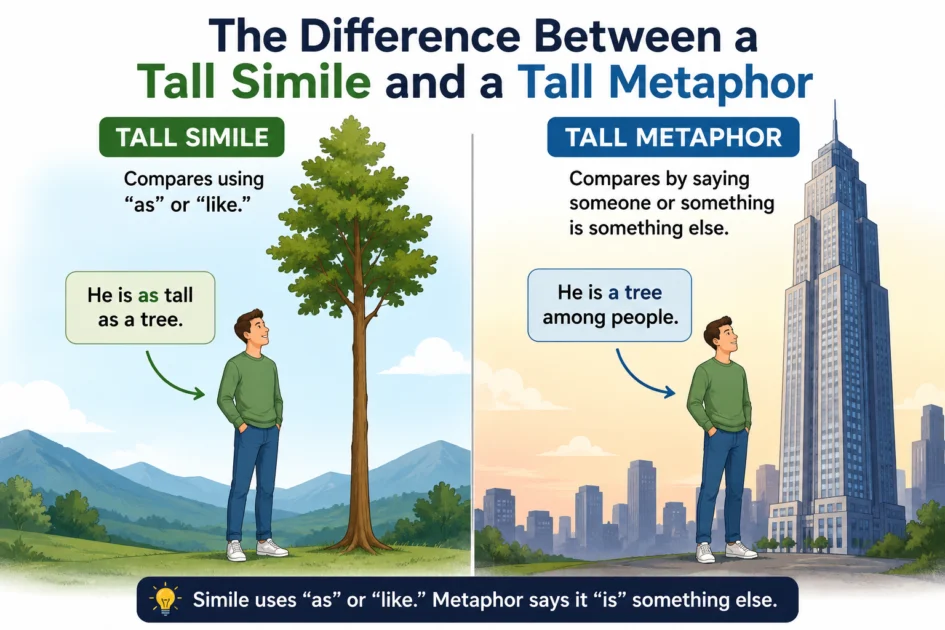
A simile uses words such as “like” or “as.”
Example:
“She is as tall as a tree.”
A metaphor makes a direct comparison.
Example:
“She is a tree among children.”
Both describe height, but similes often sound more natural and easier to understand.
Most Common Tall Simile Examples in Everyday English
People often use these comparisons:
- As tall as a tree
- As tall as a giraffe
- As tall as a tower
- As tall as a giant
- As tall as a skyscraper
- As tall as a flagpole
Example sentence:
“My brother grew as tall as a giraffe during high school.”
Famous Tall Similes Found in Literature and Poetry
Writers often compare people and objects to nature.
Examples include:
- As tall as the ancient pines
- Like a tower rising above the city
- As tall as the mountains
Poets use these comparisons to create beauty and emotion rather than exact measurements.
Tall Similes That Compare People to Trees
Trees often symbolize strength and height.
Examples:
- As tall as an oak tree
- As tall as a pine
- Like a young cedar
Sentence examples:
“The soldier stood as tall as an oak tree.”
“The boy grew like a young pine reaching for sunlight.”
Tall Similes Used to Describe Buildings and Structures
Buildings often need dramatic descriptions.
Examples:
- As tall as a skyscraper
- Like a tower touching the clouds
- As tall as a church steeple
Sentence example:
“The hotel stood as tall as a giant tower over the beach.”
Funny Tall Similes That Make Readers Smile
Humor can make similes more entertaining.
Examples:
- As tall as a stack of pancakes
- As tall as a refrigerator on stilts
- Like a beanpole with sneakers
- As tall as three toddlers standing together
Funny similes work well in children’s stories and lighthearted writing.
Creative Tall Similes for Story Writing
Creative writing allows you to invent unique comparisons.
Examples:
- As tall as a ladder to the moon
- Like a tree that never stopped growing
- As tall as a cloud scraper
Original similes make stories more memorable.
Tall Similes for Children and Students
Children understand comparisons better when they involve familiar objects.
Examples:
- As tall as a giraffe
- As tall as a basketball hoop
- As tall as a door
- Like a tree in the playground
Simple comparisons make learning fun.
How to Write Your Own Tall Simile Step by Step
Creating a tall simile is easy.
Step 1
Think about the thing you want to describe.
Step 2
Choose something famous for its height.
Step 3
Connect the ideas with “like” or “as.”
Example:
The tower is very tall.
New simile:
“The tower stood as tall as a mountain.”
Words That Pair Well With Tall Similes
Helpful descriptive words include:
- Giant
- Towering
- Enormous
- Massive
- Lofty
- Huge
- Sky high
These words strengthen your descriptions.
When to Use a Tall Simile in Descriptive Writing
Tall similes work best when you want readers to imagine something quickly.
Use them in:
- Stories
- Essays
- Poems
- Speeches
- Children’s books
Avoid using too many in one paragraph because they can make writing feel crowded.
Mistakes to Avoid When Creating Tall Similes
Some comparisons confuse readers.
Avoid:
- Using unfamiliar objects
- Creating comparisons that do not make sense
- Repeating the same simile too often
- Making comparisons that sound forced
Poor example:
“As tall as a pencil.”
Most pencils are not tall, so the comparison feels weak.
Tall Similes for Character Descriptions
Writers often use height to make characters memorable.
Examples:
- He was as tall as a pine tree.
- She stood like a graceful tower.
- The guard looked as tall as a giant.
These descriptions help readers visualize characters immediately.
Tall Similes for Poems and Creative Projects
Poetry often depends on imagery.
Examples:
- As tall as mountains that touch the sky
- Like a tree dancing in the wind
- As tall as dreams reaching heaven
Poetic similes create emotion and rhythm.
Classroom Activities for Teaching Tall Similes
Teachers can make learning interactive.
Activities include:
- Matching games
- Writing contests
- Picture descriptions
- Group storytelling
- Simile scavenger hunts
Students usually remember lessons better when they create their own examples.
Practice Sentences Using Tall Similes
Try these sentences:
- The basketball player was as tall as a tree.
- The tower rose like a giant above the city.
- My cousin grew as tall as a giraffe.
- The castle stood as tall as a mountain.
- The actor looked like a giant among children.
Practice helps students use similes naturally.
Conclusion
Tall similes turn ordinary descriptions into vivid images. Instead of simply saying that something is tall, writers compare it to trees, towers, mountains, and other familiar objects. These comparisons help readers see scenes more clearly and remember them longer.
Whether you write stories, poems, essays, or classroom assignments, learning how to use tall similes can make your writing more creative and engaging. Start with simple comparisons and then experiment with your own ideas. A well written simile can bring any piece of writing to life.
Frequently Asked Questions About Tall Similes
What is a tall simile?
A tall simile compares height to another object using words such as “like” or “as.”
What is an example of a tall simile?
“As tall as a tree” is one of the most common examples.
Why do writers use tall similes?
They create vivid pictures and make descriptions more interesting.
Can children use tall similes?
Yes. They help children improve creative writing skills.
What is the difference between a simile and a metaphor?
A simile uses “like” or “as.” A metaphor makes a direct comparison.
Can a tall simile be funny?
Yes. Many writers create humorous comparisons for entertainment.
Are tall similes used in poetry?
Yes. Poets often use them to create imagery and emotion.
How can I make my own tall simile?
Choose something tall and compare it using “like” or “as.”
Should I use many similes in one paragraph?
No. Too many comparisons can distract readers.
Do tall similes improve writing?
Yes. They make descriptions clearer and more memorable.
