
Quick Answer Box
Simple simile sentences are sentences that compare two different things using words like “like” or “as” to make descriptions clearer and more interesting. They help improve writing by making ideas easier to imagine and understand.
Introduction
Simple simile sentences make English writing easier, clearer, and more expressive. They help you compare two different things in a way that sounds natural and easy to understand.
In this guide, you will learn what simple simile sentences mean, how they work, and how you can write them yourself. You will also see real examples, practice ideas, and common mistakes to avoid. By the end, you will feel confident using similes in everyday English.
What Simple Simile Sentences Mean in Easy English
Simple simile sentences compare two different things using words like “like” or “as.”
For example:
The boy runs like a cheetah.
This sentence compares a boy and a cheetah to show speed. Both are different, but the comparison helps us understand the idea better.
How Simile Sentences Help Improve Writing Skills
Simile sentences make writing more interesting and less boring. They help you:
- Add clear descriptions
- Make readers imagine scenes easily
- Improve storytelling skills
- Express emotions better
For example, instead of saying “She is very fast,” you can say “She runs like the wind.”
Basic Structure of Simple Simile Sentences for Beginners
Simple simile sentences follow an easy pattern:
Subject + verb + like or as + comparison
Examples:
- He is as brave as a lion
- Her voice sounds like music
- The ice is as cold as snow
This structure stays simple and works in many situations.
Most Common Words Used in Simile Sentences
Most simile sentences use just a few comparison words.
Common words include:
- like
- as
- as…as
Examples:
- Busy like a bee
- As strong as steel
Difference Between Simile Sentences and Metaphors
A simile uses “like” or “as” to compare. A metaphor does not.
Examples:
Simile: She is as quiet as a mouse
Metaphor: She is a mouse in the library
Similes explain clearly, while metaphors give a direct identity.
Why Students Learn Simple Simile Sentences in School
Students learn similes to improve basic English skills.
Teachers use them to:
- Build vocabulary
- Improve sentence writing
- Develop creative thinking
- Help in exams and essays
Similes also make learning fun and easy to remember.
Easy Examples of Simple Simile Sentences for Kids
Here are simple examples children can understand easily:
- The baby is as soft as cotton
- He eats like a horse
- The sky is as blue as the ocean
- She sings like an angel
Daily Life Examples of Simile Sentences You Can Use
You can use similes in everyday conversations:
- I am as tired as a dog after work
- The room is as quiet as a library
- He is as quick as lightning
- The tea is as hot as fire
How to Identify Simile Sentences in Any Text
You can find similes easily by looking for comparison words.
Check for:
- like
- as
- as…as
Example:
The water is as clear as glass
If you see a comparison using these words, it is a simile sentence.
Step by Step Guide to Writing Your First Simile Sentence
Follow these steps:
- Choose a subject
- Think of a quality you want to describe
- Pick something similar for comparison
- Use like or as to connect them
Example:
The child is as playful as a kitten
Common Mistakes Students Make in Simile Sentences
Students often make simple errors like:
- Using wrong comparison words
- Comparing unrelated ideas without meaning
- Making sentences too long
- Forgetting like or as
Example mistake:
She is like beautiful flower (incorrect structure)
Fun Activities to Practice Simile Sentences at Home
You can practice similes in fun ways:
- Compare objects around you
- Write five similes daily
- Play “describe like” games with friends
- Use pictures to create comparisons
Simple Simile Sentences for Creative Writing Practice
Similes make stories more interesting:
- The night was as dark as ink
- His words were like sharp arrows
- The forest was as quiet as sleep
- The river flowed like silver
How Teachers Explain Simile Sentences in Classrooms
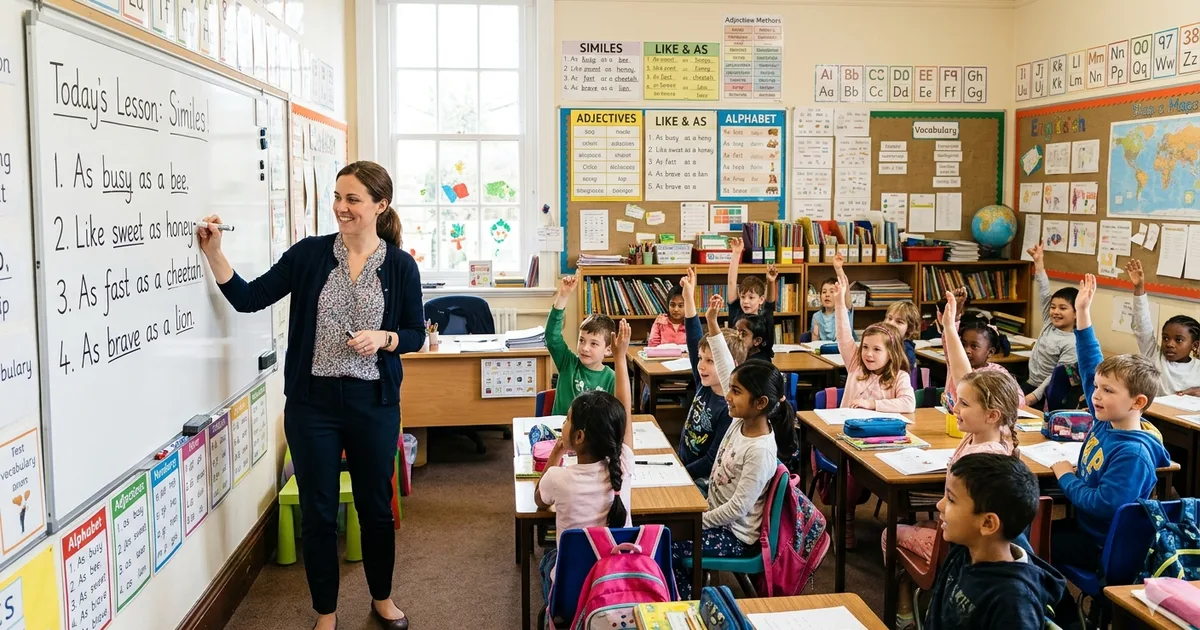
Teachers usually explain similes with examples and visuals.
They:
- Write sentences on the board
- Ask students to create comparisons
- Use real life objects for explanation
- Give short exercises
Real World Usage of Simile Sentences in Speech
People use similes in daily speech without noticing.
Examples:
- As busy as a bee
- Like a fish out of water
- As cool as ice
These make conversations more expressive.
Simple Simile Sentences for English Grammar Exams
You may see simile questions in exams like:
- The soldier was as brave as a lion
- She is as gentle as a dove
- He runs like a deer
- The snow is as white as milk
Tips to Remember Simile Sentences Easily
- Think in pictures, not words
- Practice daily with simple objects
- Learn common simile pairs
- Read short English stories
How Simile Sentences Improve Vocabulary Skills
Similes help you learn new descriptive words.
You start using words like:
- fierce
- gentle
- bright
- swift
This improves both speaking and writing skills.
Practice Exercises for Mastering Simile Sentences
Try these exercises:
- Write three similes about animals
- Write two similes about weather
- Describe your friend using one simile
- Create five daily life similes
Advanced Level Simple Simile Sentence Examples
- Her mind was as sharp as a blade
- The city moved like a living machine
- His silence was as deep as the ocean
- The storm roared like a wild beast
Conclusion
Simple simile sentences help you express ideas in a clear and creative way. They make your writing more vivid and your speech more interesting. Once you understand the structure and practice regularly, you can use similes naturally in both writing and conversation.
FAQs
What is a simple simile sentence
It is a sentence that compares two things using like or as.
What are examples of similes
She is as fast as lightning and he runs like a cheetah.
Why do we use similes
We use similes to make descriptions clearer and more creative.
What words are used in similes
We mainly use like, as, and as…as.
Is a simile a figure of speech
Yes, a simile is a figure of speech used for comparison.
What is the difference between simile and metaphor
A simile uses like or as while a metaphor does not.
How can students learn similes easily
By practicing daily with simple real life examples.
Where do we use similes in daily life
We use them in speaking, writing, and storytelling.
Are similes important in exams
Yes, they often appear in grammar and writing questions.
Can kids learn similes easily
Yes, kids can learn them with simple examples and practice.
