Quick Answer Box
What Is a Simile Without Like or As?
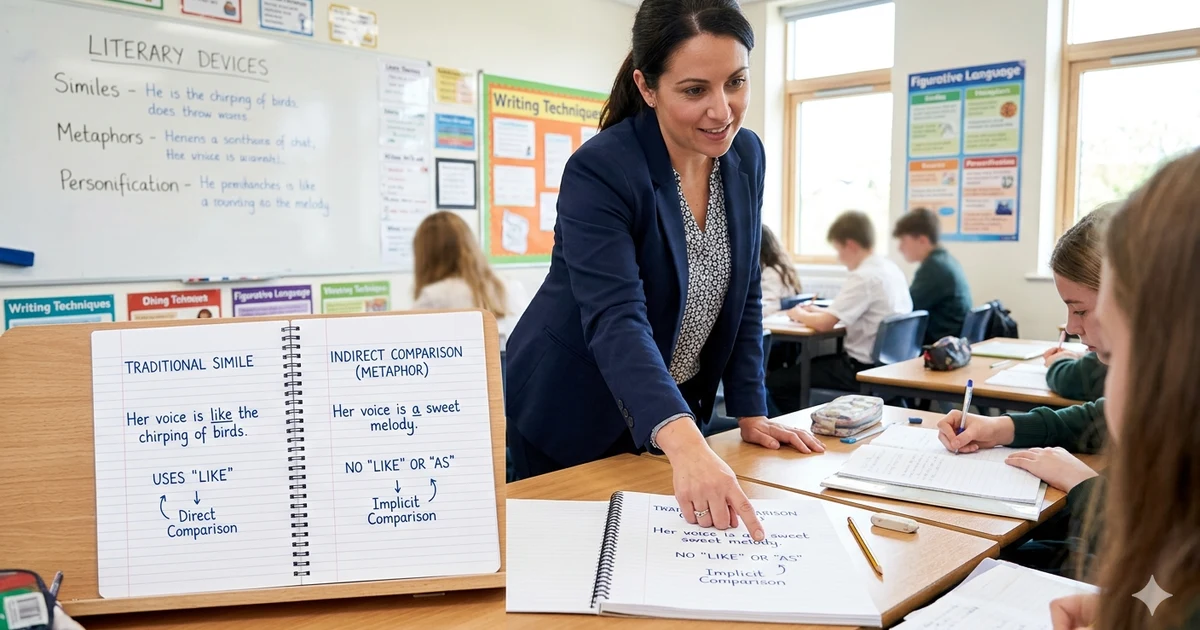
A true simile usually compares two different things using like or as. When a comparison does not use these words, it is generally called a metaphor rather than a simile.
Introduction
Many people learn that a simile always uses the words like or as. Teachers often explain similes with examples such as “as busy as a bee” or “runs like the wind.” Because of this, writers sometimes feel confused when they see comparisons that create a similar effect without using either word.
Understanding how comparisons work can make your writing stronger and more creative. In this guide, you will learn what a simile without like or as means, how it differs from a metaphor, where writers use it, and how to create vivid descriptions that engage readers. You will also find practical examples, exercises, and answers to common questions.
What Is a Simile Without Like or As?
A traditional simile compares two different things by using like or as.
Examples:
- Her smile shone like the sun.
- He was as brave as a lion.
When writers remove these comparison words but still connect two ideas, readers often describe the comparison as simile like language. However, in most cases, the sentence becomes a metaphor.
Example:
- Her smile was the sun.
The sentence creates the same image as a simile, but it does not use like or as.
This distinction causes confusion because both devices compare two different things.
Can a Simile Exist Without Using Like or As?
Most grammar experts define a simile as a comparison that specifically uses like or as.
Without those words, the comparison usually becomes a metaphor.
For example:
- Simile: The water sparkled like diamonds.
- Metaphor: The water was diamonds under the sunlight.
Both sentences create a vivid image, but only the first one fits the traditional definition of a simile.
Many people search for “simile without like or as” when they actually mean indirect comparisons that resemble similes.
Why This Type of Comparison Confuses Many Writers
Several reasons create confusion:
- Both similes and metaphors compare different things.
- Both create imagery.
- Both belong to figurative language.
- Many examples produce nearly identical meanings.
Consider these examples:
- Simile: His voice was smooth like silk.
- Metaphor: His voice was silk.
The image remains similar, but the structure changes.
Because the effect feels alike, students often mix the two devices.
The Difference Between a Simile Without Like or As and a Metaphor
The key difference lies in the wording.
Simile
A simile uses comparison words.
Example:
- The child slept like a log.
Metaphor
A metaphor states that one thing is another thing.
Example:
- The child was a log on the couch.
A metaphor creates a stronger and more direct comparison.
Writers often choose metaphors when they want more impact.
How Indirect Comparisons Work in Creative Writing
Indirect comparisons help readers visualize scenes without lengthy explanations.
Instead of writing:
- The city felt very busy.
A writer may say:
- The city was a living machine.
This comparison instantly creates a stronger image.
Creative writers use indirect comparisons to:
- Add emotion
- Build atmosphere
- Improve descriptions
- Create memorable scenes
Common Sentence Patterns That Create Simile Style Comparisons
Writers often use these patterns:
Noun Equals Noun
- Time is a thief.
- Knowledge is power.
Subject Plus Be Verb Plus Image
- Her eyes were stars.
- The classroom was a zoo.
Abstract Idea Plus Concrete Object
- Fear was a shadow behind him.
- Hope was a candle in the darkness.
These patterns create vivid mental pictures.
Simple Examples of Similes Without Like or As
These examples look similar to similes but function as metaphors.
- The classroom was a jungle.
- His mind was a library.
- The moon was a silver coin.
- Her voice was music.
- The road was a ribbon through the hills.
- The baby was an angel.
- The clouds were mountains in the sky.
- The crowd was an ocean of excitement.
Simile Without Like or As Examples for Students
Students can easily understand these examples:
- My brother is a bear before breakfast.
- The playground is a battlefield during recess.
- Her backpack is a treasure chest.
- The teacher is a guide through learning.
- The test was a mountain to climb.
- Our team is a family.
Each sentence compares two things to create a clear image.
Everyday Conversation Examples You May Already Use
People use figurative language every day.
Examples include:
- He is a walking encyclopedia.
- She is the heart of the team.
- That phone is a dinosaur.
- My room is a disaster zone.
- The office is a circus today.
Most speakers use these expressions naturally without thinking about literary terms.
How Authors Create Strong Imagery Without Like or As
Great writers choose specific and meaningful comparisons.
Instead of saying:
- The forest was beautiful.
They may write:
- The forest was a cathedral of towering trees.
This description gives readers a stronger visual experience.
Strong imagery often includes:
- Sensory details
- Emotion
- Clear visual pictures
- Original comparisons
Simile Without Like or As in Poetry
Poets often favor direct comparisons because they save words and increase impact.
Example:
- The moon, a silent guardian above the sea.
This style creates powerful imagery in a small space.
Poetry relies on concise language, so many poets choose metaphors instead of longer similes.
Simile Without Like or As in Fiction Writing
Novelists use indirect comparisons to deepen descriptions.
Example:
- The storm was a monster tearing through the village.
Readers immediately imagine power, danger, and destruction.
Fiction writers often use these comparisons to reveal character emotions and strengthen scenes.
How to Identify Hidden Comparisons in a Sentence
Ask yourself these questions:
- Does the sentence compare two different things?
- Does it use like or as?
- Does it state that one thing is another thing?
If the answer to the third question is yes, you likely found a metaphor rather than a simile.
Example:
- Her laughter was sunshine.
This sentence contains a hidden comparison and functions as a metaphor.
Mistakes Writers Make When Using Indirect Comparisons
Common mistakes include:
Mixing Similes and Metaphors
Keep the comparison consistent.
Using Clichés
Avoid overused phrases whenever possible.
Creating Unclear Images
Readers should understand the comparison immediately.
Overusing Figurative Language
Too many comparisons can distract readers from the message.
When to Use a Simile Instead of a Metaphor
Choose a simile when you want a gentler comparison.
Example:
- She moved like a dancer.
Choose a metaphor when you want stronger impact.
Example:
- She was a dancer gliding through the crowd.
The choice depends on tone, style, and audience.
How Similes Improve Description and Reader Engagement
Effective comparisons help readers:
- Visualize scenes
- Understand emotions
- Remember ideas
- Stay engaged
Compare these sentences:
- The athlete ran fast.
- The athlete ran like lightning.
The second sentence creates a more memorable image.
Step by Step Method for Writing Similes Without Like or As
Follow these steps:
Step 1: Identify the Subject
Choose what you want to describe.
Step 2: Find a Similar Image
Think of an object, person, or idea with similar qualities.
Step 3: Connect Them Directly
Create a strong comparison.
Example:
- The classroom was a beehive.
Step 4: Check for Clarity
Make sure readers understand the image.
Step 5: Revise for Impact
Replace ordinary comparisons with fresh ideas.
Practice Exercises to Identify Similes and Metaphors
Identify whether each sentence is a simile or metaphor.
- Her eyes sparkled like diamonds.
- The classroom was a zoo.
- He fought like a warrior.
- Time is a thief.
- The clouds looked like cotton.
Answers
- Simile
- Metaphor
- Simile
- Metaphor
- Simile
Frequently Asked Questions About Similes Without Like or As
Are similes required to use like or as?
Yes. Traditional definitions require one of those comparison words.
What is a comparison without like or as called?
It is usually called a metaphor.
Why do people confuse similes and metaphors?
Both compare different things and create imagery.
Can metaphors replace similes?
Yes. Writers often choose one based on style and impact.
Which is stronger, a simile or a metaphor?
Many writers consider metaphors stronger because they create direct comparisons.
Key Takeaways for Using Similes Without Like or As Effectively
Understanding figurative language helps you write with confidence. A true simile normally uses like or as. When those words disappear, the comparison often becomes a metaphor.
Both devices help readers see ideas in new ways. Similes offer gentle comparisons, while metaphors create stronger and more direct imagery. By learning how each one works, you can add depth, clarity, and creativity to your writing.
Whether you write essays, stories, poems, or everyday content, strong comparisons make your words more memorable and engaging.
Conclusion
Understanding the difference between a simile and a comparison that does not use like or as can improve both your reading and writing skills. While many people refer to these indirect comparisons as similes, they usually fall under the category of metaphors.
Both literary devices help writers create vivid images, express ideas more clearly, and make their content more engaging.
Whether you are a student, teacher, or creative writer, learning how these comparisons work allows you to add depth and creativity to your sentences. By practicing with examples and recognizing the differences between similes and metaphors, you can write descriptions that capture attention and leave a lasting impression on your readers.
10 FAQs
1. What is a simile without like or as?
Most examples become metaphors because similes traditionally use like or as.
2. Can a metaphor and simile have the same meaning?
Yes. They often express similar ideas using different structures.
3. Is “Time is a thief” a simile?
No. It is a metaphor.
4. Why do teachers compare similes and metaphors?
Both belong to figurative language and help create imagery.
5. Do all similes contain like?
No. Some use as instead.
6. Which is easier to understand, simile or metaphor?
Many readers find similes easier because the comparison appears more clearly.
7. Can I use metaphors in academic writing?
Use them carefully. They work best when they clarify an idea.
8. Are metaphors common in everyday speech?
Yes. People use them regularly in conversations.
9. How can I improve my figurative language skills?
Read widely and practice writing original comparisons.
10. Why do writers use comparisons?
Comparisons make descriptions more vivid, memorable, and engaging.
