
Quick Answer Box
What is a simile with like and as?
A simile with like and as is a figure of speech that compares two different things to highlight a shared quality. It uses the words like or as to make the comparison clear and easy to understand. Examples include “as brave as a lion” and “she runs like the wind.” Similes make writing more vivid, descriptive, and engaging for readers.
Introduction
Language becomes more interesting when we compare one thing to another. A simple comparison can help readers picture an idea, understand a feeling, or imagine a scene more clearly. One of the most common ways to make these comparisons is through similes.
A simile uses the words like or as to compare two different things that share a similar quality. Writers, students, teachers, and speakers use similes every day because they make communication more vivid and memorable.
In this guide, you will learn what a simile is, how to identify one, when to use like and as, and how to create your own powerful comparisons. You will also find plenty of examples, practice sentences, and exercises to strengthen your understanding.
What Is a Simile With Like and As?
A simile is a figure of speech that compares two different things using the words like or as.
The comparison highlights a shared characteristic between the two things.
Examples:
- She runs like the wind.
- His hands were as cold as ice.
- The baby slept like a log.
- The sky was as clear as crystal.
In each example, the writer compares one thing to another to create a stronger image in the reader’s mind.
Without the simile:
- She runs fast.
With the simile:
- She runs like the wind.
The second sentence creates a much stronger picture.
How Similes Create Stronger Comparisons in Writing
Good writing helps readers see, hear, and feel what the writer describes. Similes make this easier.
Instead of stating facts directly, a simile connects an idea to something familiar.
For example:
- The classroom was noisy.
This sentence gives basic information.
Now look at this:
- The classroom was as noisy as a busy market.
Readers can immediately imagine the sound and activity.
Similes help writers:
- Create vivid descriptions
- Add emotion
- Improve storytelling
- Make ideas easier to understand
- Capture the reader’s attention
Many great authors use similes because they make writing more engaging and memorable.
Why Writers Use Like and As in Similes
The words like and as signal a comparison.
They tell readers that two things share a similar quality.
Examples with like:
- He fought like a lion.
- The clouds floated like cotton.
- Her smile shined like the sun.
Examples with as:
- He was as brave as a lion.
- The clouds were as soft as cotton.
- Her smile was as bright as the sun.
Writers choose these words because they create clear and natural comparisons that readers understand instantly.
Similes also add personality to writing. A simple sentence can become more colorful with the right comparison.
The Difference Between a Simile and a Metaphor
Many people confuse similes and metaphors because both compare things.
The key difference lies in how they make the comparison.
Simile
A simile uses like or as.
Examples:
- She sings like a bird.
- He is as strong as an ox.
Metaphor
A metaphor states that one thing is another thing.
Examples:
- She is a bird when she sings.
- He is an ox on the football field.
A simile creates a direct comparison.
A metaphor creates a stronger and more dramatic connection.
Both tools improve writing, but similes often feel easier for beginners to understand.
How to Identify a Simile in a Sentence
Finding a simile becomes easier when you know what to look for.
Follow these steps:
Look for Like or As
Most similes contain one of these words.
Examples:
- The water sparkled like diamonds.
- Her voice was as smooth as silk.
Check for a Comparison
Ask yourself whether the sentence compares two different things.
Example:
- He eats like a horse.
A person and a horse are different, but the comparison highlights how much he eats.
Determine the Shared Quality
Identify what the two things have in common.
Example:
- As busy as a bee.
Shared quality: hard work and constant activity.
Practice Example:
Sentence:
- The blanket felt as soft as a cloud.
Comparison:
- Blanket
- Cloud
Shared quality:
- Softness
This sentence contains a simile.
Simile With Like Examples From Everyday Conversations
People use similes naturally in daily speech.
Here are common examples:
- He sleeps like a baby.
- She swims like a fish.
- They argue like cats and dogs.
- My phone battery dies like lightning.
- The children ran like wild horses.
- The car moved like a rocket.
- She shines like a star.
- He works like a machine.
- The crowd cheered like thunder.
- The cake tastes like heaven.
These expressions make conversations more colorful and expressive.
Simile With As Examples Used in Daily Language
Similes with as often follow a familiar pattern.
Structure:
As + adjective + as + noun
Examples:
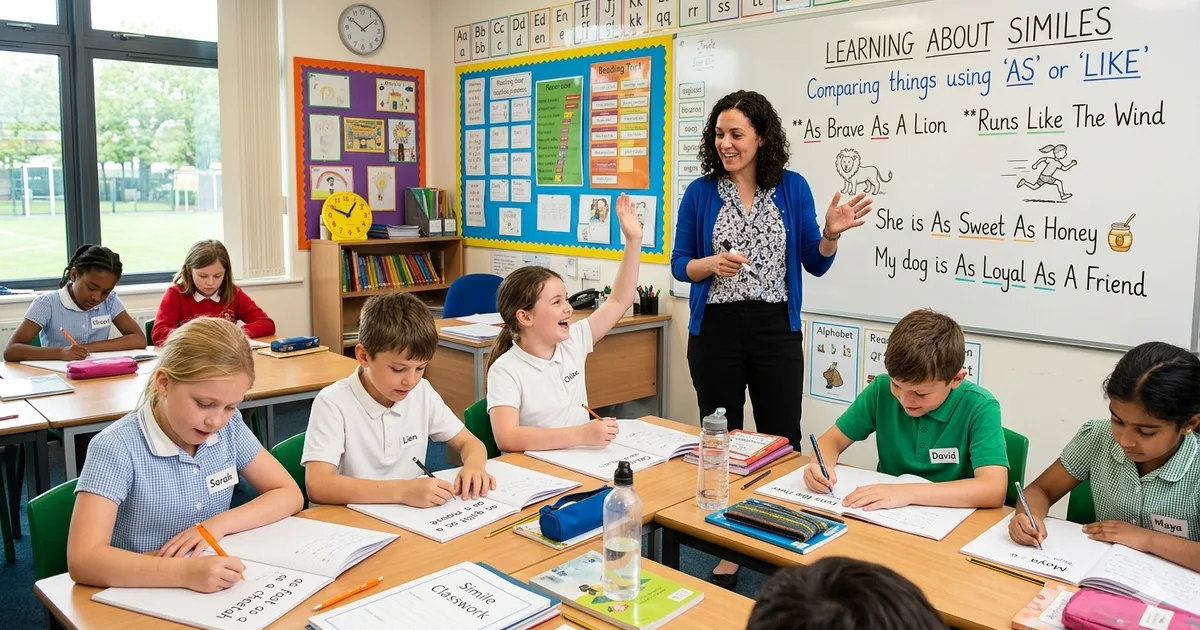
- As busy as a bee
- As quiet as a mouse
- As brave as a lion
- As light as a feather
- As cold as ice
- As blind as a bat
- As white as snow
- As quick as lightning
- As gentle as a lamb
- As stubborn as a mule
Many of these comparisons have become popular sayings in English.
Easy Similes With Like and As for Beginners
Beginners should start with simple and familiar comparisons.
Examples with Like:
- Runs like the wind
- Sleeps like a log
- Eats like a horse
- Sparkles like a diamond
- Roars like a lion
Examples with As:
- As happy as a child
- As bright as the sun
- As smooth as silk
- As sweet as honey
- As tall as a tree
These examples help students understand how similes work before creating their own.
Common Similes Students Should Know
Students often encounter these similes in books, lessons, and writing assignments.
- As cool as a cucumber
- As busy as a bee
- As blind as a bat
- As gentle as a lamb
- As quiet as a mouse
- As proud as a peacock
- As free as a bird
- As light as a feather
- As hungry as a wolf
- As wise as an owl
Learning these classic similes improves reading comprehension and writing skills.
Similes About People Using Like and As
Writers frequently use similes to describe appearance, personality, and behavior.
Examples:
- He is as brave as a lion.
- She sings like a nightingale.
- He works like a machine.
- She is as kind as an angel.
- He runs like the wind.
- She is as patient as a saint.
- He eats like a horse.
- She smiles like sunshine.
These comparisons help readers understand a person’s qualities quickly.
Similes About Emotions and Feelings
Emotions can feel difficult to describe. Similes make them easier to express.
Examples:
- I felt as happy as a child on a holiday.
- She was as nervous as a cat near a dog.
- He felt like a bird set free.
- They were as excited as fans at a championship game.
- Her heart felt as heavy as stone.
- He was as angry as a storm.
These comparisons allow readers to connect with emotions on a deeper level.
Conclusion
Similes with like and as help writers create clear, vivid, and memorable comparisons. They turn ordinary sentences into engaging descriptions that readers can easily picture and understand. Whether you want to describe a person, express an emotion, or bring a story to life, similes add color and creativity to your writing.
By learning how similes work, recognizing them in everyday language, and practicing your own comparisons, you can improve both creative and academic writing. The more you use similes thoughtfully, the more expressive and effective your communication will become.
