
Quick Answer Box
What Is a Simile in Poetry?
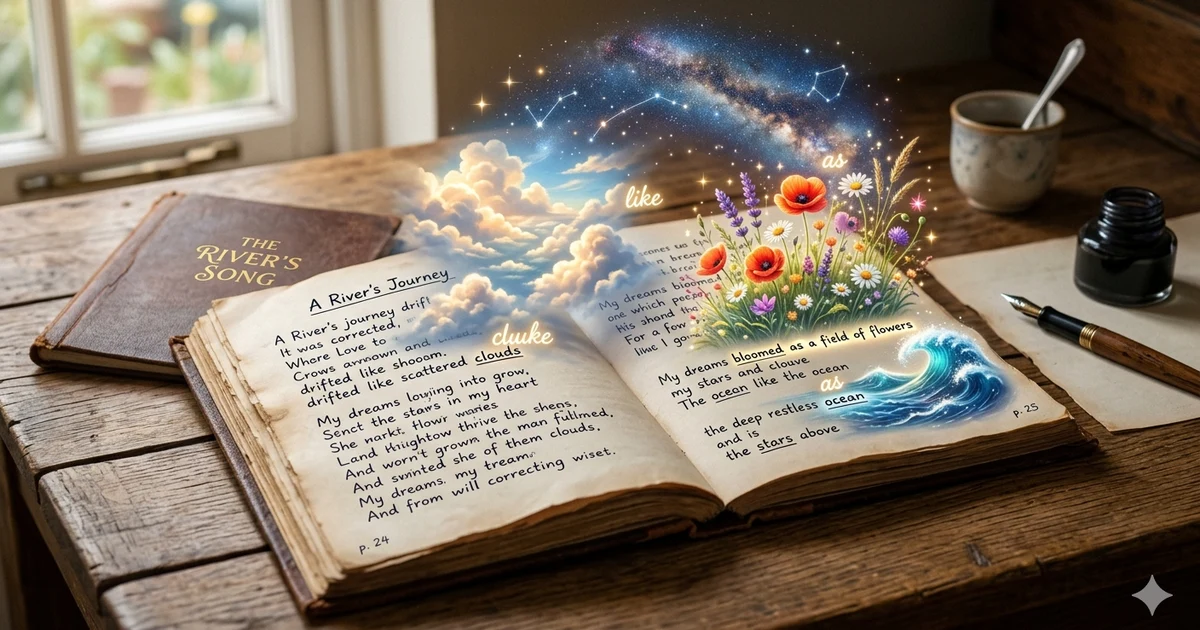
A simile in poetry is a figure of speech that compares two different things using words such as “like” or “as.” Poets use similes to create vivid imagery, express emotions, and help readers understand ideas through familiar comparisons. For example, in the line “Her smile shone like the sun,” the poet compares a smile to the sun to emphasize brightness and warmth.
Introduction
Poetry often paints pictures with words. One of the most effective tools poets use to create vivid images and emotional connections is the simile. Whether describing a beautiful sunset, a broken heart, or a powerful storm, similes help readers see and feel what the poet wants to express.
A simile compares two different things by using words such as “like” or “as.” This simple technique adds depth, color, and meaning to poetry. From classic works to modern poems, similes remain one of the most popular forms of figurative language.
In this guide, you will learn what a simile in poetry is, why poets use it, how it differs from a metaphor, and how you can identify and write effective similes in your own poems.
What Is a Simile in Poetry?
A simile is a figure of speech that compares two unlike things using the words “like” or “as.”
Examples:
- Her smile shone like the sun.
- The river moved as smoothly as silk.
- His voice was like thunder.
These comparisons help readers understand an idea by connecting it to something familiar.
In poetry, similes make descriptions more vivid and memorable.
Why Poets Use Similes to Create Strong Imagery
Imagery helps readers picture scenes, emotions, and experiences. Similes strengthen imagery by linking an unfamiliar idea to something readers already know.
For example:
“The clouds floated like cotton across the sky.”
Readers instantly imagine soft, white clouds because they understand what cotton looks like.
Strong imagery allows poetry to become more engaging and emotionally powerful.
How a Simile Works in a Poem
A simile works by creating a direct comparison.
Structure:
- Subject
- Comparison word
- Familiar image
Example:
“Her laughter rang like silver bells.”
The poet compares laughter to bells. This comparison helps readers imagine a clear, pleasant sound.
The best similes create an instant connection between the poem and the reader’s imagination.
The Difference Between a Simile and a Metaphor in Poetry
Both similes and metaphors compare things, but they do so differently.
Simile:
“His mind was like a computer.”
Metaphor:
“His mind was a computer.”
A simile uses comparison words such as “like” or “as.” A metaphor makes a direct statement without those words.
Poets often choose similes when they want a comparison to feel clear and accessible.
Common Words Used to Form Similes in Poems
Most similes rely on a few common words.
Popular examples include:
- Like
- As
- As if
- As though
Examples:
- As brave as a lion
- Like a bird in flight
- As quiet as snow
- As bright as a star
These words signal that a comparison is taking place.
How Similes Help Readers Visualize Emotions
Emotions can feel difficult to describe directly. Similes make them easier to understand.
Examples:
- Her sadness hung like a heavy cloud.
- Fear raced through him like wildfire.
- Joy bubbled inside her like a spring fountain.
These comparisons transform abstract feelings into clear mental images.
Readers connect more deeply with emotions they can picture.
The Role of Similes in Descriptive Poetry
Descriptive poetry focuses on detailed observations. Similes enrich these descriptions.
Example:
“The lake glittered like scattered diamonds.”
Instead of simply saying the lake sparkled, the poet creates a more vivid picture.
Similes help descriptive poems:
- Create stronger visuals
- Increase reader engagement
- Add creativity to ordinary scenes
Famous Simile Examples From Classic Poems
Many famous poets used similes effectively.
Example from Robert Burns:
“O my Luve’s like a red, red rose.”
This famous comparison highlights beauty, freshness, and deep affection.
Another example comes from William Wordsworth, who often compared natural elements to familiar objects and experiences.
Classic poets used similes to make their ideas memorable and emotionally rich.
Modern Poetry Examples That Use Similes Effectively
Modern poets continue to use similes in fresh and creative ways.
Examples:
- The city buzzed like a restless hive.
- Memories drifted through her mind like leaves in autumn.
- Screens glowed like tiny moons in the dark.
Modern similes often draw inspiration from technology, urban life, and contemporary experiences.
How Similes Add Rhythm and Beauty to Poetry
Poetry relies on sound as much as meaning.
Similes contribute to rhythm by creating balanced phrases and musical patterns.
Example:
“As gentle as rain upon the grass.”
The smooth flow of the comparison enhances the poem’s beauty.
A well crafted simile often feels natural and pleasing when read aloud.
Similes That Describe Nature in Poetry
Nature provides endless inspiration for similes.
Examples:
- The mountains stood like ancient guardians.
- The wind whispered like a secret.
- The stars glittered like jewels.
Nature based similes help readers experience landscapes in a vivid and emotional way.
They remain popular across many styles of poetry.
Similes Used to Express Love and Relationships
Poets frequently use similes to describe love.
Examples:
- Her heart opened like a flower.
- His devotion stood firm as an oak tree.
- Their bond shone like a lighthouse in the dark.
These comparisons help communicate feelings that often seem difficult to explain directly.
Similes That Convey Sadness, Loss, and Grief
Poetry often explores painful emotions.
Examples:
- Grief settled over him like winter fog.
- Loneliness echoed like an empty hallway.
- Tears fell like rain from storm clouds.
Such similes create emotional depth while helping readers relate to the experience.
How Poets Use Similes to Build Mood and Atmosphere
Mood reflects the emotional feeling of a poem.
Similes influence mood by shaping how readers perceive a scene.
For a peaceful mood:
“The meadow rested like a sleeping child.”
For a tense mood:
“The shadows crept like silent hunters.”
Through carefully chosen comparisons, poets guide readers toward specific emotional responses.
Tips for Writing Original Similes in Poetry
Strong similes feel fresh and meaningful.
Tips:
- Observe everyday life closely
- Avoid overused comparisons
- Connect ideas in unexpected ways
- Focus on sensory details
- Match the comparison to the poem’s theme
Example:
Instead of “bright as the sun,” try:
“Bright as a window filled with morning light.”
Originality makes poetry stand out.
Common Mistakes to Avoid When Using Similes
Writers sometimes weaken poems with poor comparisons.
Avoid:
- Overused similes
- Confusing comparisons
- Too many similes in one poem
- Comparisons that do not fit the mood
Weak example:
“Fast like a thing that moves fast.”
Strong example:
“Fast like a falcon diving from the sky.”
Clear and specific imagery creates stronger poetry.
How Students Can Identify Similes in Poems
Students can spot similes by looking for comparison words.
Steps:
- Look for “like” or “as.”
- Find the two things being compared.
- Determine why the poet made the comparison.
- Consider how it affects meaning and imagery.
Practice improves recognition skills and literary analysis.
Simile Practice Examples for Poetry Writing
Try completing these examples:
- The moon hung in the sky like ________.
- Her voice sounded as soft as ________.
- The forest stood as silent as ________.
Possible answers:
- A silver lantern
- Whispering leaves
- An abandoned church
Exercises like these encourage creative thinking.
Simile Exercises to Improve Creative Expression
Practice helps writers develop stronger poetic skills.
Exercise 1:
Choose an emotion and create three similes.
Exercise 2:
Describe a landscape using five similes.
Exercise 3:
Rewrite a simple sentence using a simile.
Original:
“The night was dark.”
Revised:
“The night was as dark as a cave deep underground.”
Regular practice builds confidence and creativity.
Conclusion
Similes play a vital role in poetry. They transform simple descriptions into vivid images that readers can easily understand and remember. By comparing one thing to another through words like “like” and “as,” poets create stronger imagery, richer emotions, and more engaging experiences.
Whether you study poetry, teach literature, or write your own poems, understanding similes can improve your appreciation of poetic language. With practice, you can identify effective similes and craft original comparisons that bring your writing to life.
Frequently Asked Questions About Similes in Poetry
What is a simile in poetry?
A simile compares two different things using words such as “like” or “as.”
Why do poets use similes?
Poets use similes to create imagery, express emotions, and make descriptions more vivid.
How can I identify a simile in a poem?
Look for comparison words such as “like” and “as.”
What is the difference between a simile and a metaphor?
A simile uses comparison words, while a metaphor makes a direct comparison.
Can a poem have multiple similes?
Yes. Many poems use several similes to enhance imagery and meaning.
Are similes part of figurative language?
Yes. Similes are one of the most common forms of figurative language.
Why are similes important in poetry?
They help readers visualize ideas and connect emotionally with the poem.
What are some common simile examples?
Examples include “as brave as a lion” and “like a shining star.”
Can students use similes in their own poems?
Yes. Similes make student writing more creative and descriptive.
Do all poems contain similes?
No. Some poems use other literary devices instead.
