Quick Answer Box
A simile for Grade 3 is a comparison between two different things using the words like or as. Similes help students make their writing more fun, colorful, and easy to imagine.
Introduction
Learning similes can make writing more exciting and creative for Grade 3 students. Instead of using plain sentences, children can compare one thing to another in a fun and imaginative way. Similes help young learners describe feelings, objects, people, animals,
and places with colorful language that readers can easily picture in their minds. For example, saying “as bright as the sun” sounds more interesting than simply saying “very bright.” In this guide, students will learn what similes mean, how to recognize them in sentences, and how to use them in their own writing.
They will also explore many easy and funny examples that make learning enjoyable. Simple classroom activities, writing exercises, and creative tips can help children practice similes with confidence. As students improve their understanding of similes, they also become stronger readers, better storytellers, and more creative writers in everyday schoolwork.
What a Simile Means for Grade 3 Students
A simile compares two different things by using the words like or as. It helps readers picture something more clearly.
For example:
- The baby slept like a kitten.
- Her smile shined like the sun.
- He ran as fast as a rabbit.
These comparisons make sentences more fun and interesting.
Kids often use similes when they write stories, poems, or classroom assignments.
Why Grade 3 Kids Learn Similes in English Class
Teachers introduce similes because they improve creativity and writing skills. Similes also help children describe things in a better way.
Students learn how to:
- Use descriptive language
- Build stronger sentences
- Make stories more exciting
- Express emotions clearly
- Improve reading comprehension
Children who understand similes often become more confident writers.
Easy Simile Examples Grade 3 Students Can Understand
Simple examples help students learn faster.
Here are easy similes for Grade 3 learners:
- As busy as a bee
- As soft as cotton
- Like a shining star
- As cold as ice
- Like popcorn in a hot pan
- As loud as thunder
- Like a fish in water
- As sweet as candy
Kids can practice these examples in speaking and writing activities.
How to Spot a Simile in a Sentence
Students can find similes by looking for comparison words.
The most common words include:
- Like
- As
Example sentences:
- The blanket felt as soft as a cloud.
- The dog barked like a drum.
- Her eyes sparkled like diamonds.
If a sentence compares two things using like or as, it usually contains a simile.
Simple Similes Using Animals for Kids
Animal similes make learning fun because children already know many animals and their traits.
Examples include:
- As brave as a lion
- As slow as a turtle
- Like a jumping kangaroo
- As quiet as a mouse
- Like a soaring eagle
Students enjoy using animal similes in stories and classroom games.
Fun Food Similes for Third Grade Practice
Food similes sound funny and creative. They also help children describe taste, shape, and color.
Examples:
- As sweet as chocolate
- Like melting butter
- As round as an orange
- Like hot soup on a winter day
- As crunchy as chips
Teachers often use food similes during writing exercises because kids easily connect with them.
Similes About Weather That Sound Creative
Weather similes create strong pictures in the reader’s mind.
Examples:
- As bright as the summer sun
- Like rain tapping on the roof
- As cold as winter snow
- Like thunder in the sky
- As gentle as a spring breeze
These similes work well in poems and descriptive paragraphs.
School Related Similes Grade 3 Students Can Use
Students can use school similes in essays and classroom stories.
Examples include:
- As sharp as a pencil
- Like glue holding paper together
- As busy as the school hallway
- Like chalk on a blackboard
- As neat as a clean notebook
These examples feel familiar and easy for children to understand.
Similes That Describe Feelings and Emotions
Similes help children explain emotions in a creative way.
Examples:
- As happy as a child at a birthday party
- Like a balloon floating in the sky
- As nervous as a cat near water
- Like sunshine after rain
- As calm as a sleeping baby
Emotional similes improve storytelling and personal writing.
Funny Similes That Make Kids Laugh
Funny similes make lessons more enjoyable.
Examples:
- As messy as spaghetti on the floor
- Like a monkey dancing in pajamas
- As wobbly as jelly
- Like popcorn popping everywhere
- As silly as a clown at a circus
Humor keeps children interested in learning language skills.
Nature Similes for Creative Writing Activities
Nature gives writers many ideas for similes.
Examples:
- As green as fresh grass
- Like leaves dancing in the wind
- As tall as a mountain
- Like waves crashing on rocks
- As colorful as a rainbow
Teachers often use nature themes during creative writing lessons.
Similes for Describing Friends and Family
Children enjoy writing about people they know.
Examples:
- As caring as a mother bird
- Like a superhero protecting everyone
- As cheerful as morning sunshine
- Like a best friend sharing toys
- As gentle as grandma’s hug
These similes add warmth and emotion to writing.
Sports Similes for Active Grade 3 Learners
Sports similes connect with energetic students.
Examples:
- As fast as a race car
- Like a basketball bouncing across the court
- As strong as a wrestler
- Like a soccer ball flying into the goal
- As quick as a sprinter
Sports comparisons make writing feel active and exciting.
Common Simile Words Like and As Explained
Most similes use like or as to compare things.
Examples with like:
- He swam like a dolphin.
- The cake smelled like heaven.
Examples with as:
- As bright as gold
- As smooth as silk
Students should remember that similes always compare two things in a clear way.
Difference Between a Simile and a Metaphor for Kids
A simile uses like or as. A metaphor compares things without those words.
Examples of similes:
- She sings like a bird.
- He is as strong as steel.
Examples of metaphors:
- She is a shining star.
- Time is a thief.
Both tools improve writing, but similes feel easier for younger students.
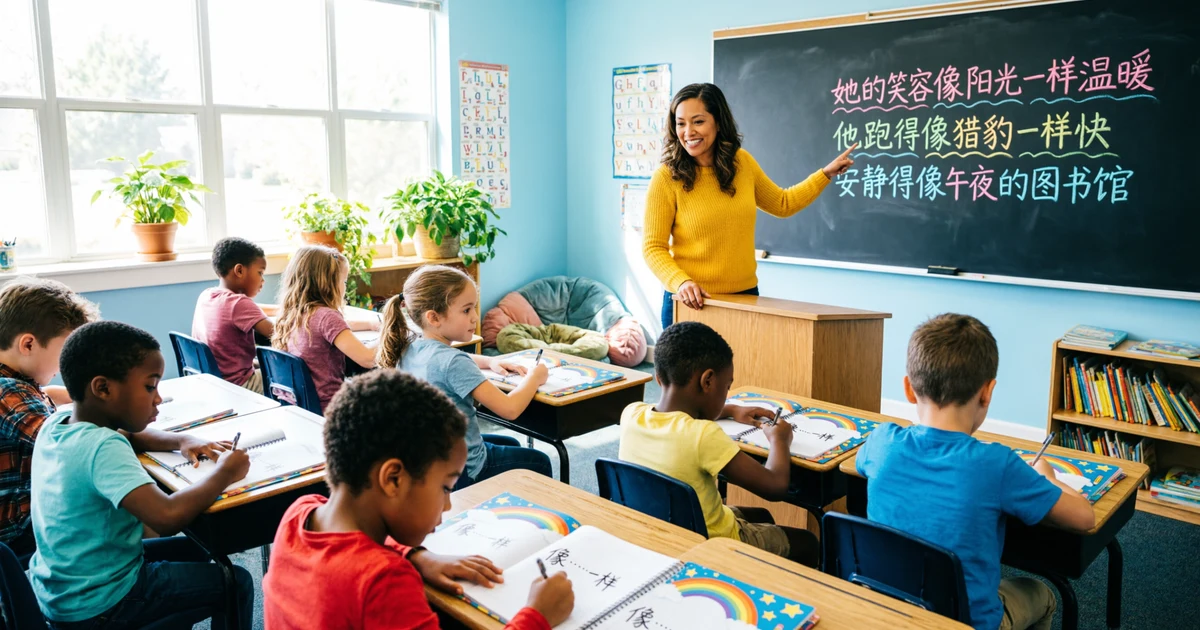
How Teachers Use Similes in Classroom Activities
Teachers use many fun methods to teach similes.
Popular activities include:
- Matching games
- Fill in the blank worksheets
- Story writing exercises
- Picture description activities
- Group speaking games
These activities help students practice similes in creative ways.
Easy Simile Exercises for Grade 3 Practice
Simple exercises improve understanding.
Try these activities:
Complete the Simile
- As light as ______
- Like a bird in ______
Write Your Own Simile
Describe:
- A happy day
- Your best friend
- Your favorite food
Circle the Simile
Find the simile in each sentence.
Practice builds confidence and creativity.
Mistakes Kids Make When Writing Similes
Children sometimes confuse similes with regular descriptions.
Common mistakes include:
- Forgetting like or as
- Comparing unrelated things
- Using confusing comparisons
- Repeating the same similes often
For example:
Incorrect: The cat was fast pizza.
Correct: The cat was as fast as lightning.
Clear comparisons make writing stronger.
Tips to Help Grade 3 Students Write Better Similes
Students can improve by following simple tips.
Helpful ideas include:
- Think about colors, sounds, and feelings
- Use familiar objects
- Read books with descriptive language
- Practice writing every day
- Keep comparisons simple and clear
Creative thinking helps students write memorable similes.
Fun Simile Games and Activities for Kids
Games make learning more exciting.
Fun classroom activities include:
Simile Charades
Students act out similes while classmates guess them.
Simile Drawing Game
Children draw pictures that match similes.
Finish the Sentence
Teachers start a simile and students complete it.
Example:
- As fluffy as ______
- Like a bird ______
These activities improve imagination and teamwork.
Conclusion
Similes help Grade 3 students become creative and confident writers. They turn simple sentences into colorful descriptions that readers enjoy. Children can use similes to describe people, feelings, animals, weather, sports, and everyday experiences.
With practice, students learn how to create strong comparisons that make stories and classroom work more interesting. Fun examples, games, and writing exercises make similes easy for kids to understand and enjoy.
FAQs
What is a simile for Grade 3 students?
A simile compares two things by using like or as.
Why do kids learn similes in Grade 3?
Similes help children improve writing and creativity.
What are common simile words?
The most common words are like and as.
Can a simile describe feelings?
Yes. Similes can describe emotions clearly and creatively.
What is an easy simile example?
As soft as cotton is a simple simile example.
How can students practice similes?
Students can practice through games, worksheets, and story writing.
What is the difference between a simile and a metaphor?
A simile uses like or as. A metaphor does not.
Are similes important in creative writing?
Yes. Similes make writing more vivid and engaging.
Can teachers use simile games in class?
Yes. Games make learning fun and interactive.
What are some funny similes for kids?
Examples include as wobbly as jelly and like popcorn popping everywhere.
