
Introduction
Darkness can be hard to describe with only a few words. If you simply write, “The room was dark,” your reader knows there is little light, but the sentence does not give them much to imagine.
A simile can change that.
You could write, “The room was as dark as a cave.” Now the reader can picture a place with almost no light. The comparison gives the sentence a stronger image.
This is why similes for dark are useful in creative writing, poetry, school assignments, stories, and descriptions. They can describe the actual absence of light, the deep color of something, or even an emotional state.
There is also a small difference between a simile for dark and a dark simile. A simile for dark usually describes literal darkness or a very dark color. A dark simile can go further and create a feeling of fear, sadness, mystery, loneliness, or danger.
For example, “The basement was as dark as a cave” describes literal darkness. “His sadness followed him like a shadow” uses a dark image to describe an emotion.
Both are useful, but knowing the difference helps you choose the right comparison for your writing.
Quick Answer
A simile for dark compares something that is very dark or black to a familiar image using words such as “like” or “as.” Common examples include “dark as night,” “dark as coal,” “dark as ink,” and “dark as a moonless night.” Dark similes can also describe emotions such as fear, sadness, loneliness, and mystery. They make simple sentences more visual and help readers understand the mood of a scene without using long explanations.
What Is a Simile for Dark?
A simile for dark is a comparison that describes something as very dark, black, dim, or difficult to see. It usually uses “like” or “as” to connect two ideas.
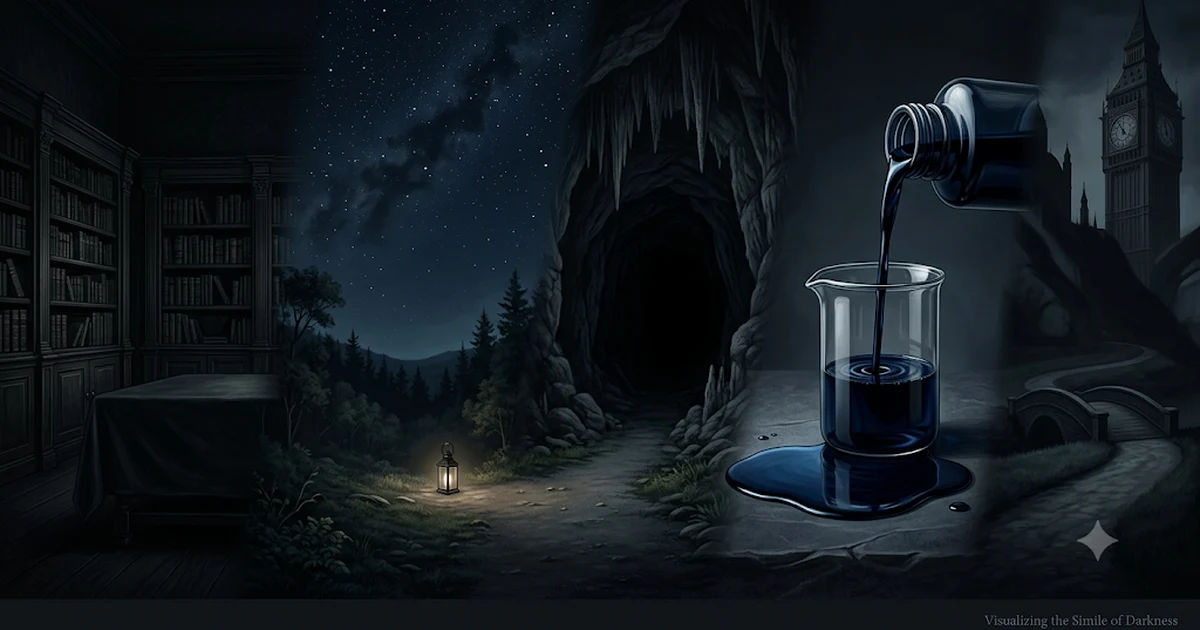
For example:
- The room was as dark as a cave.
- The sky looked as dark as ink.
- Her hair was as dark as coal.
- The road was dark like a moonless night.
The purpose is to give the reader a picture instead of simply stating that something is dark.
A good simile uses something familiar. Most people know what a moonless night, cave, shadow, or piece of coal looks like. That makes the comparison easy to understand.
Dark similes can describe places, objects, colors, weather, people, and nighttime scenes.
Dark Simile vs. Simile for Darkness
These two phrases are closely related, but they are not always used in exactly the same way.
A simile for darkness focuses mainly on the lack of light.
Example:
The hallway was as dark as midnight.
A dark simile can describe a darker mood or emotion.
Example:
Fear followed him like a shadow.
The first sentence tells us how dark the hallway is. The second uses darkness as an image for fear.
This difference is useful when writing because you can decide whether you want to describe what something looks like or how something feels.
Best Similes for Dark
Here are some of the most useful and natural similes for describing darkness or a deep black color.
1. Dark as night
Meaning: Extremely dark.
Example: The forest was as dark as night, and we could barely see the trail.
This is one of the most common and easiest dark similes to use.
2. Dark as midnight
Meaning: Very dark, like the middle of the night.
Example: The empty road was as dark as midnight.
This works well for nighttime settings and quiet outdoor scenes.
3. Dark as ink
Meaning: Deep and almost completely black.
Example: The lake looked as dark as ink under the cloudy sky.
This comparison works especially well for water, skies, and deep colors.
4. Dark as coal
Meaning: Deep black in color.
Example: His eyes were as dark as coal.
You can also use this comparison for hair, clothing, or other black objects.
5. Dark as a cave
Meaning: Extremely dark and enclosed.
Example: The basement was as dark as a cave after the power went out.
This is a good choice when you want to suggest both darkness and confinement.
6. Dark as pitch
Meaning: Completely or almost completely dark.
Example: The hallway was as dark as pitch when all the lights went out.
“Pitch dark” is also a very common expression in everyday English.
7. Dark as a moonless night
Meaning: Very dark because there is no moonlight.
Example: The road was as dark as a moonless night.
This is especially useful for describing outdoor scenes.
8. Dark as a shadow
Meaning: Dim, black, or difficult to see clearly.
Example: A figure stood as dark as a shadow near the doorway.
For a more natural comparison in some sentences, you can also write, “The figure stood like a shadow near the doorway.”
9. Dark as obsidian
Meaning: Deep black with a smooth appearance.
Example: The stone was as dark as obsidian.
This gives your writing a more descriptive and polished feel.
10. Dark as a raven’s wing
Meaning: Deep, rich black.
Example: Her hair was as dark as a raven’s wing.
This works particularly well for hair, feathers, clothing, and other objects with a deep black color.
11. Dark as a dungeon
Meaning: Very dark, gloomy, and sometimes frightening.
Example: The abandoned basement was as dark as a dungeon.
This is a strong choice for horror, mystery, and suspense writing.
12. Dark as a tomb
Meaning: Extremely dark and gloomy.
Example: The old room was as dark as a tomb.
It creates a stronger sense of fear or uneasiness than a simple description such as “very dark.”
Similes for Darkness in Different Situations
The best simile depends on what you are describing. A comparison that works for a cave may not work as well for someone’s hair or the evening sky.
| What You Are Describing | Good Simile | Why It Works |
|---|---|---|
| Room | Dark as a cave | Shows complete darkness |
| Night sky | Dark as midnight | Creates a nighttime image |
| Water | Dark as ink | Shows a deep, solid color |
| Hair | Dark as coal | Describes deep black color |
| Road | Dark as a moonless night | Suggests little natural light |
| Basement | Dark as a dungeon | Adds a gloomy feeling |
| Stone | Dark as obsidian | Suggests a rich black surface |
| Storm clouds | Dark as thunderclouds | Shows a threatening sky |
| Forest | Dark as night | Simple and familiar |
| Hallway | Dark as pitch | Suggests almost no light |
Dark Similes for Night and Nature
Nature gives writers many strong images for darkness. Night, clouds, forests, storms, and deep water can all create a vivid setting.
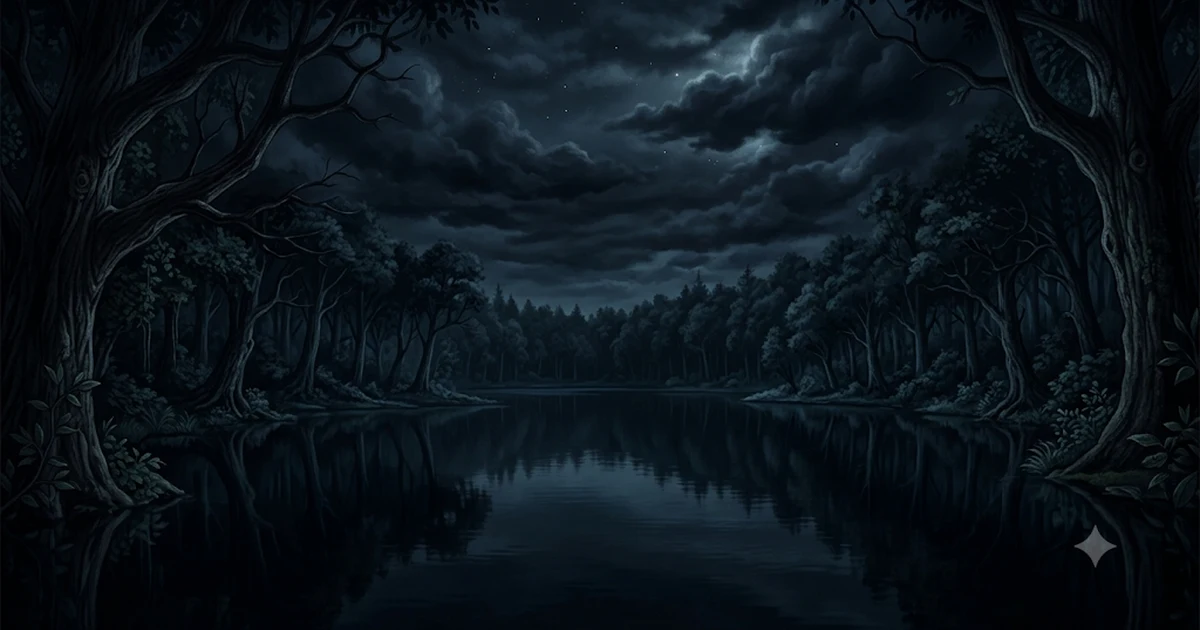
Here are some examples:
- The sky was as dark as black velvet.
- The forest was as dark as night.
- The clouds were as dark as thunderclouds before a storm.
- The lake looked as dark as ink.
- The road disappeared like a shadow beneath the trees.
- The night covered the town like a heavy blanket.
- The trees stood like dark figures in the fog.
- The clouds gathered like a warning in the distance.
These comparisons help readers picture the entire scene instead of focusing only on the word “dark.”
Dark Similes for Fear and Suspense
Darkness often creates uncertainty. That makes dark similes especially useful in horror and suspense writing.
For example:
Plain:
He was scared.
With a dark simile:
Fear followed him like a shadow.
Here are more examples:
- The silence felt like something waiting to strike.
- His footsteps echoed like a warning in the dark.
- The old house stood like a forgotten tomb.
- The hallway stretched like an endless tunnel.
- Her breath felt tight like a trap closing around her.
- The shadows moved like silent figures behind the walls.
- The door creaked like it was hiding a secret.
These comparisons leave some room for the reader’s imagination. That is often what makes suspense effective.
Dark Similes for Sadness and Loneliness
Dark imagery can also express emotions. You do not always need to say that someone is deeply sad or lonely. A comparison can show the feeling more naturally.
Examples include:
- Her sadness followed her like a shadow.
- His smile faded like the last light of evening.
- The empty house felt like a heart after loss.
- Her memories lingered like smoke in a closed room.
- His loneliness settled over him like a winter night.
- The silence between them was like a wall of ice.
- His grief stayed with him like a cloud that would not move.
These examples are not describing literal darkness. Instead, they use dark images to represent emotional pain.
Short Dark Similes for Everyday Writing
You do not always need a long or poetic comparison. Short similes can work well in simple writing and everyday descriptions.
- Dark like ink
- Black like coal
- Quiet like a grave
- Still like a shadow
- Cold like stone
- Heavy like night
- Silent like an empty street
- Black as midnight
For example:
The room was dark like ink.
His expression was cold like stone.
The street was quiet like an empty town.
Simple comparisons can make ordinary sentences more interesting without making them difficult to understand.
Creative Dark Similes for Storytelling
If you want your writing to sound more original, try creating comparisons that are less predictable.
- The night wrapped around her like a secret no one wanted to reveal.
- His thoughts drifted like ashes in the wind.
- The truth followed him like a shadow he could never escape.
- The darkness swallowed the road like deep water.
- Her fear grew like a storm behind closed doors.
- The memory returned like a ghost at midnight.
- The silence sat between them like an unopened letter.
- Hope disappeared like the last light before dawn.
These examples work because the comparison supports the feeling of the sentence. A creative simile should still be easy enough for the reader to understand.
Dark Similes for People and Appearance
Dark similes can describe physical features without simply repeating words such as black or very dark.
Hair
Her hair was as dark as a raven’s wing.
Eyes
His eyes were as dark as coal.
Clothing
The dress was as dark as midnight.
Skin or shadows
The figure looked dark like a shadow against the wall.
When describing people, choose comparisons that focus on the feature you actually want to highlight. Coal suggests a deep black color, while a raven’s wing can suggest a darker and slightly glossy appearance.
Dark Similes for Weather
Weather can quickly change the mood of a scene. Dark clouds, heavy rain, fog, and storms give you plenty of material for comparisons.
Examples:
- The clouds were as dark as thunderclouds.
- The sky looked like a storm was hiding behind it.
- The rain fell like tears against the window.
- The fog spread like a gray curtain across the road.
- The wind howled like a warning through the trees.
- The storm approached like a dark shadow over the town.
These comparisons are useful in stories, poems, and descriptive essays.
Dark Similes for Horror and Mystery
A horror scene becomes stronger when the description creates questions in the reader’s mind.
Compare these two sentences:
The basement was dark.
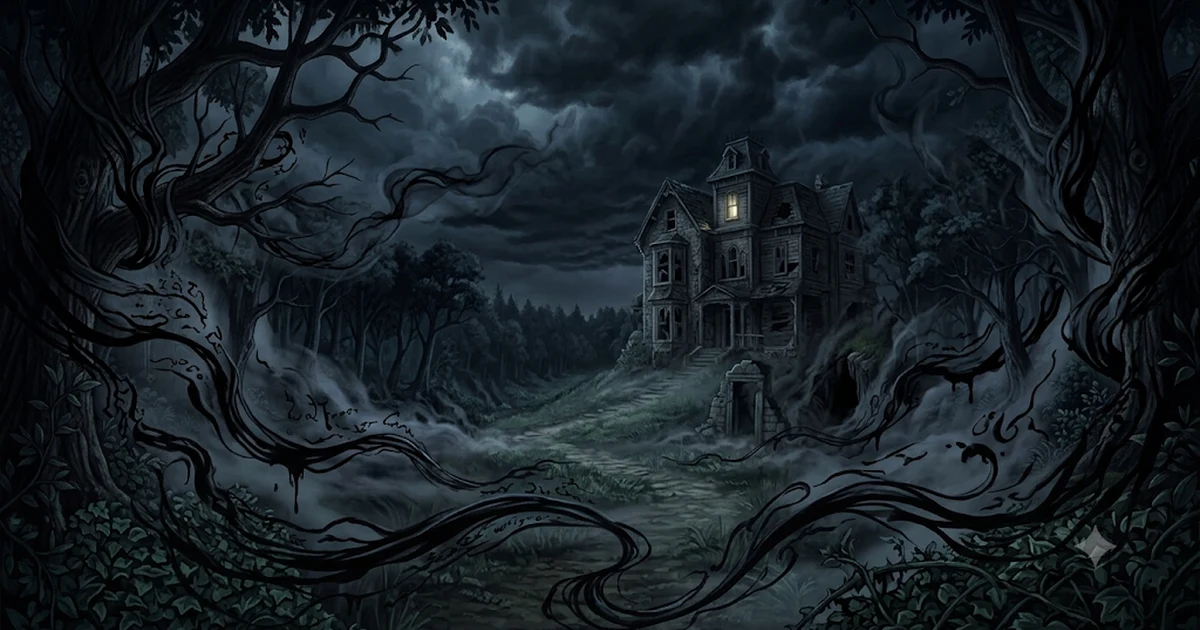
The basement was as dark as a tomb.
The second sentence creates a stronger mood. It makes the reader expect something unsettling.
More examples include:
- The basement was as dark as a tomb.
- The abandoned house stood like a dead tree in the fog.
- The hallway looked like a tunnel leading nowhere.
- Her whisper sounded like a secret from the darkness.
- The shadows gathered like strangers around a fire.
- The forest looked like a place forgotten by daylight.
Dark similes work especially well when you do not explain everything. Let the image create some of the mystery.
How Dark Similes Create Mood and Atmosphere
A simile can change the emotional effect of a sentence.
Consider:
The forest was quiet.
This tells us something about the forest.
Now consider:
The forest was as quiet as a forgotten grave.
This creates a completely different feeling. The reader may imagine loneliness, fear, or something mysterious.
Dark similes can create different moods.
Mystery
The path disappeared like a secret in the fog.
Fear
The house stood as dark as a tomb.
Loneliness
The empty street stretched like a forgotten road.
Sadness
Her smile faded like the last light before dawn.
Tension
The silence hung like a storm about to break.
The comparison you choose should match the emotion you want the reader to feel.
How to Use Like and As in Dark Similes
Most similes use like or as.
Use as when you directly compare a quality.
The room was as dark as a cave.
Her hair was as dark as coal.
Use like when you compare one thing to another.
The darkness spread like ink.
Fear followed him like a shadow.
Both forms are useful. The important thing is that the comparison sounds natural in the sentence.
How to Create Your Own Dark Similes
You can create a dark simile in four simple steps.
Step 1: Choose what you want to describe
Start with a plain sentence.
The hallway was dark.
Step 2: Choose a dark image
Think about things naturally connected with darkness.
You could choose:
- night
- midnight
- ink
- coal
- shadows
- caves
- tunnels
- storms
- moonless skies
- tombs
Step 3: Connect the ideas
Use “like” or “as.”
The hallway was as dark as a tunnel.
Step 4: Check the comparison
Ask yourself whether the image fits.
If you are describing black hair, “dark as coal” may work better than “dark as a dungeon.” If you are describing a frightening basement, “dark as a dungeon” creates a stronger mood.
How to Turn a Simple Sentence Into a Dark Simile
You can improve a plain sentence without changing its basic meaning.
Simple:
The road was dark.
Better:
The road was as dark as a moonless night.
Simple:
She felt lonely.
Better:
Her loneliness followed her like a shadow.
Simple:
The room was quiet.
Better:
The room was as quiet as a forgotten grave.
Simple:
The clouds looked threatening.
Better:
The clouds were as dark as thunderclouds before a storm.
The goal is not to decorate every sentence. A single strong simile can be more effective than several weak ones.
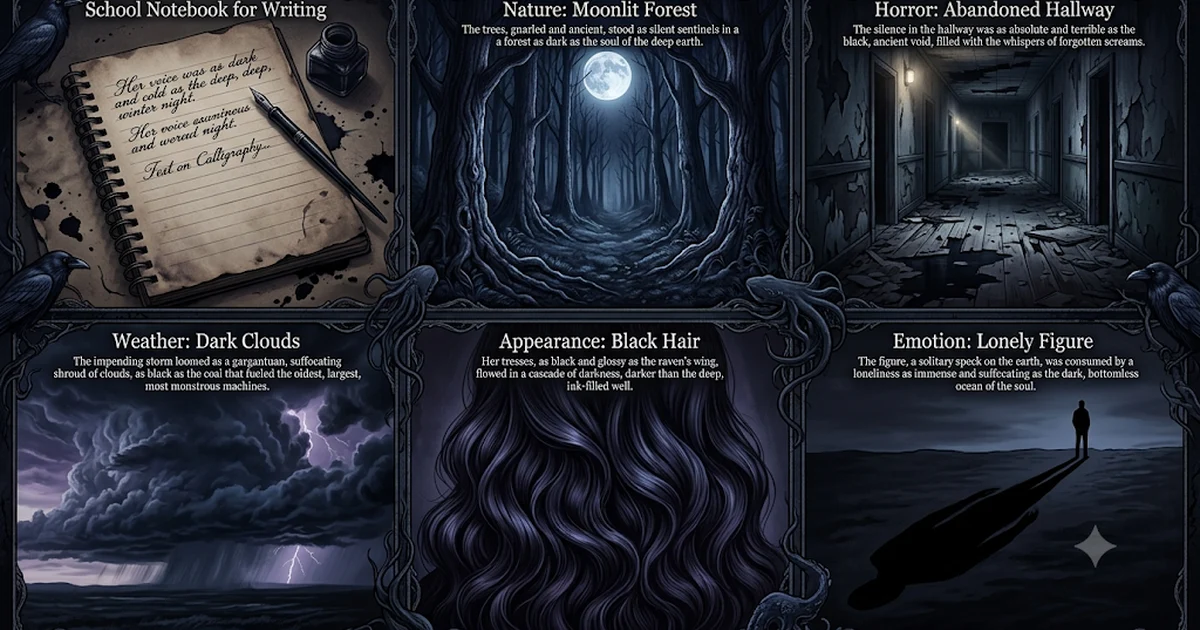
Best Dark Similes by Writing Purpose
Different types of writing call for different comparisons.
| Purpose | Useful Dark Simile |
| School writing | Dark as night |
| Horror | Dark as a tomb |
| Suspense | Like a shadow |
| Poetry | Dark as black velvet |
| Nature writing | Dark as thunderclouds |
| Describing hair | Dark as coal |
| Describing water | Dark as ink |
| Describing a road | Dark as a moonless night |
| Mystery | Like a secret in the darkness |
| Emotional writing | Like a shadow that never leaves |
This makes it easier to choose a simile that fits your purpose instead of using the same comparison every time.
Common Mistakes When Using Dark Similes
Dark similes can lose their effect when they are used without care.
Using too many similes
If every sentence contains a comparison, the writing can feel crowded. One strong simile is often enough.
Choosing an unrelated comparison
The image should make sense with the subject.
Repeating the same phrase
Using “dark as night” again and again makes the writing predictable.
Making every scene gloomy
Dark imagery should match the scene. Not every description needs a frightening or sad comparison.
Overexplaining the simile
A good image usually speaks for itself. You do not need several sentences explaining what the reader should feel.
Using a complicated image
If the reader has to stop and figure out the comparison, it may not be helping the sentence.
Practice Exercise: Complete These Dark Similes
Try completing each sentence with your own comparison.
- The haunted house was as ______ as ______.
- The alley behind the old bakery was as ______ as ______.
- The movie theater without any lights was as ______ as ______.
- Grandma’s attic was as ______ as ______.
- The abandoned train tunnel was as ______ as ______.
- The forest path at night was as ______ as ______.
- The basement during the power outage was as ______ as ______.
- The stormy sky was as ______ as ______.
- The deep cave was as ______ as ______.
- The bedroom with blackout curtains was as ______ as ______.
Possible Answers
- Dark as a dungeon
- Dark as night
- Dark as a cave
- Dark as a cellar
- Dark as midnight
- Dark as shadows
- Dark as pitch
- Dark as thunderclouds
- Dark as the abyss
- Dark as a moonless night
There is not always one correct answer. If your comparison is clear and fits the sentence, it can work.
Similes for Dark vs. Ordinary Descriptions
An ordinary description tells the reader what something is. A simile gives the reader an image to picture.
| Ordinary Description | Simile |
| The room was dark. | The room was as dark as a cave. |
| The street was empty. | The street was empty like a forgotten road. |
| She was sad. | Her sadness followed her like a shadow. |
| The sky was dark. | The sky was as dark as ink. |
| The hallway was frightening. | The hallway stretched like an endless tunnel. |
The main benefit is not simply adding more words. The simile adds an image, mood, or emotional meaning.
When Should You Use Dark Similes?
Dark similes are useful when you want to:
- Describe a very dark place
- Describe a black or deep color
- Create a mysterious atmosphere
- Build fear or suspense
- Show sadness or loneliness
- Describe nighttime scenes
- Add imagery to poetry
- Make a school essay more descriptive
- Give a story a stronger emotional mood
You should avoid them when the comparison does not add anything useful or when a direct sentence would be clearer.
What Is a Simile for Very Dark?
If you want to describe something that is extremely dark, you can use:
- Dark as pitch
- Dark as midnight
- Dark as a moonless night
- Dark as a cave
- Dark as a tomb
- Dark as ink
- Dark as night
For example:
The basement was as dark as pitch.
This tells the reader that there was almost no light at all.
What Is a Simile for Dark and Scary?
For a dark and frightening scene, comparisons such as “dark as a tomb,” “dark as a dungeon,” or “like a shadow waiting nearby” can work well.
For example:
The abandoned house was as dark as a tomb.
This creates both darkness and a sense of danger.
Final Thoughts
Similes for dark can turn a plain description into something readers can see and feel. Instead of simply saying that a room, road, forest, or sky is dark, you can compare it with something familiar such as night, ink, coal, a cave, or a moonless sky.
Dark similes can also go beyond literal darkness. They can describe fear, sadness, loneliness, mystery, and tension. A feeling can follow someone like a shadow, while hope can disappear like the last light before dawn.
The key is to choose a comparison that fits the subject and the mood. You do not need a complicated phrase to make your writing powerful. A simple and natural simile can often do the job better.
With practice, you can create your own similes for dark that make stories, poems, essays, and everyday descriptions more vivid and memorable.
FAQs About Dark Similes
1. What is a dark simile?
A dark simile compares something with a dark, gloomy, mysterious, or frightening image using words such as “like” or “as.” For example, “The room was as dark as a cave.”
2. What is a simile for darkness?
A simile for darkness compares darkness with something familiar. Examples include “dark as night,” “dark as ink,” “dark as midnight,” and “dark as a moonless night.”
3. What is the most common simile for dark?
“Dark as night” is one of the most familiar and easiest similes for dark. It is simple enough for everyday writing and school assignments.
4. What is a simile for very dark?
Good choices include “dark as pitch,” “dark as a cave,” “dark as midnight,” and “dark as a moonless night.”
5. Can dark similes describe emotions?
Yes. Dark similes can describe sadness, fear, loneliness, anger, and uncertainty. For example, “His loneliness followed him like a shadow.”
6. Are dark similes only used in horror writing?
No. They can be used in poetry, stories, essays, school writing, and everyday descriptions. They are useful whenever you want to create a serious, mysterious, or emotional mood.
7. How do I create my own dark simile?
Choose the thing you want to describe, pick a dark image that fits it, and connect the two with “like” or “as.” For example, “The lake was as dark as ink.”
8. What makes a dark simile effective?
A good dark simile is clear, natural, relevant, and easy to picture. It should add something to the sentence instead of simply making it longer.
9. What is a simple dark simile for students?
“The cave was as dark as night” is a simple example. It clearly shows how a simile compares one thing with another using “as.”
10. Can I use dark similes in everyday conversation?
Yes. Short comparisons such as “dark as night,” “dark as ink,” and “quiet like a grave” can be used in casual conversation when they fit the situation.
11. What is a dark simile for fear?
“Fear followed him like a shadow” is a simple dark simile for fear. It suggests that the feeling stays close and is difficult to escape.
12. What is a dark simile for sadness?
“Her sadness followed her like a shadow” is one natural example. It shows sadness as something that remains with the person.
