
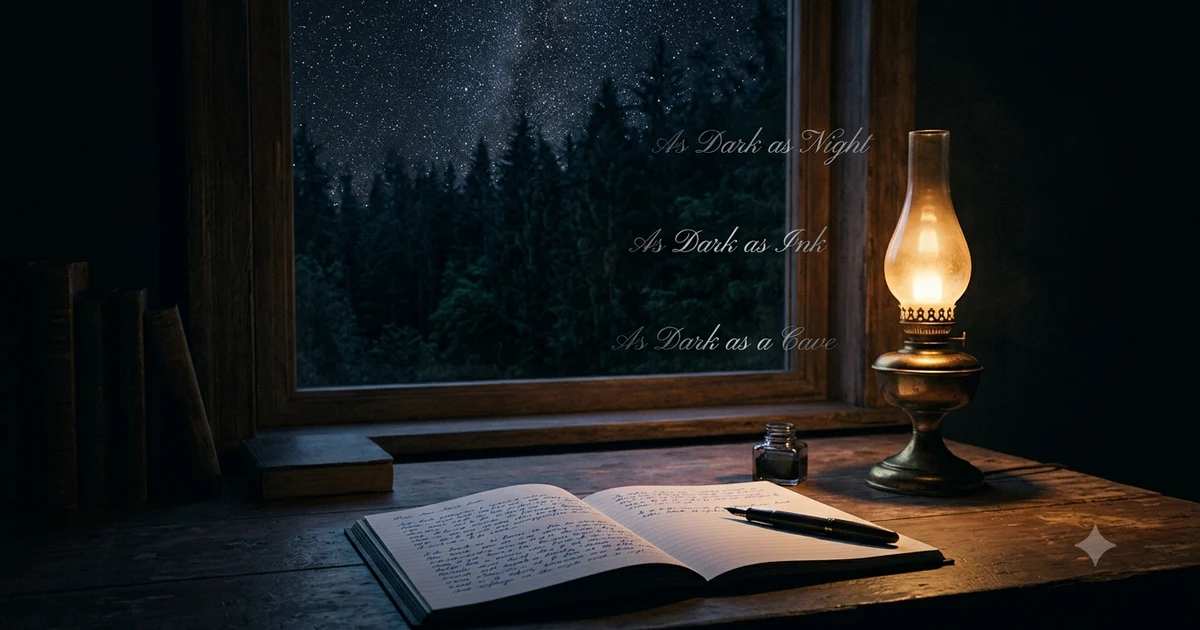
A dark as simile compares a person, place, object, or feeling with something dark by using the words “as” or “like.” These comparisons make writing more descriptive by helping readers picture a scene or emotion instantly. Instead of simply saying “The cave was dark,” you can write “The cave was as dark as a moonless night.” The second sentence creates a much stronger image. Dark similes are widely used in stories, poems, speeches, and everyday conversations because they add depth, mystery, and emotion while keeping the writing simple and engaging.
Introduction
Good writing helps readers see a scene instead of simply reading about it. One of the easiest ways to achieve this is by using similes. A well-chosen simile turns an ordinary sentence into something memorable by comparing one thing with another using the words as or like.
Darkness is one of the most powerful ideas writers use in descriptions. It can represent mystery, fear, sadness, danger, peace, or even beauty. Instead of writing “The room was dark,” you can say “The room was as dark as a cave.” That small change allows readers to imagine the scene much more clearly.
Dark similes are not limited to horror stories. They appear in novels, poetry, school essays, movie scripts, speeches, and everyday conversations. They help describe people, places, emotions, weather, and nature in a way that feels natural and vivid.
Whether you are a student learning figurative language, a teacher looking for classroom examples, or a writer searching for creative inspiration, understanding dark similes will improve your descriptive writing.
In this guide, you’ll discover what dark similes are, why writers use them, more than 30 practical examples with meanings, tips for creating your own comparisons, common mistakes to avoid, and plenty of ideas to make your writing stronger.
What Is a Dark Simile?
A dark simile is a figure of speech that compares something to darkness using the words as or like. The comparison helps readers understand how dark, mysterious, frightening, or intense something appears.
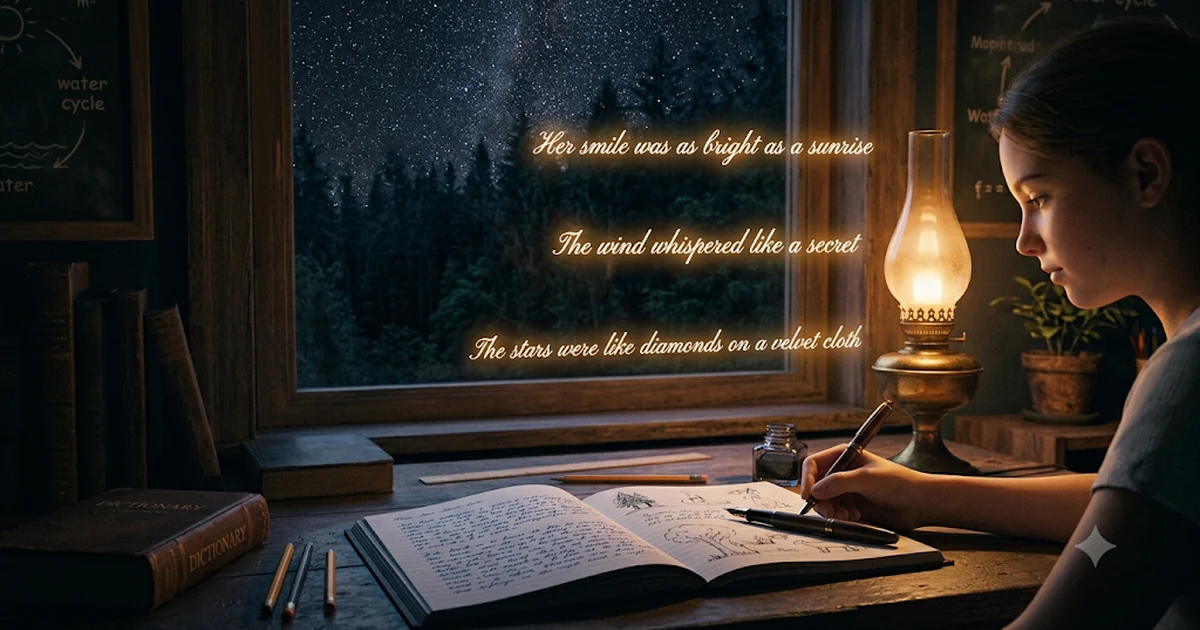
Instead of giving a plain description, a simile creates a picture in the reader’s mind.
For example, compare these two sentences.
Without a simile
The hallway was dark.
With a simile
The hallway was as dark as a tunnel.
The second sentence immediately creates a clearer image because most people understand how little light exists inside a tunnel.
Dark similes can describe many different things, including:
- Places
- People
- Weather
- Objects
- Emotions
- Nature
- Night scenes
Simple Examples
- The room was as dark as a cave.
- His hair was as dark as coal.
- The lake looked as dark as ink.
- The sky became as dark as thunderclouds.
- Her dress was as dark as velvet.
- The tunnel felt as dark as midnight.
Each comparison makes the description more vivid without making it difficult to understand.
Dark Simile vs. Dark Metaphor
Many people confuse similes with metaphors because both compare two different things. However, they work differently.
| Feature | Dark Simile | Dark Metaphor |
|---|---|---|
| Uses as or like | ✅ Yes | ❌ No |
| Makes a direct comparison | ❌ No | ✅ Yes |
| Easier for beginners | ✅ Yes | Sometimes |
| Creates vivid imagery | ✅ Yes | ✅ Yes |
Examples
Dark Simile
The forest was as dark as midnight.
Dark Metaphor
The forest was a blanket of darkness.
Both describe the same scene, but the simile uses as, while the metaphor makes the comparison directly.
Learning the difference helps you choose the right figurative language for your writing.
Why Writers Use Dark Similes
Dark similes do much more than describe the absence of light. They create atmosphere, build emotion, and help readers experience a scene through imagination.
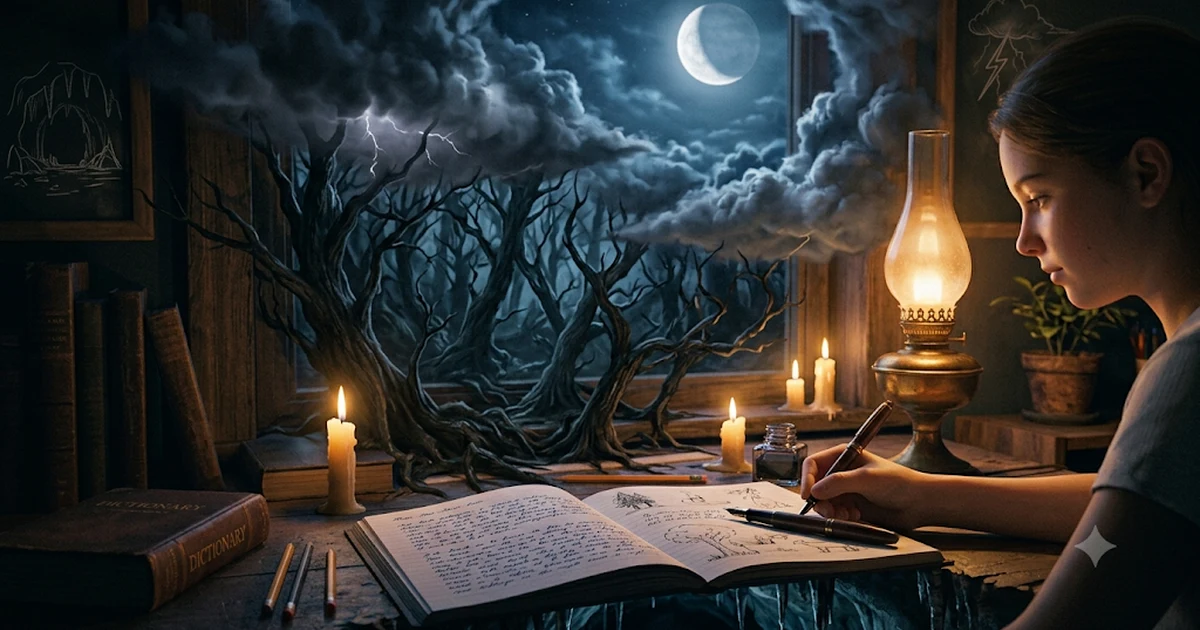
Professional writers often use dark similes because they instantly improve weak descriptions without adding unnecessary words.
Dark similes help writers:
- Create mystery.
- Build suspense.
- Show fear naturally.
- Describe sadness and loneliness.
- Make settings feel realistic.
- Add emotion to characters.
- Improve storytelling.
- Help readers visualize scenes.
- Make poems sound more expressive.
- Keep descriptions memorable.
Example
Plain sentence
The forest was scary.
Better sentence
The forest was as dark as a moonless night, and every sound echoed between the trees.
The second sentence immediately creates tension because readers can imagine standing in complete darkness.
Another Example
Plain
The room was quiet.
Better
The room was as dark as a forgotten cellar, making every small noise seem louder.
Small changes like these make ordinary writing much more engaging.
Best Dark as Simile Examples
Here are some of the most useful dark similes with their meanings and example sentences.
1. As Dark as Night
Meaning: Extremely dark with little or no light.
Example:
The abandoned cabin was as dark as night, making every sound seem frightening.
2. As Dark as Coal
Meaning: Deep black in color.
Example:
His eyes were as dark as coal, reflecting determination and mystery.
3. As Dark as Ink
Meaning: Rich, deep darkness.
Example:
The lake looked as dark as ink beneath the cloudy evening sky.
4. As Dark as a Cave
Meaning: Completely without light.
Example:
The basement was as dark as a cave after the electricity went out.
5. As Dark as Midnight
Meaning: Pitch black.
Example:
The empty highway became as dark as midnight once the streetlights disappeared.
6. As Dark as Thunderclouds
Meaning: Dark, heavy, and threatening.
Example:
His face grew as dark as thunderclouds when he heard the bad news.
7. As Dark as Shadows
Meaning: Hidden, dim, or difficult to see.
Example:
The hallway remained as dark as shadows, even during the afternoon.
8. As Dark as Obsidian
Meaning: Deep black with a smooth, shiny appearance.
Example:
The polished stone was as dark as obsidian.
9. As Dark as a Moonless Night
Meaning: Completely without natural light.
Example:
The beach looked as dark as a moonless night, with only the sound of crashing waves nearby.
10. As Dark as a Dungeon
Meaning: Extremely dark and gloomy.
Example:
The old castle felt as dark as a dungeon, hiding centuries of secrets.
11. As Dark as Velvet
Meaning: Soft, rich, and beautifully dark.
Example:
The evening sky spread across the horizon as dark as velvet.
12. As Dark as a Raven’s Wing
Meaning: Deep black with a glossy appearance.
Example:
Her long hair was as dark as a raven’s wing, shining in the morning sunlight.
13. As Dark as a Tunnel
Meaning: Completely enclosed and lacking light.
Example:
The underground passage was as dark as a tunnel, forcing us to rely on flashlights.
14. As Dark as a Cellar
Meaning: Dim, enclosed, and difficult to see.
Example:
The storage room remained as dark as a cellar, even during the day.
15. As Dark as a Tomb
Meaning: Silent, eerie, and completely dark.
Example:
The abandoned church felt as dark as a tomb, sending chills down our spines.
16. As Dark as the Abyss
Meaning: Deep, endless darkness.
Example:
The ocean beneath the ship looked as dark as the abyss, disappearing into the distance.
17. As Dark as Tar
Meaning: Thick, rich blackness.
Example:
The freshly brewed coffee was as dark as tar.
18. As Dark as a Forest at Night
Meaning: Dense darkness beneath trees.
Example:
The hiking trail became as dark as a forest at night, making every step uncertain.
19. As Dark as a Coal Mine
Meaning: Completely without light.
Example:
The abandoned warehouse was as dark as a coal mine, making it impossible to see ahead.
20. As Dark as a Winter Night
Meaning: Cold, long, and deeply dark.
Example:
The village looked as dark as a winter night after the heavy snowfall.
21. As Dark as Charcoal
Meaning: Deep black with a slightly rough appearance.
Example:
The burnt wood was as dark as charcoal after the campfire.
22. As Dark as Soot
Meaning: Covered in a dusty black color.
Example:
The chimney walls were as dark as soot from years of smoke.
23. As Dark as Lava Rock
Meaning: Naturally black and rugged.
Example:
The volcanic stones were as dark as lava rock, standing out against the sand.
24. As Dark as Wet Asphalt
Meaning: Smooth, reflective darkness.
Example:
The road became as dark as wet asphalt after the evening rain.
25. As Dark as Smoke Before Dawn
Meaning: Thick and shadowy.
Example:
The valley looked as dark as smoke before dawn, hiding everything below.
Quick Comparison Table
| Simile | Best Used For |
|---|---|
| As dark as night | General darkness |
| As dark as coal | Hair, eyes, objects |
| As dark as ink | Water and reflections |
| As dark as a cave | Rooms and enclosed spaces |
| As dark as midnight | Outdoor night scenes |
| As dark as thunderclouds | Weather and emotions |
| As dark as velvet | Beautiful descriptions |
| As dark as a tomb | Horror stories |
| As dark as the abyss | Mystery and suspense |
| As dark as a moonless night | Complete darkness |
| As dark as charcoal | Burnt objects |
| As dark as soot | Dusty black surfaces |
| As dark as wet asphalt | Roads after rain |
Dark Similes for Different Types of Writing
Not every piece of writing uses dark similes in the same way. The best comparison depends on your purpose and audience.
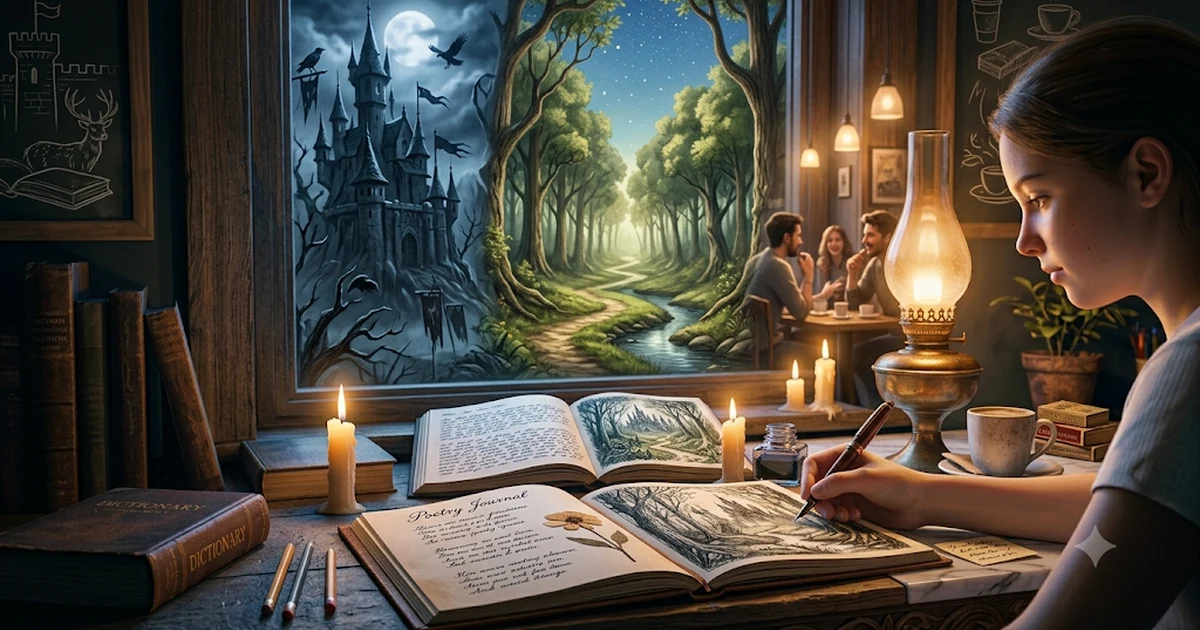
For Horror Stories
Dark similes help build suspense and create an unsettling atmosphere.
Examples:
- As dark as a forgotten grave
- As dark as a haunted tunnel
- As dark as a silent crypt
- As dark as a cursed castle
- As dark as an abandoned prison
For Nature Writing
These comparisons help readers picture landscapes and changing weather.
Examples:
- As dark as a moonless forest
- As dark as storm clouds
- As dark as the evening sky
- As dark as a mountain cave
- As dark as the deep ocean
For Poetry
Poets often use symbolic comparisons instead of literal ones.
Examples:
- As dark as fading dreams
- As dark as endless silence
- As dark as forgotten memories
- As dark as hidden sorrow
- As dark as a lonely winter.
Dark Similes for Everyday Conversation
Dark similes are not only useful in stories and poems. People also use them in daily conversations to describe places, objects, weather, and even emotions. These comparisons sound natural because they are easy to understand.
At Home
- The basement is as dark as a cave.
- My bedroom was as dark as night after I closed the curtains.
- The attic looked as dark as a cellar.
At School
- The science lab became as dark as midnight during the power outage.
- The empty hallway felt as dark as a tunnel.
During Travel
- The country road was as dark as a moonless night.
- The train tunnel looked as dark as the abyss.
Talking About Weather
- The sky turned as dark as thunderclouds before the rain.
- The evening became as dark as velvet.
Describing Objects
- His jacket was as dark as coal.
- The coffee looked as dark as tar.
- Her hair was as dark as a raven’s wing.
Simple similes like these make everyday speech more colorful without sounding unnatural.
Dark Similes in Literature
Dark similes have been used in literature for centuries. They help writers create atmosphere, reveal emotions, and make scenes unforgettable.
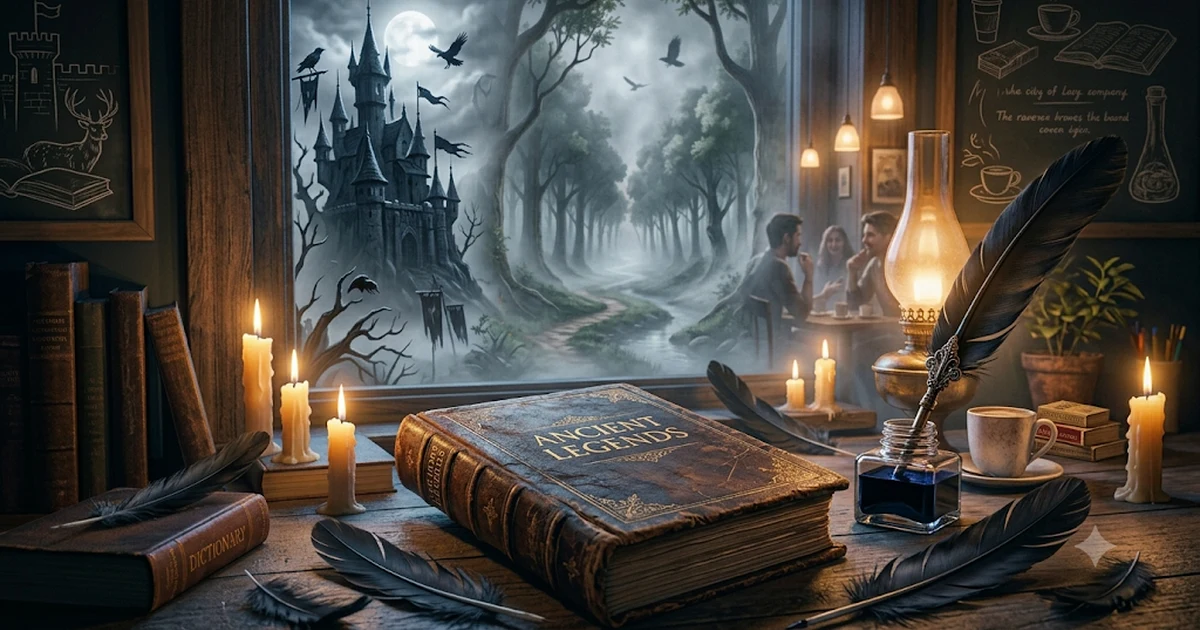
Gothic novels often describe castles, forests, and old buildings using dark comparisons to create suspense. Horror writers use them to make readers feel uneasy before anything frightening even happens.
Poets also rely on dark similes to express emotions such as grief, loneliness, and uncertainty. Instead of directly saying a character feels sad, they compare that sadness to darkness, storms, or endless nights.
For example, a writer might describe a lonely road as as dark as forgotten memories or a silent house as as dark as a tomb. These comparisons give readers something they can picture instead of simply telling them how they should feel.
Dark similes remain popular because they combine imagination with simple language, making descriptions both powerful and memorable.
Dark Similes for Students
Students frequently use similes in school assignments, essays, speeches, and creative writing activities. Learning a few simple dark similes can improve descriptive writing without making sentences too complicated.
Here are some classroom-friendly examples:
- The classroom became as dark as night during the blackout.
- The cave was as dark as ink.
- The library hallway felt as dark as a tunnel.
- The sky grew as dark as storm clouds.
- The old house looked as dark as a dungeon.
- The basement was as dark as a cellar.
- The forest became as dark as midnight.
- The road appeared as dark as coal after the rain.
- The cave entrance looked as dark as the abyss.
- The room remained as dark as a moonless night.
Teachers often encourage students to use similes because they make stories easier to imagine and more enjoyable to read.
Dark Similes for Kids
Children learn figurative language best through simple examples. These dark similes use familiar objects and places that young learners can easily picture.
- As dark as a cave
- As dark as night
- As dark as a closed box
- As dark as a tunnel
- As dark as black paint
- As dark as a bat cave
- As dark as charcoal
- As dark as a crow’s feathers
- As dark as the evening sky
- As dark as a moonless night
These examples are perfect for elementary school writing exercises because they are easy to understand and remember.
Creative Dark Similes
Common similes work well, but original comparisons make writing stand out. The key is to keep them clear while adding a fresh image.
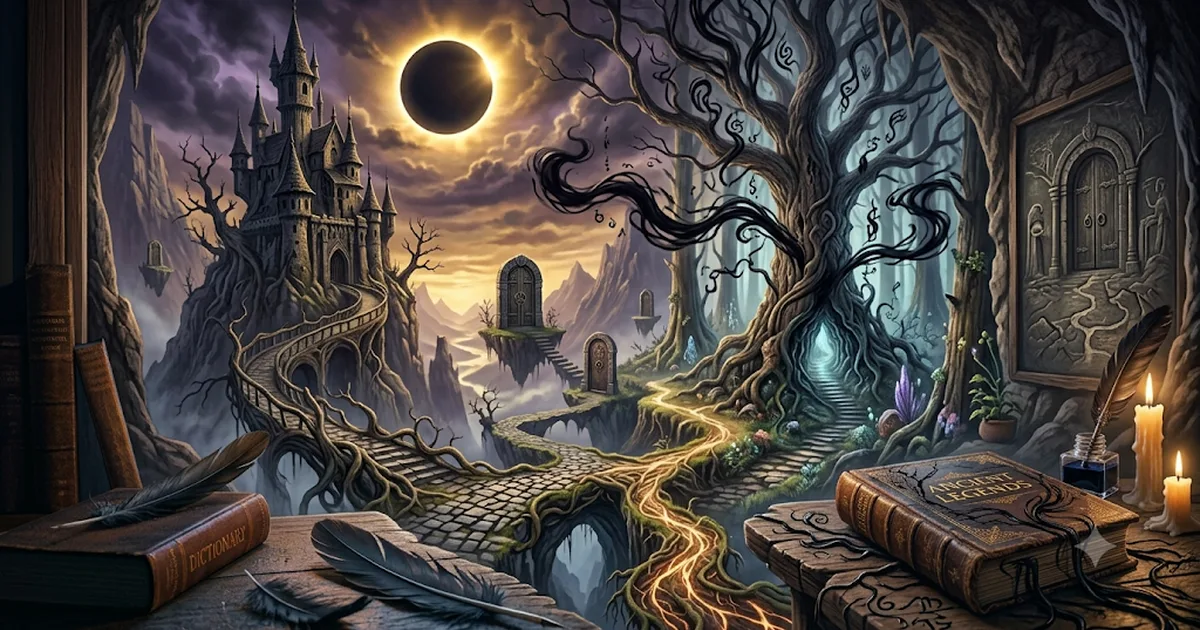
Here are some creative ideas:
- As dark as a forgotten secret
- As dark as an empty road after midnight
- As dark as silent memories
- As dark as a locked room
- As dark as buried treasure
- As dark as the last page of an unwritten story
- As dark as a sleeping volcano
- As dark as smoke before dawn
- As dark as an unopened chest
- As dark as the bottom of the ocean
- As dark as burnt wood
- As dark as an eclipse
- As dark as ancient stone
- As dark as hidden caves
- As dark as a sealed vault
Original similes should still be easy to picture. If readers have to stop and think too hard about the comparison, it may be too complicated.
Strong vs. Weak Dark Similes
Not every simile has the same impact. Strong similes are clear, familiar, and easy to imagine, while weak similes often sound confusing or overly dramatic.
| Weak Simile | Strong Simile |
|---|---|
| Very dark | As dark as a cave |
| Extremely black | As dark as coal |
| Really scary | As dark as a forgotten tunnel |
| Very gloomy | As dark as thunderclouds |
| Completely dark | As dark as a moonless night |
When choosing a simile, always ask yourself whether your reader can picture it immediately.
When to Use Dark Similes
Dark similes are most effective when you want to create a specific mood or atmosphere.
They work well for:
- Horror stories
- Mystery novels
- Adventure stories
- Poetry
- Creative writing
- Fantasy fiction
- Personal narratives
- Nature descriptions
They also help describe emotions such as fear, loneliness, sadness, uncertainty, and suspense.
When to Avoid Dark Similes
Although dark similes are useful, they are not appropriate for every situation.
Avoid using them when:
- Writing cheerful children’s stories.
- Creating lighthearted comedy.
- Writing formal business reports.
- Preparing academic or scientific papers.
- Describing joyful celebrations.
Using too many dark comparisons in happy scenes can make the writing feel confusing or emotionally inconsistent.
Common Mistakes to Avoid
Even experienced writers sometimes misuse similes.
Using the Same Simile Too Often
Repeating as dark as night throughout an article becomes boring. Mix different comparisons instead.
Making Comparisons Too Complex
Poor example:
As dark as the mysterious endless forgotten shadow of impossible nightmares.
Better example:
As dark as a cave.
Simple writing is usually stronger.
Mixing Different Images
Incorrect:
The room was as dark as coal and as loud as sunshine.
Use one clear comparison at a time.
Forcing Similes Everywhere
Not every sentence needs a simile. Too many comparisons slow down the writing.
Practice Exercise
Complete each sentence using your own dark simile.
- The hallway was as dark as __________.
- The cave remained as dark as __________.
- The forest looked as dark as __________.
- His eyes were as dark as __________.
- The river appeared as dark as __________.
- The sky became as dark as __________.
- The basement felt as dark as __________.
- The old church stood as dark as __________.
- The tunnel looked as dark as __________.
- The room stayed as dark as __________.
Sample Answers
- a cave
- ink
- midnight
- coal
- velvet
- thunderclouds
- a cellar
- a tomb
- the abyss
- a moonless night
Try creating five original dark similes of your own. The more you practice, the more natural descriptive writing will become.
Tips for Using Dark Similes Effectively
Keep these simple tips in mind whenever you write.
- Choose familiar comparisons.
- Match the simile to the mood.
- Keep sentences natural.
- Avoid repeating the same comparison.
- Read your writing aloud.
- Mix classic and original similes.
- Use similes only where they improve the description.
The best similes help readers imagine a scene without drawing attention away from the story.
Conclusion
Dark similes are one of the easiest ways to make writing more vivid, expressive, and memorable. Whether you are describing a mysterious forest, a silent cave, a gloomy room, or a character’s emotions, the right comparison helps readers picture the scene instantly.
Classic similes such as as dark as night, as dark as a cave, and as dark as coal remain popular because they are simple and effective. At the same time, creating your own original comparisons can make your writing unique and engaging.
Practice using different dark similes in stories, essays, poems, and conversations. Over time, you will learn which comparisons fit different situations naturally, making your writing stronger and more enjoyable to read.
Frequently Asked Questions
What is a dark simile?
A dark simile compares something with darkness using the words as or like.
What is the most common dark simile?
As dark as night is the most common example.
Can dark similes describe emotions?
Yes. They often describe fear, sadness, loneliness, mystery, and anger.
Are dark similes only used in horror stories?
No. They also appear in poetry, novels, essays, speeches, and everyday conversations.
What does “as dark as coal” mean?
It describes something that is extremely black in color.
Can children learn dark similes?
Yes. Simple examples like as dark as a cave are suitable for young learners.
How do I write my own dark simile?
Choose a familiar dark object or place and compare it using as or like.
What is the difference between a simile and a metaphor?
A simile uses as or like, while a metaphor makes a direct comparison.
Can I use dark similes in essays?
Yes. They work well in descriptive and creative essays.
Which dark simile best describes complete darkness?
As dark as a moonless night and as dark as a cave are two of the strongest and most natural choices.
Is “as dark as ink” a good simile?
Yes. It is commonly used to describe deep, rich darkness.
Can I invent my own dark similes?
Absolutely. Original similes can make your writing more unique, as long as the comparison is easy for readers to understand.
