
Quick Answer
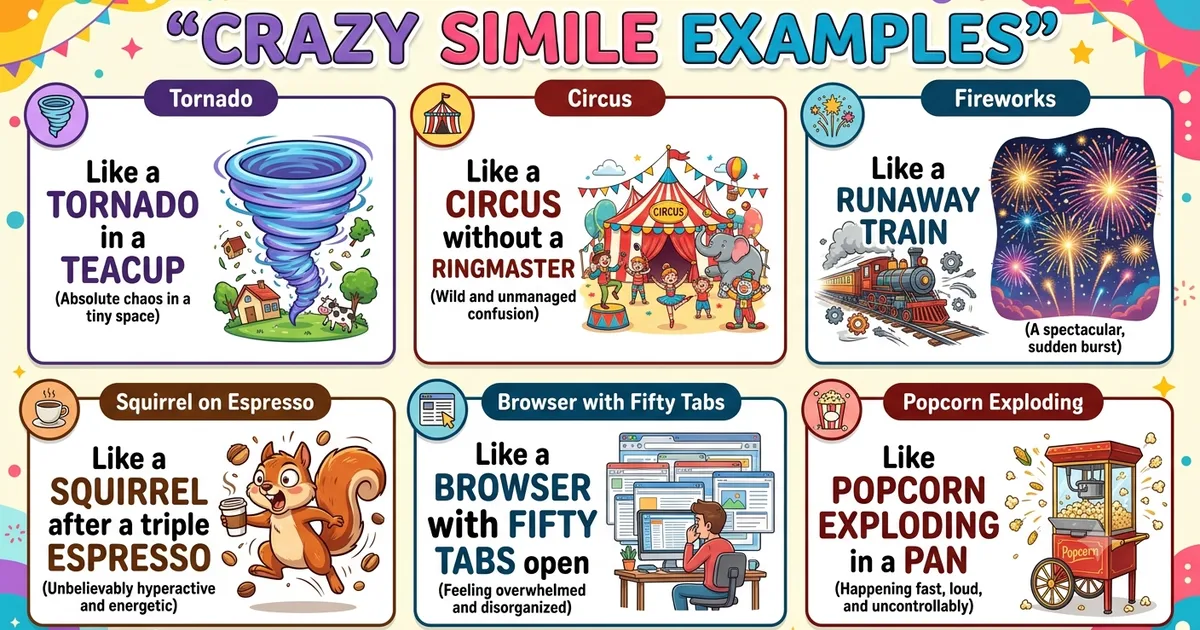
A crazy simile is a comparison that uses like or as in a surprising, unusual, or imaginative way. Unlike ordinary similes, crazy similes create stronger mental images and make writing more memorable. For example, saying “He ran like a squirrel on espresso” paints a much more vivid picture than simply saying “He ran very fast.” Writers use crazy similes to add humor, emotion, creativity, and energy to their descriptions.
Introduction
Some sentences feel ordinary. Others jump off the page and stay in your mind long after you read them. One reason for this difference is the use of vivid figurative language.
Among the most powerful tools writers use is the simile. A simile compares two things using words such as like or as. When that comparison becomes unexpected, imaginative, or slightly exaggerated, it turns into what many people call a crazy simile.
Crazy similes help readers see familiar situations in a fresh way. They can make a story funnier, a character more memorable, or an emotion more powerful. Whether you are writing a story, essay, blog post, speech, or social media caption, creative similes can make your words stand out.
In this guide, you will learn what crazy similes are, why they work so well, how to create your own, and dozens of examples you can use in your writing.
What Is a Crazy Simile?
A crazy simile is a comparison that feels surprising or unusual while still making sense.
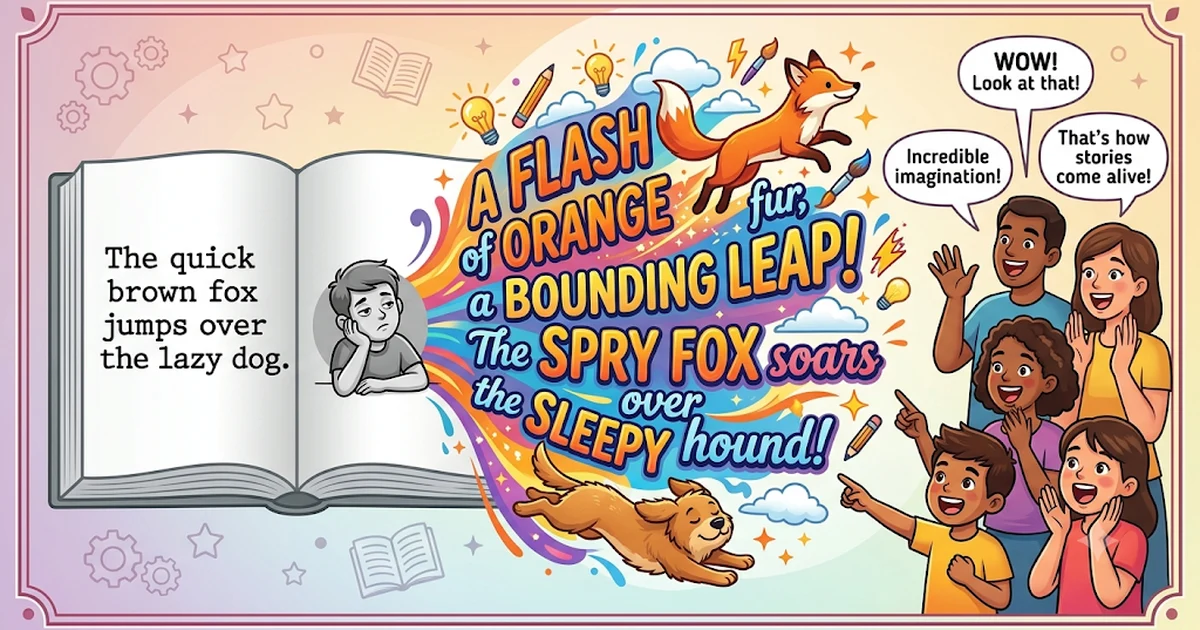
The purpose is not to confuse readers. Instead, it is to create a stronger image than a traditional comparison.
Examples
- He ran like a squirrel on espresso.
- Her thoughts bounced around like popcorn in a hot pan.
- The room felt as quiet as a paused video.
- My brain was like a browser with fifty tabs open.
- She smiled like she had discovered a secret treasure map.
Although these comparisons sound unusual, they instantly create clear mental pictures.
Why Crazy Similes Grab Attention
People naturally notice things that are different. A predictable comparison may be understood quickly, but a creative one sticks in the reader’s mind.
Crazy similes work because they:
- Create vivid mental images
- Add personality to writing
- Make descriptions more memorable
- Add humor and emotion
- Help readers connect with a scene
Instead of saying someone was energetic, you could say:
“He was as energetic as a firecracker on New Year’s Eve.”
The second sentence is much more engaging.
Most Popular Crazy Simile Examples
As Crazy as a Loon
Meaning: Extremely eccentric or irrational.
Example: After staying awake for two days, he was as crazy as a loon.
Like a Tornado
Meaning: Chaotic and out of control.
Example: The classroom looked like a tornado had swept through it.
Crazy Like a Fox
Meaning: Appearing foolish but actually clever.
Example: Everyone laughed at her idea, but she was crazy like a fox.
As Nutty as a Fruitcake
Meaning: Extremely strange or quirky.
Example: My uncle is as nutty as a fruitcake, but everyone enjoys his stories.
Like a Circus
Meaning: Disorderly and chaotic.
Example: The office became like a circus before the deadline.
Crazy as a Bag of Cats
Meaning: Wild and unpredictable.
Example: The birthday party was as crazy as a bag of cats.
Like a Madhouse
Meaning: Noisy and frenzied.
Example: The shopping mall was like a madhouse during the holiday sale.
Like a Runaway Train
Meaning: Moving beyond control.
Example: The project became like a runaway train once problems started piling up.
Crazy as a Firecracker
Meaning: Highly energetic and explosive.
Example: The crowd was as crazy as a firecracker when the band appeared.
Like a Jack-in-the-Box
Meaning: Unexpected and surprising.
Example: His sudden question popped up like a jack-in-the-box.
Original Crazy Similes for Modern Writing
Modern readers often relate to technology and everyday experiences. These fresh similes feel current and creative.
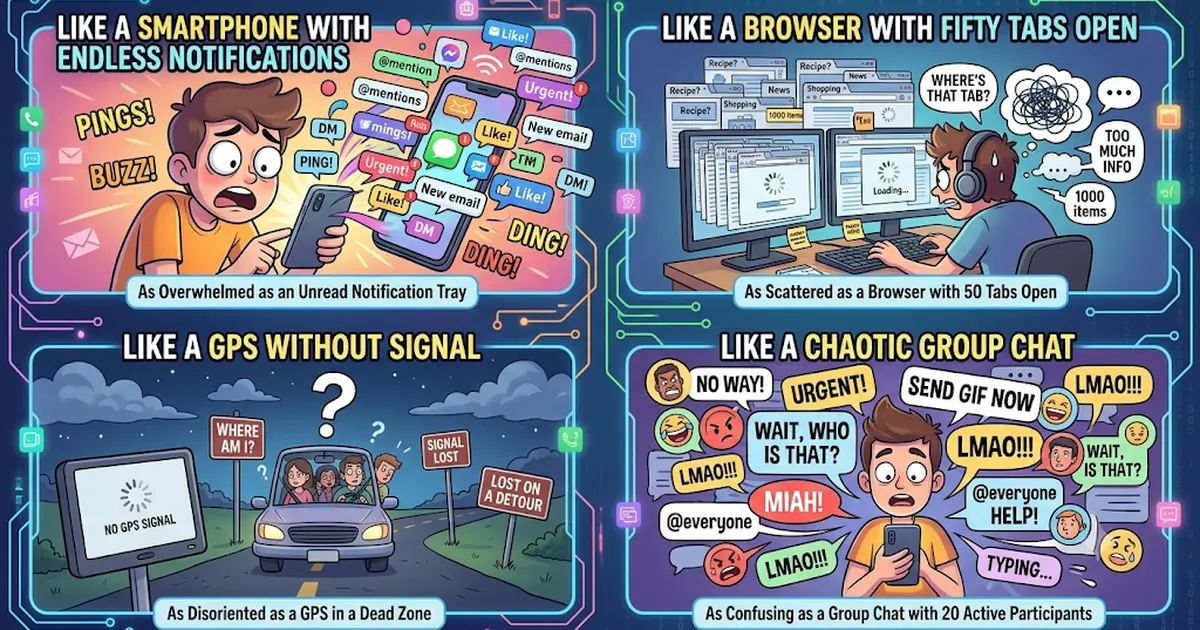
- As restless as a phone with endless notifications
- Like a browser with fifty tabs open
- As unpredictable as a viral internet trend
- Like a GPS with no signal
- As chaotic as a group chat before a deadline
- Like a blender full of fireworks
- As noisy as a stadium during overtime
- Like popcorn exploding in every direction
- As jumpy as a cat near a cucumber
- Like a laptop running twenty programs at once
- As energetic as a toddler after birthday cake
- Like a rocket searching for a launchpad
- As confusing as a maze with moving walls
- Like a shopping cart racing downhill
- As wild as a squirrel fueled by energy drinks
Funny Crazy Similes
Humorous similes make writing entertaining and memorable.
Examples
- He danced like a chicken with WiFi.
- She laughed like a cartoon villain.
- I ate like a vacuum cleaner.
- He snored like a chainsaw in a tunnel.
- The kids ran around like popcorn in a microwave.
These comparisons are exaggerated, but that is what makes them effective.
Crazy Similes for Emotions
Strong emotions become more powerful when paired with vivid imagery.
Happiness
- Joy exploded like fireworks across the sky.
- She smiled like sunshine breaking through storm clouds.
Fear
- Fear crawled through me like ice water.
- My heart pounded like a drum in a parade.
Anger
- He was as angry as a storm trapped in a bottle.
- Her words hit like thunder.
Nervousness
- I felt like a balloon ready to burst.
- My stomach twisted like a roller coaster track.
Crazy Similes for Storytelling
Storytelling relies on imagery. Crazy similes help readers picture scenes more clearly.
Examples
- The forest stood like a crowd of silent giants.
- His shadow followed him like a secret.
- The sky cracked like broken glass.
- The wind howled like a hungry wolf.
- The city lights sparkled like scattered diamonds.
These comparisons make scenes feel more vivid and immersive.
Crazy Similes for Speed and Action
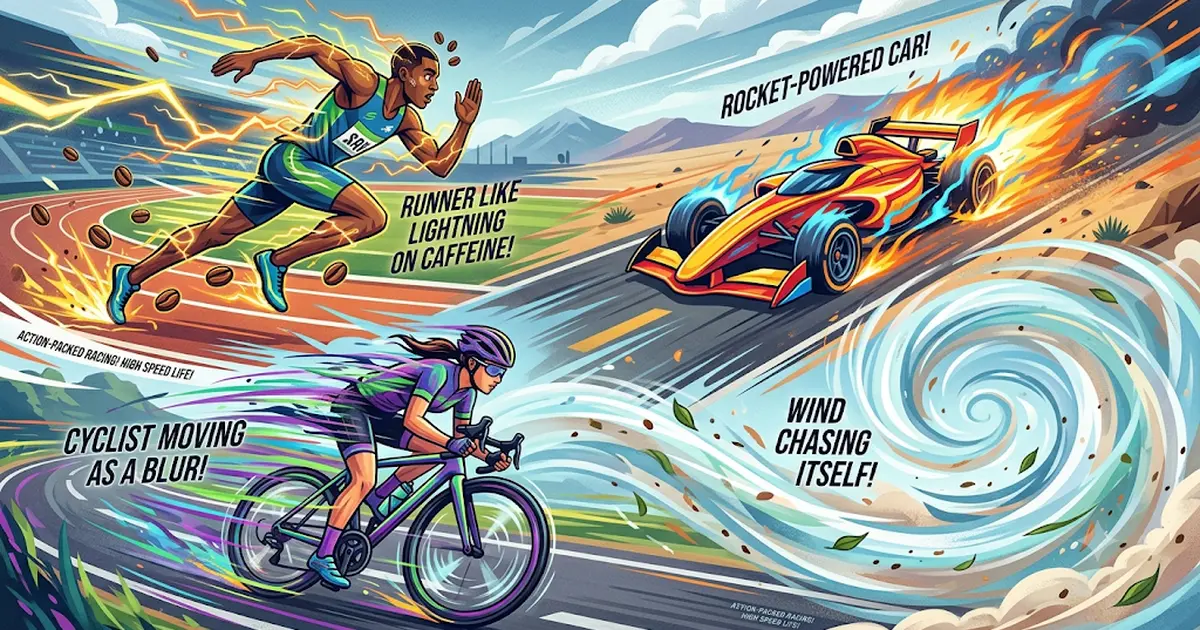
Fast-moving scenes benefit from energetic comparisons.
Examples
- He ran like lightning on caffeine.
- The car shot forward like a rocket.
- She sprinted like the wind chasing itself.
- The ball flew like a missile.
- The cyclist moved like a blur.
Crazy Similes for Weird Situations
Sometimes life feels strange, and unusual comparisons help describe those moments.
Examples
- The meeting felt like a circus with no ringmaster.
- The silence hung like a question nobody answered.
- The room spun like a broken compass.
- The conversation bounced around like a pinball machine.
- The situation felt like a puzzle with missing pieces.
Crazy Similes vs Regular Similes
| Regular Simile | Crazy Simile |
|---|---|
| Busy as a bee | Busy as a bee on triple espresso |
| Fast as lightning | Fast like lightning on caffeine |
| Quiet as a mouse | Quiet as a paused video |
| Strong as an ox | Strong as a bulldozer with attitude |
| Happy as a child | Happy like a kid who found buried treasure |
Crazy similes often create stronger and more memorable images.
How to Create Your Own Crazy Similes
Follow these simple steps:
1. Choose a Subject
Decide what you want to describe.
2. Identify a Trait
Focus on one quality such as speed, noise, happiness, or confusion.
3. Find an Unexpected Comparison
Think of something unusual that shares the same quality.
4. Connect Them
Use like or as to create the simile.
Example
Trait: Loud
Comparison: Thunderstorm in a small room
Simile: The music was as loud as a thunderstorm in a small room.
Common Mistakes to Avoid
Many writers make these mistakes when creating similes:
- Using comparisons that do not make sense
- Adding too many similes in one paragraph
- Copying overused comparisons repeatedly
- Making comparisons so complex that readers get confused
A good crazy simile should always remain understandable.
Practice Exercises
Complete these similes.
- The classroom was as crazy as a ________.
- His thoughts raced like a ________.
- The party felt like a ________.
- She laughed like a ________.
- The meeting became as chaotic as a ________.
Answers
- Circus
- Runaway train
- Madhouse
- Cartoon villain
- Tornado
Benefits of Using Crazy Similes
Writers who use creative similes often enjoy several advantages:
- More engaging writing
- Better storytelling
- Stronger imagery
- Improved creativity
- Increased reader interest
The more you practice, the easier it becomes to create original comparisons.
Conclusion
Crazy similes bring energy, humor, and imagination into writing. They transform ordinary descriptions into memorable images that readers can instantly picture. Whether you are writing stories, essays, speeches, or everyday content, creative similes help your words stand out.
The key is balance. Make your comparisons surprising, but keep them clear enough for readers to understand. With practice, you will start seeing creative connections everywhere and your writing will become more vivid, expressive, and unforgettable.
FAQs
What is a crazy simile?
A crazy simile is an unusual or unexpected comparison that uses the words like or as while still making sense to the reader.
What is the best example of a crazy simile?
One popular example is “as crazy as a loon,” which describes someone acting in a highly eccentric or irrational way.
Why do writers use crazy similes?
Writers use crazy similes to create vivid imagery, add humor, and make descriptions more memorable.
Are crazy similes good for storytelling?
Yes. They help readers visualize scenes, emotions, actions, and characters more effectively.
Can students use crazy similes in essays?
Yes. Creative similes can make essays and creative writing more engaging when used appropriately.
What is the difference between a simile and a metaphor?
A simile uses words like like or as to compare two things, while a metaphor makes a direct comparison without using those words.
How many crazy similes should I use in a paragraph?
Usually one or two are enough. Too many can make writing feel cluttered or confusing.
Can crazy similes be funny?
Absolutely. Many crazy similes use humor and exaggeration to entertain readers while creating strong imagery.
