
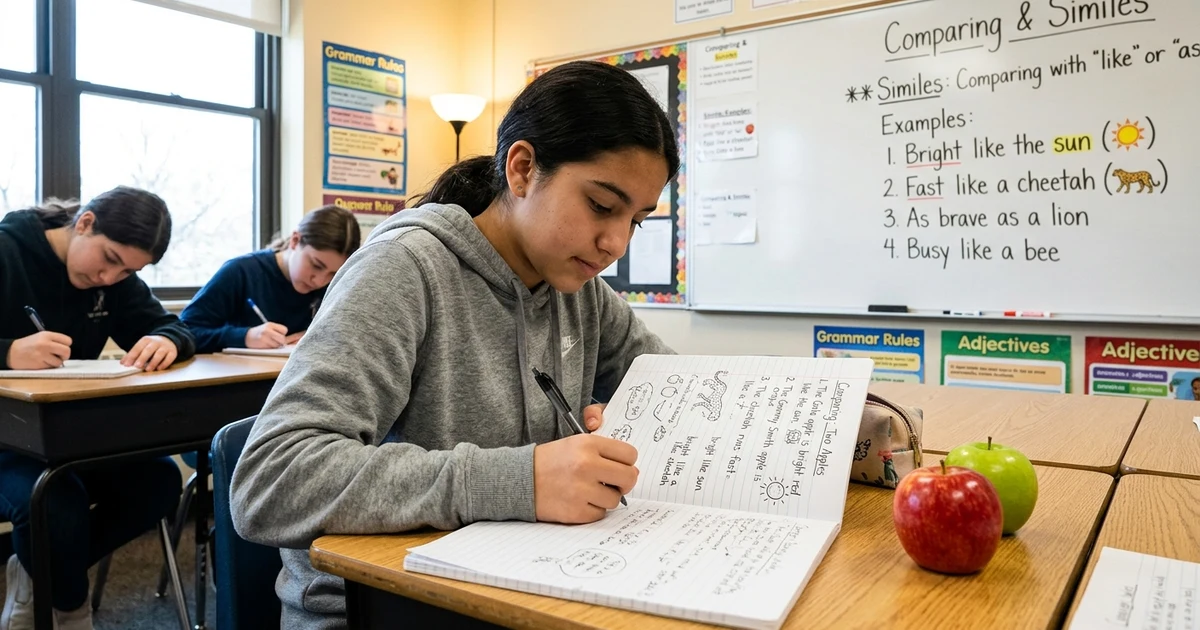
Simile Using Like Writing Tips for Better Comparisons
Quick Answer Box
What Is a Simile Using Like?
A simile using like is a figure of speech that compares two different things to highlight a shared quality. The word like creates the comparison, making descriptions more vivid and easier to understand.
For example, “She is as busy as a bee” and “He runs like the wind” use similes to create clear mental images. Writers and speakers use similes with like to add creativity, emotion, and detail to their language.
Introduction
Have you ever heard someone say, “She shines like the sun” or “He runs like the wind”? These expressions create vivid pictures in the reader’s mind and make language more engaging. They are examples of similes using the word “like.”
A simile helps writers compare two different things in a creative and easy to understand way. Whether you write stories, essays, poems, or everyday messages, similes can make your writing more interesting and memorable.
In this guide, you will learn what a simile using like means, how it works, where to use it, and how to create your own powerful comparisons. You will also find plenty of examples and practical tips to improve your writing skills.
What Is a Simile Using Like?
A simile using like compares two different things by connecting them with the word “like.”
The comparison highlights a shared quality between the two things.
Examples:
- Her smile was like sunshine.
- The baby slept like a log.
- The car moved like lightning.
These sentences do not claim the two things are the same. Instead, they point out a similarity that helps readers understand the description better.
How a Simile Using Like Compares Two Different Things
A simile connects a subject with something familiar to create a clearer image.
For example:
- His voice was like thunder.
- The water sparkled like diamonds.
In the first example, the voice sounds powerful and loud. In the second example, the water appears bright and beautiful.
By comparing something unfamiliar or ordinary to something recognizable, writers make descriptions stronger and easier to imagine.
Why Writers Use Similes with Like in Everyday Language
People naturally use similes in conversations because they communicate ideas quickly.
Examples include:
- Busy like a bee
- Hungry like a wolf
- Quiet like a mouse
These comparisons help listeners understand emotions, actions, and situations without lengthy explanations.
Writers also use similes to:
- Create vivid imagery
- Add emotion
- Improve storytelling
- Make descriptions memorable
The Difference Between a Simile Using Like and a Metaphor
A simile compares two things using words such as “like” or “as.”
Example:
- Her eyes were like stars.
A metaphor makes a direct comparison without using comparison words.
Example:
- Her eyes were stars.
Both figures of speech create imagery, but similes make the comparison more explicit.
Simple Simile Using Like Examples for Beginners
If you are new to similes, start with simple examples.
- Soft like cotton
- Cold like ice
- Fast like a cheetah
- Bright like the sun
- Strong like an ox
- Sweet like honey
- Light like a feather
- Sharp like a razor
These examples help beginners understand how similes connect familiar ideas.
Simile Using Like Examples Found in Daily Conversations
Many common expressions use similes.
Examples:
- He eats like a horse.
- She sings like an angel.
- They fought like cats and dogs.
- I slept like a baby.
- The room was quiet like a library.
People use these phrases because they communicate meaning clearly and naturally.
Creative Similes Using Like for Descriptive Writing
Creative writing benefits greatly from original similes.
Examples:
- Her laughter danced through the room like music.
- The city lights glittered like scattered jewels.
- The clouds drifted like ships across the sky.
- His thoughts raced like wild horses.
Unique similes help readers connect emotionally with the scene.
Similes Using Like to Describe People
Writers often use similes to describe personality, appearance, and behavior.
Examples:
- Brave like a lion
- Gentle like a lamb
- Wise like an owl
- Stubborn like a mule
- Calm like still water
These comparisons instantly communicate character traits.
Similes Using Like to Describe Emotions and Feelings
Similes can express emotions more vividly than plain descriptions.
Examples:
- My heart felt like a drum.
- She trembled like a leaf.
- He felt like a bird set free.
- The sadness hung over him like a dark cloud.
These comparisons help readers experience the emotion more deeply.
Similes Using Like to Describe Nature and Weather
Nature provides endless inspiration for similes.
Examples:
- The sky glowed like fire.
- The rain fell like silver threads.
- The river moved like a ribbon.
- The wind howled like a wolf.
These descriptions create strong visual images.
Simile Using Like for School Assignments and Essays
Teachers often encourage students to use similes because they improve writing quality.
For example:
Instead of writing:
- The garden was beautiful.
You can write:
- The garden looked like a colorful painting.
This approach adds detail and keeps readers engaged.
How to Write a Strong Simile Using Like
Follow these steps:
- Identify what you want to describe.
- Think about its strongest quality.
- Find something familiar with the same quality.
- Connect them using “like.”
Example:
- The athlete ran quickly.
Strong simile:
- The athlete ran like the wind.
The comparison should feel natural and easy to understand.
Common Mistakes to Avoid When Creating Similes
Avoid these common errors:
- Using comparisons that do not make sense
- Overusing similes in every sentence
- Choosing confusing images
- Using clichés too often
- Comparing things without a clear shared quality
Strong similes stay simple and meaningful.
Simile Using Like Versus Simile Using As
Both forms create comparisons.
Using like:
- She sparkled like a diamond.
Using as:
- She was as bright as a diamond.
The meaning remains similar, but the sentence structure changes.
Writers often use both styles to add variety.
Famous Similes Using Like in Literature
Many authors use similes to create memorable descriptions.
Examples include:
- Lonely like a cloud
- Busy like a bee
- Brave like a lion
These expressions remain popular because they paint clear mental pictures.
Literature often relies on similes to make scenes more vivid and emotional.
Fun Simile Using Like Examples for Children
Children enjoy simple and imaginative comparisons.
Examples:
- Happy like a clown
- Bouncy like a ball
- Bright like a rainbow
- Fast like a rocket
- Loud like a drum
These examples help young learners understand figurative language.
How Similes Using Like Improve Storytelling
Stories become more engaging when readers can visualize what happens.
Compare these examples:
Plain sentence:
- The castle was large.
With a simile:
- The castle stood like a giant watching over the valley.
The second sentence creates a stronger image and adds atmosphere to the story.
Practice Exercises for Writing Similes Using Like
Try completing these sentences.
- The snow was like __________.
- Her voice sounded like __________.
- The puppy jumped like __________.
- The stars shined like __________.
- The crowd moved like __________.
You can also choose an object and create three original similes that describe it.
Simile Using Like Examples for Different Writing Styles
Narrative Writing
- The forest stretched like an endless maze.
Poetry
- Love flowed like a gentle river.
Academic Writing
- The process spread through the community like ripples in water.
Creative Writing
- The moon hung in the sky like a silver lantern.
Different styles require different levels of creativity and detail.
Frequently Asked Questions About Similes Using Like
Many writers and students ask questions about similes. Understanding the basics helps you use them more effectively and avoid common mistakes.
Conclusion
A simile using like compares two different things to highlight a shared quality. This simple writing tool makes descriptions clearer, more vivid, and more memorable.
Whether you write stories, essays, poems, or everyday messages, similes can bring your words to life. By choosing meaningful comparisons and using them naturally, you can create stronger images and connect more effectively with readers.
Practice writing your own similes regularly, and you will soon discover how powerful a simple comparison can be.
FAQs
What is a simile using like?
A simile using like compares two different things by using the word “like” to show a shared quality.
What is an example of a simile using like?
“She shines like the sun” is a common example of a simile using like.
Why do writers use similes?
Writers use similes to create vivid imagery and make descriptions easier to understand.
Can a simile use words other than like?
Yes. Similes often use either “like” or “as.”
What is the difference between a simile and a metaphor?
A simile uses comparison words such as like or as, while a metaphor makes a direct comparison.
Are similes important in storytelling?
Yes. Similes help readers visualize scenes, emotions, and characters more clearly.
Can children learn similes easily?
Yes. Simple examples make similes easy and enjoyable for children to understand.
How can I create my own simile?
Identify a quality you want to describe and compare it to something familiar that shares that quality.
Are similes only used in literature?
No. People use similes in everyday conversations, speeches, advertising, and many forms of writing.
Can I use too many similes in my writing?
Yes. Too many similes can make writing feel cluttered. Use them where they add value and clarity.
