
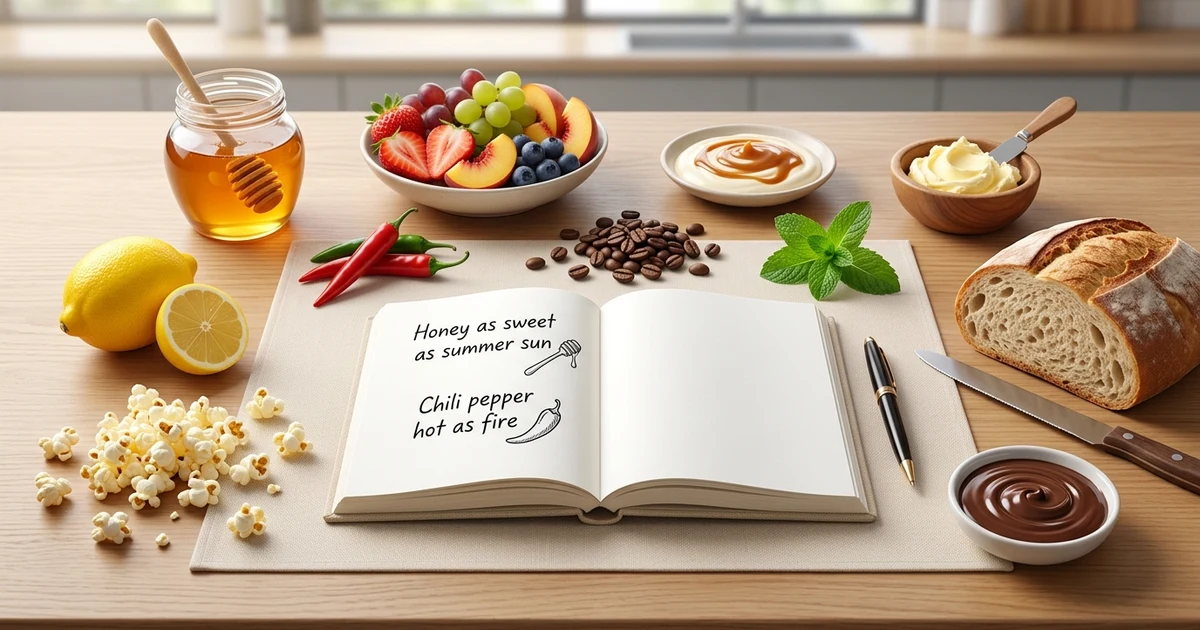
Food is more than fuel. It can bring comfort, create memories, and make ordinary moments feel special. The smell of fresh bread can remind us of home, while the taste of a favorite dessert can bring back childhood memories.
When writers describe food, however, simply saying that something is sweet, spicy, soft, or delicious does not always create a strong picture. This is where similes for food can help.
A simile compares two different things using words such as like or as. For example, instead of saying, “The cake was sweet,” you could write, “The cake was as sweet as honey.” The second sentence gives readers a familiar image they can easily understand.
Food similes can describe much more than food itself. They can help describe people, emotions, sounds, colors, textures, smells, places, and experiences.
Whether you are writing a story, poem, essay, food review, blog post, menu description, or classroom assignment, the right food simile can make your writing more vivid and memorable.
In this guide, you will find common and creative food similes, examples for different tastes and textures, food similes for emotions and people, funny comparisons, writing tips, common mistakes, and exercises to help you create your own.
Quick Answer
Similes for food are comparisons that use food or drinks to describe another person, object, feeling, action, or experience. They usually contain like or as and help readers imagine a quality through something familiar.
Some common food similes include:
- Sweet as honey
- Sour as a lemon
- Soft as butter
- Cool as a cucumber
- Red as a tomato
- Hot as chili
- Smooth like cream
- Sticky like caramel
- Crunchy like potato chips
- Fresh as a peach
- Bitter like black coffee
- Fluffy like whipped cream
Food similes can describe taste, texture, color, smell, temperature, personality, emotions, and appearance. They make ordinary descriptions more colorful without making the writing difficult to understand.
What Is a Food Simile?
A food simile is a figure of speech that compares something with food or drink by using like or as.
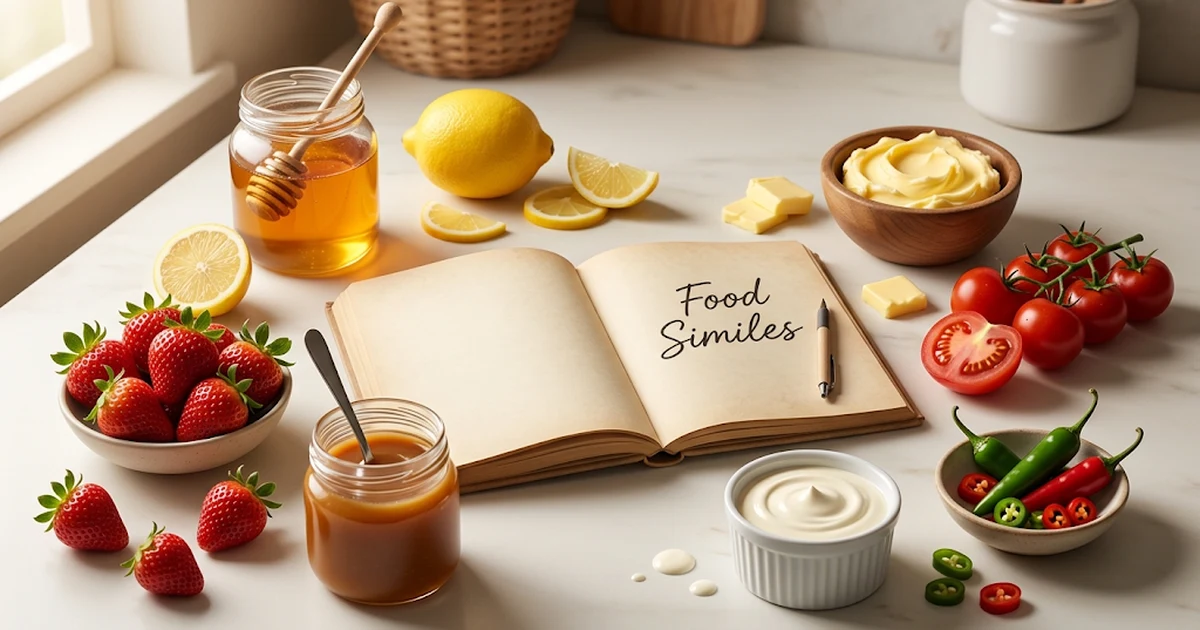
For example:
- Her smile was sweet as honey.
- The blanket was soft as butter.
- His face became red as a tomato.
- The sauce was hot like a chili pepper.
- Her voice was smooth like cream.
The comparison is not meant to be taken literally. Instead, it focuses on a quality that the two things share.
Honey is sweet, so it can be used to describe a kind person. Butter is soft, so it can describe a gentle texture. A tomato is often red, so it can describe someone’s flushed face.
Food is especially useful for similes because it connects with our senses. Readers already know what sweetness, sourness, crunchiness, warmth, or creaminess feels like.
For example:
Plain:
The bread was warm.
With a simile:
The bread was warm like a fresh loaf straight from the oven.
The second version gives the reader a stronger sensory image.
Food Simile vs. Food Metaphor
A food simile and a food metaphor both compare two things, but they do so in different ways.
| Food Simile | Food Metaphor |
|---|---|
| Uses like or as | Usually does not use like or as |
| Makes a direct comparison | States the comparison more directly |
| Her smile was sweet as honey | Her smile was honey |
| His thoughts tangled like spaghetti | His thoughts were spaghetti |
A simile says something is like another thing. A metaphor says something is another thing for descriptive effect.
For example:
Simile:
Her voice was smooth like cream.
Metaphor:
Her voice was cream.
Both create an image, but the simile makes the comparison clearer.
Why Do Writers Use Food Similes?
Food is familiar to almost everyone, which makes it an easy source of comparisons.
Writers use food similes to:
- Create vivid mental pictures
- Add sensory details
- Describe emotions
- Show personality
- Describe appearance
- Add humor
- Create atmosphere
- Make simple writing more interesting
- Help readers connect with an experience
Consider these two sentences:
Plain:
Maya was very kind.
With a food simile:
Maya was as sweet as honey.
The second sentence gives readers a stronger sense of Maya’s personality.
Food similes can also make abstract emotions easier to understand.
For example:
The disappointment felt bitter like black coffee.
Readers can connect the unpleasant emotional experience with a familiar taste.
Common Food Similes and Their Meanings
| Food Simile | Meaning | Example |
| Sweet as honey | Kind or pleasant | My grandmother was as sweet as honey. |
| Sweet as sugar | Friendly or lovable | The little girl was sweet as sugar. |
| Cool as a cucumber | Calm and relaxed | He stayed as cool as a cucumber. |
| Red as a tomato | Very red or embarrassed | Her face became red as a tomato. |
| Soft as butter | Very soft or gentle | The blanket felt soft as butter. |
| Sour as a lemon | Unpleasant or unhappy | He gave me a sour look. |
| Hot as chili | Very hot or spicy | The curry was hot as chili. |
| Smooth like cream | Smooth or gentle | Her voice was smooth like cream. |
| Fresh as a peach | Fresh, lively, or healthy | She looked fresh as a peach. |
| Bitter like coffee | Unpleasant or disappointing | The memory felt bitter like coffee. |
| Sticky like caramel | Clingy or difficult to remove | The mud was sticky like caramel. |
| Crunchy like chips | Crisp and noisy | The leaves were crunchy like chips. |
Food Similes for Sweetness
Sweet foods can represent pleasant tastes, kindness, love, happiness, comfort, and positive memories.
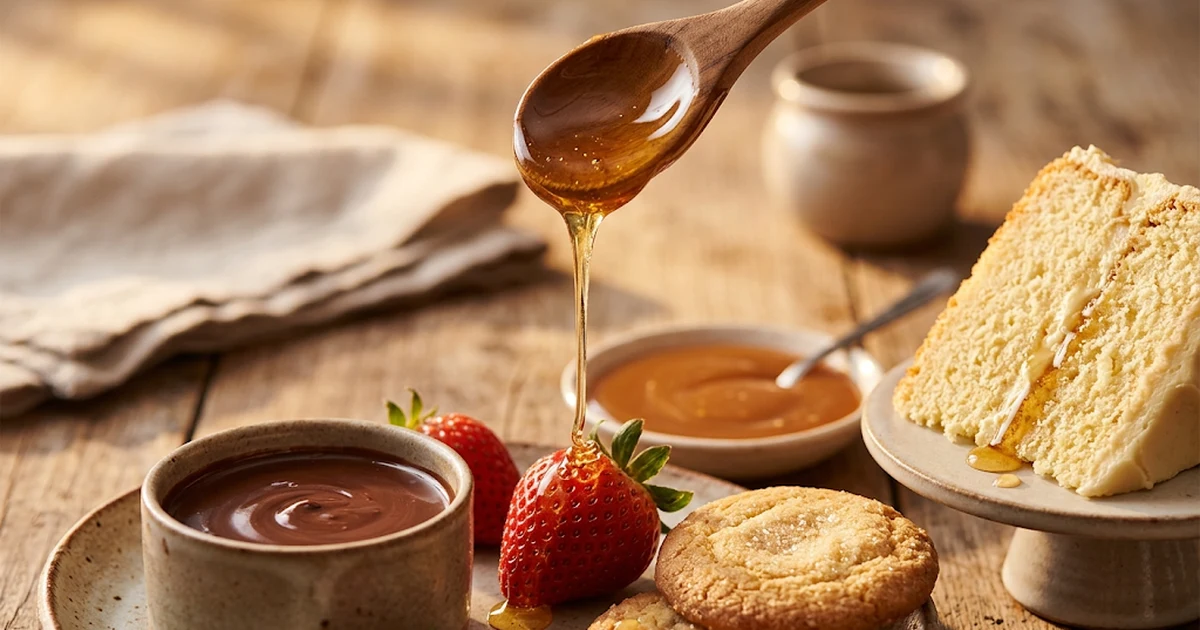
Here are some examples:
- Sweet as honey
- Sweet as sugar
- Sweet like ripe strawberries
- Sweet like warm chocolate
- Sweet as candy
- Sweet like caramel
- Sweet as a ripe peach
- Sweet like a freshly baked cookie
- Sweet as a spoonful of jam
- Sweet like strawberry syrup
Examples
Her kind words were sweet as honey.
The child’s laugh was sweet like a freshly baked cookie.
The memory was sweet like warm chocolate on a cold evening.
Her homemade pie was sweet as a spoonful of jam.
The dessert was sweet like ripe strawberries on a summer afternoon.
Sweet food comparisons are especially useful when describing kindness, happiness, love, pleasant memories, and desserts.
Food Similes for Sourness
Sour flavors can describe unpleasant tastes, moods, expressions, or experiences.
Examples include:
- Sour as a lemon
- Sour like an unripe berry
- Sharp like vinegar
- Sour like tart lemonade
- Sour as a green apple
- Tangy like fresh lime
Examples
His response was as sour as a lemon.
Her expression looked sour like an unripe berry.
The lemonade was tangy like fresh lime.
His mood became sour as a green apple after the argument.
These comparisons work well when you want to describe something unpleasant without simply using words such as bad or unhappy.
Food Similes for Bitterness
Bitter foods can represent disappointment, sadness, resentment, or an unpleasant experience.
Examples:
- Bitter like black coffee
- Bitter like burnt toast
- Bitter as dark chocolate
- Bitter like overcooked greens
- Bitter as unsweetened cocoa
Examples
The disappointment felt bitter like black coffee.
His words were bitter like burnt toast.
The old memory remained bitter as unsweetened cocoa.
Her apology sounded bitter like overcooked greens.
These comparisons can add emotional depth to serious writing.
Food Similes for Heat and Spice
Spicy foods can describe physical heat, anger, excitement, energy, or intensity.
Examples:
- Hot as chili
- Hot as a chili pepper
- Fiery like hot sauce
- Burning like spicy curry
- Hot like fresh soup
- Spicy as a bowl of chili
- Fiery like a jalapeño
Examples
The curry was as hot as a chili pepper.
Her anger burned like hot sauce.
The soup was hot like a pan fresh from the stove.
The debate became fiery like a bowl of spicy chili.
Food similes for heat are especially effective when describing strong emotions or intense situations.
Food Similes for Softness and Smoothness
Soft and creamy foods provide natural comparisons for gentle textures.
Examples:
- Soft as butter
- Soft as a ripe peach
- Soft like fresh bread
- Soft as marshmallows
- Smooth like cream
- Smooth like melted chocolate
- Silky like pudding
- Fluffy like whipped cream
Examples
The kitten’s fur was as soft as butter.
Her voice was smooth like cream.
The pillow felt soft as a marshmallow.
The cake was fluffy like whipped cream.
The chocolate melted smooth like cream on my tongue.
These similes can describe skin, hair, fur, fabric, voices, pillows, cakes, and other soft things.
Food Similes for Crunchy and Crispy Textures
Crunchy foods can help writers describe sounds and textures.
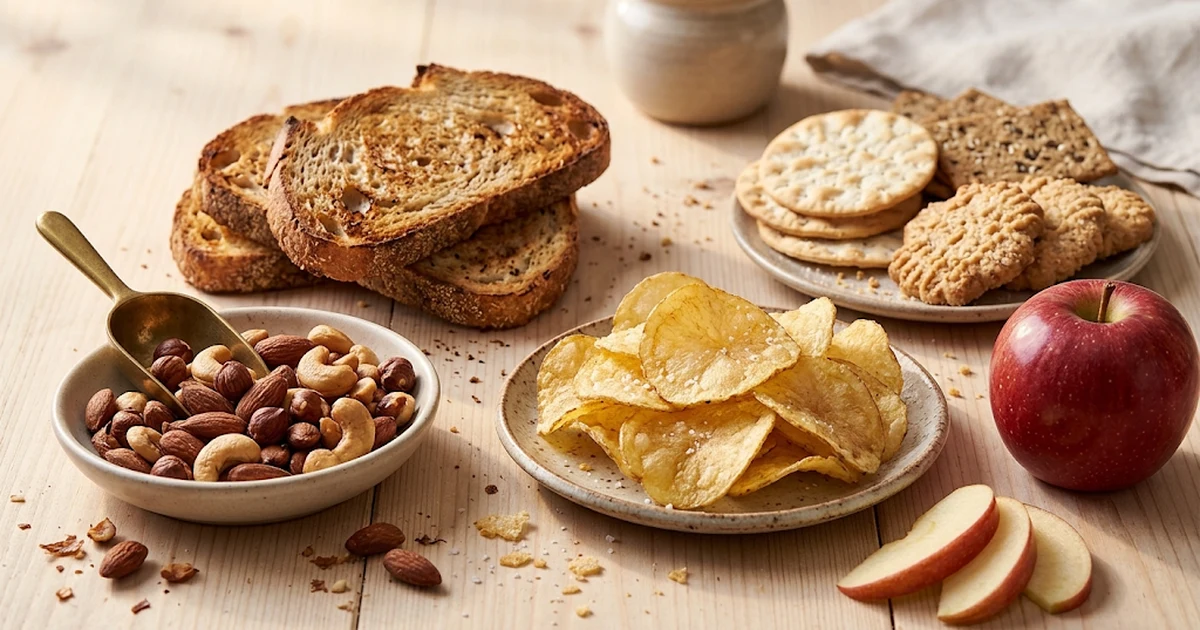
Examples:
- Crunchy like potato chips
- Crisp like a fresh apple
- Crackly like toasted bread
- Crunchy like a dry biscuit
- Crisp as a fresh cracker
- Crunchy like roasted nuts
Examples
The leaves cracked beneath my feet like potato chips.
The apple was crisp like a fresh snack.
The toast sounded crunchy like a dry biscuit.
The roasted nuts were crunchy like tiny pieces of autumn.
These comparisons can make sounds easier for readers to imagine.
Food Similes for Sticky and Chewy Textures
Sticky and chewy foods provide fun comparisons for things that cling, stretch, or resist.
Examples:
- Sticky like caramel
- Chewy like taffy
- Thick like peanut butter
- Stretchy like melted cheese
- Sticky as honey
- Chewy like gummy candy
Examples
The mud clung to my shoes like sticky caramel.
The glue was thick like peanut butter.
The melted cheese stretched like warm taffy.
The candy was chewy like an old piece of taffy.
Food Similes for Color and Appearance
Food can also help describe colors and visual details.
Examples:
- Red as a tomato
- Red like a cherry
- Pink like a strawberry
- Orange like a pumpkin
- Yellow like a lemon
- Brown like melted chocolate
- White like whipped cream
- Green like a fresh lime
- Purple like a ripe plum
Examples
Her cheeks were pink like strawberries.
His face became red as a tomato.
The sunset was orange like a ripe pumpkin.
Her dark hair shone like melted chocolate.
The flowers were yellow like fresh lemons.
These comparisons are useful for describing people, clothing, scenery, objects, and food.
Food Similes for Smell and Aroma
Food can also help writers describe smells in a more memorable way.
Examples:
- Warm like fresh bread
- Sweet like vanilla cake
- Rich like roasted coffee
- Spicy like freshly cooked curry
- Fresh like sliced citrus
- Smoky like grilled meat
- Sweet like cinnamon rolls
Example
The kitchen smelled warm like fresh bread, while the rich aroma of coffee filled the room.
This kind of comparison can make a setting feel more realistic and inviting.
Food Similes for Temperature
Food can provide familiar comparisons for hot and cold temperatures.
Examples:
- Hot like fresh soup
- Hot as a baked potato
- Warm like fresh bread
- Warm like melted chocolate
- Cold as ice cream
- Cool like chilled lemonade
- Cold like a frozen popsicle
Examples
The mug felt warm like fresh bread from the oven.
The lemonade was cool like a glass of ice water.
The ice cream was cold like a frozen popsicle.
The soup was hot like a baked potato fresh from the oven.
Food Similes for Emotions
Food similes can turn difficult-to-describe emotions into familiar images.
Happiness
- Happiness felt sweet as candy.
- Joy spread through her like warm honey.
- His laughter popped like popcorn.
- Her smile was bright like a slice of orange.
Anger
- Her anger burned like hot chili.
- His temper was fiery as hot sauce.
- His words stung like raw onion.
Sadness
- The memory felt bitter like black coffee.
- Her disappointment was sour as a lemon.
- His sadness lingered like the taste of burnt toast.
Excitement
- Her excitement popped like popcorn.
- His energy bubbled like soup on a hot stove.
- The children jumped like kernels in a hot pan.
Nervousness
- Her thoughts tangled like spaghetti.
- Worry stuck to him like caramel.
- His stomach twisted like a bowl of noodles.
Food similes are useful for emotions because they turn an invisible feeling into something concrete and familiar.
Food Similes for Describing People
Examples:
- She was as sweet as honey.
- He stayed as cool as a cucumber.
- Her cheeks were red like cherries.
- The baby was soft as a peach.
- His voice was smooth like cream.
- She became sour as a lemon after losing the game.
- His smile was warm like fresh bread.
- The energetic child bounced like popcorn.
Example Paragraph
The new teacher was as sweet as honey, but she stayed as cool as a cucumber when the classroom became noisy. Her warm smile made nervous students feel comfortable.
The comparisons show the teacher’s personality without simply listing her qualities.
Food Similes for Beauty and Appearance
Food can create colorful descriptions of beauty and appearance.
Examples:
- Her cheeks were pink like strawberries.
- Her lips were red like cherries.
- Her skin was soft as a peach.
- Her hair shone like melted chocolate.
- Her eyes were bright like fresh blueberries.
- Her smile glowed like a slice of orange in sunlight.
- Her dress was yellow like a ripe lemon.
Example
Her cheeks were pink like ripe strawberries, and her dark hair shone like melted chocolate in the afternoon light.
These descriptions can make characters more vivid without using complicated vocabulary.
Funny Food Similes
Funny food similes use unexpected comparisons to create humor.
Examples:
- He bounced like popcorn in a hot pan.
- Her hair looked like a bowl of tangled spaghetti.
- The sleepy dog stretched like melted cheese.
- He rolled across the floor like a runaway meatball.
- She slipped like a noodle falling from a fork.
- The puppy wobbled like jelly on a plate.
- He stood as stiff as a frozen carrot.
- His stomach growled like an angry blender full of soup.
Example
After playing outside for hours, Ben dropped onto the couch like a pancake landing on a plate.
Funny comparisons can make stories, children’s writing, and casual descriptions more entertaining.
Dramatic and Emotional Food Similes
Food can also create strong emotional images.
Examples:
- Bitter like a broken promise
- Sour like lost love
- Sweet as a mother’s hug
- Hot like a desert oven
- Sharp like raw onion
- Rich as a royal feast
- Cold as forgotten ice cream
Examples
The coffee was bitter like a broken promise.
Her homemade cookies were sweet as a mother’s hug.
The curry was spicy as a desert fire, leaving everyone’s tongue tingling.
These comparisons are more emotional than simple descriptions and can work well in fiction and poetry.
Creative and Unique Food Similes
Common similes are easy to understand, but original comparisons can make your writing stand out.
Here are some creative examples:
- Creamy like moonlight on velvet
Suggests something smooth and luxurious. - Nutty as a squirrel’s secret stash
Creates a playful image for an earthy flavor. - Zesty like a carnival trumpet
Suggests something bright, lively, and exciting. - Sticky as a toddler’s fingers after candy
A humorous way to describe something extremely sticky. - Velvety like a jazz saxophone
Suggests a rich and smooth quality. - Tangy like sunshine squeezed into a lemon
Creates a bright and refreshing image. - Fluffy like a cloud of whipped cream
Suggests a light and airy texture. - Rich as a royal feast
Suggests something luxurious and full of flavor. - Sweet like a childhood summer
Connects sweetness with nostalgia. - Crunchy like autumn leaves under sneakers
Combines a food texture with a familiar seasonal sound.
Creative similes work best when readers can understand the connection without having to stop and figure it out.
Fresh Food Similes You Can Use
If you want something less common, try these:
- The lemonade was bright like sunshine in a glass.
- The cake was fluffy like a pillow made of clouds.
- The sauce was thick like a river of peanut butter.
- The cookies were crisp like tiny autumn leaves.
- The soup smelled warm like a kitchen on a winter morning.
- The chocolate was smooth like a velvet ribbon.
- The fruit tasted fresh like rain on a summer garden.
- The caramel clung like honey to a spoon.
- The popcorn bounced like tiny golden stars.
- The bread smelled comforting like Sunday morning.
These examples can work well in creative writing, food reviews, stories, and descriptive paragraphs.
Food Similes for Storytelling
Food similes can make a story more sensory and immersive.
For example:
The kitchen smelled warm like fresh bread. Steam curled above the soup, bubbling like a tiny volcano. Outside, rain tapped against the windows, but inside the room felt safe and cozy.
This short description gives readers a sense of:
- Smell
- Warmth
- Movement
- Comfort
- Atmosphere
Instead of simply telling readers that the kitchen was cozy, the writer allows them to experience the scene.
Food Similes for Descriptive Writing
Compare these two paragraphs.
Plain Version
The market was colorful and busy. The fruit looked fresh, and the spices smelled strong.
Improved Version
The market was full of color and movement. Red apples shone like polished candy, while bright oranges glowed like tiny suns. Warm spices filled the air, and people moved through the narrow paths like popcorn bouncing in a hot pan.
The second paragraph creates stronger visual and sensory details.
How to Create Your Own Food Similes
Creating original food similes is simple when you follow a few steps.
Step 1: Choose What You Want to Describe
Choose a:
- Person
- Object
- Emotion
- Sound
- Place
- Action
- Texture
- Color
Example:
A pillow.
Step 2: Identify Its Main Quality
Ask yourself what stands out.
Example:
The pillow is soft.
Step 3: Think of a Food With the Same Quality
Choose something familiar.
Example:
Butter is soft.
Step 4: Connect the Two Ideas
Use like or as.
Example:
The pillow was as soft as butter.
Step 5: Make the Comparison Fit the Mood
For a funny sentence, you might use:
The pillow was soft like a giant marshmallow.
For a more poetic sentence:
The pillow was soft like a cloud of whipped cream.
The best simile depends on the tone and purpose of your writing.
Food Similes for Students
Food similes are useful for students because they are easy to understand and practice.
Students can use them in:
- Stories
- Essays
- Poems
- Descriptive paragraphs
- Vocabulary activities
- Creative writing exercises
- Classroom presentations
Character Writing Activity
Write three food similes about a fictional person.
Example:
Meal Description Activity
Describe your favorite meal using comparisons for:
- Taste
- Smell
- Texture
- Temperature
- Color
Emotion Activity
Create a food simile for:
- Happiness
- Anger
- Sadness
- Excitement
- Nervousness
This exercise helps students connect abstract feelings with familiar sensory experiences.
Short Food Similes
Sometimes you only need a short comparison.
- Sweet as honey
- Cool as a cucumber
- Red as a tomato
- Soft as butter
- Sour as a lemon
- Hot as chili
- Smooth as cream
- Sticky like caramel
- Crunchy like chips
- Bright like a lemon
- Soft as a peach
- Fresh as a peach
- Bitter like coffee
- Chewy like taffy
- Fluffy like whipped cream
- Warm like fresh bread
These short examples are useful for school assignments, poems, captions, stories, and everyday writing.
Food Similes vs. Other Types of Similes
Food is only one source of similes. Writers can also compare things with animals, nature, weather, objects, and other familiar subjects.
| Type | Example | Main Purpose |
| Food simile | Sweet as honey | Taste, personality, or emotion |
| Nature simile | Bright as the sun | Appearance or mood |
| Animal simile | Busy as a bee | Behavior or activity |
| Weather simile | Calm like a quiet lake | Mood or atmosphere |
| Object simile | Strong as steel | Strength or durability |
Food similes are especially useful when you want to create sensory details because food naturally connects with taste, smell, texture, color, and temperature.
How to Use Food Similes in Writing
In Essays
Food similes can make descriptive essays more interesting.
Example:
The cafeteria smelled warm like fresh bread, and the freshly cooked food filled the room with comforting aromas.
In Stories
They can help readers experience a scene.
Example:
The soup bubbled like a tiny volcano while the smell of garlic filled the kitchen.
In Poems
Food similes can create rhythm and emotional imagery.
Example:
Her words were sweet as honey,
Her laughter popped like popcorn,
And her smile warmed the room
Like bread fresh from the oven.
In Food Reviews
Food similes can make descriptions more engaging.
Example:
The chocolate mousse was smooth like velvet, with a rich flavor that lingered after every bite.
Common Mistakes When Using Food Similes
Using Too Many Similes
Too many comparisons can make writing feel crowded.
Overloaded:
Her smile was sweet as honey, her hair was dark like chocolate, her voice was smooth as cream, and her shoes were shiny like candy.
Better:
Her smile was sweet as honey, and her voice was calm and gentle.
Choose the strongest comparison instead of adding a simile to every detail.
Using a Confusing Comparison
The food quality should match the subject.
Confusing:
His voice was crunchy like potato chips.
Clear:
His voice was smooth like cream.
A strange comparison can work in comedy, but it may not fit serious writing.
Forcing a Food Simile
Not every sentence needs figurative language.
Simple sentence:
The teacher entered the classroom.
This sentence is already clear. A simile should add meaning rather than simply decorate the sentence.
Repeating the Same Simile
Using “sweet as honey” several times can make your writing repetitive.
Try alternatives when they fit:
- Sweet like warm chocolate
- Sweet as ripe strawberries
- Sweet like a childhood memory
Mixing Too Many Images
Avoid combining unrelated comparisons in a way that confuses the reader.
Confusing:
Her thoughts were spaghetti, her voice was honey, and her anger was a burning pizza.
Clear:
Her thoughts tangled like spaghetti.
One strong comparison is often better than several weak ones.
Tips for Making Food Similes Sound Natural
Keep these tips in mind:
- Choose foods your readers recognize.
- Match the food quality with the subject.
- Use sensory details.
- Keep the comparison easy to understand.
- Avoid unnecessary similes.
- Match the tone to the subject.
- Use humor when appropriate.
- Avoid repeating the same comparison.
- Read the sentence aloud.
- Choose strong images instead of complicated ones.
A good food simile should feel like a natural part of the sentence.
Food Simile Practice Exercises
Exercise 1: Complete the Similes
- The sauce was as spicy as __________.
- Her skin was soft like __________.
- The child bounced like __________.
- His face became red as __________.
- The old bread was hard like __________.
- The lemonade was tangy like __________.
- The soup was warm as __________.
- Her voice was smooth like __________.
- The mud was sticky as __________.
- The cake was sweet like __________.
Exercise 2: Create Your Own
Write one food simile for each word:
- Soft
- Bright
- Sticky
- Happy
- Angry
- Smooth
- Cold
Exercise 3: Improve These Sentences
Add a food simile to each sentence:
- The baby laughed.
- The room was warm.
- The mud was sticky.
- The girl was kind.
- The boy was excited.
Exercise 4: Write a Descriptive Paragraph
Describe a kitchen, restaurant, market, bakery, or family meal.
Try to include at least three food similes. Do not put all of them in one sentence.
Sample Answers
There can be many correct answers. Here are some examples:
- The sauce was as spicy as a chili pepper.
- Her skin was soft like a ripe peach.
- The child bounced like popcorn in a hot pan.
- His face became red as a tomato.
- The old bread was hard like stale toast.
- The lemonade was tangy like fresh lime.
- The soup was warm as fresh bread.
- Her voice was smooth like cream.
- The mud was sticky as caramel.
- The cake was sweet like warm chocolate.
Frequently Asked Questions
What is a food simile?
A food simile compares something with a food or drink using like or as. For example, “Her smile was sweet as honey” compares her smile with the sweetness of honey.
What is a simple food simile example?
“Soft as butter” is a simple food simile. It describes something that is very soft or smooth.
Why are food similes useful?
Food similes make writing more vivid and memorable. They help readers imagine tastes, textures, colors, smells, temperatures, emotions, and personalities.
Can food similes describe people?
Yes. Food similes can describe personality, appearance, behavior, or mood. For example, “as sweet as honey” can describe a kind and pleasant person.
Can food similes describe emotions?
Yes. Writers can connect emotions with familiar food experiences. For example, “The disappointment felt bitter like black coffee” connects an emotional experience with a familiar taste.
Can I use food similes in essays?
Yes. Food similes work well in descriptive and creative essays. Use them naturally and make sure they support your main idea.
How do I create a food simile?
Choose something to describe, identify its main quality, think of a food with the same quality, and connect the two with like or as.
Should I use many food similes in one paragraph?
No. Too many comparisons can make writing feel crowded. Choose only the similes that add useful imagery.
Are unique food similes better than common ones?
Both can be useful. Common similes are easy to understand, while unique similes can make your writing more memorable. The best choice depends on your audience and purpose.
How can I make my food similes more creative?
Look beyond taste. Think about texture, smell, color, temperature, shape, sound, and emotions connected with food. Then find an unexpected but understandable comparison.
Conclusion
Similes for food can turn simple descriptions into vivid and memorable writing. They use familiar qualities such as sweetness, sourness, bitterness, softness, heat, color, smell, and texture to help readers understand something in a fresh way.
Simple comparisons like “sweet as honey,” “soft as butter,” “red as a tomato,” and “cool as a cucumber” are effective because readers already understand the images behind them. More creative comparisons, such as “her laughter popped like popcorn” or “his thoughts tangled like spaghetti,” can give your writing a more original voice.
The goal is not to use as many similes as possible. A strong simile should fit the subject, match the tone, and add something meaningful to the sentence.
Once you start paying attention to the tastes, textures, colors, smells, sounds, and feelings connected with food, you will find plenty of ideas for creating your own comparisons.
With a little practice, you can use food similes to make stories, essays, poems, descriptions, and everyday writing more colorful, natural, and memorable.
