
Introduction
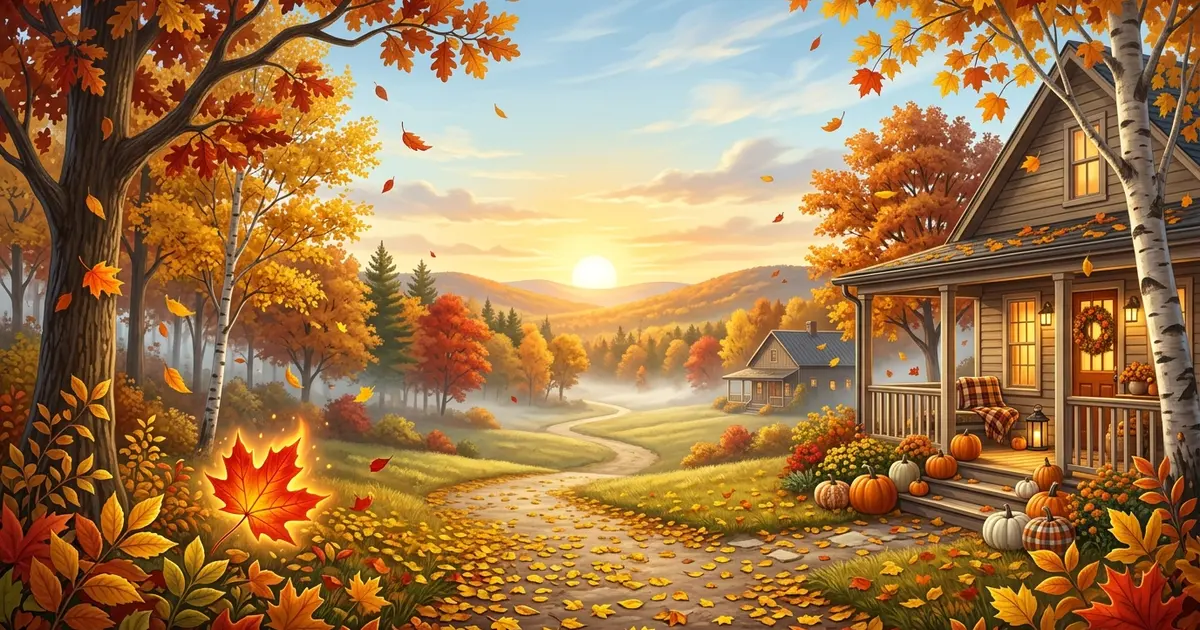
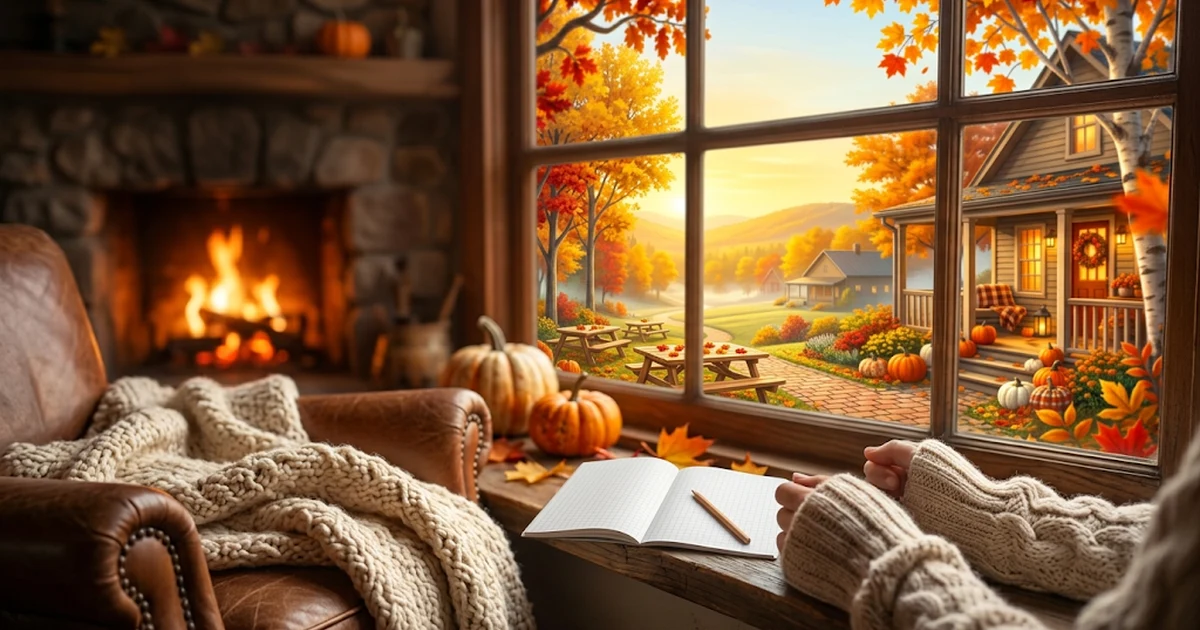
Fall has a way of changing the world without making a lot of noise. Green leaves slowly turn red, orange, yellow, and brown. The mornings become cooler. The days get shorter. A quiet breeze moves through the trees, while dry leaves crunch beneath your feet.
These small changes give writers plenty of details to describe. But simply saying “the leaves were colorful” or “the air was cold” does not always create a strong picture. This is where fall similes can help.
A simile compares one thing with another using words such as “like” or “as.” It gives readers something familiar to picture. For example, “The leaves were like flames” instantly creates an image of bright red and orange leaves moving in the wind. “The air was as crisp as a fresh apple” helps readers imagine the cool, fresh feeling of a fall morning.
Fall similes can describe almost every part of the season. You can use them for falling leaves, colorful trees, chilly mornings, windy afternoons, rainy days, foggy roads, Halloween pumpkins, harvest fields, cozy evenings, and even the emotional feeling of change that often comes with autumn.
Whether you are writing a school essay, short story, poem, journal entry, social media caption, or simple paragraph, the right comparison can make your words feel more alive.
Quick Answer
Fall similes are comparisons that use words such as “like” or “as” to describe the colors, weather, sounds, nature, and feelings of fall. For example, you can say, “The leaves were like flames,” “The autumn air was as crisp as a fresh apple,” or “The fog covered the field like a soft blanket.” These comparisons make fall writing easier to picture and more interesting to read.
Fall and autumn mean the same season. “Fall” is especially common in American English, while “autumn” is also widely used. Writers can use either word when creating seasonal descriptions. Similes are often used to make autumn scenes more vivid by focusing on familiar images and sensory details.
What Is a Fall Simile?
A fall simile is a comparison that describes something connected with fall by comparing it to something familiar.
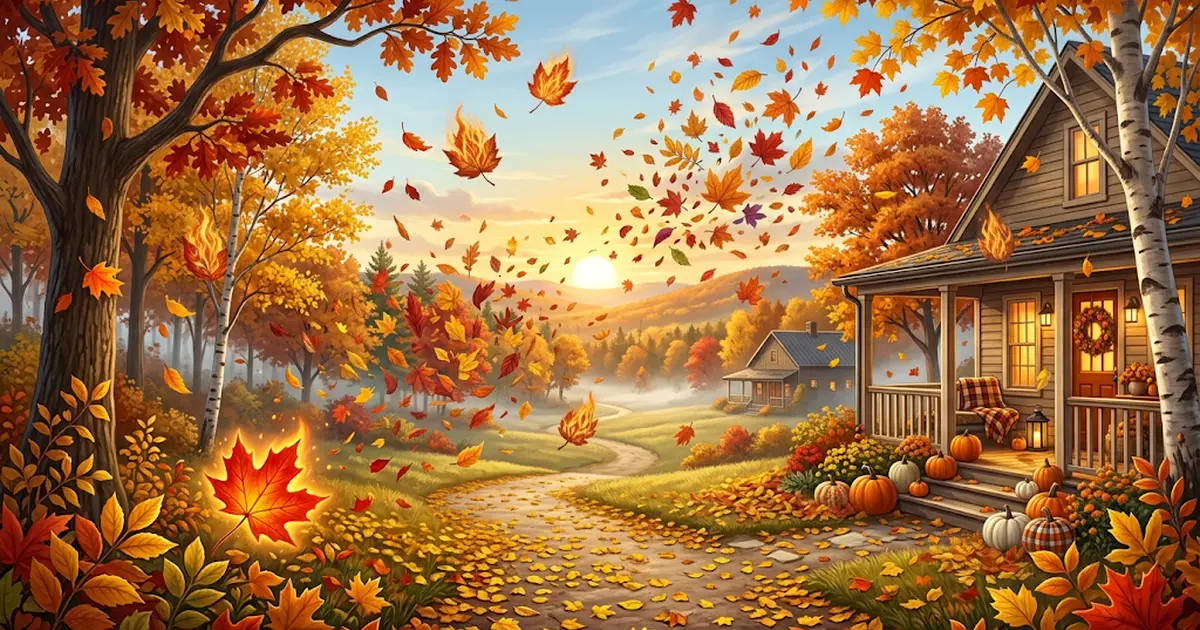
The comparison usually uses like or as.
For example:
- The leaves fell like confetti.
- The air was as crisp as a fresh apple.
- The trees looked like skeletons.
- The sunset was like a painting.
The purpose is not to say that two things are literally the same. Instead, the comparison highlights one quality they share.
If you say, “The leaves looked like flames,” you are focusing on their bright red and orange colors. If you say, “The leaves fell like confetti,” you are focusing on their movement and the way they spread through the air.
That is what makes similes useful in descriptive writing. They give readers a familiar image that helps them understand what you mean.
Fall and Autumn: Are They the Same?
Yes. Fall and autumn refer to the same season.
“Fall” is very common in American English, while “autumn” is also used in the United States and is especially common in more formal or literary writing.
That means these phrases have the same basic meaning:
- Fall similes
- Autumn similes
- Similes for fall
- Similes for autumn
For a US audience, “fall similes” sounds natural and familiar. Writers can still use “autumn” throughout an article when it fits the sentence better.
Why Are Fall Similes Useful?
Fall is full of strong sensory details. The colors are bright, the weather changes, leaves make sounds underfoot, and the season often creates feelings of comfort or nostalgia.
Similes help turn those details into clearer images.
For example:
Plain:
The leaves covered the ground.
With a simile:
The leaves covered the ground like a golden carpet.
The second sentence gives readers a better picture of what the ground looks like.
Fall similes can help you:
- Make descriptions more vivid
- Add emotion to your writing
- Help readers imagine a scene
- Describe colors more clearly
- Show movement and sound
- Create a cozy or peaceful mood
- Make school writing more interesting
- Add personality to captions and creative writing
A simile does not need to be complicated to work well. In many cases, a simple comparison is the strongest choice.
35 Fall Similes With Meanings and Examples
1. Leaves Like Flames
Meaning: This describes bright red, orange, and yellow leaves that resemble fire.
Example: The maple leaves looked like flames dancing in the autumn wind.
2. Leaves Like Confetti
Meaning: This describes leaves falling and spreading through the air like small pieces of paper at a celebration.
Example: The leaves fell like confetti across the park.
3. Leaves Like Golden Coins
Meaning: This describes yellow leaves scattered across the ground.
Example: The sidewalk was covered with leaves like golden coins.
4. Leaves Like Soft Rain
Meaning: This describes the gentle movement of leaves as they fall from the trees.
Example: The leaves drifted down like soft rain.
5. Leaves Like Tiny Dancers
Meaning: This focuses on leaves spinning and moving through the air.
Example: The leaves twirled like tiny dancers before touching the ground.
6. Sky Like a Painting
Meaning: This describes a beautiful fall sky filled with changing colors.
Example: The evening sky looked like a painting of orange, pink, and gold.
7. Forest Like a Painted Canvas
Meaning: This compares the colorful autumn forest to an artist’s canvas.
Example: The forest looked like a painted canvas covered in red and gold.
8. Trees Like Skeletons
Meaning: This describes trees after most of their leaves have fallen and their bare branches are visible.
Example: By late fall, the trees stood like skeletons against the cloudy sky.
9. Air Like Ice
Meaning: This describes very cold autumn air.
Example: The morning air felt like ice against my face.
10. Air Like a Fresh Apple
Meaning: This describes the cool, crisp, refreshing feeling of fall air.
Example: The autumn air was as crisp as a fresh apple.
11. Breeze Like a Caress
Meaning: This describes a soft breeze that gently touches the skin.
Example: The cool breeze moved across my face like a gentle caress.
12. Wind Like a Whisper
Meaning: This describes the soft sound of wind moving through trees and leaves.
Example: The wind passed through the branches like a whisper.
13. Wind Like a Wild Animal
Meaning: This describes strong, loud, or rough autumn wind.
Example: The wind howled like a wild animal outside the window.
14. Rain Like Tears
Meaning: This gives gentle fall rain a soft or slightly sad feeling.
Example: Rain ran down the window like tears.
15. Raindrops Like Pearls
Meaning: This describes raindrops shining on leaves or grass.
Example: Tiny raindrops rested on the leaves like pearls.
16. Fog Like a Blanket
Meaning: This describes thick fog covering the ground and surrounding objects.
Example: Morning fog settled over the fields like a blanket.
17. Fog Like a Ghost
Meaning: This creates a mysterious or eerie picture of fog.
Example: The fog moved through the empty street like a ghost.
18. Sunlight Like Honey
Meaning: This describes the warm golden light often seen during fall.
Example: Sunlight poured through the branches like honey.
19. Sun Like a Spotlight
Meaning: This compares bright sunlight to a stage spotlight.
Example: The afternoon sun shone like a spotlight on the golden trees.
20. Moon Like a Pearl
Meaning: This describes the pale and glowing appearance of the moon.
Example: The moon hung in the dark sky like a pearl.
21. Moon Like a Lantern
Meaning: This compares the moon’s soft nighttime glow to a lantern.
Example: The full moon glowed like a lantern above the quiet forest.
22. Stars Like Diamonds
Meaning: This describes bright stars shining against a dark sky.
Example: The stars sparkled like diamonds above the autumn hills.
23. Birds Like Arrows
Meaning: This describes migrating birds moving quickly across the sky.
Example: The birds flew south like arrows toward warmer places.
24. Pumpkins Like Lanterns
Meaning: This describes glowing carved pumpkins, especially around Halloween.
Example: The pumpkins on the porch glowed like lanterns after sunset.
25. Squirrels Like Acrobats
Meaning: This describes the quick and skillful movements of squirrels as they gather food.
Example: The squirrels jumped between branches like acrobats.
26. Fields Like Gold
Meaning: This describes fields that look golden because of crops, sunlight, or fall colors.
Example: The fields stretched across the valley like gold.
27. Shadows Like Ink
Meaning: This describes the long, dark shadows created by the lower fall sun.
Example: The trees cast shadows across the road like spilled ink.
28. Silence Like a Soft Blanket
Meaning: This describes the peaceful quiet that can settle over a fall landscape.
Example: Silence covered the forest like a soft blanket.
29. Fall Like a Turning Page
Meaning: This describes the season as a transition from summer toward winter.
Example: Fall arrived like a turning page, bringing cooler mornings and shorter days.
30. Fall Days Like a Storybook
Meaning: This describes fall days as beautiful, memorable, and full of small moments.
Example: The colorful trees and cool mornings made the fall days feel like a storybook.
31. Harvest Like a Treasure Chest
Meaning: This describes the abundance of crops gathered during the fall harvest.
Example: The harvest looked like a treasure chest filled with pumpkins, apples, and corn.
32. Autumn Like a Cozy Sweater
Meaning: This describes the warm and comfortable feeling associated with fall.
Example: The cool evening felt like a cozy sweater wrapped around the town.
33. Autumn Like a Fading Ember
Meaning: This describes fall as a season that holds onto summer’s warmth while moving toward winter.
Example: Autumn lingered like a fading ember, glowing softly before winter arrived.
34. Autumn Like a Weathered Postcard
Meaning: This describes the nostalgic feeling that fall can create.
Example: The old neighborhood looked like a weathered postcard in the golden October light.
35. Autumn Like a Golden Hush
Meaning: This describes the quiet and peaceful atmosphere created by fall colors and softer days.
Example: The park settled into autumn like a golden hush as the sun went down.
Easy Fall Similes for Beginners
If you are learning similes for the first time, start with comparisons that are easy to understand.
- Leaves are like fire.
- The air is like ice.
- The sky is like a painting.
- The wind is like a whisper.
- The trees are like skeletons.
- The moon is like a pearl.
- The fog is like a blanket.
- The pumpkins are like lanterns.
- The fields are like gold.
- The leaves fall like rain.
These simple examples work well for young students, English learners, and basic descriptive writing.
Fall Similes for Describing Leaves
Leaves are probably the most recognizable symbol of fall. You can describe their color, movement, shape, and sound in different ways.
For Color
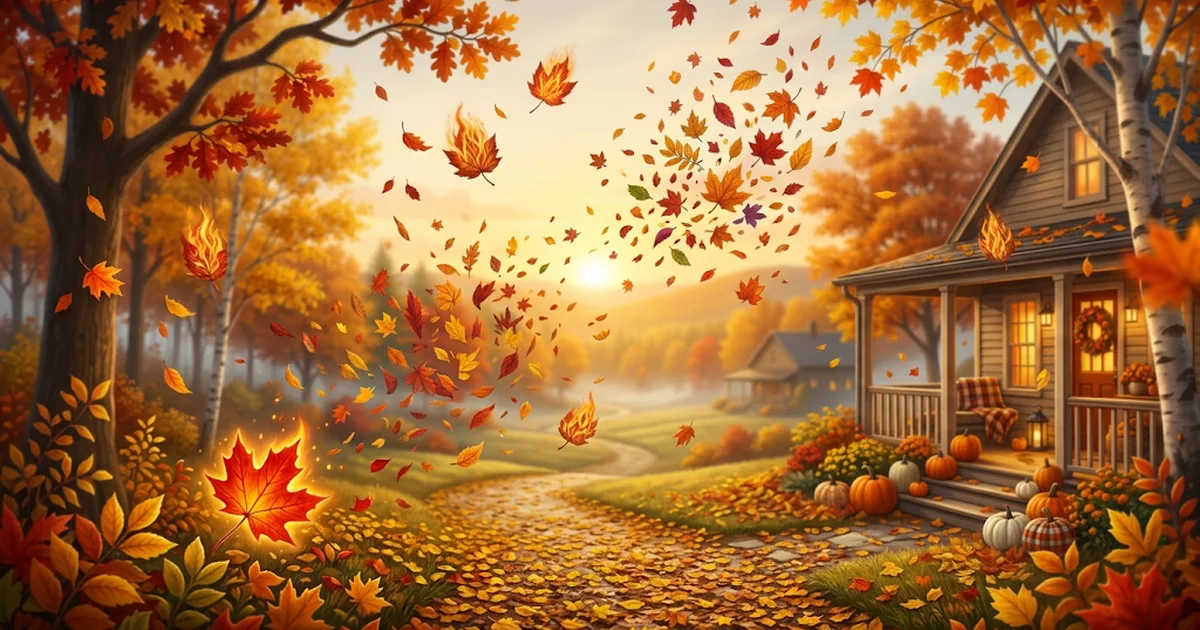
- Leaves glow like flames.
- Leaves shine like gold.
- Red leaves look like rubies.
- The forest looks like a painter’s palette.
For Movement
- Leaves fall like soft rain.
- Leaves spin like tiny dancers.
- Leaves scatter like confetti.
- Leaves drift like feathers.
Fall Similes for Colors
Autumn colors are one of the easiest subjects to describe with similes.
Try these:
- The trees were like burning torches.
- The leaves were as red as rubies.
- The forest looked like a painter’s canvas.
- The hills were like waves of gold.
- The sunset was like melted orange paint.
- The leaves were as bright as jewels.
These comparisons can make a simple description feel much more visual.
Fall Similes for Weather
Fall weather can be warm, cool, windy, rainy, or foggy.
For a cool morning:
The air was as crisp as a fresh apple.
For a cold morning:
The air felt like ice.
For a gentle breeze:
The breeze moved like a soft whisper.
For strong wind:
The wind howled like a wild animal.
For rain:
The rain tapped against the window like tiny fingers.
For fog:
The fog spread across the field like a blanket.
Weather similes are especially useful in stories because they can establish the mood of a scene.
Fall Similes for Sounds
Fall has its own collection of sounds.
You may hear leaves crunching under your shoes, wind moving through branches, rain tapping on windows, or squirrels rushing through trees.
Here are some examples:
- Leaves crunch like dry paper.
- Wind whispers like a secret.
- Branches creak like old doors.
- Rain taps like tiny fingers.
- Leaves rustle like soft applause.
- The wind roars like a distant train.
Sound-based similes help readers feel as if they are standing inside the scene.
Fall Similes for Cozy Feelings
Fall is not only about cold air and falling leaves. It is also a season associated with comfort.
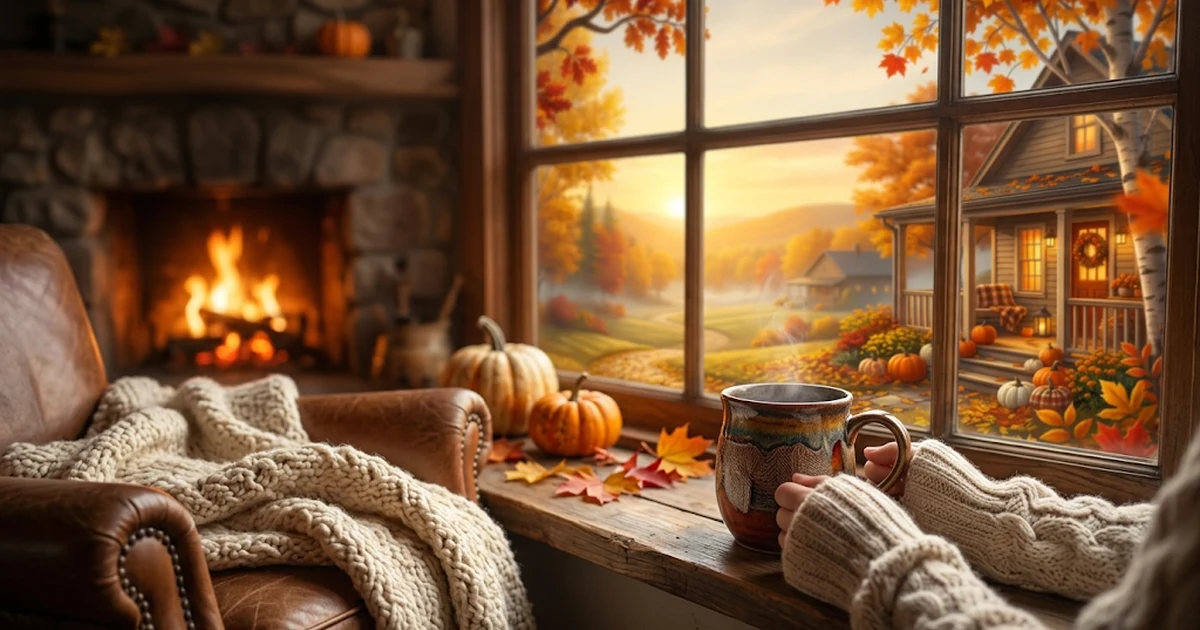
Think about warm drinks, soft blankets, sweaters, fireplaces, family gatherings, and quiet evenings.
You can describe these feelings with similes such as:
- The evening felt like a warm blanket.
- The fireplace glowed like a tiny sun.
- The warm drink felt like a hug in a cup.
- The sweater was as soft as a cloud.
- The house felt like a cozy nest.
- The night wrapped around us like a warm scarf.
These comparisons work well in personal stories and cozy social media captions.
Fall Similes for Change and Transition
Fall is also a natural symbol of change. Summer fades, leaves change color, and winter slowly approaches.
That makes fall useful when writing about personal growth, new beginnings, endings, or memories.
Try these:
- The season changed like a turning page.
- Summer faded like an old photograph.
- The leaves changed like artists switching colors.
- The year moved forward like a slowly turning wheel.
- Fall arrived like a quiet goodbye.
- The old season disappeared like a fading dream.
These comparisons give fall writing a deeper emotional meaning.
Fall Similes for Harvest
Harvest is another important part of fall. Farms, orchards, pumpkins, apples, corn, and other crops can all become subjects for creative comparisons.
Examples:
- The harvest was like a treasure chest.
- The apple orchard looked like a basket of jewels.
- The pumpkin patch was like a field of orange lanterns.
- The cornfields stood like golden walls.
- The baskets were filled like overflowing treasure boxes.
Harvest similes can work especially well in stories about farms, festivals, Thanksgiving, and country life.
Fall Similes for Halloween
Halloween gives fall writing a different mood. Instead of peaceful and cozy, you may want something playful, mysterious, or spooky.
Examples:
- The pumpkins glowed like lanterns.
- The fog moved like a ghost.
- The bare trees reached upward like bony fingers.
- The moon looked like a silver coin.
- The shadows stretched across the yard like dark claws.
- The old house stood like a forgotten castle.
These comparisons can add atmosphere to Halloween stories and captions.
Fall Similes for Social Media Captions
Social media captions usually work best when they are short and easy to remember.
Try these:
- Falling leaves like golden dreams
- Crisp air like a fresh start
- Cozy nights like warm hugs
- Autumn skies like soft poetry
- Leaves dancing like confetti
- Golden trees like sunshine
- Cool mornings like new beginnings
- October nights like quiet stories
- Fall colors like a painter’s dream
- Pumpkin season like a little celebration
A short simile can say a lot without making the caption feel crowded.
Fall Similes for Students and School Assignments
Students often need simple examples that are easy to understand and use correctly.
Here are some good choices:
- The leaves were like flames.
- The air was as cold as ice.
- The sky looked like a painting.
- The trees stood like skeletons.
- The rain fell like tears.
- The fields looked like gold.
- The moon was like a pearl.
- The fog covered the road like a blanket.
- The wind sounded like a whisper.
- The leaves fell like confetti.
For an essay, it is better to choose one or two strong similes than to place a comparison in every sentence.
How to Use Fall Similes in a Story
A simile works best when it is part of a scene rather than added randomly.
For example:
Basic:
I walked through the forest. The leaves were colorful.
Improved:
I walked through the forest while red and orange leaves glowed like flames above my head.
The second version gives the reader more to imagine.
You can use similes to describe:
- The setting
- Weather
- Characters’ feelings
- Sounds
- Movement
- Colors
- Time of day
A strong simile should support the scene rather than distract from it.
How to Create Your Own Fall Similes
Creating a new simile is simple.
Step 1: Pick a Fall Detail
Choose something you can see, hear, smell, touch, or feel.
For example:
A falling leaf
Step 2: Think About Its Quality
Ask what the leaf is doing.
It might be:
- Floating
- Spinning
- Falling
- Drifting
- Glowing
Step 3: Find a Familiar Comparison
Think of something that behaves in a similar way.
A feather floats. Confetti falls. A dancer spins.
Step 4: Add Like or As
Now create the comparison.
The leaf floated like a feather.
Or:
The leaves fell like confetti.
Step 5: Check the Sentence
Ask yourself whether the comparison makes sense and improves the image.
If it feels forced, try another comparison.
Plain Sentences vs Fall Similes
One of the easiest ways to understand similes is to compare a basic sentence with a more descriptive one.
Plain: The leaves fell.
With a simile: The leaves fell like golden rain.
Plain: The wind was quiet.
With a simile: The wind whispered like a secret.
Plain: The forest was colorful.
With a simile: The forest looked like a painter’s canvas.
Plain: The air was cold.
With a simile: The air felt like ice.
Plain: The fog covered the field.
With a simile: The fog covered the field like a soft blanket.
The goal is not to make every sentence longer. The goal is to make important descriptions clearer and more memorable.
Common Mistakes When Writing Fall Similes
Using Too Many Similes

A paragraph does not need a simile in every sentence. Too many comparisons can make writing feel crowded.
Choosing an Unclear Comparison
The reader should be able to understand why two things are being compared.
Repeating the Same Comparison
If you use “like fire” several times, the writing can start to feel repetitive. Try different comparisons for color, movement, sound, and mood.
Making the Comparison Too Complicated
Simple ideas are often stronger.
“The leaves fell like rain” is easier to understand than a long comparison that takes several sentences to explain.
Confusing Similes With Metaphors
A simile normally uses like or as.
Simile: The leaves were like flames.
Metaphor: The leaves were flames.
Both create imagery, but they use different forms of comparison.
Using a Comparison That Does Not Fit
A simile should match the quality you want to describe.
For example, “The gentle breeze was like a roaring lion” would create a confusing image unless you specifically mean that the breeze suddenly became strong and loud.
Fall Simile Practice Exercise
Complete each sentence with your own comparison.
- The autumn leaves were as colorful as ______.
- The fall sky looked like ______.
- The wind whispered like ______.
- The bare trees looked like ______.
- The autumn rain fell like ______.
- The fields looked as golden as ______.
- The morning air felt as cold as ______.
- The sunlight poured through the trees like ______.
- The fog covered the road like ______.
- The full moon shone like ______.
- The pumpkins glowed like ______.
- The dry leaves sounded like ______.
Possible Answers
- flames
- a painting
- a secret
- skeletons
- tears
- gold
- ice
- honey
- a blanket
- a pearl
- lanterns
- dry paper
There can be many correct answers. The important thing is that the comparison makes sense and creates a clear image.
How Fall Similes Improve Descriptive Writing
Similes teach writers to look beyond basic descriptions.
Instead of only noticing that leaves are red, you begin thinking about what that red reminds you of. Maybe the leaves look like flames, rubies, or glowing embers.
Instead of saying the air is cold, you can think about whether it feels like ice, a cold breath, or chilled silk.
This way of thinking improves descriptive writing because it encourages you to notice:
- Color
- Texture
- Movement
- Sound
- Temperature
- Light
- Mood
- Emotion
A strong simile gives readers something they already understand and uses that familiar idea to explain something new.
Quick List of Fall Similes
Here is a quick list to save for writing practice:
- Leaves like flames
- Leaves like confetti
- Leaves like golden coins
- Leaves like soft rain
- Leaves like tiny dancers
- Sky like a painting
- Forest like a painted canvas
- Trees like skeletons
- Air like ice
- Air like a fresh apple
- Breeze like a caress
- Wind like a whisper
- Wind like a wild animal
- Rain like tears
- Raindrops like pearls
- Fog like a blanket
- Fog like a ghost
- Sunlight like honey
- Sun like a spotlight
- Moon like a pearl
- Moon like a lantern
- Stars like diamonds
- Birds like arrows
- Pumpkins like lanterns
- Squirrels like acrobats
- Fields like gold
- Shadows like ink
- Silence like a soft blanket
- Fall like a turning page
- Fall days like a storybook
- Harvest like a treasure chest
- Autumn like a cozy sweater
- Autumn like a fading ember
- Autumn like a weathered postcard
- Autumn like a golden hush
FAQs About Fall Similes
1. What is a fall simile?
A fall simile compares something connected with fall to another familiar thing using words such as “like” or “as.”
2. What is an example of a fall simile?
“The leaves fell like golden rain” is a simple example of a fall simile.
3. What are some easy fall similes?
Easy examples include “leaves like fire,” “air like ice,” “sky like a painting,” “wind like a whisper,” and “fog like a blanket.”
4. How can I describe fall leaves with similes?
You can compare fall leaves to flames, gold, confetti, feathers, coins, rain, or tiny dancers depending on their color and movement.
5. What is a good simile for fall weather?
“The autumn air was as crisp as a fresh apple” is a good simile for cool and refreshing fall weather.
6. What is a simile for autumn colors?
“The trees looked like a painter’s canvas” is a simple way to describe the many colors of fall.
7. Can I use fall similes in a school essay?
Yes. Fall similes can make descriptive essays more vivid and help readers picture the setting.
8. Can fall similes be used in poems?
Yes. Similes are useful in poems because they can add imagery, emotion, and atmosphere.
9. How do I create my own fall simile?
Choose something from fall, identify one of its qualities, think of something familiar with a similar quality, and connect the two with “like” or “as.”
10. Should I use many similes in one paragraph?
No. A few strong and natural similes are usually better than using a comparison in every sentence.
11. Are fall and autumn the same thing?
Yes. Fall and autumn are two names for the same season.
12. What makes a good fall simile?
A good fall simile is clear, natural, relevant, and easy for the reader to picture. It should add something useful to the description rather than simply make the sentence longer.
Conclusion
Fall gives writers plenty of beautiful details to work with. Colorful leaves, cool air, quiet forests, golden sunlight, rainy mornings, glowing pumpkins, and peaceful evenings can all become stronger descriptions when you use the right comparison.
Fall similes make those descriptions easier to picture. Leaves can fall like confetti, trees can glow like flames, fog can spread like a blanket, and the autumn air can feel as crisp as a fresh apple.
The best similes do not need complicated words. They simply connect something about fall with an image the reader already knows.
Whether you are writing a school assignment, story, poem, caption, or personal reflection, try looking at one small detail around you and asking, “What does this remind me of?” That question can turn an ordinary fall description into a memorable one.
