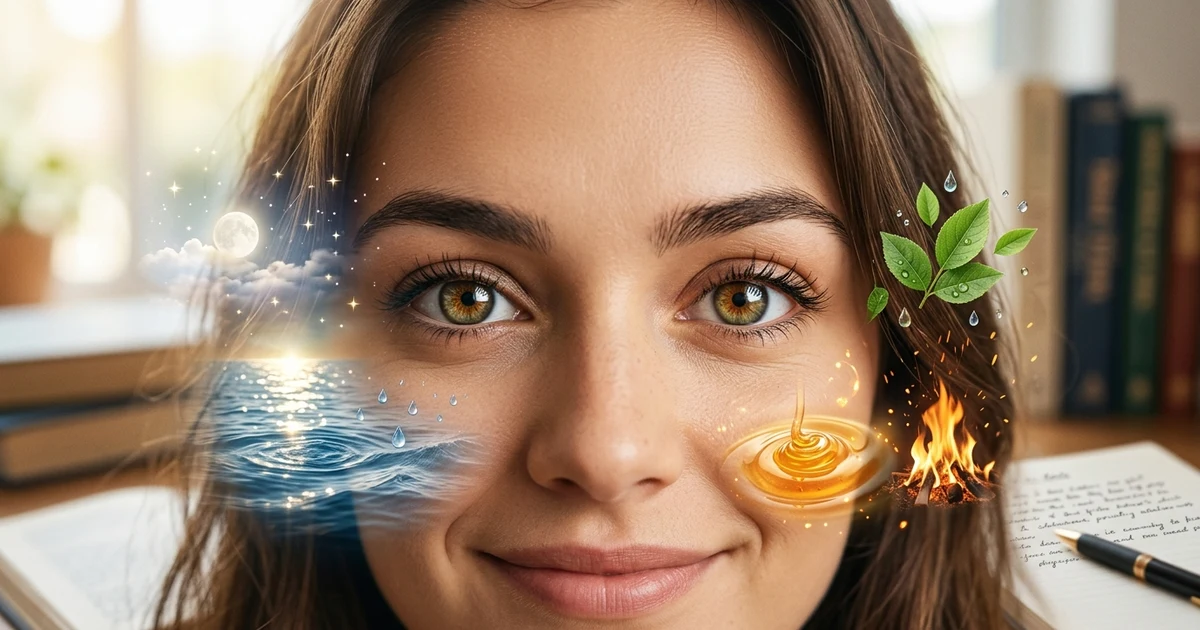
Eyes can say a lot without a single word. They can show happiness, sadness, fear, anger, love, curiosity, or surprise. In stories and poems, writers often use similes for eyes to make these details easier for readers to picture.
A simile compares one thing to another using words such as like or as. For example, saying, “Her eyes sparkled like stars” does not mean her eyes are actual stars. It creates an image of eyes that look bright and full of light.
Simple descriptions can tell readers what something looks like, but a good simile can help them imagine the scene. Instead of saying someone has beautiful eyes, you might say, “Her eyes shone like sunlight on water.” The second sentence gives the reader a clearer picture.
In this guide, you will find 30 similes for eyes along with meanings and example sentences. You will also learn how to describe different eye colors, emotions, expressions, and personalities with natural comparisons.
What Is an Eyes Simile?
An eyes simile is a figurative comparison that describes eyes by comparing them with something familiar. The comparison usually uses like or as.

For example:
- Her eyes were as bright as stars.
- His eyes were like deep oceans.
- Her eyes sparkled like sunlight on water.
- His eyes were as dark as night.
These comparisons do not mean that the eyes are literally stars, oceans, or sunlight. They help readers imagine qualities such as brightness, color, depth, or emotion.
There is also an important difference between a literal comparison and a figurative simile.
Literal: Her eyes look like her mother’s.
Figurative: Her eyes shine like stars.
The first sentence makes a direct comparison. The second creates an imaginative picture, which is what makes it a simile.
Why Do Writers Use Similes for Eyes?
Eyes are closely connected with emotion. A character may not say that they are nervous, angry, or heartbroken, but their eyes can reveal those feelings.
For example:
Simple:
His eyes showed anger.
With a simile:
His eyes burned like fire.
The second sentence gives the reader a stronger image.
Eyes similes can help writers:
- Describe eye color
- Show emotions
- Create a mood
- Make characters more memorable
- Add detail to stories
- Make poems more expressive
- Help readers visualize a scene
- Show personality without explaining everything directly
A strong simile should fit the scene. The goal is not to make the comparison as complicated as possible. The goal is to make the description clearer and more interesting.
30 Similes for Eyes With Meanings and Examples
1. As bright as stars
Meaning: Very bright, lively, or sparkling.
In a sentence: Her eyes were as bright as stars when she saw the puppy.
2. Like two shiny marbles
Meaning: Round, smooth, glossy, and bright.
In a sentence: The baby’s eyes looked like two shiny marbles as he stared at the colorful toy.
3. As blue as the ocean
Meaning: A deep or beautiful blue color.
In a sentence: Her eyes were as blue as the ocean on a clear summer day.
4. Like chocolate drops
Meaning: Warm brown eyes with a soft and appealing look.
In a sentence: His eyes looked like chocolate drops when he smiled.
5. As green as fresh grass
Meaning: A bright or fresh green color.
In a sentence: Her eyes were as green as fresh grass after the rain.
6. Like two full moons
Meaning: Large, round, and wide open.
In a sentence: His eyes were like two full moons when he heard the strange noise.
7. As sharp as an eagle’s eyes
Meaning: Very observant and able to notice small details.
In a sentence: Her eyes were as sharp as an eagle’s, so she noticed the tiny scratch on the table.
8. Like buttons on a teddy bear
Meaning: Small, round, cute, and shiny.
In a sentence: The puppy had eyes like buttons on a teddy bear.
9. As dark as night
Meaning: Very dark or deep in color.
In a sentence: His eyes were as dark as night, giving him a quiet and mysterious look.
10. Like fire when angry
Meaning: Full of anger, energy, or intensity.
In a sentence: His eyes looked like fire when he heard what had happened.
11. As soft as clouds
Meaning: Gentle, calm, and caring.
In a sentence: Her eyes were as soft as clouds when she comforted the frightened child.
12. Like raindrops on a window
Meaning: Watery and full of tears.
In a sentence: Her eyes looked like raindrops on a window after she started crying.
13. As golden as the morning sun
Meaning: Warm and golden in color.
In a sentence: His eyes were as golden as the morning sun.
14. Like storm clouds
Meaning: Showing sadness, worry, anger, or a troubled mood.
In a sentence: His eyes looked like storm clouds before he walked away.
15. As wide as saucers
Meaning: Very wide because of surprise, excitement, or fear.
In a sentence: Her eyes were as wide as saucers when she opened the gift.
16. Like ice on a lake
Meaning: Cold, still, or emotionally distant.
In a sentence: His eyes were like ice on a lake as he listened without saying a word.
17. As brown as tree bark
Meaning: A natural and earthy shade of brown.
In a sentence: Her eyes were as brown as tree bark in the forest.
18. Like flashlights in the dark
Meaning: Bright and noticeable in a dark place.
In a sentence: The dog’s eyes looked like flashlights in the dark hallway.
19. As clear as glass
Meaning: Clear, open, or easy to understand.
In a sentence: Her eyes were as clear as glass, and her feelings were easy to read.
20. Like a puzzle waiting to be solved
Meaning: Mysterious or difficult to understand.
In a sentence: His eyes were like a puzzle waiting to be solved.
21. As sleepy as a kitten
Meaning: Tired, relaxed, or ready for sleep.
In a sentence: Her eyes were as sleepy as a kitten curled up on a warm blanket.
22. Like sunlight on water
Meaning: Bright, sparkling, and full of light.
In a sentence: Her eyes sparkled like sunlight on water.
23. As curious as a cat
Meaning: Always watching, noticing, and wondering.
In a sentence: His eyes were as curious as a cat’s as he explored the new room.
24. Like mirrors
Meaning: Showing a person’s feelings clearly.
In a sentence: Her eyes were like mirrors, revealing how happy she really was.
25. As deep as a well
Meaning: Full of emotion or difficult to understand.
In a sentence: His eyes were as deep as a well, and no one could tell what he was thinking.
26. Like shining coins
Meaning: Bright, round, and reflective.
In a sentence: Her eyes looked like shining coins beneath the bright lights.
27. As warm as sunlight
Meaning: Kind, comforting, and welcoming.
In a sentence: His eyes were as warm as sunlight when he welcomed the nervous child.
28. Like the sky at sunset
Meaning: Beautiful, colorful, and changing.
In a sentence: Her eyes were like the sky at sunset, warm and beautiful.
29. As still as a pond
Meaning: Very calm and peaceful.
In a sentence: His eyes were as still as a pond on a quiet morning.
30. Like stars in the night
Meaning: Bright, noticeable, and beautiful.
In a sentence: Her eyes were like stars in the night, shining against the darkness.
Similes for Different Eye Colors
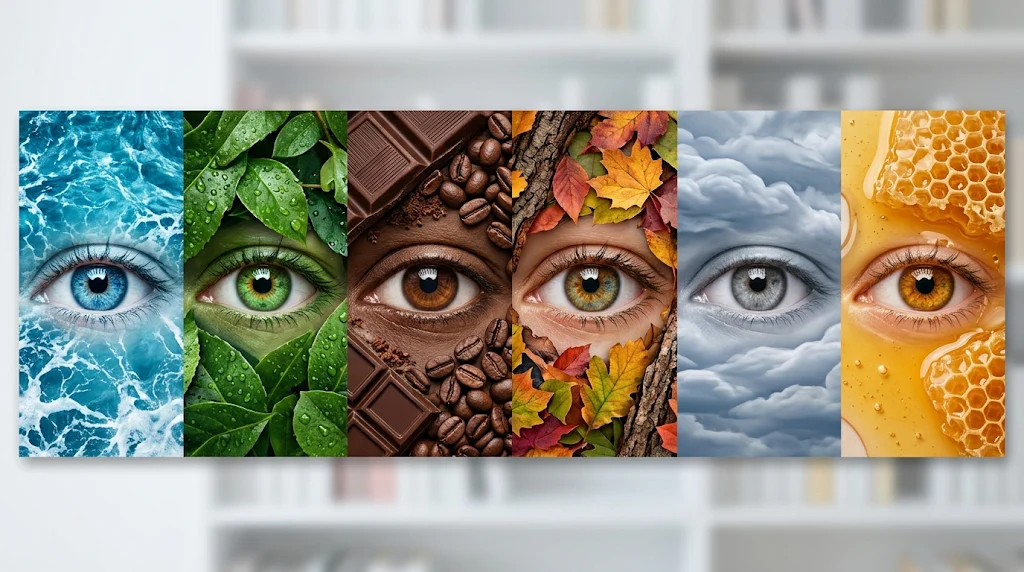
Eye color gives you an easy starting point when creating a simile. Think about something in nature or everyday life that has a similar color.
Similes for Blue Eyes
- As blue as the ocean
- Like a clear summer sky
- Blue like a quiet lake
- Like clear water
Example: Her blue eyes were as clear as a summer sky.
Similes for Green Eyes
- As green as fresh grass
- Like spring leaves
- Green like a forest
- Like fresh moss
Example: His eyes were green like leaves after a spring rain.
Similes for Brown Eyes
- Like warm chocolate
- As brown as tree bark
- Like polished wood
- Like freshly brewed coffee
Example: Her brown eyes were warm like melted chocolate.
Similes for Hazel Eyes
- Like autumn leaves
- Like sunlight through leaves
- A mix of green and gold
- Like a forest in fall
Example: Her hazel eyes looked like autumn leaves in the afternoon light.
Similes for Gray Eyes
- Like a cloudy sky
- As gray as morning mist
- Like smooth stones
- Like silver clouds
Example: His gray eyes were like a cloudy sky before the rain.
Similes for Golden or Amber Eyes
- Like warm honey
- As golden as sunlight
- Like autumn light
- Like polished amber
Example: Her amber eyes glowed like warm honey in the sunlight.
Similes for Bright Eyes
Bright eyes can suggest happiness, excitement, energy, or interest.
Try these examples:
- Her eyes sparkled like fireworks.
- His eyes shone like the morning sun.
- Her eyes glowed like a candle in the dark.
- His eyes were as bright as stars.
- Her eyes shimmered like sunlight on water.
Use bright images when you want the reader to feel energy or happiness.
Similes for Beautiful Eyes
Beauty can be described in many ways. Instead of always using stars or diamonds, think about flowers, sunlight, water, or nature.
Examples:
- Her eyes were like fresh flowers.
- His eyes shone like morning light.
- Her eyes were as clear as fresh water.
- His eyes sparkled like sunlight on a lake.
- Her eyes were warm like golden sunlight.
The best choice depends on the character and the mood of the scene.
Similes for Sad Eyes
Sad eyes can be compared with rain, clouds, empty spaces, or fading light.
Examples:
- Her eyes looked like a rainy sky.
- His eyes were like storm clouds.
- Her eyes were as empty as a dry well.
- His eyes looked like windows covered with rain.
- Her eyes shimmered like raindrops on glass.
These comparisons allow you to show sadness instead of simply saying, “She was sad.”
Similes for Angry Eyes
Anger can be described with strong images such as fire, lightning, storms, and hot coals.
Examples:
- His eyes burned like fire.
- Her eyes flashed like lightning.
- His eyes were like a raging storm.
- Her eyes were as fierce as a wildfire.
- His eyes glowed like hot coals.
These similes work well in tense scenes and moments of conflict.
Similes for Loving and Kind Eyes
Gentle images are useful when describing love, kindness, and affection.
Examples:
- Her eyes were like warm sunlight.
- His eyes were as gentle as a quiet morning.
- Her eyes shone like a soft candle.
- His eyes were warm like honey.
- Her eyes felt as comforting as a familiar home.
These comparisons can be used for romantic relationships, family moments, friendships, and caring characters.
Similes for Mysterious Eyes
Sometimes a character’s eyes make other people wonder what they are thinking.
Examples:
- His eyes were like a deep ocean.
- Her eyes looked like a moonless night.
- His eyes were like locked doors.
- Her eyes were like a puzzle waiting to be solved.
- His eyes were as deep as a hidden well.
These similes are useful for mysterious or secretive characters.
Similes for Surprised Eyes
Surprise can change the way eyes look. They may become wide, bright, or suddenly focused.
Examples:
- Her eyes were as wide as saucers.
- His eyes opened like two bright windows.
- Her eyes were as round as coins.
- His eyes looked like two full moons.
- Her eyes widened like a startled cat’s.
These work well in stories when a character sees something unexpected.
Similes for Tired or Sleepy Eyes
When someone is tired, their eyes may look heavy, dull, or half closed.
Examples:
- Her eyes were as sleepy as a kitten.
- His eyes were heavy like wet curtains.
- Her eyes looked like half-closed windows.
- His eyes were as tired as a traveler after a long journey.
- Her sleepy eyes looked soft like a warm blanket.
Short Eyes Similes for Everyday Writing
Sometimes you only need a short comparison.
Here are some easy ones:
- Eyes like stars
- Eyes like fire
- Eyes like ice
- Eyes like honey
- Eyes like the ocean
- Eyes like glass
- Eyes like mirrors
- Eyes like buttons
- Eyes like sunlight
- Eyes like storm clouds
These short phrases can work in captions, poems, dialogue, creative writing, and casual descriptions.
Eyes Similes for Storytelling and Character Building
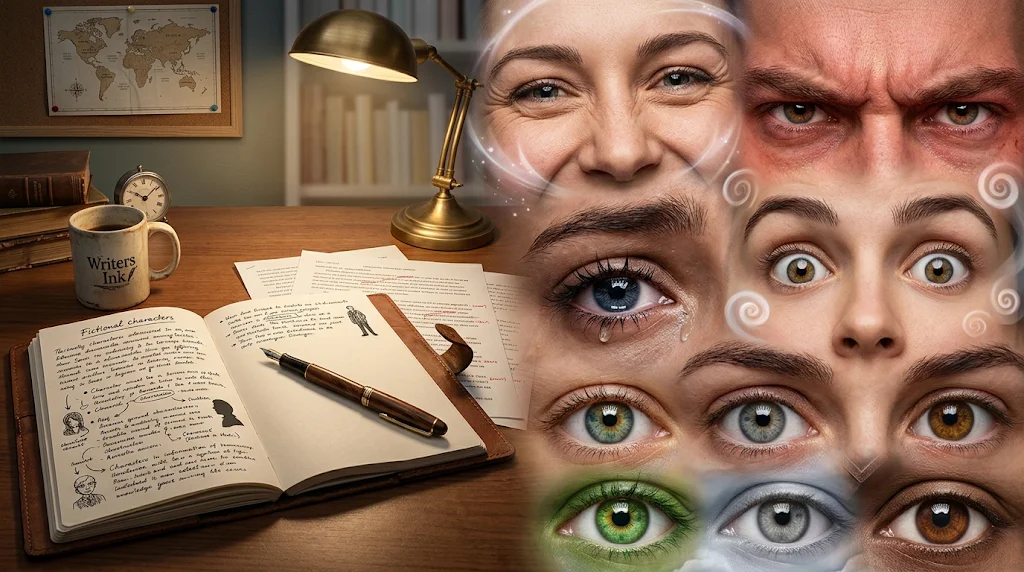
A simile can reveal something about a character without directly telling the reader.
For example:
His eyes were like locked doors.
This suggests that he may be secretive or difficult to understand.
Her eyes were like open skies.
This can suggest freedom, honesty, or a cheerful personality.
His eyes burned like fire.
This may suggest anger or determination.
Her eyes were like calm water.
This can suggest peace and patience.
This is one reason eyes similes are useful in storytelling. They can describe appearance while also giving clues about personality.
How to Describe Eyes Without Repeating the Same Similes
Stars, oceans, fire, and sunlight are common comparisons. They can work well, but using them repeatedly can make your writing feel predictable.
Instead, look around you for less obvious images.
For example, instead of:
Her eyes were like stars.
You might write:
Her eyes shimmered like sunlight caught on a glass of water.
Instead of:
His eyes were like fire.
You might write:
His eyes glowed like coals beneath a dying flame.
The goal is not to make every comparison unusual. The goal is to choose an image that fits the exact scene.
How to Create Your Own Eyes Similes
Creating an original eyes simile is easier when you break it into a few steps.
Start with the eyes
Notice their color, brightness, size, movement, or expression.
Choose the emotion
Ask what the eyes are showing.
Are they happy, nervous, angry, tired, curious, peaceful, or sad?
Find a matching image
Think of something from nature, daily life, animals, weather, or familiar objects.
Connect the two
Use like or as.
For example:
Emotion: Calm
Image: A quiet lake
Simile: Her eyes were like a quiet lake.
Another example:
Emotion: Excitement
Image: Fireworks
Simile: His eyes sparkled like fireworks.
Read it aloud
If the comparison sounds strange when you say it, try a simpler version.
Common Mistakes When Writing Eyes Similes
Using too many comparisons
Do not put several unrelated images into one sentence.
Awkward:
Her eyes were like stars, fire, oceans, clouds, diamonds, and flowers.
Better:
Her eyes sparkled like stars.
One strong comparison is usually enough.
Choosing an image that does not match the emotion
A comparison should support the mood.
“Eyes like warm sunlight” sounds gentle and comforting.
“Eyes like fire” sounds intense or angry.
Make sure the image fits the scene.
Using the same simile repeatedly
If every character has eyes like stars, the descriptions may start to feel repetitive.
Try using different images for different characters.
Making the comparison too complicated
A simile should help the reader understand the description. If the reader has to stop and figure out what the comparison means, it may be too complicated.
Forgetting the context
A simile that works in a romantic scene may not work in a scary scene. Always think about what is happening around the character.
Focusing only on beauty
Eyes do not only describe physical appearance. They can show fear, confidence, confusion, kindness, anger, curiosity, or sadness.
How to Make Eyes Similes Sound Natural
A natural simile should fit smoothly into the sentence.
Natural:
Her eyes were like calm water.
Less natural:
Her eyes were an abstract universe of endless emotional energy.
Simple language is often stronger because readers can understand it immediately.
Before using a simile, ask yourself:
Does the image make sense?
Does it match the emotion?
Can the reader picture it?
Does it sound natural when read aloud?
If the answer is yes, the simile is probably working.
Before and After Examples
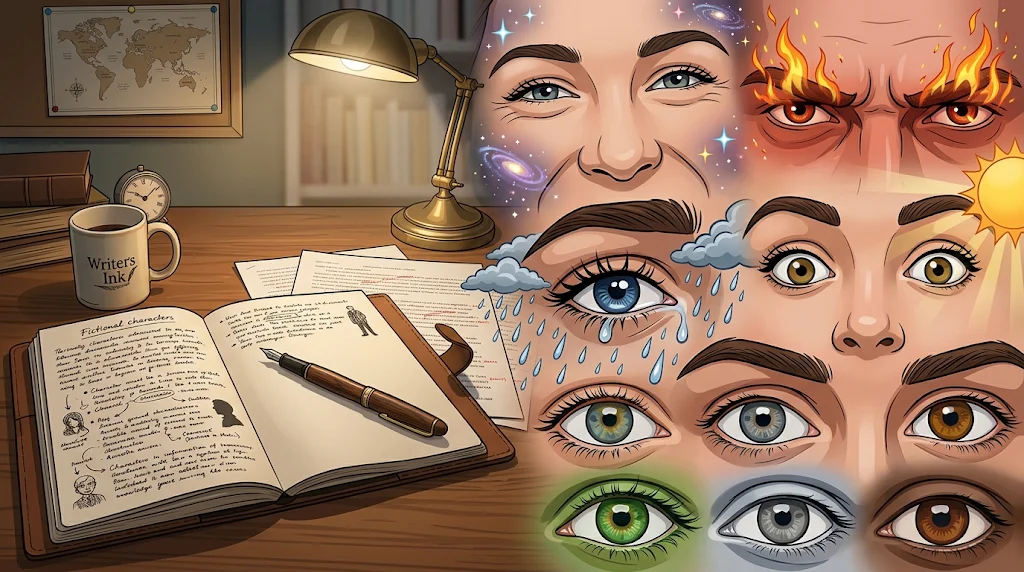
One easy way to understand the value of similes is to compare a plain sentence with a descriptive one.
Plain:
She had beautiful eyes.
With a simile:
Her eyes sparkled like sunlight on water.
Plain:
He looked angry.
With a simile:
His eyes burned like fire.
Plain:
She looked sad.
With a simile:
Her eyes looked like a rainy sky.
Plain:
He looked tired.
With a simile:
His eyes were as sleepy as a kitten.
The simile adds an image without requiring a long explanation.
Eyes Similes in Poems and Creative Writing
Poetry gives writers more freedom to use imaginative comparisons.
Examples:
- Her eyes held the night like a secret.
- His eyes flowed like a quiet river.
- Her eyes were like silent prayers.
- His gaze was as deep as an endless sea.
- Her eyes shimmered like rain beneath the moon.
Poetic similes can be more imaginative than everyday descriptions, but they should still create a feeling or picture that readers can understand.
Fun Exercise: Complete the Eyes Similes
Fill in each blank with a word or phrase that creates a natural comparison.
- When she saw her birthday present, her eyes were as wide as ________.
- His sleepy eyes looked as soft as a ________.
- Her blue eyes were as bright as the ________.
- After standing outside in the snow, his eyes looked cold like ________.
- My baby brother’s eyes were round and shiny like ________ on a teddy bear.
- She was crying, and her eyes looked like ________ on a window.
- When Dad gets mad, his eyes look like they are full of ________.
- My friend has brown eyes as warm as ________.
- The dog’s eyes glowed in the dark like ________.
- After hearing the good news, his eyes sparkled like ________ in the night sky.
Answer Key
- Saucers
- Blanket
- Ocean or sky
- Ice on a lake
- Buttons
- Raindrops
- Fire
- Chocolate or honey
- Flashlights
- Stars
Create Your Own Eyes Similes
Now try creating your own comparisons.
Exercise 1
Complete the sentence:
Her eyes were like ________ because she was feeling calm.
Exercise 2
Complete the sentence:
His eyes flashed like ________ when he became angry.
Exercise 3
Describe someone’s blue eyes without using the word ocean or sky.
Exercise 4
Describe sad eyes without using the words rain or tears.
Exercise 5
Write one simile for curious eyes.
There is no single correct answer for these exercises. The goal is to find a comparison that clearly matches the feeling or appearance you want to describe.
Tips for Writing Better Eyes Similes
Keep these simple ideas in mind:
- Start with a clear image.
- Match the simile to the emotion.
- Use familiar objects and scenes.
- Avoid unnecessary words.
- Do not repeat the same comparison too often.
- Look for details that make your character different.
- Read the sentence aloud.
- Choose clarity over complicated language.
- Let the scene guide your choice.
A good simile does not have to be fancy. It just needs to give the reader something they can picture.
Frequently Asked Questions About Eyes Similes
1. What is an eyes simile?
An eyes simile is a figurative comparison that describes eyes by comparing them with another object, place, animal, or idea using words such as like or as.
2. What is a good simile for beautiful eyes?
Some natural choices include “Her eyes sparkled like sunlight on water” and “Her eyes were as bright as stars.”
3. What is a simile for sad eyes?
You can compare sad eyes to rain, clouds, fading light, or other quiet images. For example, “Her eyes looked like a rainy sky.”
4. What is a simile for angry eyes?
Fire, lightning, storms, and hot coals can describe angry eyes. For example, “His eyes burned like fire.”
5. What is a simile for blue eyes?
Blue eyes can be compared with the ocean, sky, lakes, or clear water. For example, “Her eyes were as blue as the ocean.”
6. What is a simile for brown eyes?
Brown eyes can be compared with chocolate, coffee, tree bark, wood, or warm earth. For example, “His eyes were warm like chocolate.”
7. What is a simile for sparkling eyes?
You can use images connected with light, such as stars, sunlight, fireworks, or water. For example, “Her eyes sparkled like fireworks.”
8. What is a simile for mysterious eyes?
Deep oceans, locked doors, hidden caves, and puzzles can suggest mystery. For example, “His eyes were like locked doors.”
9. How can I create my own eyes simile?
First notice the eyes’ color, expression, or mood. Then think of something that creates a similar feeling and connect the two with like or as.
10. Can eyes similes be used in everyday conversation?
Yes. Short expressions such as “eyes like stars” or “eyes like fire” can be used in everyday conversation, although they are especially common in creative and descriptive writing.
11. Are eyes similes useful in storytelling?
Yes. They can describe appearance while also revealing a character’s mood, personality, or feelings.
12. What makes a good eyes simile?
A good eyes simile is clear, natural, easy to picture, and connected to the emotion or appearance being described.
Conclusion
Eyes can reveal feelings that characters never say out loud. They can look bright with excitement, soft with kindness, dark with sadness, or sharp with anger. Similes for eyes give writers a simple way to turn these details into clear images.
You do not need complicated language to create a strong comparison. A simple line such as “Her eyes were like calm water” can tell the reader a lot when it fits the scene.
When creating your own eyes similes, start by noticing the color, expression, and emotion. Then think of something familiar that matches it. With practice, you can move beyond common comparisons and create descriptions that feel natural and personal.
The next time you describe a character’s eyes, do not just tell your reader what they look like. Give them an image they can see.
