
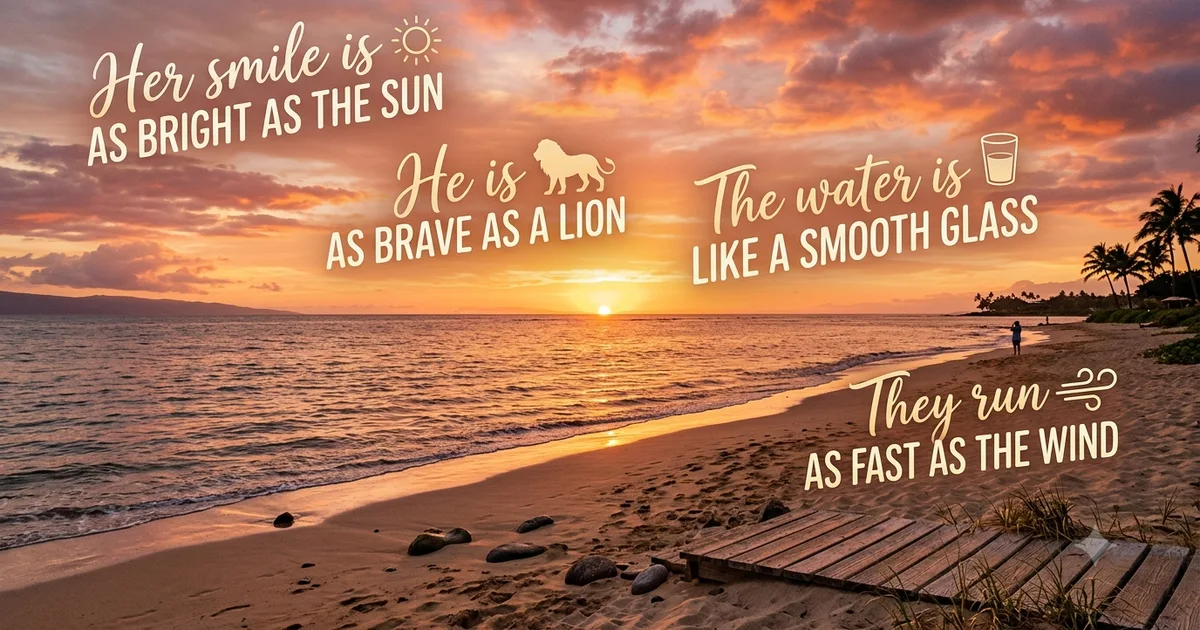
Quick Answer
What is a Sunset Simile?
A sunset simile compares a sunset to another object or experience using words like “as” or “like.” It helps create vivid mental images while expressing emotions such as beauty, peace, romance, hope, or the end of a day. Sunset similes make writing more colorful, engaging, and memorable.
Introduction
A sunset can turn an ordinary scene into something unforgettable. The warm colors, fading light, and peaceful feeling often inspire writers to create beautiful comparisons. One of the best ways to describe a sunset is through a simile.
A sunset simile compares a sunset or something related to it by using words such as “like” or “as.” These comparisons help readers picture a scene and feel its emotion.
In this guide, you will learn what a sunset simile means, why writers use it, and how to create your own powerful examples for stories, poems, and essays.
What Is a Sunset Simile in Simple Words
A sunset simile compares a sunset to another object or experience using “like” or “as.”
Examples include:
- The sunset glowed like a burning candle.
- The sky turned red as a rose at sunset.
- The evening clouds floated like golden feathers.
These comparisons make descriptions more vivid and easier to imagine.
Why Writers Often Compare Things to a Sunset
Sunsets naturally carry strong emotions. They can represent:
- Beauty
- Peace
- Love
- Change
- Endings
- Hope
Because sunsets create powerful feelings, writers often use them to add meaning to a scene.
For example:
“The old man’s smile faded like a sunset disappearing beyond the hills.”
This sentence suggests both beauty and an ending.
How a Sunset Simile Creates Strong Visual Imagery
Good writing helps readers see a scene in their minds. A sunset simile paints a picture through comparison.
Instead of writing:
“The sunset was pretty.”
You could write:
“The sunset spread across the sky like spilled paint.”
The second sentence creates a clear image and makes the description more memorable.
The Difference Between a Sunset Simile and a Sunset Metaphor
A simile uses comparison words.
Example:
“The sunset looked like a golden fire.”
A metaphor makes a direct statement.
Example:
“The sunset was a golden fire.”
Both create imagery, but similes often feel gentler and easier for beginners to understand.
Common Emotions Expressed Through Sunset Similes
Sunset similes often communicate emotions such as:
- Calmness
- Nostalgia
- Happiness
- Romance
- Sadness
- Hope
Example:
“Her memories drifted away like a sunset fading into night.”
The comparison creates a feeling of loss and reflection.
Easy Sunset Simile Examples for Beginners
Here are simple examples:
- The sunset shone like melted gold.
- The sky glowed like a giant lantern.
- The clouds looked like cotton dipped in orange paint.
- The sun sank like a coin into the sea.
- The sunset spread across the horizon like a colorful blanket.
These examples work well in school assignments and creative writing.
Sunset Similes That Describe Beauty and Peace
A sunset often represents calm and beauty.
Examples include:
- The sunset rested on the ocean like silk.
- The evening sky looked like a painted masterpiece.
- The fading sunlight flowed like honey across the hills.
- The sunset glimmered like a field of golden flowers.
These comparisons create a peaceful mood.
Sunset Similes Used to Show Endings and Change
A sunset marks the end of the day, so writers often use it to symbolize change.
Examples:
- The season ended like a sunset slipping behind the mountains.
- Their friendship faded like the last light of evening.
- His childhood disappeared like a sunset into darkness.
These similes add emotional depth to writing.
Creative Sunset Similes for Poetry Writing
Poetry thrives on imagery. Try these examples:
- The sunset floated like a dream across the sky.
- Evening arrived like a painter brushing red across a canvas.
- The sun fell like a glowing ember.
Poets often use sunsets because they naturally inspire imagination.
Sunset Similes That Make Stories More Emotional

Descriptions become stronger when they connect to emotions.
Example:
“She watched him leave, and her happiness vanished like the sunset behind the trees.”
The sunset mirrors the character’s feelings and strengthens the scene.
How to Write Your Own Sunset Simile Step by Step
Follow these steps:
Step 1
Think about the feeling you want to express.
Step 2
Choose something that shares the same qualities.
Step 3
Create the comparison using “like” or “as.”
Example:
Feeling: Warmth
Comparison: A glowing fireplace
Sentence:
“The sunset glowed like a fireplace on a cold evening.”
Words That Pair Well With Sunset in Similes
Helpful descriptive words include:
- Golden
- Crimson
- Soft
- Radiant
- Fiery
- Gentle
- Peaceful
- Glowing
- Warm
- Brilliant
Strong word choices create stronger imagery.
Mistakes to Avoid When Creating Sunset Similes
Avoid these common problems:
Using Cliches
“The sunset was like a painting” appears too often.
Creating Confusing Comparisons
Choose images readers understand easily.
Adding Too Many Details
Keep the comparison simple and focused.
Sunset Similes for School Assignments and Essays
Teachers often ask students to use figurative language.
Examples:
- The sunset spread across the sky like orange velvet.
- The evening sun looked like a glowing pumpkin.
- The clouds blushed like roses at sunset.
These examples sound creative while remaining easy to understand.
Romantic Sunset Similes for Creative Writing
Sunsets often appear in romantic scenes.
Examples:
- Her smile glowed like a sunset over the ocean.
- Their love felt warm like the last rays of evening.
- The sky blushed like a shy face at sunset.
These comparisons add emotion and beauty.
Sunset Similes That Describe Colors and Light
The colors of sunset inspire vivid descriptions.
Examples:
- The horizon burned like liquid gold.
- The clouds looked like pieces of fire.
- The sky glowed like a bowl of melted copper.
- The evening light spread like orange silk.
These images help readers picture the scene.
Famous Examples of Sunset Comparisons in Literature
Many writers compare sunsets to paintings, fire, jewels, and precious metals.
Classic literature often uses sunset imagery to symbolize:
- The end of a journey
- Lost love
- Peace after conflict
- The passing of time
Studying these comparisons can improve your own writing.
When to Use a Sunset Simile Instead of a Metaphor
Choose a simile when:
- You want a softer comparison.
- Your audience includes young readers.
- You want clear imagery.
- You want to explain an emotion gently.
A simile often feels more natural in descriptive writing.
Practice Exercises to Create Better Sunset Similes
Try these activities:
Exercise One
Describe a beach sunset using one simile.
Exercise Two
Write three similes that show peace.
Exercise Three
Write a sunset simile that represents sadness.
Practice builds stronger writing skills.
Conclusion
A sunset simile adds depth and emotion to writing by comparing a sunset to something familiar using words like as or like. These comparisons help readers picture the scene while feeling emotions such as peace, hope, romance, or reflection. Whether you are writing a story, poem, speech, or school essay, sunset similes make descriptions more vivid and engaging.
The strongest similes use simple, natural comparisons that readers can easily understand. Instead of making writing sound complicated, they create clear mental images that leave a lasting impression. With regular practice, you can craft original sunset similes that make every sunset scene more memorable and meaningful.
Frequently Asked Questions About Sunset Similes
What is a sunset simile?
A comparison that uses “like” or “as” to describe a sunset.
Why do writers use sunset similes?
They create vivid imagery and emotional depth.
Can a sunset simile be romantic?
Yes. Many writers use sunsets to express love and affection.
Are sunset similes useful in poetry?
Yes. They help poets create beautiful mental pictures.
Can children use sunset similes?
Yes. They are simple and fun to learn.
What emotions do sunset similes express?
Peace, sadness, love, hope, and change.
How do I create my own sunset simile?
Think about the feeling and compare it to something with similar qualities.
What is an example of a sunset simile?
“The sunset glowed like melted gold.”
Is a sunset metaphor different from a sunset simile?
Yes. A simile uses comparison words while a metaphor makes a direct comparison.
Why are sunsets popular in creative writing?
They naturally symbolize beauty, endings, and emotion.
