

Introduction
Good writing is easy to follow. Readers stay engaged when ideas feel simple, vivid, and easy to picture. One of the easiest ways to improve clarity is by using similes.
A simile compares two different things using the words like or as. When done well, a simile helps readers understand an idea instantly. Instead of saying something is easy to understand, you can say it is as clear as glass. Instead of saying a message was obvious, you can describe it as as clear as day.
Clear similes work because they connect unfamiliar ideas to familiar experiences. They help students write better essays, storytellers create stronger descriptions, and everyday writers communicate more effectively.
In this guide, you will learn what clear similes are, why they work, how to use them correctly, and the best examples you can use in your own writing.
Quick Answer
A clear simile compares something to a familiar object, feeling, or experience using the words like or as. The goal is to help readers instantly understand what you mean. Examples include as clear as glass, as clear as day, and like a freshly cleaned window. These comparisons create strong mental images and make writing easier to understand.
What Is a Clear Simile?
A clear simile is a comparison that readers can understand immediately. It uses familiar images and avoids complicated language.
Examples
- Her explanation was as clear as glass.
- His instructions were as clear as a bell.
- The water looked like a polished mirror.
- The answer was as clear as day.
These comparisons work because most people already know what glass, bells, mirrors, and daylight are like.
Why Clear Similes Make Writing Better
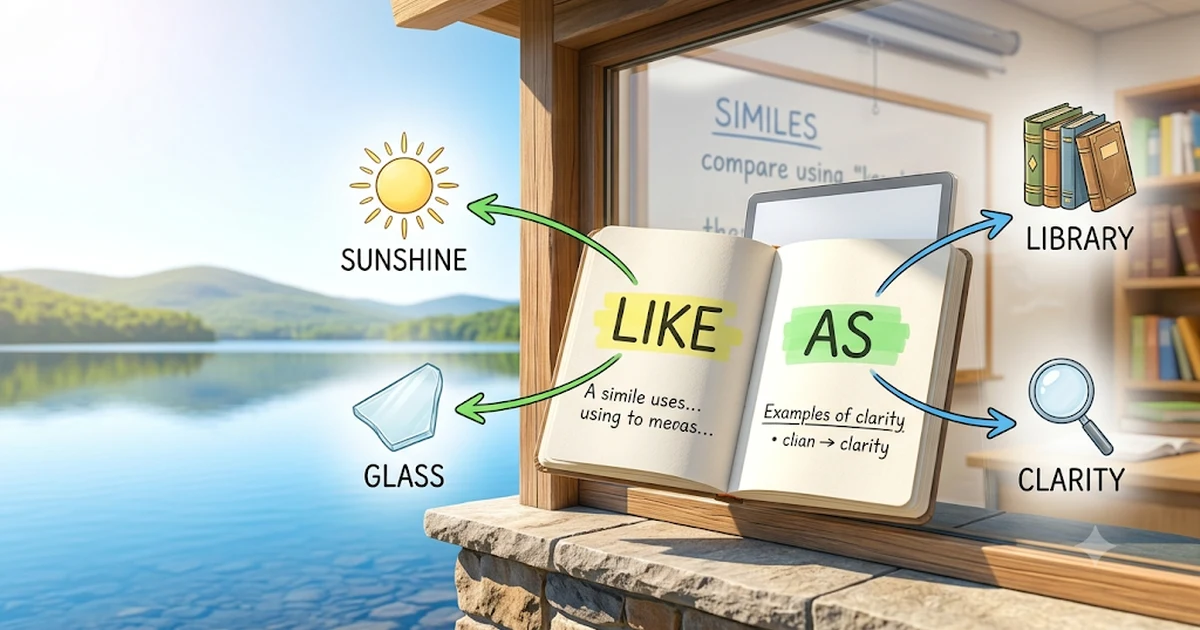
Clear similes improve writing because they:
- Create vivid mental images
- Simplify complex ideas
- Improve readability
- Make descriptions memorable
- Keep readers engaged
Example
Plain Sentence:
The lake was very transparent.
Improved Sentence:
The lake was as clear as glass, revealing every pebble beneath the surface.
The second sentence creates a much stronger image.
Best Similes for Clear With Meanings and Examples
| Simile | Meaning | Example |
|---|---|---|
| As clear as glass | Easy to see or understand | The lake was as clear as glass. |
| As clear as day | Obvious and unmistakable | It was as clear as day that she was happy. |
| As clear as a bell | Easy to hear or understand | His instructions were as clear as a bell. |
| Like a freshly cleaned window | Spotless and transparent | The view looked like a freshly cleaned window. |
| Like water in a mountain stream | Pure and transparent | Her explanation was like water in a mountain stream. |
| As clear as a cloudless sky | Open and free from confusion | His plan was as clear as a cloudless sky. |
| Like a polished mirror | Smooth and reflective | The lake looked like a polished mirror. |
| As clear as writing in bold | Impossible to miss | The warning was as clear as writing in bold. |
| Like lights in the dark | Makes understanding easier | Her advice was like lights in the dark. |
| As clear as footprints in snow | Easy to follow | The clues were as clear as footprints in snow. |
Clear Similes for Describing Emotions
Emotions can be difficult to explain. Similes make them easier to understand.
Examples
- Her excitement was like a balloon ready to burst.
- His anger burned like fire.
- She felt as light as a feather.
- His heart felt as heavy as stone.
- He felt like he was walking on air.
Clear Similes for Describing People
Writers often use similes to reveal personality traits quickly.
Examples
- As brave as a lion
- As gentle as a lamb
- Like a rock during a storm
- As patient as a saint
- Like a flowing river when speaking
Clear Similes for Movement and Action
Action descriptions become more vivid with similes.
Examples
- He ran like lightning.
- The car sped like a rocket.
- She moved like a dancer.
- The leaves fell like rain.
- The horse galloped like the wind.
Common Mistakes to Avoid
Many writers make similes too complicated.
Avoid:
❌ Rare comparisons
❌ Long explanations
❌ Mixed imagery
❌ Forced comparisons
Example
Weak Simile:
He ran like a machine trapped in a storm of endless motion.
Better Simile:
He ran like the wind.
The simpler version is easier to understand.
How to Create Your Own Clear Similes
Follow these steps:
Step 1
Choose what you want to describe.
Step 2
Think of a familiar image.
Step 3
Connect them using like or as.
Step 4
Read it aloud and check if it feels natural.
Example
Plain:
The room was messy.
Simile:
The room looked like a storm had passed through it.
Practice Exercise
Fill in the blanks with suitable similes.
- The water was __________.
- Her answer was __________.
- The sky looked __________.
- The clues were __________.
- His message was __________.
Sample Answers
- As clear as glass
- As clear as a bell
- As clear as a cloudless sky
- As clear as footprints in snow
- As clear as day
Conclusion
Clear similes help readers understand ideas quickly. They transform ordinary descriptions into vivid images that are easy to picture and remember. Whether you are writing an essay, story, blog post, or school assignment, simple comparisons such as as clear as glass, as clear as day, and like a polished mirror can make your writing stronger.
The best similes are short, familiar, and natural. Focus on clarity first, and your writing will become more engaging and effective.
FAQs
What is a clear simile?
A clear simile compares two things using familiar images that readers understand immediately.
What are examples of clear similes?
Examples include as clear as glass, as clear as day, and as clear as a bell.
Why are similes important in writing?
They help readers visualize ideas and make descriptions more memorable.
How do I write a good simile?
Use a familiar comparison, connect it with like or as, and keep it simple.
Can students use similes in essays?
Yes. Similes make essays more descriptive and engaging when used naturally.
