Introduction
Learning English becomes more enjoyable when children discover creative ways to describe the world around them. A simile is one of the easiest and most useful language tools for young learners. It compares one thing with another by using the words “like” or “as.”
For example, instead of saying that a rabbit is very fast, a child can say, “The rabbit is as fast as the wind.” Instead of saying that a kitten is soft, they can say, “The kitten is as soft as a cloud.” These comparisons help children create clear pictures in their minds.
Similes make reading more interesting, writing more colorful, and speaking more expressive. They also help children build vocabulary, improve imagination, and explain ideas in a memorable way.
This guide explains what a simile is, how children can recognize one, and how to create one. It also includes easy examples, fun activities, writing tips, practice exercises, common mistakes, and answers to frequently asked questions.
Quick Answer
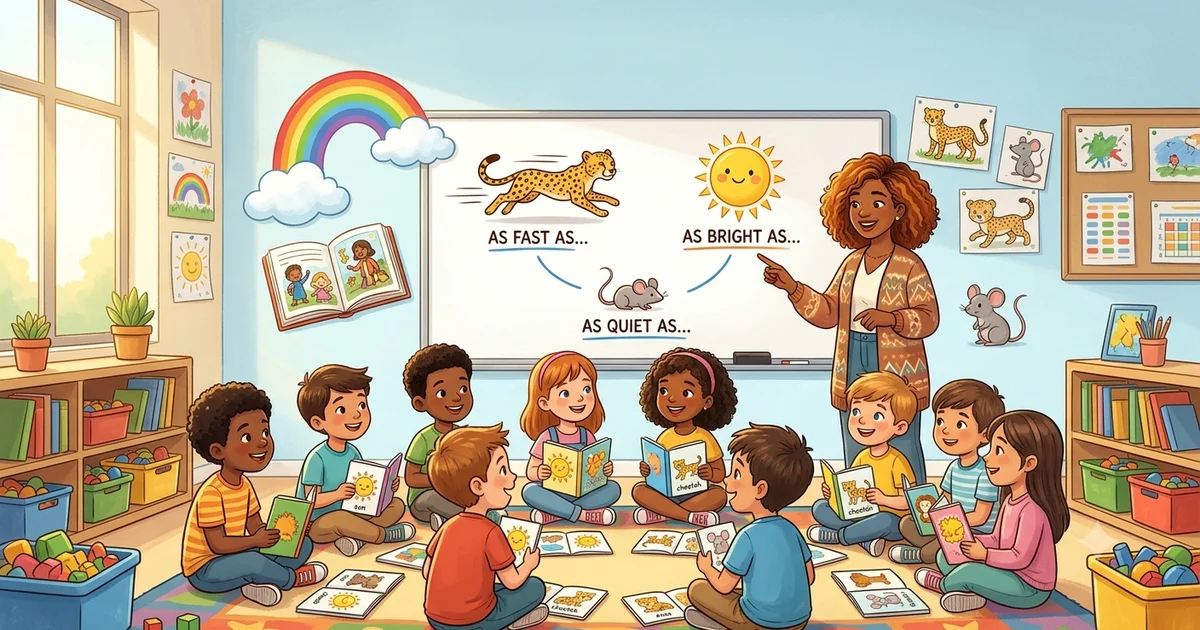
A simile for kids is a comparison between two different things that uses the words “like” or “as.” Similes help children describe people, animals, objects, places, actions, and feelings in a creative and easy-to-understand way. For example, “as fast as a cheetah” describes great speed, while “as soft as a cloud” describes something very soft. Similes make language more colorful and help children become stronger readers, writers, and speakers.
What Is a Simile for Kids?
A simile is a figure of speech that compares two different things by using “like” or “as.” The comparison helps readers and listeners understand an idea by connecting it to something familiar.
For example:
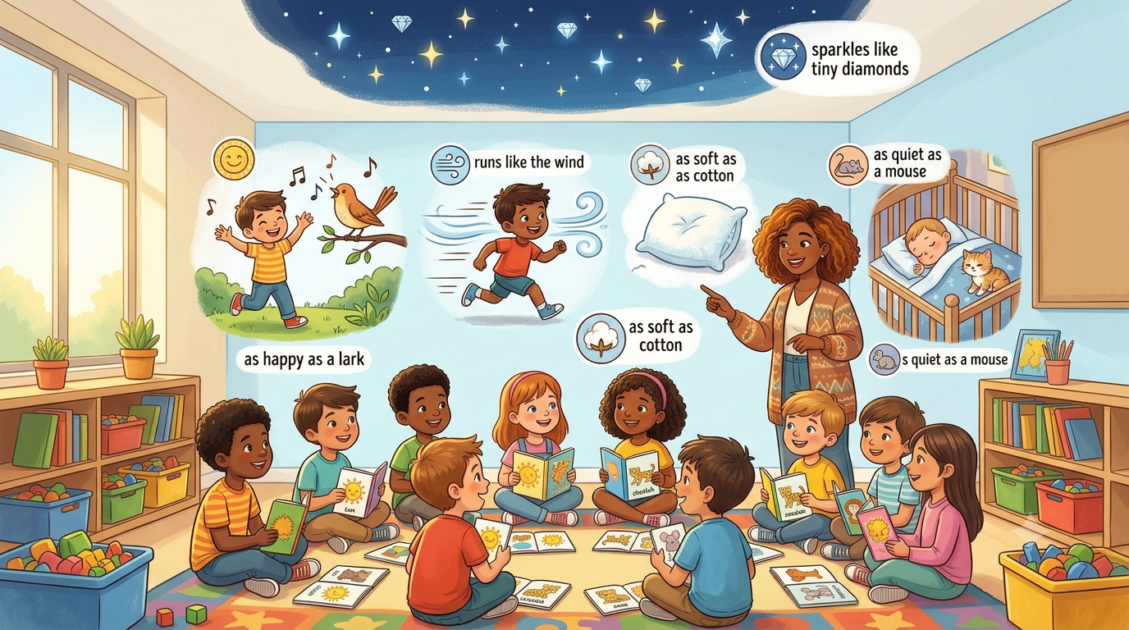
- She is as happy as a lark.
- He runs like the wind.
- My pillow is as soft as cotton.
- The baby slept like a kitten.
- The stars shone like tiny diamonds.
Each sentence compares one thing with another to create a clearer picture.
Children may already hear similes in stories, poems, cartoons, songs, and everyday conversations. Once they learn how similes work, they can begin noticing them everywhere.
The Simple Simile Formula
Children can remember these two easy patterns:
Thing + like + comparison
Example:
The bird flew like an arrow.
Thing + as + describing word + as + comparison
Example:
The snow was as white as milk.
Here are some common examples:
| Description | Simile |
|---|---|
| Very fast | As fast as a cheetah |
| Very cold | As cold as ice |
| Very bright | As bright as the sun |
| Very quiet | As quiet as a mouse |
| Very busy | As busy as a bee |
| Very light | As light as a feather |
| Very strong | As strong as an ox |
| Very sweet | As sweet as honey |
Why Are Similes Important for Kids?
Similes are more than fun expressions. They help children develop important language and thinking skills.
Similes can help children:
- Learn new descriptive words
- Improve vocabulary
- Understand stories more easily
- Write more interesting sentences
- Develop creativity
- Express feelings clearly
- Speak with greater confidence
- Create strong mental pictures
- Remember ideas more easily
Compare these two sentences:
Plain sentence:
The dog was fast.
Sentence with a simile:
The dog was as fast as lightning.
The second sentence gives readers a stronger picture of the dog’s speed.
Benefits of Learning Similes
| Benefit | How It Helps Children |
|---|---|
| Better vocabulary | Children learn new describing words |
| Stronger writing | Stories become more detailed and engaging |
| Improved reading | Children understand descriptive language |
| More creativity | Comparisons encourage imaginative thinking |
| Clearer speaking | Children can explain ideas in interesting ways |
| Better confidence | Children become more comfortable using language |
| Stronger memory | Creative comparisons are easier to remember |
How to Identify a Simile
Finding a simile becomes easy when children know what to look for.
Check for these three clues:
- Look for the word “like.”
- Look for the word “as.”
- Check whether two different things are being compared.
Example:
The baby slept like a kitten.
The sentence uses “like” to compare the baby’s peaceful sleep to a kitten’s sleep. Therefore, it is a simile.
Another example:
The water was as clear as glass.
The sentence uses the pattern “as clear as,” so it is also a simile.
Important Tip
Not every sentence containing “like” is a simile.
For example:
I like chocolate ice cream.
The word “like” means “enjoy” here. It does not compare two things, so the sentence is not a simile.
Simile vs. Metaphor
Similes and metaphors both compare things, but they use different structures.
| Simile | Metaphor |
|---|---|
| Uses “like” or “as” | Does not use “like” or “as” |
| Makes a clear comparison | Makes a direct comparison |
| Often easier for children | Can be more challenging |
| “She sings like a bird.” | “She is a bird when she sings.” |
Another example:
Simile:
The classroom was as quiet as a library.
Metaphor:
The classroom was a library.
For young learners, similes are often easier because the comparison is clearly shown.
Easy Simile Examples for Kids
Animal Similes
Animals are excellent for teaching similes because children already know many animal characteristics.
| Simile | Meaning |
|---|---|
| As brave as a lion | Very brave |
| As busy as a bee | Always active or working |
| As gentle as a lamb | Very kind and calm |
| As wise as an owl | Very wise |
| As playful as a puppy | Full of energy and fun |
| As slow as a turtle | Moving slowly |
| As quiet as a mouse | Very quiet |
| As proud as a peacock | Feeling very proud |
| As hungry as a wolf | Extremely hungry |
| As free as a bird | Free to go anywhere |
Nature Similes
Nature provides beautiful and easy comparisons.
- As bright as the sun
- As calm as a lake
- As fresh as morning dew
- As cool as a breeze
- As colorful as a rainbow
- As tall as a mountain
- As deep as the ocean
- As clear as crystal
- As light as a feather
- Like leaves dancing in the wind
Examples in Sentences
- The lake was as calm as glass.
- Her smile was as bright as the sun.
- The mountain stood as tall as a giant.
- The leaves moved like dancers in the wind.
- The sky was as blue as the sea.
Food Similes
Food-related similes are easy for children to understand and remember.
- As sweet as honey
- As smooth as butter
- As soft as a marshmallow
- As crunchy as crackers
- As cold as ice cream
- Like popcorn popping in a pan
- As juicy as an orange
- As fluffy as whipped cream
- As round as a cookie
- As fresh as a ripe apple
Examples in Sentences
- The cake was as sweet as honey.
- The bread was as soft as a pillow.
- The ice cream was as cold as snow.
- The popcorn jumped like tiny balls in the pan.
School Similes
School gives children many opportunities to practice similes.
- As quiet as a library
- As sharp as a pencil
- As colorful as a box of crayons
- As busy as a beehive
- As neat as a new notebook
- As full as a backpack
- As bright as a classroom poster
- Like pages turning in the wind
- As excited as children on the last day of school
- As organized as a row of books
Examples in Sentences
- Our classroom was as busy as a beehive.
- My backpack felt as heavy as a rock.
- Her handwriting was as neat as a printed page.
- The students were as excited as children at a birthday party.
Home Similes
Children can find many simile ideas at home.
- As warm as a blanket
- As soft as my pillow
- As shiny as a mirror
- As cozy as a nest
- As clean as a whistle
- As comfortable as my favorite chair
- As bright as a lamp
- As quiet as a sleeping house
- Like water flowing from a tap
- As welcoming as a warm hug
Examples in Sentences
- My bed was as soft as a cloud.
- The kitchen floor was as shiny as a mirror.
- The living room felt as cozy as a nest.
- The soup was as hot as fire.
Weather Similes
Weather similes are easy because children experience different types of weather throughout the year.
- As cold as ice
- As hot as the desert
- As white as fresh snow
- As bright as sunshine
- As gentle as spring rain
- As cool as an autumn breeze
- Like thunder rolling across the sky
- Like clouds floating overhead
- As dark as a stormy night
- As fresh as the air after rain
Examples in Sentences
- The winter wind was as cold as ice.
- The sun was as bright as gold.
- The rain fell like tiny beads from the sky.
- The clouds floated like soft pillows.
Friendship Similes
Similes can help children describe kindness, friendship, and caring relationships.
- As kind as an angel
- As cheerful as sunshine
- As friendly as a puppy
- As helpful as a guide
- As caring as a loving parent
- As loyal as a true friend
- Like two peas in a pod
- As patient as a good teacher
- As welcoming as a warm smile
- As loving as family
Examples in Sentences
- My friend is as cheerful as sunshine.
- The two sisters are like two peas in a pod.
- Our teacher is as patient as a gardener caring for young plants.
Action Similes
Action similes make movement more exciting.
- Runs like the wind
- Climbs like a monkey
- Swims like a fish
- Jumps like a kangaroo
- Flies like an eagle
- Spins like a top
- Sleeps like a baby
- Shines like a diamond
- Dances like a butterfly
- Moves like lightning
Examples in Sentences
- The athlete ran like the wind.
- The children jumped like kangaroos.
- The fish moved like an arrow through the water.
- The dancer floated like a butterfly across the stage.
Feeling Similes
Similes help children explain emotions in creative ways.
| Feeling | Simile |
|---|---|
| Happy | As happy as a lark |
| Sad | Like a rainy day |
| Excited | As excited as a child on a birthday |
| Nervous | Like a leaf shaking in the wind |
| Calm | As peaceful as a quiet lake |
| Angry | Like a roaring lion |
| Proud | As proud as a peacock |
| Curious | Like a kitten exploring a new room |
| Sleepy | As sleepy as a bear in winter |
| Surprised | Like seeing magic for the first time |
Creative Similes for Story Writing
Similes make stories more vivid because they help readers imagine characters, places, and events.
Here are some creative examples:
- The moon shone like a silver coin.
- The stars twinkled like tiny diamonds.
- The river flowed as smoothly as silk.
- The leaves danced like happy children.
- The clouds floated like fluffy pillows.
- The castle stood as tall as a giant.
- The forest was as quiet as midnight.
- The flowers smelled as sweet as perfume.
- The path twisted like a long snake.
- The waterfall sparkled like glitter.
Example: Writing With and Without Similes
Without Similes
The little girl walked through the forest. The trees were tall. Birds were singing. The sun was bright.
With Similes
The little girl walked through the forest as quietly as a mouse. The trees stood as tall as giants, while birds sang like tiny musicians. Above her, the sun shone as bright as gold, making every flower sparkle like a colorful jewel.
The second paragraph creates a clearer and more interesting picture.
Funny Similes That Kids Love
Funny similes make language lessons memorable.
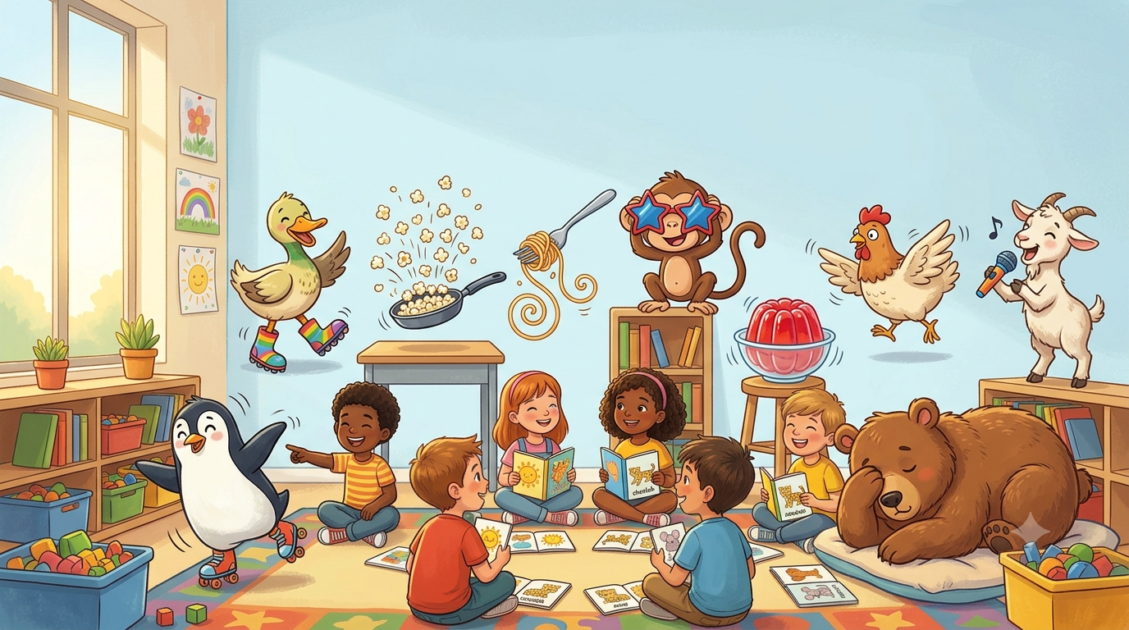
- As clumsy as a penguin on roller skates
- Like a chicken trying to fly
- As silly as a monkey wearing sunglasses
- Like popcorn bouncing around a pan
- As sleepy as a bear after winter
- Like spaghetti falling off a fork
- As wobbly as jelly
- Like a duck dancing in boots
- As noisy as a hundred alarm clocks
- Like a goat singing karaoke
Children can use these examples as inspiration for their own funny comparisons.
How to Write Your Own Similes
Creating a simile is simple when children follow a few steps.
Step 1: Choose Something
Choose a person, animal, object, place, or feeling.
Example:
A rabbit
Step 2: Choose a Quality
What is special about it?
The rabbit is fast.
Step 3: Find a Good Comparison
Think of something else that is known for being fast.
The rabbit is as fast as the wind.
Here is another example:
Thing: Pillow
Quality: Soft
Simile: The pillow is as soft as cotton.
One more example:
Thing: Flashlight
Quality: Bright
Simile: The flashlight is as bright as the sun.
Simile Writing Table
| Thing | Quality | Simile |
|---|---|---|
| Cake | Sweet | As sweet as honey |
| Snow | White | As white as milk |
| Feather | Light | As light as a feather |
| Cat | Soft | As soft as velvet |
| Bicycle | Fast | As fast as lightning |
Fun Simile Activities for Kids
1. Match the Simile
Match the beginning with the correct ending.
| Beginning | Ending |
|---|---|
| As brave as | a lion |
| As busy as | a bee |
| As cold as | ice |
| As soft as | cotton |
| As bright as | the sun |
2. Finish the Simile
Complete these sentences:
- As fast as __________
- As sweet as __________
- As tall as __________
- As quiet as __________
- As busy as __________
Possible answers:
- A cheetah
- Honey
- A mountain
- A mouse
- A bee
Children can also create their own answers if the comparisons make sense.
3. Picture Simile Game
Show children pictures of:
- An elephant
- A rainbow
- An ice cream cone
- The sun
- A mountain
Ask them to create one simile for each picture.
Examples:
- The elephant is as big as a truck.
- The rainbow is as colorful as a box of crayons.
- The ice cream is as cold as snow.
4. Simile Hunt
Ask children to read a short story and underline every simile they find.
This activity helps improve reading comprehension and teaches children how similes are used in real writing.
5. Daily Simile Challenge
Ask children to create one new simile every day.
For example:
Today’s object: A balloon
Possible simile: The balloon was as light as a feather.
Simile Practice Worksheet
Circle the Similes
- He runs like the wind.
- The cat is sleeping.
- She is as happy as sunshine.
- We went to school.
- The flower smells sweet.
- The lake was as still as glass.
Correct answers:
1, 3, and 6
Fill in the Blanks
- As brave as a __________
- As cold as __________
- As soft as __________
- Like a __________ in the sky
- As busy as a __________
Possible answers:
- Lion
- Ice
- Cotton
- Bird
- Bee
Create Your Own Similes
Write a simile for:
- A bicycle
- Your best friend
- Your teacher
- Your pet
- Your favorite toy
- A rainy day
- A delicious meal
There can be many correct answers because similes encourage creativity.
Common Mistakes Kids Make
1. Forgetting “Like” or “As”
Incorrect:
He runs a cheetah.
Correct:
He runs like a cheetah.
2. Making an Unclear Comparison
Unclear:
As loud as a sandwich.
The comparison does not clearly explain loudness.
Better:
As loud as thunder.
3. Confusing Similes and Metaphors
Simile:
She sings like a bird.
Metaphor:
She is a bird when she sings.
4. Using Too Many Similes
Similes make writing interesting, but too many can make a paragraph difficult to read.
Use similes when they add a useful picture or make an idea clearer.
5. Using a Comparison That Does Not Fit
A good simile should match the quality being described.
For example:
As cold as ice works because ice is cold.
As bright as the sun works because the sun is bright.
Children should choose comparisons that readers can easily understand.
Tips for Parents and Teachers
Parents and teachers can make simile practice part of everyday learning.
Try these ideas:
- Read storybooks and point out similes.
- Ask children to create one simile each day.
- Encourage descriptive writing in journals.
- Play matching and guessing games.
- Use pictures as writing prompts.
- Ask children to compare objects during outdoor walks.
- Praise creative ideas.
- Let children explain why their comparisons work.
- Use similes in classroom discussions.
- Create a “Simile Wall” with new examples.
Regular practice helps children use similes naturally.
Why Similes Improve Writing
Similes help children replace simple descriptions with clear and memorable images.
Instead of:
The cake tasted good.
Write:
The cake was as sweet as honey.
Instead of:
The boy was scared.
Write:
The boy shook like a leaf in the wind.
Instead of:
The playground was noisy.
Write:
The playground was as noisy as a busy train station.
Instead of:
The girl was happy.
Write:
The girl was as happy as a lark.
These comparisons make writing more vivid and enjoyable.
Conclusion
Learning similes for kids is a fun and effective way to make English more creative and meaningful. By comparing two different things with “like” or “as,” children can describe people, animals, objects, places, actions, and feelings in colorful ways.
Similes help children build vocabulary, improve reading comprehension, develop stronger writing skills, and express ideas with greater confidence. They also encourage imagination by helping young learners connect new ideas with familiar things.
Children can practice similes through stories, games, worksheets, classroom activities, conversations, and everyday observations. With regular practice, they can learn to recognize similes and create original comparisons of their own.
The more children use similes, the easier it becomes to turn ordinary sentences into clear, imaginative, and memorable descriptions.
Frequently Asked Questions
1. What is a simile for kids?
A simile is a comparison between two different things that uses the words “like” or “as.”
2. What is an easy simile example?
As fast as a cheetah is an easy simile because it compares great speed to a fast animal.
3. What words are used in similes?
The most common words are “like” and “as.”
4. Why do children learn similes?
Similes help children improve vocabulary, creativity, reading, writing, speaking, and descriptive skills.
5. How is a simile different from a metaphor?
A simile uses “like” or “as,” while a metaphor makes a direct comparison without using those words.
6. Can children create their own similes?
Yes. Children can use their imagination to create original comparisons that clearly describe a quality or idea.
7. Where can children find similes?
Children can find similes in storybooks, poems, songs, cartoons, classroom lessons, and everyday conversations.
8. Why are animal similes popular?
Children know many animal characteristics, so comparisons such as “as brave as a lion” and “as busy as a bee” are easy to understand.
9. How can teachers teach similes?
Teachers can use stories, pictures, games, worksheets, matching activities, reading exercises, and creative writing tasks.
10. Are similes important in English?
Yes. Similes make language more descriptive, engaging, and memorable while helping children communicate clearly.
