
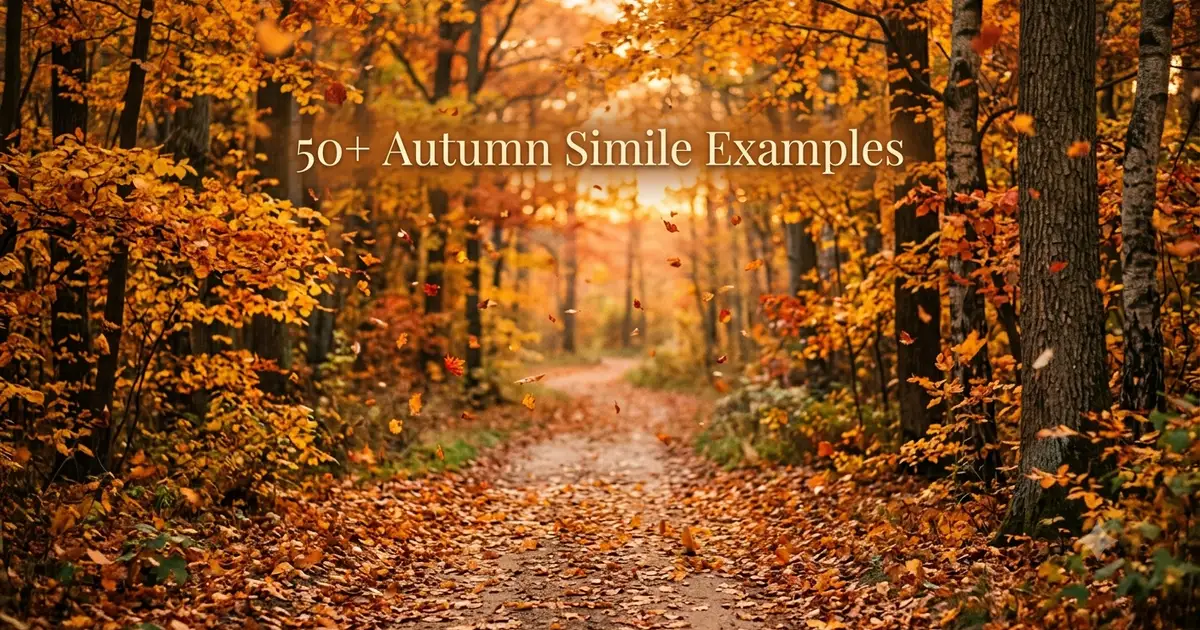
Autumn Simile Examples That Bring Fall Writing to Life
Introduction
Autumn is more than a season. It is the sound of leaves crunching under your feet, the smell of cinnamon in the air, and the sight of trees glowing in shades of gold, orange, and red. Few times of the year inspire writers as much as fall does.
Whether you’re writing a poem, a descriptive essay, a short story, or completing a school assignment, autumn similes can instantly make your words more memorable. Instead of simply saying, “The weather was cold,” you can write, “The air was as crisp as a freshly picked apple.” One small comparison can turn an ordinary sentence into a vivid image.
In this guide, you’ll discover the best autumn simile examples, learn how to create your own, avoid common mistakes, and find practical comparisons that bring your fall writing to life.
Quick Answer
An autumn simile is a comparison that uses the words “like” or “as” to describe the sights, sounds, colors, and feelings of the fall season. Examples include “as crisp as autumn air,” “leaves fell like golden rain,” and “as calm as a sleeping child.” Autumn similes make writing more vivid, helping readers picture the beauty, warmth, and nostalgia of fall in poems, essays, stories, and school assignments.
What Is an Autumn Simile?
An autumn simile is a figure of speech that compares something to an autumn-related image using the words “like” or “as.”
For example:
- As golden as October sunshine
- Leaves drifted like feathers in the wind.
- As peaceful as an autumn sunset.
- The forest stood like a silent guardian.
These comparisons help readers experience the season instead of simply reading about it.
Best Autumn Simile Examples
| Autumn Simile | Meaning |
|---|---|
| As crisp as autumn air | Very fresh and cool |
| Leaves fell like golden rain | Leaves falling gently |
| As quiet as a fall evening | Extremely peaceful |
| As bright as the harvest moon | Very bright and beautiful |
| As cold as morning frost | Chilly and refreshing |
| As red as autumn leaves | Deep red in color |
| As calm as a sleeping child | Peaceful and still |
| Leaves scattered like confetti | Leaves spreading everywhere |
| As cozy as a warm sweater | Comfortable and comforting |
| Trees blazed like bonfires | Trees displaying brilliant colors |
Autumn Similes for Falling Leaves
- Leaves fell like golden rain.
- Leaves danced like ballerinas in the wind.
- Leaves drifted like feathers across the yard.
- Leaves scattered like confetti after a celebration.
- Leaves rustled like whispered secrets in the forest.
Autumn Similes for Weather
- The air felt as crisp as a fresh apple.
- The wind blew as sharp as a knife.
- The morning was as cool as an October dawn.
- The fog hung like a soft blanket over the hills.
- The sky looked as gray as smoke before sunrise.
Autumn Similes for Colors and Scenery
- Trees glowed like embers at dusk.
- The forest looked as colorful as a painter’s palette.
- The sunset shone like molten gold.
- The fields sparkled like tiny diamonds in the frost.
- The river reflected autumn like a mirror.
Autumn Similes for Emotions
Autumn is often associated with nostalgia, peace, and reflection.
- She felt as quiet as a falling leaf.
- His thoughts drifted like leaves on the wind.
- The evening felt as peaceful as a still lake.
- Her smile was as warm as a cup of tea on a chilly day.
- The moment lingered like the last leaf on a tree.
How to Create Your Own Autumn Similes
Creating autumn similes is simple:
- Choose a feeling, color, or action.
- Think of something connected to autumn.
- Compare the two using “like” or “as.”
Example:
- Feeling: Calm
- Autumn image: Sunset
- Result: “As calm as an autumn sunset.”
The more you observe nature, the easier it becomes to create unique comparisons.
Common Mistakes to Avoid
- Using too many similes in one paragraph.
- Choosing comparisons that don’t make sense.
- Repeating overused phrases excessively.
- Mixing seasons (e.g., comparing autumn to tropical beaches).
- Making similes unnecessarily complicated.
Remember: the best similes are simple, clear, and relatable.
Why Autumn Similes Improve Writing
Autumn similes help writers:
- Create vivid imagery.
- Add emotion and atmosphere.
- Improve descriptive essays.
- Make poems more memorable.
- Strengthen storytelling.
- Enhance classroom assignments.
Good writing doesn’t just tell readers what happened—it helps them see, hear, and feel it.
Frequently Asked Questions
What is an autumn simile?
An autumn simile compares something to an autumn-related image using the words “like” or “as.”
Why are autumn similes important?
They make writing more descriptive, engaging, and memorable.
Can students use autumn similes in essays?
Yes. They are excellent for descriptive essays, creative writing assignments, and exams.
What are some popular autumn similes?
Popular examples include “as crisp as autumn air,” “leaves fell like golden rain,” and “as bright as the harvest moon.”
Are autumn similes useful for poetry?
Absolutely. They add rhythm, imagery, and emotion to poems and songs.
Conclusion
Autumn has a special way of turning ordinary moments into unforgettable memories. From golden leaves and cool mornings to quiet evenings and glowing sunsets, the season offers endless inspiration for writers.
These autumn simile examples can help you create stronger essays, more vivid stories, and more expressive poems. Whether you’re a student, teacher, or creative writer, the right comparison can bring your words to life.
The next time you step outside on a fall morning, pay attention to what you see, hear, and feel—you may discover your next great autumn simile waiting in the breeze.
Autumn carries a quiet beauty that words alone often fail to capture. Leaves fall, air cools, and colors shift in a way that feels both calm and powerful. If you want your writing to reflect that feeling, you need more than simple descriptions.
Autumn similes help you paint clear pictures and express mood with ease. In this guide, you will learn how to use them, create your own, and apply them in real writing. You will also find practical examples that you can use right away.
What is an autumn simile with simple explanation
An autumn simile compares something to a fall related image using the word as.
It helps describe a quality through something people connect with autumn.
Examples
- The leaves fell as softly as feathers
- The air felt as crisp as fresh apples
- The sky looked as gray as smoke
Each one links a feeling or image to the season.
Why autumn similes make writing more vivid
Autumn has strong visuals and emotions. Similes turn those into clear images.
Instead of saying the weather is cold, you can say it feels as cold as early morning frost.
Readers can see and feel the moment instead of guessing.
Easy autumn simile examples for beginners
Start with simple and familiar ideas
- As orange as a pumpkin
- As crisp as autumn air
- As dry as fallen leaves
- As cool as an October morning
- As quiet as an empty park
These work well for anyone learning to write.
Common autumn similes used in everyday language
Some similes feel natural because people use them often
- As red as autumn leaves
- As chilly as a fall evening
- As golden as sunset in October
- As still as a calm autumn night
You can use these in both speech and writing.
Autumn similes that describe falling leaves
Leaves define the season, so they offer rich comparisons
- Leaves fell as gently as snow
- Leaves danced as lightly as butterflies
- Leaves drifted as slowly as feathers
- Leaves scattered as freely as confetti
These create motion and softness in your writing.
Autumn similes for weather and seasonal changes
Weather changes shape the mood of autumn
- The air felt as sharp as a blade
- The wind blew as cold as ice
- The sky looked as pale as ash
- The morning felt as fresh as new rain
These help describe the shift from warmth to coolness.
Autumn similes that capture colors and scenery
Autumn stands out because of its colors
- The trees glowed as bright as fire
- The leaves looked as red as embers
- The fields shone as gold as sunlight
- The forest looked as colorful as a painting
Use these when you want strong visual impact.
Creative autumn similes for storytelling
Stories need unique images
- The forest stood as silent as a secret
- The road stretched as lonely as an empty path
- The wind whispered as softly as a hidden voice
- The evening fell as quickly as fading light
Creative similes add depth to your scenes.
Autumn similes to describe emotions and mood
Autumn often feels calm, nostalgic, or even sad
- She felt as quiet as a falling leaf
- His mood turned as cold as autumn wind
- The day felt as peaceful as a still lake
- Her thoughts drifted as slowly as dry leaves
These connect feelings to the season.
Short autumn similes for quick writing use
Sometimes you need quick phrases
- As cold as frost
- As red as leaves
- As dry as autumn grass
- As calm as a fall evening
Short similes fit well in exams and quick writing tasks.
Autumn similes for poems and creative writing
Poetry needs rhythm and imagery
- The night felt as deep as an endless forest
- The wind moved as gently as a soft sigh
- The leaves glowed as warm as fading fire
- The silence spread as wide as the sky
These lines create mood and flow.
Autumn similes for students and school assignments
Students need clear and effective comparisons
- The playground looked as empty as a quiet field
- The trees stood as tall as towers
- The air felt as fresh as morning dew
- The leaves fell as fast as rain
These improve grades by adding detail.
How to write your own autumn simile step by step
Follow a simple method
- Choose a quality like cold, color, or movement
- Think of an autumn image that shows it
- Build your sentence
Example
- Quality is softness
- Think of falling leaves
- Result is as soft as falling leaves
Practice helps you create better lines.
Mistakes to avoid when using autumn similes
Watch out for these errors
- Avoid overused phrases in creative writing
- Do not mix unrelated ideas
- Keep comparisons clear and logical
- Do not use too many in one paragraph
Clear writing always wins over crowded sentences.
Autumn similes that describe wind and air
Wind plays a big role in autumn scenes
- The wind blew as sharp as a knife
- The breeze felt as light as a whisper
- The air moved as softly as silk
- The gusts hit as hard as sudden waves
These add motion and feeling.
Autumn similes for describing trees and forests
Trees define the landscape
- The trees stood as still as statues
- The branches looked as bare as bones
- The forest felt as deep as a mystery
- The trunks rose as tall as pillars
These build strong visual scenes.
How autumn similes improve descriptive essays
Similes help you show instead of tell
Instead of saying the park looked nice
You can say the park looked as colorful as a painting
This makes your writing more engaging and clear.
Fun and unique autumn similes to stand out
Try something different
- As crunchy as dry leaves underfoot
- As smoky as a distant fire
- As cozy as a warm sweater
- As quiet as a hidden path
Unique similes grab attention.
Autumn similes inspired by nature and daily life
You can find ideas everywhere
- As warm as a cup of tea on a cold day
- As soft as a wool scarf
- As bright as a harvest moon
- As calm as a slow sunset
Daily life makes your writing relatable.
Quick list of the best autumn similes to remember
- As crisp as autumn air
- As red as falling leaves
- As cold as morning frost
- As golden as harvest fields
- As quiet as a fall evening
- As soft as drifting leaves
- As calm as an autumn sunset
- As bright as the harvest moon
- As dry as fallen leaves
- As peaceful as a silent forest
Conclusion
Autumn similes give your writing color, feeling, and clarity. They help you describe scenes, express emotions, and connect with readers in a natural way.
You do not need complex words to create strong images. You just need the right comparisons. Practice often, observe the season, and your writing will start to reflect the beauty of autumn.
FAQs
1. What is an autumn simile
It compares something to an autumn image using as to describe a quality.
2. Why should I use autumn similes in writing
They make descriptions more vivid and easier to imagine.
3. Can students use autumn similes in exams
Yes, they improve descriptive answers and writing quality.
4. How do I create my own autumn simile
Choose a quality and match it with an autumn related image.
5. Are autumn similes useful for poetry
Yes, they add rhythm and strong imagery to poems.
6. What are common mistakes in using similes
Using too many or choosing unclear comparisons.
7. Can autumn similes express emotions
Yes, they help connect feelings with seasonal images.
8. Are short similes effective
Yes, they work well in quick writing and exams.
9. Can I use funny autumn similes
Yes, humor makes writing more engaging.
10. Do autumn similes help storytelling
Yes, they create mood and make scenes more realistic.
