Introduction
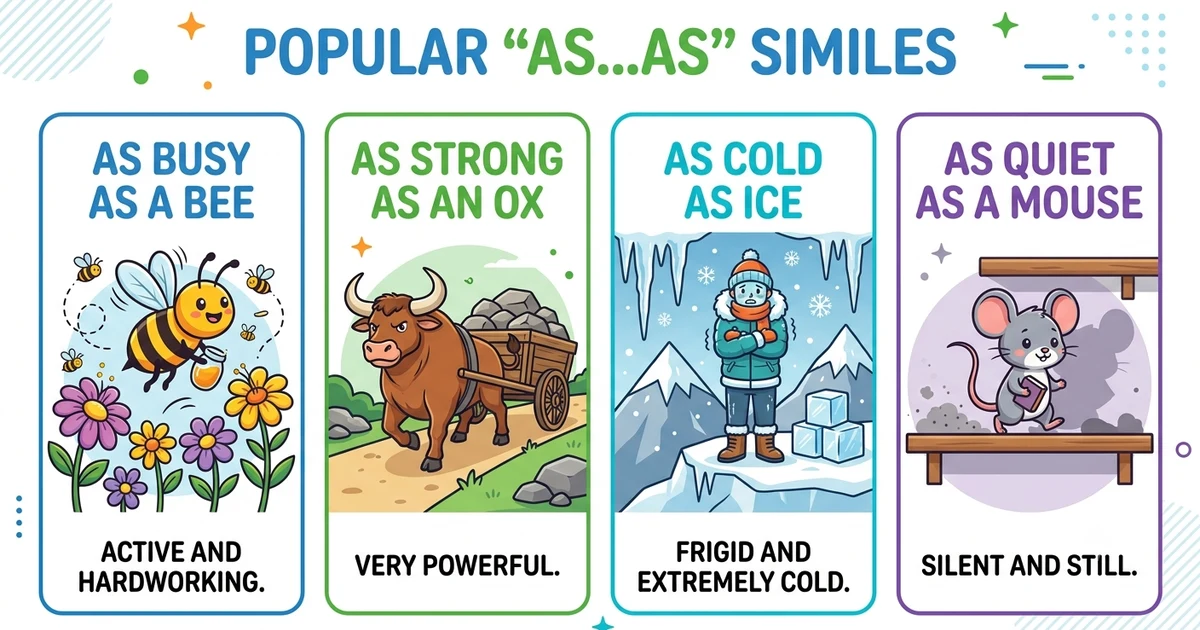
Have you ever heard someone say, “She is as busy as a bee” or “He is as strong as an ox”? These are examples of “as…as” similes, one of the most common and effective figures of speech in the English language. They help writers and speakers create clear, memorable, and vivid comparisons by linking two things that share a similar quality.
An “as…as” simile follows a simple pattern: as + adjective + as + noun. This structure makes it easy to describe people, places, emotions, and objects in a more engaging way. Whether you are a student learning English grammar, a teacher preparing classroom materials, or a writer looking to improve your style, understanding “as…as” similes can make your communication more expressive.
In this guide, you will discover what an “as…as” simile is, explore popular examples, learn how to use them correctly in sentences, and avoid common mistakes. By the end, you will have a strong understanding of these timeless comparisons and know how to use them naturally in both writing and everyday conversations.
Quick Answer
An “as…as” simile is a figure of speech that compares two things using the pattern as + adjective + as + noun to make descriptions more vivid and easier to understand. Common examples include “as busy as a bee,” “as cold as ice,” and “as strong as an ox.” These similes are widely used in everyday English, literature, and creative writing to emphasize qualities such as speed, strength, beauty, and emotion in a memorable way.
What is an as as simile with simple explanation
An as as simile compares two things using the structure as something as something.
It shows that one thing has a quality similar to another.
Examples
- She is as brave as a lion
- The water is as cold as ice
- He runs as fast as the wind
Each sentence compares a quality like bravery, coldness, or speed.
Why writers use as as similes in everyday language
Writers use similes to make ideas easier to understand. They help readers picture what you mean.
They also make speech more interesting.
For example
- Saying he is very busy sounds plain
- Saying he is as busy as a bee feels alive
Similes add emotion and clarity at the same time.
Basic formula of an as as simile with clear examples
The structure stays simple
as + adjective + as + noun
Examples
- As light as a feather
- As strong as an ox
- As quiet as a mouse
The adjective shows the quality. The noun gives a clear image.
Common as as simile examples used in daily conversation
People use many similes without thinking.
Here are common ones
- As easy as pie
- As old as time
- As cool as a cucumber
- As blind as a bat
- As fresh as a daisy
These phrases feel natural in everyday speech.
Easy as as similes for students and beginners
Beginners need simple and clear examples.
- As happy as a child
- As tall as a tree
- As bright as the sun
- As soft as cotton
- As slow as a turtle
These help students understand the idea quickly.
As as simile examples that describe people
Similes can describe personality and appearance.
- As kind as a mother
- As stubborn as a mule
- As gentle as a lamb
- As proud as a peacock
- As busy as a bee
These comparisons give strong and clear impressions.
As as similes to describe emotions and feelings
You can express emotions more clearly with similes.
- As happy as a king
- As sad as a rainy day
- As nervous as a cat
- As calm as the sea
- As angry as a storm
Readers can feel the emotion through the image.
As as simile examples for describing weather and nature
Nature offers strong images for similes.
- As hot as fire
- As cold as ice
- As bright as the sun
- As dark as night
- As fresh as morning air
These work well in descriptive writing.
Funny as as similes that make writing more engaging
Humor makes writing memorable.
- As clumsy as a baby elephant
- As slow as a snail on vacation
- As loud as a rock concert
- As messy as a teenager’s room
Funny similes keep readers interested.
Creative as as similes to improve storytelling
Creative writing needs fresh ideas.
- As silent as falling snow
- As sharp as broken glass
- As mysterious as the deep ocean
- As quick as a flash of lightning
These help build strong scenes and moods.
Difference between simile and metaphor with examples
A simile compares using as or like. A metaphor makes a direct statement.
Simile
- She is as brave as a lion
Metaphor
- She is a lion
Similes feel softer and clearer. Metaphors feel stronger and more direct.
Mistakes to avoid when using as as similes
Avoid these common mistakes
- Do not use too many in one paragraph
- Avoid clichés in formal writing
- Do not mix unrelated ideas
- Keep comparisons logical
Bad example
- As fast as a mountain
Good example
- As fast as lightning
How to create your own as as simile step by step
Follow this simple method
- Choose a quality
- Think of something known for that quality
- Build the sentence
Example
- Quality is speed
- Think of lightning
- Result is as fast as lightning
Practice helps you improve quickly.
As as simile examples for formal and academic writing
Formal writing needs careful choices.
- As clear as evidence
- As important as data
- As strong as proof
Avoid informal or funny similes in serious work.
As as similes in famous quotes and literature
Writers often use similes to create strong images.
You may see lines like
- As cold as marble
- As fierce as fire
These lines stay memorable because of clear comparisons.
Practice exercises to master as as similes
Try these exercises
Fill in the blank
- As light as ______
- As brave as ______
Create your own
- Write three similes about happiness
- Write three similes about fear
Practice builds confidence.
As as similes for descriptive essays and exams
Similes help you score better in writing tasks.
Use them to describe
- People
- Places
- Events
Example
The night felt as dark as a cave
This makes your answer stand out.
How as as similes improve clarity and imagery
Similes turn abstract ideas into clear pictures.
Instead of saying very cold
Say as cold as ice
Readers understand faster and remember better.
Tips to make similes sound natural and not forced
Follow these tips
- Use simple comparisons
- Match the context
- Avoid overuse
- Read your sentence aloud
Natural similes feel smooth and clear.
Quick list of the most popular as as similes to remember
- As busy as a bee
- As light as a feather
- As cold as ice
- As quick as lightning
- As quiet as a mouse
- As strong as an ox
- As happy as a child
- As blind as a bat
- As fresh as a daisy
- As brave as a lion
These work in many situations.
Conclusion
“As…as” similes are a simple yet powerful way to make language more descriptive and engaging. By comparing one thing to another, they help readers and listeners quickly understand qualities such as strength, speed, beauty, or emotion. From familiar expressions like “as cold as ice” and “as busy as a bee” to creative comparisons of your own, these similes add color and personality to both spoken and written English.
Whether you are studying grammar, improving your writing skills, or teaching English to others, learning how to use “as…as” similes can greatly enhance your communication. The key is to choose comparisons that are clear, meaningful, and easy to understand. With regular practice, you will be able to use “as…as” similes naturally and confidently in everyday conversations, school assignments, and professional writing.
Frequently Asked Questions (FAQs)
1. What is an “as…as” simile?
An “as…as” simile is a figure of speech that compares two things using the structure as + adjective + as + noun. For example, “as brave as a lion” and “as light as a feather.”
2. Why are “as…as” similes important?
“As…as” similes make writing and speech more vivid and descriptive. They help readers and listeners better understand a person’s qualities, emotions, or the characteristics of an object through familiar comparisons.
3. What are some common examples of “as…as” similes?
Some popular examples include:
- As busy as a bee
- As cold as ice
- As strong as an ox
- As quiet as a mouse
- As white as snow
- As cool as a cucumber
4. How do you write an “as…as” simile?
To write an “as…as” simile, follow this formula:
As + adjective + as + noun
For example:
- As soft as silk
- As fast as lightning
- As clear as crystal
Choose a noun that is commonly associated with the adjective to make the comparison more effective.
5. Can I create my own “as…as” similes?
Yes! While many “as…as” similes are well-known expressions, you can create your own as long as the comparison is clear and meaningful. Creative similes can make your writing more unique and engaging.
6. Are “as…as” similes used in everyday English?
Absolutely. Native English speakers use “as…as” similes in conversations, books, movies, and speeches. Expressions like “as happy as a clam” and “as stubborn as a mule” are commonly heard in everyday communication.
7. What is the difference between a simile and a metaphor?
A simile compares two things using words such as “like” or “as,” while a metaphor makes a direct comparison without using these words. For example:
Metaphor: “He is a lion on the battlefield.”
Simile: “He is as brave as a lion.”
