

Understanding emotions is not always easy. Sometimes you know what you feel, but you cannot find the right words to explain it. You might feel happy, sad, angry, nervous, proud, lonely, or excited, yet simply naming the emotion does not always show how strongly you feel it.
This is where emotion similes can help.
An emotion simile compares a feeling with something familiar. It uses words such as “like” or “as” to create a picture in the reader’s mind. Instead of saying someone is very happy, you might say they are as happy as a clam. Instead of saying someone is extremely angry, you could say they are as mad as a hornet.
These comparisons make feelings easier to picture and understand. They are useful in stories, poems, essays, speeches, classroom assignments, conversations, and social media posts.
Emotion similes do not need complicated words. A simple comparison can sometimes express a feeling better than a long explanation.
In this guide, you will find emotion simile examples for happiness, sadness, anger, fear, love, anxiety, loneliness, excitement, pride, guilt, disappointment, and other common feelings. You will also learn how to create your own emotion similes and use them naturally in your writing.
What Is an Emotion Simile?
An emotion simile is a comparison that describes a feeling by connecting it with something familiar. Similes usually use the words “like” or “as.”

For example:
- She was as happy as a clam.
- He was as mad as a hornet.
- Her heart felt as heavy as a stone.
- He was as scared as a rabbit.
- She felt like a bird set free.
Each example gives the reader more than the name of an emotion. It creates an image that helps explain what the feeling is like.
Compare these two sentences:
She was nervous.
She was as nervous as a cat in a strange room.
The first sentence tells us the emotion. The second gives us a clearer picture of the feeling.
That is what makes emotion similes useful. They turn an abstract feeling into an image that readers can understand.
Emotion Simile vs Metaphor
Similes and metaphors both compare things, but they do it differently.
A simile makes a direct comparison using words such as “like” or “as.”
Simile: Her happiness was like sunshine.
A metaphor makes the comparison directly without using “like” or “as.”
Metaphor: Her happiness was sunshine.
Both can make writing more expressive, but this article focuses on similes.
Why Are Emotion Similes Useful?
Emotions are difficult to see because they happen inside us. A reader cannot directly see someone’s happiness, fear, sadness, or anxiety.
A simile gives that emotion a shape or image.
Emotion similes can help you:
- Make writing more vivid
- Explain feelings clearly
- Help readers understand characters
- Make descriptions more memorable
- Add personality to your writing
- Express strong feelings with simple words
- Make stories and conversations more interesting
For example:
He felt lonely.
This is clear, but it does not give us much detail.
He felt like a single tree standing in an empty field.
This creates a stronger picture of loneliness.
30 Emotion Simile Examples With Meanings
Here are common similes that can describe emotions, moods, and feelings in everyday writing.
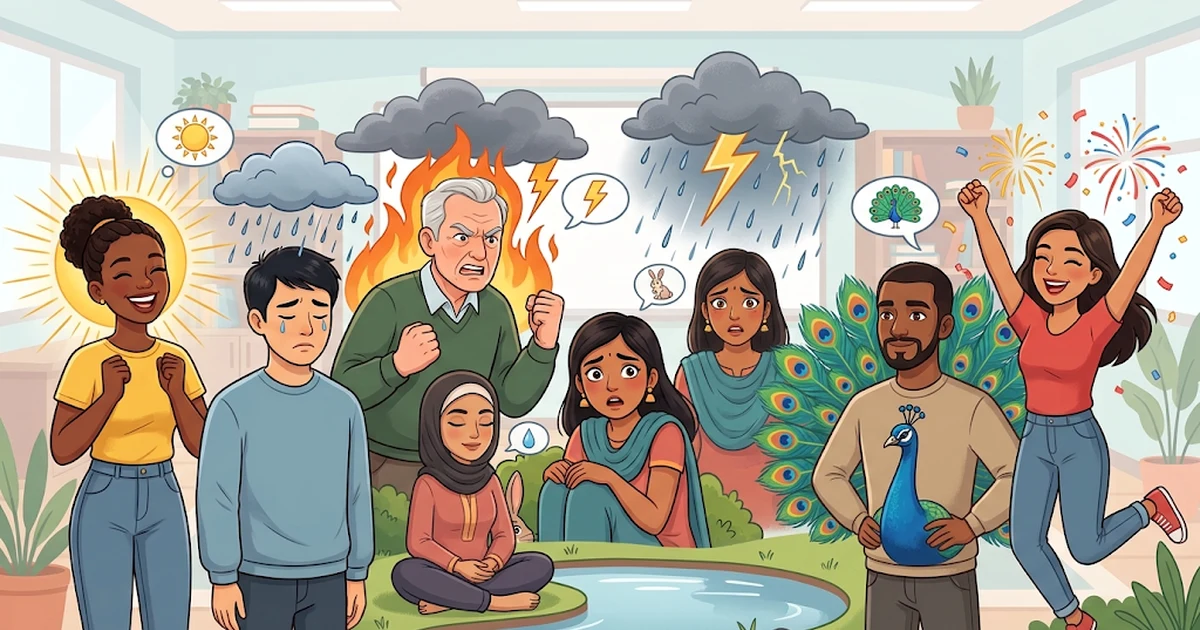
1. As Busy as a Bee
Meaning: Extremely active or hardworking.
Example: During the school play preparations, Sarah was as busy as a bee, rehearsing her lines and helping with the props.
Other ways to say it: Working nonstop, full of energy.
2. As Happy as a Clam
Meaning: Very happy or content.
Example: After receiving an A on his math test, Tommy was as happy as a clam and could not stop smiling.
Other ways to say it: Full of joy, cheerful.
3. As Proud as a Peacock
Meaning: Extremely pleased with yourself or something you have achieved.
Example: When Katie won the spelling bee, she was as proud as a peacock while holding her trophy.
Other ways to say it: Proud as punch, bursting with pride.
4. As Quiet as a Mouse
Meaning: Very quiet or silent.
Example: The students were as quiet as mice while the teacher handed out the test papers.
Other ways to say it: Completely silent, very quiet.
5. As Cool as a Cucumber
Meaning: Calm and composed during a stressful situation.
Example: Even when the presentation stopped working, Maya stayed as cool as a cucumber.
Other ways to say it: Calm and collected, completely composed.
6. As Light as a Feather
Meaning: Feeling free, relieved, or emotionally unburdened when used to describe a person.
Example: After hearing the good news, Sarah felt as light as a feather.
Other ways to say it: Free as air, completely relieved.
7. As Snug as a Bug in a Rug
Meaning: Extremely comfortable and cozy.
Example: Wrapped in a warm blanket, Emma felt as snug as a bug in a rug.
Other ways to say it: Warm and cozy, comfortable.
8. As Clear as Crystal
Meaning: Easy to understand.
Example: After the teacher explained the situation, the instructions were as clear as crystal.
Other ways to say it: Clear as day, easy to understand.
9. As Quick as Lightning
Meaning: Extremely fast.
Example: The little boy was as quick as lightning when he ran toward the playground.
Other ways to say it: Fast as lightning, quick as a flash.
10. As Slow as Molasses
Meaning: Very slow or sluggish.
Example: The line at the amusement park moved as slow as molasses, and everyone became impatient.
Other ways to say it: Slow as can be, moving very slowly.
11. As Mad as a Hornet
Meaning: Extremely angry.
Example: When John broke his sister’s favorite toy, she was as mad as a hornet.
Other ways to say it: Furious, extremely angry.
12. As Cold as Ice
Meaning: Very cold. It can also describe someone who seems emotionally distant.
Example: After the argument, his attitude toward his friend felt as cold as ice.
Other ways to say it: Distant, icy, unfriendly.
13. As Brave as a Lion
Meaning: Extremely courageous.
Example: Tom was as brave as a lion when he stood up for his friend.
Other ways to say it: Fearless, courageous.
14. As Sly as a Fox
Meaning: Clever and crafty.
Example: Sarah was as sly as a fox when she tried to hide the fact that she had eaten the last cookie.
Other ways to say it: Cunning, crafty, clever.
15. As Slippery as an Eel
Meaning: Difficult to control, understand, or hold onto.
Example: His thoughts were as slippery as an eel when he tried to explain how he felt.
Other ways to say it: Hard to grasp, difficult to control.
16. As Bright as the Sun
Meaning: Very cheerful, positive, or full of energy.
Example: After hearing the good news, Sarah felt as bright as the sun.
Other ways to say it: Cheerful, full of joy.
17. As Nervous as a Cat
Meaning: Very nervous or uneasy.
Example: Before walking onto the stage, Jake was as nervous as a cat in a strange room.
Other ways to say it: On edge, anxious, uneasy.
18. As Quiet as a Church Mouse
Meaning: Extremely quiet.
Example: During the test, the classroom was as quiet as a church mouse.
Other ways to say it: Silent, completely still.
19. As Dark as a Storm Cloud
Meaning: Very sad, gloomy, or negative.
Example: After hearing the bad news, his mood became as dark as a storm cloud.
Other ways to say it: Gloomy, miserable, downcast.
20. As Sweet as Honey
Meaning: Very kind, gentle, or affectionate.
Example: Grandma was as sweet as honey when she comforted the children.
Other ways to say it: Kind, caring, affectionate.
21. As Red as a Tomato
Meaning: Very embarrassed or flushed.
Example: When everyone noticed his mistake, Jake turned as red as a tomato.
Other ways to say it: Flushed, embarrassed.
22. As Wise as an Owl
Meaning: Very knowledgeable or thoughtful.
Example: Grandpa was as wise as an owl and always had helpful advice.
Other ways to say it: Wise, knowledgeable, thoughtful.
23. As Soft as a Kitten
Meaning: Very gentle or tender.
Example: Her voice was as soft as a kitten when she comforted the frightened child.
Other ways to say it: Gentle, tender, caring.
24. As Grumpy as a Bear
Meaning: Very irritable or grouchy.
Example: Dad was as grumpy as a bear before he had his morning coffee.
Other ways to say it: Cranky, grouchy, irritable.
25. As Stubborn as a Mule
Meaning: Unwilling to change your mind.
Example: Jenny was as stubborn as a mule and refused to try the new food.
Other ways to say it: Headstrong, determined, unwilling to change.
26. As Busy as a Squirrel
Meaning: Extremely active or constantly moving.
Example: The children were as busy as squirrels while preparing decorations for the party.
Other ways to say it: Active, energetic, always moving.
27. As Hungry as a Wolf
Meaning: Extremely hungry.
Example: After playing soccer for two hours, Mike was as hungry as a wolf.
Other ways to say it: Starving, very hungry.
28. As Messy as a Pig
Meaning: Very untidy or disorganized.
Example: After the birthday party, the kitchen looked as messy as a pigsty.
Other ways to say it: Untidy, cluttered, disorganized.
29. As Scared as a Rabbit
Meaning: Extremely frightened.
Example: When the thunder shook the windows, Lily was as scared as a rabbit.
Other ways to say it: Frightened, terrified, nervous.
30. As Curious as a Cat
Meaning: Very eager to learn, discover, or investigate.
Example: When Sarah heard a strange noise outside, she became as curious as a cat.
Other ways to say it: Inquisitive, interested, eager to know.
Emotion Similes for Happiness
Happiness can be described with bright, warm, and positive images.
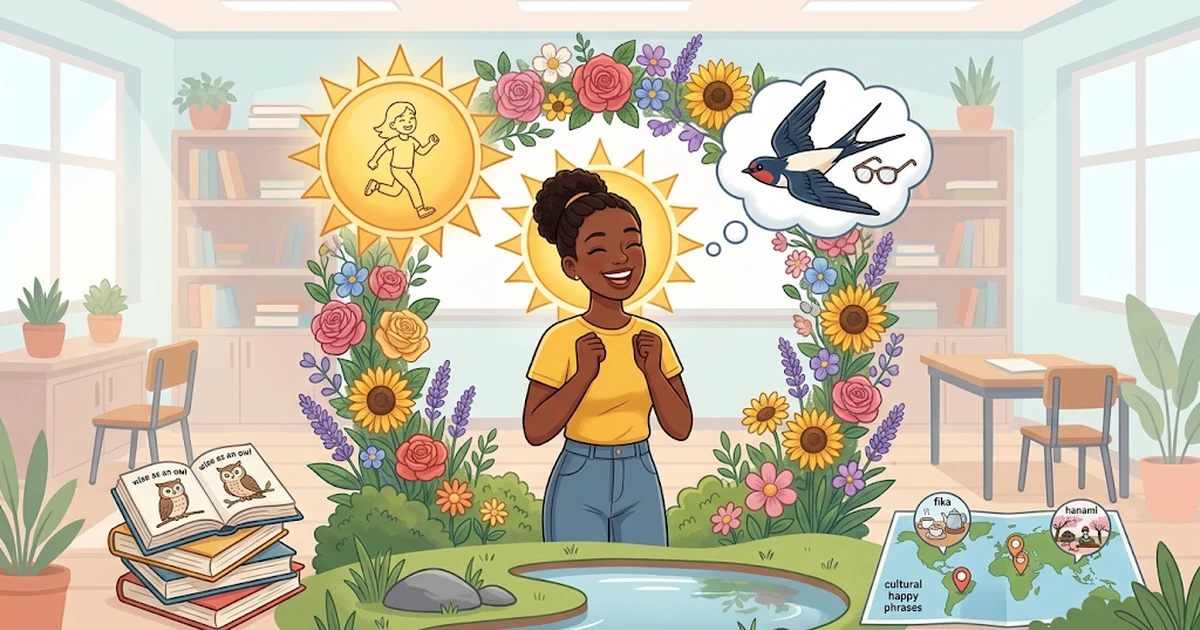
Examples:
- She was as happy as a child on Christmas morning.
- His smile was as bright as the morning sun.
- She felt like a bird flying free.
- His happiness spread like sunshine through the room.
- Her joy was like fresh rain after a long dry season.
- He felt as light as a feather after hearing the good news.
These comparisons show happiness through images that readers already understand.
Emotion Similes for Sadness
Sadness can be quiet or overwhelming. A good simile can show the weight of that feeling without explaining it in too many words.
Examples:
- His heart felt as heavy as a stone.
- She felt like an empty room after everyone had gone home.
- His sadness was like a dark cloud following him.
- She sat like a tree losing its leaves.
- Her tears fell like rain against the window.
- His grief felt like an endless night with no stars.
These similes can work well in stories, poems, personal writing, and reflective essays.
Emotion Similes for Anger
Anger is often connected with heat, storms, fire, and sudden movement.
Examples:
- He was as mad as a hornet.
- Her anger felt like boiling water.
- He burned like a fire inside.
- She was as angry as a storm cloud.
- His words came out like thunder.
- His temper rose like flames.
These comparisons help readers understand how intense the anger is.
Emotion Similes for Fear
Fear often makes people feel small, uncertain, and unable to stay still.
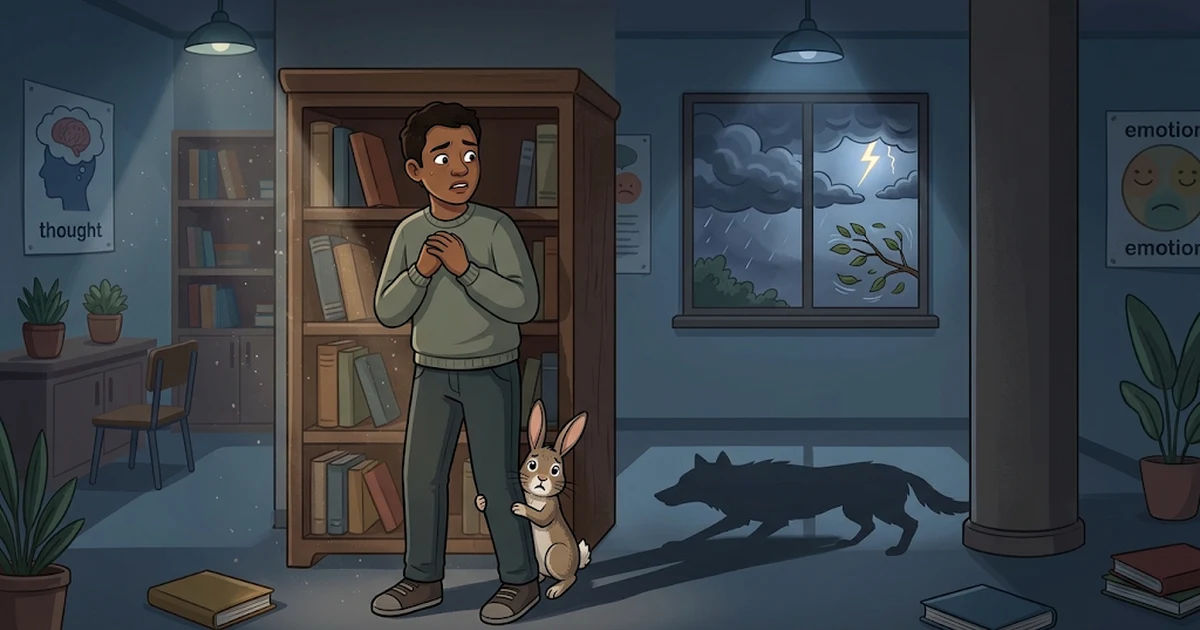
Examples:
- She was as scared as a rabbit.
- He trembled like leaves in a strong wind.
- Her fear felt like ice in her chest.
- He felt like a small bird trapped in a dark room.
- Her heart raced like a drum.
- Fear followed him like a shadow.
These similes are especially useful in suspense stories and dramatic scenes.
Emotion Similes for Love
Love can be described through warm and familiar images.
Examples:
- He loved her like flowers love sunlight.
- Her love felt as warm as a summer afternoon.
- His heart opened like a flower in spring.
- Their love was like a warm light in a dark room.
- She cared for him like a mother bird protects her young.
- His love stayed with her like a soft song in her memory.
Simple comparisons can make descriptions of love feel warm and sincere.
Emotion Similes for Anxiety
Anxiety can feel like constant movement inside your mind.
Examples:
- He felt like a clock ticking too fast.
- Her thoughts raced like cars on a busy highway.
- His mind was like a room full of ringing phones.
- She was as restless as waves during a storm.
- His worry followed him like a shadow.
- Her thoughts spun like leaves caught in the wind.
These comparisons show the restless side of anxiety without using complicated language.
Emotion Similes for Loneliness
Loneliness can exist even when other people are nearby. Similes can help show that empty feeling.
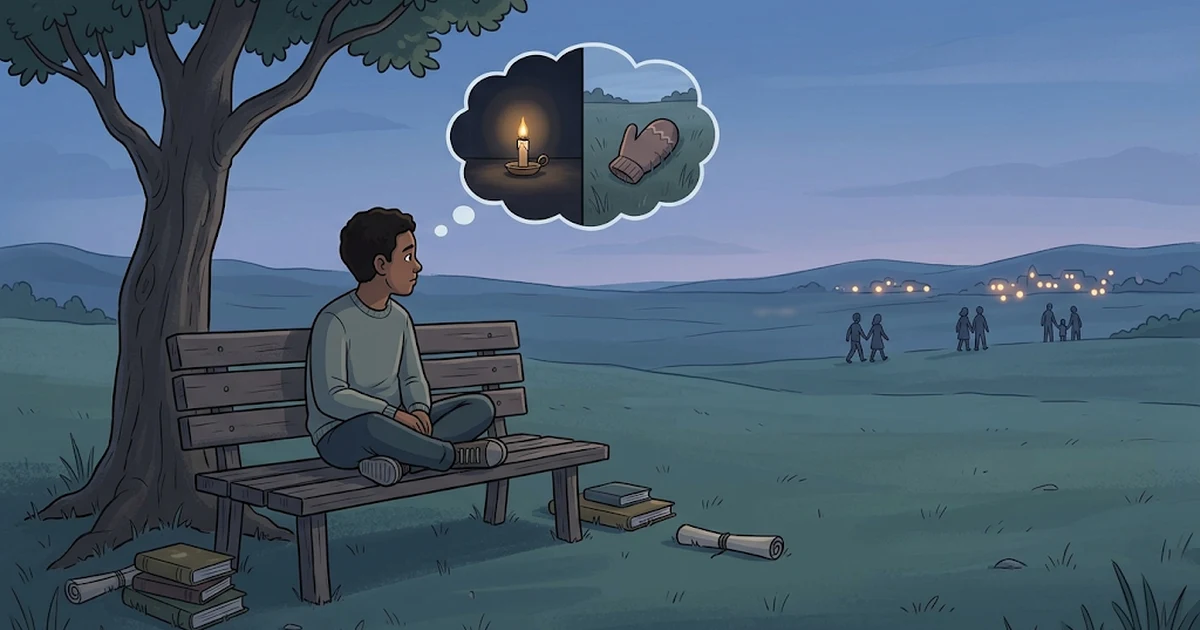
Examples:
- He felt as lonely as a single star in an empty sky.
- She felt like an empty chair in a crowded room.
- His loneliness was like a house with all the lights turned off.
- She felt like a forgotten song nobody remembered.
- He stood like a single tree in a wide empty field.
These images make loneliness easier for readers to picture.
Emotion Similes for Excitement
Excitement often feels energetic and difficult to contain.
Examples:
- Her excitement was like fireworks exploding across the sky.
- He was as excited as a child on Christmas morning.
- Her heart jumped like a spring when she heard the news.
- His energy was like a spark spreading through dry grass.
- She felt like she was about to burst with excitement.
These similes work well for celebrations, competitions, trips, and good news.
Emotion Similes for Pride
Pride is the feeling of being pleased with something you have achieved.
Examples:
- She was as proud as a peacock.
- He stood as tall as a mountain after winning the award.
- Her heart felt as full as a balloon.
- He smiled like someone who had just reached the top of a hill.
- She carried her achievement like a shining medal.
Emotion Similes for Calmness
Similes can also describe peaceful and relaxed feelings.
Examples:
- She was as calm as still water.
- His mind felt like a quiet lake.
- He sat as peacefully as a bird resting on a branch.
- Her breathing became as steady as a slow tide.
- The room felt like a quiet morning.
These examples create a peaceful mood without using complicated descriptions.
Emotion Similes for Guilt
Guilt can feel like something heavy that stays in your mind.
Examples:
- His guilt followed him like a shadow.
- The mistake sat on his mind like a heavy stone.
- She carried her guilt like a backpack filled with rocks.
- His regret hung over him like a dark cloud.
- Her conscience felt as heavy as an anchor.
These comparisons help show how guilt can stay with someone.
Emotion Similes for Disappointment
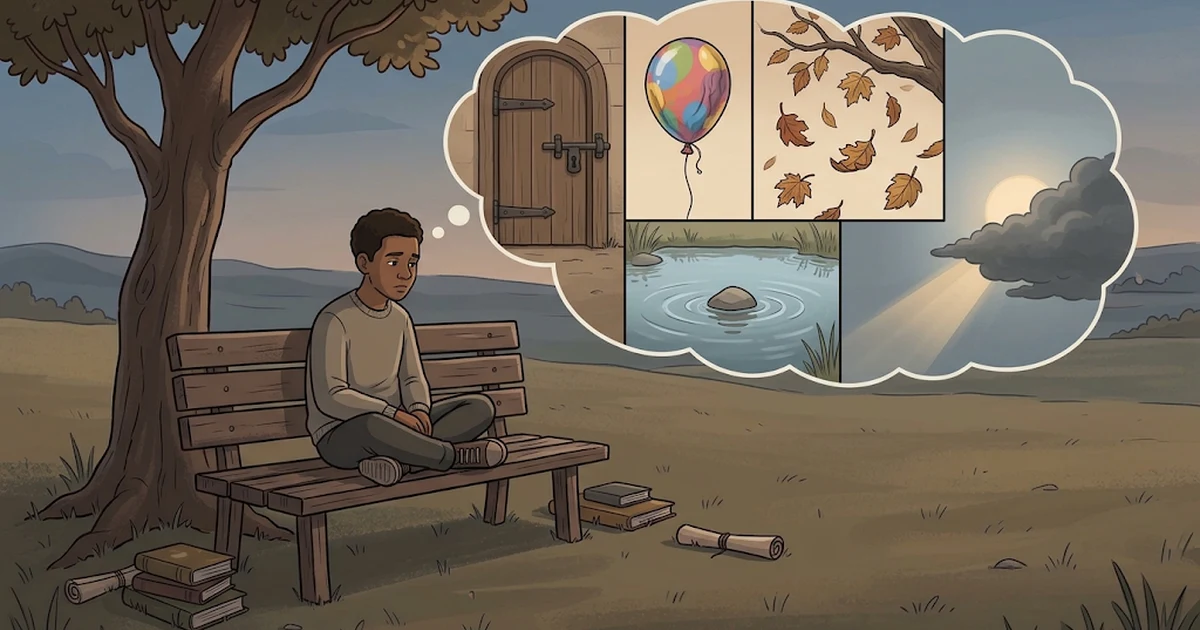
Disappointment can feel like losing something you were hoping for.
Examples:
- His disappointment felt like a balloon slowly losing air.
- Her hopes fell like leaves from a tree.
- He felt like a door had suddenly closed in front of him.
- Her excitement disappeared like sunlight behind a cloud.
- His heart sank like a stone in deep water.
Emotion Similes for Shame and Embarrassment
Shame and embarrassment often show through physical reactions such as blushing, avoiding eye contact, or wanting to hide.
Examples:
- Her face became as red as a tomato.
- He wanted to disappear like a shadow.
- Her embarrassment felt like a spotlight shining directly on her.
- He felt as exposed as a book left open on a crowded table.
- Shame wrapped around him like a heavy coat.
How to Create Your Own Emotion Simile
Creating an emotion simile is easier than it may seem.
Step 1: Choose an Emotion
Start with the feeling you want to describe.
For example:
Fear
Step 2: Think About How It Feels
Ask yourself what happens when someone experiences fear.
Their heart may beat faster. Their hands may shake. They may want to hide or run.
Step 3: Choose a Familiar Image
Think of something that has a similar quality.
For fear, you might choose:
- A frightened rabbit
- Shaking leaves
- A dark room
- A trapped bird
- A storm
Step 4: Connect the Ideas
Use “like” or “as” to connect the emotion with the image.
For example:
She trembled like leaves in a strong wind.
The comparison works because both the person and the leaves are shaking.
How to Make an Emotion Simile More Original
Common similes are useful, especially when you are learning. But creative writing can become more interesting when you create your own comparisons.
Compare these examples:
Common:
Her happiness was like sunshine.
More original:
Her happiness spread through the room like sunlight slipping under a closed door.
The second comparison gives the reader a more specific image.
You do not need to make every simile unusual. The important thing is that the comparison should make sense and fit the emotion.
Short Emotion Similes for Daily Conversation
Short similes can work well in everyday conversations, texts, and captions.
Examples:
- As happy as sunshine
- Like a cloud of worry
- As sad as a rainy day
- Like fire inside
- As calm as still water
- Like a weight on my shoulders
- As free as the wind
- Like a storm in my head
These are simple enough to use without making the conversation sound too formal.
Emotion Similes for Creative Writing
Similes are especially useful when writing stories and poems because they allow readers to experience what a character feels.
For example:
He walked like a man carrying invisible weight.
This sentence does not simply tell the reader that he is sad. It suggests that his sadness is affecting the way he moves.
Another example is:
Her voice felt like soft rain against the window.
This creates a gentle emotional image without directly naming the feeling.
You can also write:
His grief felt like an endless night with no stars.
Her hope was like a small flame in a storm.
Her heart was like a calm sea hiding powerful waves.
These comparisons add emotional depth while keeping the language simple.
How to Use Emotion Similes in Essays and Assignments
Emotion similes can make creative essays and personal writing more descriptive. They should support your main idea rather than distract from it.
For example:
Simple:
The character was nervous before the speech.
With a simile:
The character was as nervous as a bird trapped in a small cage before the speech.
The second sentence gives the reader a clearer sense of the character’s fear.
For formal academic writing, use similes only when they fit the assignment. If the goal is to explain a fact clearly, a direct statement may be better than a figurative comparison.
Emotion Similes for Social Media Captions
Short emotion similes can work well in social media captions.
Examples:
- Feeling as free as the wind today.
- Happiness like sunshine after rain.
- My heart feels like a calm ocean.
- Mood like floating on clouds.
- Feeling as light as a feather.
- My mind is like a storm today.
The best captions are usually short and natural.
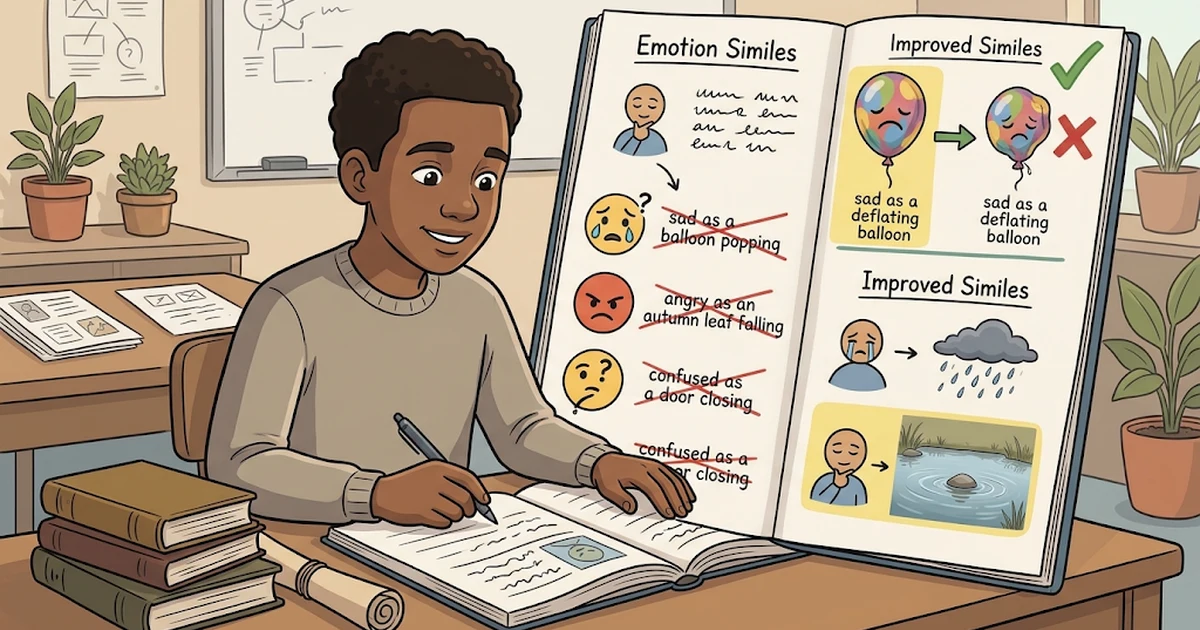
Common Mistakes When Writing Emotion Similes
Using an Unclear Comparison
Make sure readers can understand why the two things are being compared.
Making the Simile Too Long
A simile should make your sentence clearer, not turn it into a long explanation.
Using Too Many Similes
Using a simile in every sentence can make your writing feel forced. One strong comparison is often enough.
Mixing Unrelated Images
Avoid putting several unrelated comparisons into the same sentence.
Choosing a Comparison That Does Not Match the Emotion
A happy feeling should not normally be compared with an image that suggests fear or sadness unless you are deliberately showing mixed emotions.
Using Only Clichés
Common similes are useful, but try creating original comparisons when you want your writing to stand out.
Emotion Similes for Mixed Feelings
Sometimes people experience several emotions at the same time. Similes can show these complicated feelings.
Examples:
- She smiled like sunshine hiding rain.
- His heart felt like a calm sea with hidden waves.
- She felt like laughter mixed with tears.
- His happiness was like a bright light surrounded by shadows.
- Her hope flickered like a small candle in the wind.
These examples work well when a character is happy and sad, hopeful and afraid, or excited and nervous at the same time.
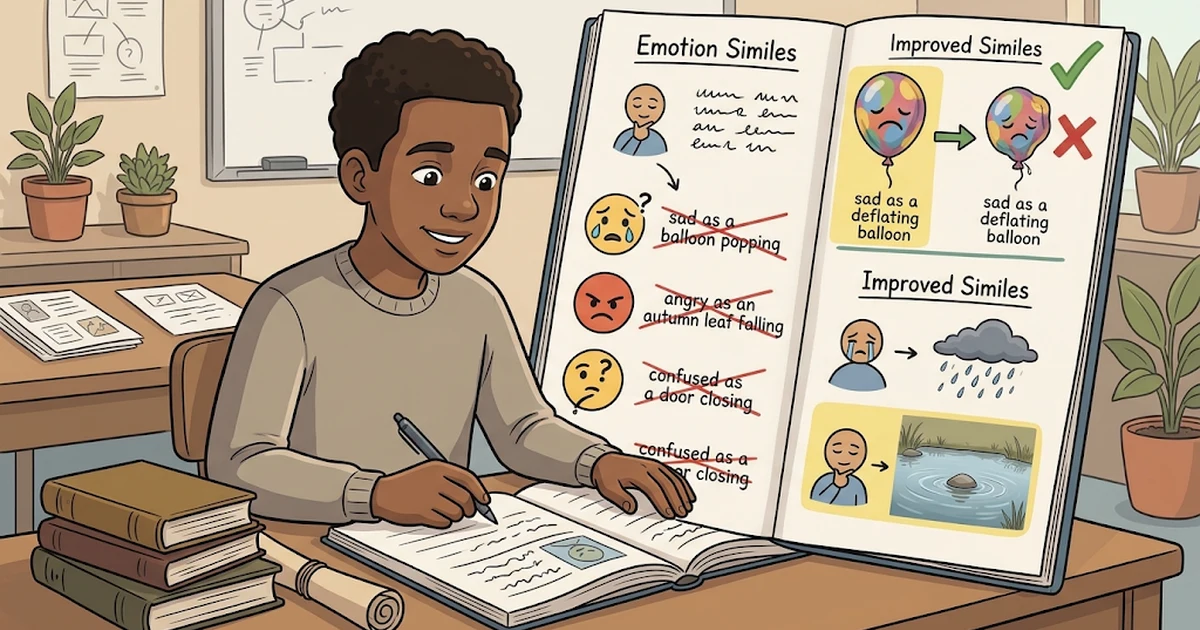
Practice Exercises for Emotion Similes
Try completing these sentences.
- When you are feeling furious, you can say you are as ______ as a ______.
- If you are feeling very content, you can describe yourself as ______ as a ______.
- When you are extremely proud, you can feel as ______ as a ______.
- If you are very quiet, you are as ______ as a ______.
- When you remain calm during a stressful situation, you are as ______ as a ______.
- If you feel emotionally free, you can say you feel as ______ as a ______.
- When you are extremely comfortable, you can say you are as ______ as a ______.
- If something is easy to understand, you can describe it as ______ as ______.
- When something moves extremely fast, it is as ______ as ______.
- If something moves very slowly, you can describe it as ______ as ______.
Answers
- mad, hornet
- happy, clam
- proud, peacock
- quiet, mouse
- cool, cucumber
- light, feather
- snug, bug in a rug
- clear, crystal
- quick, lightning
- slow, molasses
Create Your Own Emotion Similes
Now try making your own comparisons.
Emotion: Loneliness
Image: An empty chair
Your simile: __________________________
Emotion: Anxiety
Image: A ticking clock
Your simile: __________________________
The goal is not to find one perfect answer. Try to create a comparison that clearly connects the image with the emotion.
Frequently Asked Questions About Emotion Similes
What is an emotion simile?
An emotion simile is a comparison used to describe a feeling. It normally uses “like” or “as” to connect an emotion with something familiar.
What is a good example of an emotion simile?
“As happy as a clam” is a common example. It describes someone who is very happy or content.
What is a simile for happiness?
Some examples are “as happy as a clam,” “as bright as the sun,” and “like a bird flying free.”
What is a simile for sadness?
You can say “his heart felt as heavy as a stone” or “her sadness was like a dark cloud.”
What is a simile for anger?
Examples include “as mad as a hornet,” “angry like a storm,” and “her anger felt like boiling water.”
What is a simile for fear?
Examples include “as scared as a rabbit,” “he trembled like leaves,” and “fear followed him like a shadow.”
What is a simile for loneliness?
You could say “he felt like a single tree in an empty field” or “she felt like an empty chair in a crowded room.”
Can emotion similes describe negative feelings?
Yes. Emotion similes can describe sadness, fear, anger, anxiety, loneliness, guilt, disappointment, shame, and many other difficult feelings.
Can students use emotion similes in essays?
Yes. They can make creative and personal writing more descriptive. In formal academic writing, use them only when they fit the assignment.
How can I create my own emotion simile?
Choose an emotion, think about how it feels, find something with a similar quality, and connect the two using “like” or “as.”
What makes an emotion simile effective?
A strong emotion simile is clear, relevant, easy to picture, and naturally connected to the feeling.
Conclusion
Emotion similes make it easier to turn feelings into words. They connect abstract emotions with familiar images, helping readers understand what a person is experiencing.
Instead of simply saying someone is happy, you can say they are as happy as a clam. Instead of saying someone is angry, you can describe them as mad as a hornet. Someone who feels lonely might feel like a single tree in an empty field, while someone who feels anxious might feel like a clock ticking too fast.
The best emotion similes do not need complicated vocabulary. They simply need a clear connection between the feeling and the image.
Whether you are writing a story, poem, essay, speech, classroom assignment, or social media caption, emotion similes can make your words more expressive and easier to remember. With regular practice, you can create your own comparisons and describe almost any feeling in a natural and meaningful way.
