
Introduction
Dialogue gives characters a voice. It shows how they think, what they feel, and how they relate to other people. A short conversation can reveal confidence, fear, anger, excitement, sadness, or humor. However, dialogue may feel plain when every character speaks in the same simple way.
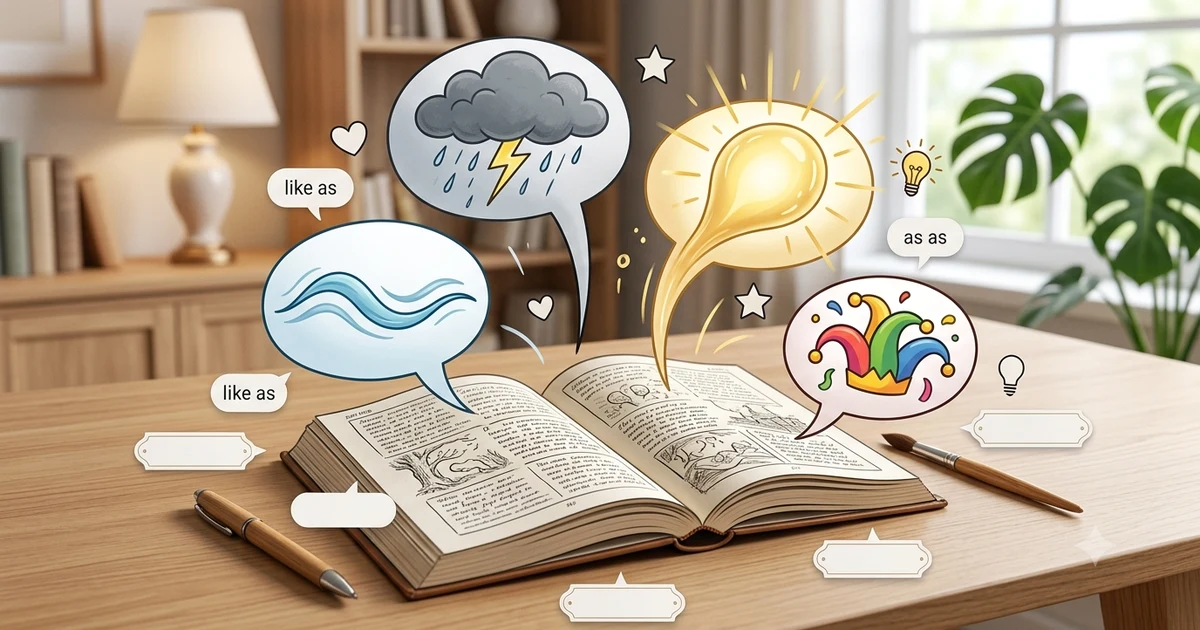
A well-chosen simile for dialogue can make a conversation more vivid. It helps readers imagine the sound, rhythm, energy, or emotional effect of a character’s words. Instead of writing, “She sounded nervous,” a writer might say, “Her voice trembled like a window in a strong wind.” The comparison creates a clearer picture and allows readers to feel the emotion.
Similes can also reveal personality. A cheerful character may describe things with bright and playful comparisons, while a cautious character may use quiet or careful imagery. The best similes do more than decorate a sentence. They support the mood, deepen characterization, and make dialogue easier to remember.
This guide explains what a simile for dialogue means, why writers use one, how to create original comparisons, and how to use them naturally. You will also find examples for emotional, funny, friendly, tense, and dramatic conversations.
Quick Answer
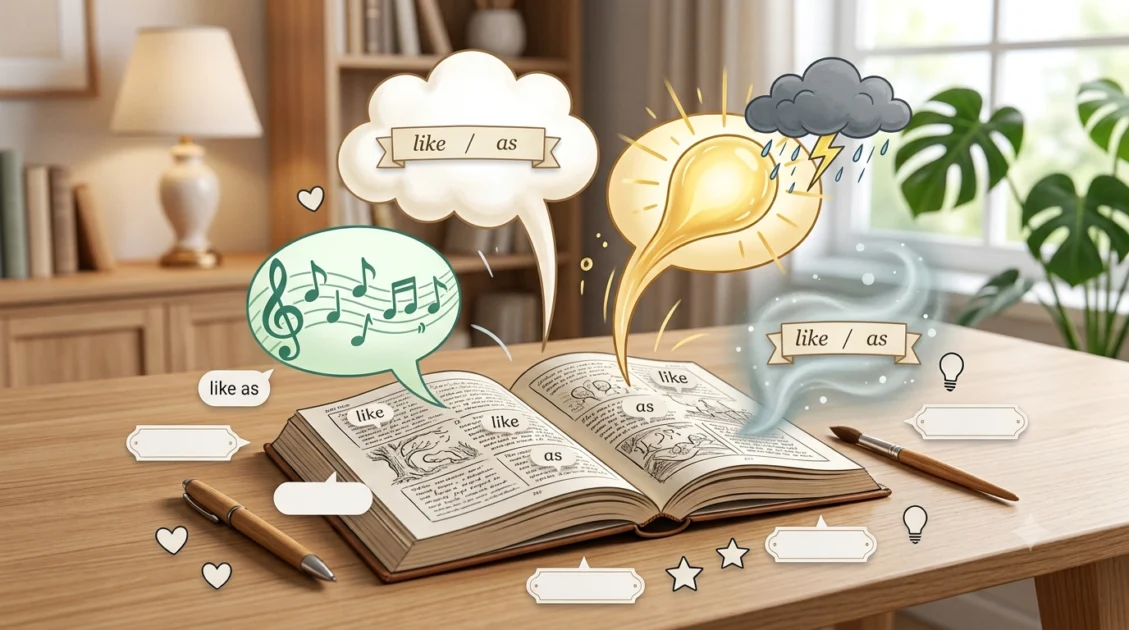
A simile for dialogue compares a character’s voice, words, tone, or way of speaking to something familiar by using words such as “like” or “as.” These comparisons help readers understand emotions that dialogue alone may not fully show. For example, “Her voice shook like a leaf in the wind” suggests fear or nervousness, while “His words landed like a heavy stone” suggests emotional impact. A strong dialogue simile should be clear, natural, and appropriate for the character and scene.
What Does Simile for Dialogue Mean?
A simile for dialogue is a comparison that describes the way someone speaks, the effect of their words, or the emotional atmosphere around a conversation. Similes usually use “like” or “as.”
For example:
“Her voice was as soft as falling snow.”
This simile describes the gentle quality of the speaker’s voice.
Another example is:
“His answer came out like a door slamming shut.”
This comparison suggests that his response was sudden, cold, or final.
A dialogue simile may describe:
- A character’s voice
- The speed of speech
- The tone of a reply
- The emotional effect of spoken words
- The silence between speakers
- The mood of an entire conversation
For example:
“Their argument rolled through the room like thunder.”
The comparison does not only describe the words. It also shows the power and tension of the conversation.
A useful simile gives readers information that ordinary dialogue may not communicate directly.
Why Writers Use Similes in Dialogue
Dialogue often carries more meaning than the words spoken aloud. A character may say, “I’m fine,” while their voice reveals worry, frustration, or sadness. Similes help writers show those hidden emotions.
Writers use dialogue similes to:
- Show emotion without explaining it directly
- Create a vivid image
- Reveal character personality
- Strengthen the mood of a scene
- Make conversations more memorable
- Add humor or tension
- Help readers imagine how a line sounds
Consider these examples:
Plain:
“His apology sounded cold.”
With a simile:
“His apology sounded like a door closing.”
The second version creates a stronger emotional image. It suggests distance and finality without explaining every feeling.
Similes are especially useful when a writer wants to show emotion quickly. One clear comparison can sometimes communicate more than several sentences of explanation.
How Similes Make Dialogue Feel More Real
Real conversations are not only made of words. People pause, whisper, interrupt, laugh, hesitate, and change their tone. Readers cannot hear these details, so writers must create them through description.
A simile can help readers imagine the feeling behind a spoken line.
Compare these sentences:
“She answered quietly.”
“She answered like someone afraid of waking the whole house.”
The second sentence gives the quietness a purpose. It suggests caution or fear.
Another example:
“He spoke quickly.”
“His words rushed out like water from a broken pipe.”
The simile shows speed and a lack of control.
Natural similes make dialogue feel more human because they connect speech with familiar experiences. The reader can picture the comparison and understand the emotion more easily.
Simple Simile for Dialogue Examples for Beginners
Beginners should use clear comparisons that are easy to understand. A simple simile is often more effective than a long or complicated one.
Here are easy examples:
- “Her voice shook like a leaf in the wind.”
- “He whispered like rain against a window.”
- “The teacher’s words rolled through the room like thunder.”
- “She laughed like a child at a carnival.”
- “His reply felt as cold as winter air.”
- “Her words flowed like a calm river.”
- “He spoke as gently as a soft breeze.”
- “Their laughter burst like popcorn.”
- “His voice rose like a siren.”
- “She answered as quietly as a mouse.”
These examples use familiar images. Readers can quickly understand the tone or emotion being described.
Simile for Dialogue That Shows Anger
Angry dialogue often feels sharp, fast, loud, or forceful. Strong similes can show that energy without repeatedly using words such as angry, furious, or upset.
Examples:
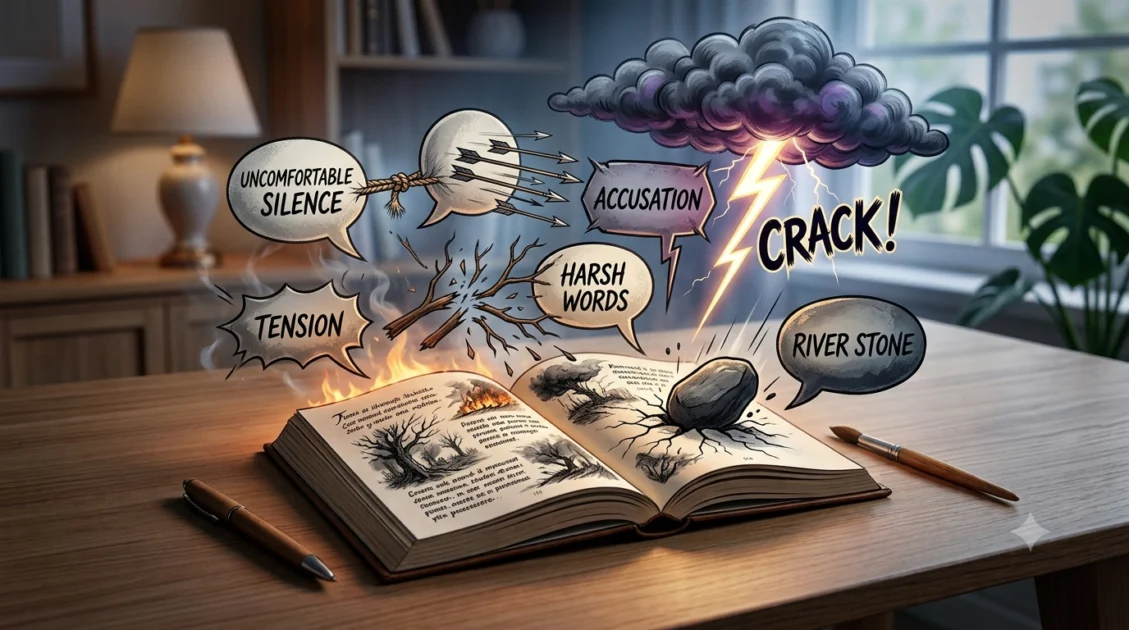
- “His words crashed like waves against the rocks.”
- “Her reply snapped like a dry branch.”
- “His voice rolled through the room like thunder.”
- “Their accusations flew like arrows.”
- “Her words struck like a hammer.”
- “His anger spread like fire through dry grass.”
- “She spoke like a storm about to break.”
- “Every answer came out as sharp as a blade.”
- “Their argument shook the room like an earthquake.”
- “His warning hit like a slammed door.”
Use strong imagery carefully. The comparison should match the intensity of the scene.
Friendly Similes for Natural Conversations
Friendly dialogue often feels warm, relaxed, playful, and comfortable. Similes can help create a welcoming mood.
Examples:
- “Their laughter flowed like music.”
- “The conversation moved like a calm river.”
- “Her words felt like sunshine after rain.”
- “They joked like children on the first day of summer.”
- “His greeting was as warm as fresh bread.”
- “Their stories spilled out like coins from an open jar.”
- “She laughed like she had heard the best joke in the world.”
- “Their conversation felt like an old favorite song.”
- “His voice was as cheerful as birds at sunrise.”
- “Their jokes bounced around like balls on a playground.”
These comparisons create a sense of comfort and connection.
Emotional Similes for Sad Dialogue
Sad conversations may include silence, regret, disappointment, or loss. Gentle imagery often works better than dramatic comparisons.
Examples:
- “Her words fell like leaves at the end of autumn.”
- “His goodbye faded like a song heard from far away.”
- “The silence between them settled like evening fog.”
- “She spoke like someone carrying a heavy suitcase.”
- “His voice trembled like a candle in the wind.”
- “Her answer drifted away like smoke.”
- “The room felt as quiet as an empty road.”
- “His words sounded like rain against a closed window.”
- “She whispered like the last page of a story.”
- “Their conversation faded like daylight at sunset.”
These similes create emotion while allowing readers to interpret the scene for themselves.
Funny Similes for Dialogue
Funny similes can make characters more memorable. They work well when the comparison is surprising but still easy to understand.
Examples:
- “He bragged like a rooster before sunrise.”
- “She talked faster than popcorn popping.”
- “His excuse twisted like spaghetti on a fork.”
- “They argued like two cats sharing one chair.”
- “Her confidence grew like a balloon at a birthday party.”
- “He explained the plan like a squirrel hiding snacks.”
- “She laughed like a car with a broken horn.”
- “His story bounced around like socks in a dryer.”
- “They talked over each other like three radios playing at once.”
- “His answer arrived as late as a slow bus.”
Funny similes should fit the character’s personality. A serious character may not suddenly use a silly comparison unless the moment has a clear reason.
Simile for Dialogue in Warm and Meaningful Conversations
Warm conversations often include trust, kindness, appreciation, or emotional connection. Soft and peaceful imagery can make these scenes feel more personal.
Examples:
- “Her voice was as gentle as morning light.”
- “Their words moved between them like a quiet melody.”
- “His encouragement felt like sunlight through a window.”
- “The conversation flowed like a peaceful walk.”
- “Her laughter brightened the room like a lamp.”
- “His words settled over her like a warm blanket.”
- “They spoke as comfortably as old friends.”
- “Her reply felt like the first warm day of spring.”
- “Their conversation moved like a familiar path.”
- “His voice carried kindness like a letter from home.”
The best comparisons support the mood without becoming overly dramatic.
Strong Similes for Dialogue in Conflict Scenes
Conflict scenes need tension and movement. Short similes often work best because they keep the conversation moving.
Examples:
- “Their accusations flew like arrows.”
- “Her words snapped like dry wood.”
- “His response landed like a heavy stone.”
- “The room felt like a storm waiting to break.”
- “Their silence stretched like a tight rope.”
- “His answer cut through the room like an alarm.”
- “Every reply added fuel like dry wood to a fire.”
- “Her voice rose like a wave before it crashed.”
- “The argument spread like a crack across ice.”
- “His words hit the room like a sudden clap of thunder.”
Avoid adding a simile to every line. A few well-placed comparisons can create stronger tension than many repeated ones.
How to Write Similes Inside Character Dialogue
Sometimes a narrator uses a simile to describe dialogue. Other times, the character speaks the simile directly.
Narrative description:
Maya’s voice shook like a leaf in the wind.
Simile spoken by a character:
“This room is as cold as a freezer,” Maya said.
Both forms are useful, but they serve different purposes.
When a character speaks a simile, the comparison should sound natural for that person.
For example, a gardener might say:
“His temper grows like weeds after rain.”
A musician might say:
“Her voice is as smooth as a slow melody.”
A mechanic might say:
“That plan is running like an engine without oil.”
Character-based comparisons make dialogue feel more believable because they reflect a person’s experiences and interests.
How to Create an Original Simile for Dialogue
You do not need unusual or complicated words to create an original simile. Start by identifying the emotion or quality you want to show.
Use this simple process:
1. Identify the feeling
Ask:
- Is the character nervous?
- Is the speaker excited?
- Does the reply sound cold?
- Is the conversation tense?
- Does the character speak quickly?
2. Think about how the feeling behaves
For example, nervous speech may:
- Shake
- Break
- Stop suddenly
- Become quiet
3. Find a familiar image
You might compare nervous speech to:
- A leaf in the wind
- A candle flame
- A loose window
- Paper trembling in a breeze
4. Write the comparison
“Her voice trembled like a candle flame in the wind.”
5. Read it aloud
If the sentence sounds forced, shorten it or choose a clearer image.
How to Keep Dialogue Similes Short and Powerful
Long comparisons can slow a conversation. Short similes are often easier to understand and remember.
Too long:
“His voice sounded like a dark storm cloud moving slowly across a cold ocean on a winter night.”
Stronger:
“His voice rolled like thunder.”
The shorter version is clearer and creates a faster emotional effect.
To keep a simile powerful:
- Use one main image
- Remove unnecessary details
- Focus on one emotion
- Choose familiar comparisons
- Read the sentence aloud
- Keep the wording natural
A short simile can be vivid without interrupting the flow of dialogue.
Common Mistakes Writers Make With Dialogue Similes
Similes can weaken writing when they are confusing, repetitive, or unrelated to the scene.
Using too many similes
If every line contains a comparison, the dialogue may feel crowded.
Overused:
“Her voice was like rain. His answer was like thunder. The room was like ice. Their silence was like smoke.”
The repeated structure becomes distracting.
Use similes at important emotional moments instead.
Using mixed imagery
Confusing:
“Her voice was like sunshine mixed with thunder and melting ice.”
The images do not create one clear feeling.
Clearer:
“Her voice cut through the silence like an alarm.”
Using clichés too often
Common phrases may feel predictable.
Examples include:
- As cold as ice
- As quiet as a mouse
- Like a broken record
These phrases are not always wrong, but original imagery can make writing more memorable.
Ignoring the character’s voice
A young child, scientist, athlete, and musician may use different comparisons.
Choose images that fit the character’s background and personality.
Slowing an important scene
During a fast argument or urgent moment, long poetic comparisons may interrupt the pace.
Use short, direct similes when the scene moves quickly.
Simile for Dialogue in Fiction Writing
Fiction writers use similes to build atmosphere and reveal emotion. The style of the comparison should match the story.
Fantasy dialogue
“Her warning drifted through the hall like smoke from an ancient spell.”
Mystery dialogue
“His answer slipped away like a shadow behind a locked door.”
Adventure dialogue
“The captain’s command struck the crew like a sudden wave.”
Realistic fiction
“Her reply came out like she had practiced it all morning.”
The imagery should feel consistent with the world of the story.
Simile for Dialogue in Screenplays and Scripts
Scripts depend heavily on speech, actions, and short descriptions. A quick simile can help communicate tone without adding a long explanation.
Examples:
He laughs like someone trying to hide his worry.
Her voice cuts through the silence like an alarm.
The conversation hangs over the room like smoke.
His answer arrives like a sudden interruption.
In a screenplay, use similes carefully. They should help readers understand the scene without making directions too detailed or distracting.
Similes That Show Fear or Nervousness in Dialogue
Fear can change the sound and rhythm of speech. A character may whisper, pause, repeat words, or speak too quickly.
Examples:
- “Her voice trembled like paper in the wind.”
- “His answer came out like a whisper trapped behind a door.”
- “She spoke as carefully as someone walking across thin ice.”
- “His words stumbled like feet in the dark.”
- “The silence pressed against them like heavy fog.”
- “Her voice flickered like a candle near an open window.”
- “He answered like someone expecting a sudden noise.”
- “Every word shook like a loose window during a storm.”
- “Her reply was as small as a distant echo.”
- “His voice faded like footsteps down a long hallway.”
These comparisons show tension without repeatedly naming the emotion.
How Similes Reveal Character Emotions
Strong writing often shows emotions instead of directly explaining them.
Telling:
He was hurt by her answer.
Showing with a simile:
He answered like every word weighed something.
The second example encourages readers to notice the emotional effect.
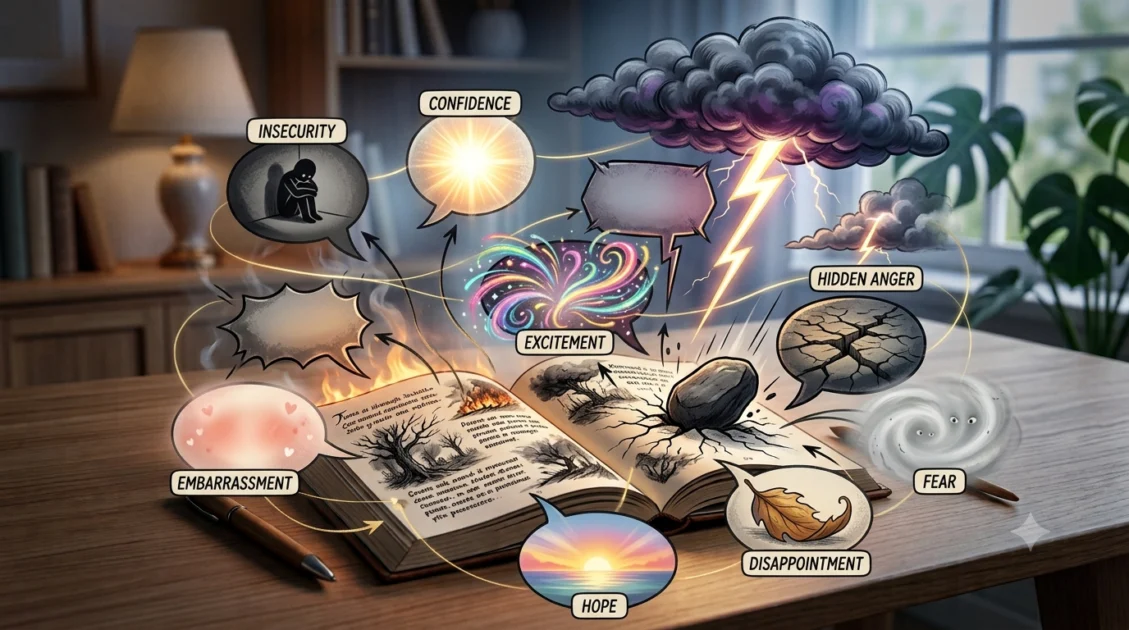
Similes can reveal:
- Insecurity
- Confidence
- Hidden anger
- Excitement
- Embarrassment
- Fear
- Hope
- Disappointment
A carefully chosen comparison can add emotional depth without requiring a long explanation.
Tips for Making Dialogue Similes Sound Original
Original similes usually come from observation. Look at ordinary objects, sounds, places, and experiences.
Try these ideas:
- Notice how people speak when they are nervous or excited.
- Use sights, sounds, textures, and movement.
- Think from the character’s point of view.
- Compare emotions with everyday experiences.
- Avoid adding unusual words only to sound creative.
- Choose one clear image instead of several mixed images.
Instead of:
“Her reply was as cold as ice.”
You could write:
“Her reply felt like a message left unread.”
The second comparison may feel fresher while still suggesting distance.
Original does not have to mean complicated. Clear and specific imagery is often more effective.
Best Simile for Dialogue Examples
Here are additional examples for students and writers:
- “His promise faded like smoke in the rain.”
- “She answered like someone guarding a secret.”
- “Their laughter burst like fireworks.”
- “His apology landed like a heavy stone.”
- “The conversation drifted like autumn leaves.”
- “Her voice glowed like candlelight.”
- “His warning hit like a slammed door.”
- “Their silence stretched like an empty road.”
- “She whispered like wind moving through trees.”
- “His anger rose like water behind a dam.”
- “Her words floated like paper boats.”
- “His answer was as quick as a spark.”
- “The conversation moved like a slow train.”
- “Her laughter rang like a school bell.”
- “His voice was as steady as a clock.”
- “Their jokes bounced around like rubber balls.”
- “Her reply slipped out like a secret.”
- “His words fell like rain on dry ground.”
- “The argument grew like a storm on the horizon.”
- “Her voice softened like evening light.”
Conclusion
A strong simile for dialogue can turn an ordinary conversation into a vivid and memorable scene. It helps readers hear the tone behind spoken words, understand hidden emotions, and connect more deeply with characters.
The best dialogue similes are clear, natural, and connected to the scene. They match the character’s personality, support the mood, and add meaning without slowing the conversation. A short comparison such as “His voice rolled like thunder” can communicate tension more quickly than a long explanation.
Whether you write stories, scripts, essays, or classroom assignments, use similes with purpose. Focus on one clear image, avoid overusing comparisons, and choose details that fit the speaker. With practice, you can create original dialogue similes that make every conversation feel more alive.
FAQs
What is a simile for dialogue?
A simile for dialogue compares a character’s voice, words, tone, or conversation to something familiar by using words such as “like” or “as.”
Why do writers use similes in dialogue?
Writers use similes to show emotion, describe tone, reveal personality, create imagery, and make conversations more memorable.
Can similes improve character dialogue?
Yes. Similes can make character dialogue feel more expressive and realistic by helping readers understand how words sound or feel.
What makes a good dialogue simile?
A good dialogue simile is clear, natural, relevant to the scene, and appropriate for the character speaking.
Should dialogue similes be short?
Usually, yes. Short similes are easier to understand and help dialogue move smoothly. Longer comparisons can work when the scene is slow or reflective.
Can students use similes in essays?
Yes. Students can use similes in creative essays, stories, descriptive paragraphs, and other writing assignments.
What are common mistakes with dialogue similes?
Common mistakes include using too many comparisons, repeating clichés, mixing unrelated images, and choosing similes that do not fit the character.
How do I make a dialogue simile original?
Use everyday observations, sensory details, and character-specific experiences. Focus on a clear image instead of trying to make the comparison overly complicated.
Are similes useful in screenplays?
Yes. Short similes in scene descriptions can help communicate tone, emotion, and atmosphere to readers and performers.
Can funny similes improve dialogue scenes?
Yes. Funny similes can add humor, reveal personality, and make conversations more entertaining when they fit the character and situation.
