
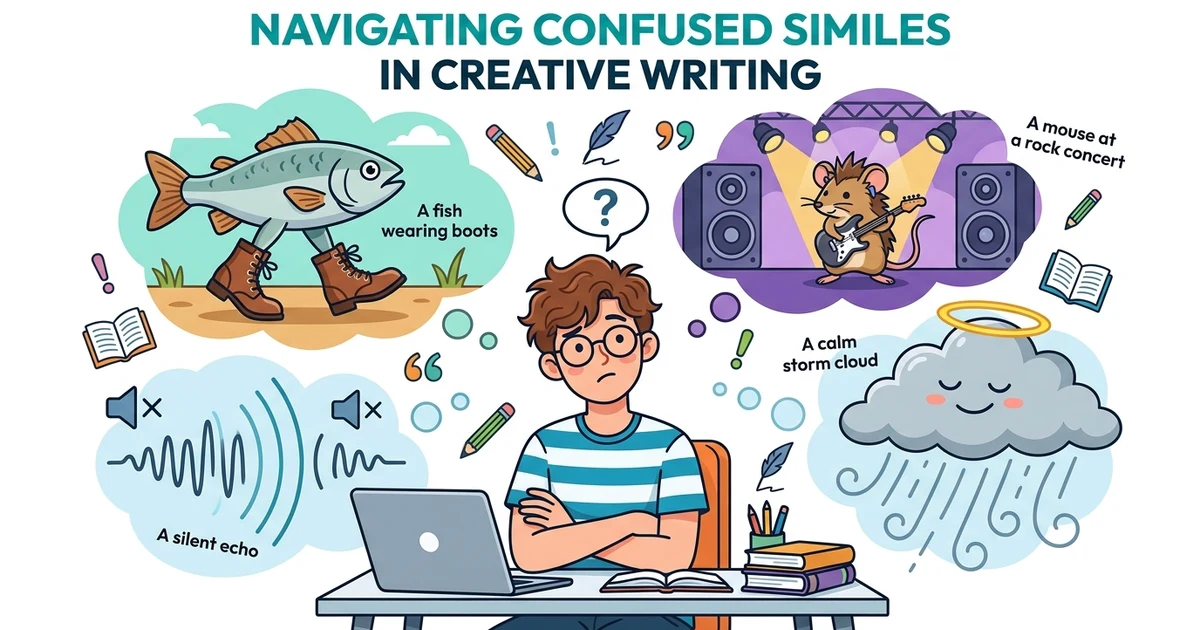
A confused simile is a comparison that uses like or as but combines ideas that do not naturally fit together. Unlike a regular simile, which creates a clear image, a confused simile often mixes conflicting concepts, making the comparison sound unusual, humorous, or intentionally puzzling. Writers sometimes use confused similes to show complex emotions, create comedy, or highlight a character’s confusion.
Introduction
Similes are one of the easiest ways to make writing more vivid. They help readers visualize ideas by comparing one thing to another using words like “like” or “as.” Most similes aim to create a clear and familiar image. For example, saying someone is “as busy as a bee” immediately helps readers understand what you mean.
However, not all similes create perfect clarity. Sometimes a comparison feels strange, mixed, or slightly illogical. This type of comparison is known as a confused simile. While confused similes may sound like mistakes, they can actually serve a purpose in creative writing. They can add humor, emphasize emotional conflict, or make a scene more memorable.
In this guide, you will learn what a confused simile is, how it differs from a regular simile, when it works, when it fails, and how to create your own confused similes effectively.
What Is a Confused Simile?
A confused simile is a comparison that creates a mixed, contradictory, or unclear image.
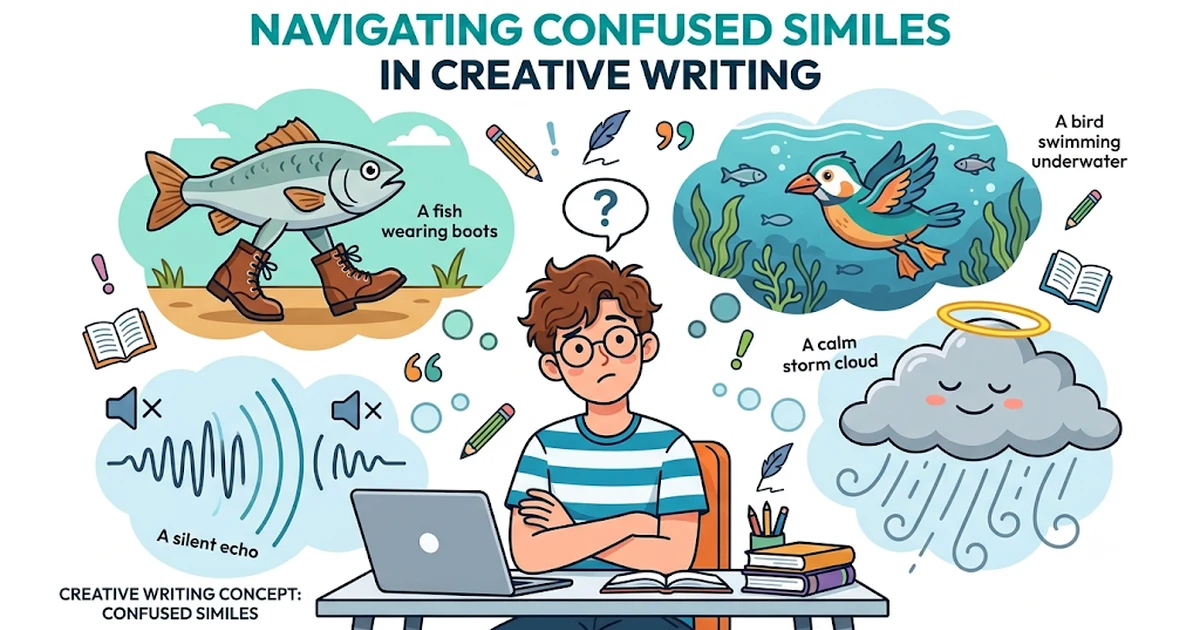
A standard simile compares two things in a logical way:
- He ran like the wind.
- She was as quiet as a mouse.
A confused simile introduces an element that clashes with the original image:
- He ran like the wind stuck in traffic.
- She was as quiet as a shouting whisper.
The reader understands the intended comparison, but the added detail creates confusion or contradiction.
Regular Similes vs Confused Similes
| Regular Simile | Confused Simile |
|---|---|
| As light as a feather | As light as a feather made of stone |
| Like a fish in water | Like a fish in water wearing boots |
| As fast as lightning | As fast as a slow lightning bolt |
| As clear as glass | As clear as a foggy mirror |
Regular similes improve clarity, while confused similes create tension between two conflicting ideas.
Why Writers Use Confused Similes
Although they seem unusual, confused similes can be powerful writing tools.
Add Humor
Unexpected comparisons often make readers laugh.
Example:
“He was as brave as a scared lion.”
Show Emotional Conflict
People often experience mixed emotions.
Example:
“I felt calm like a storm inside.”
Reflect Confusion
A confused simile can mirror a character’s state of mind.
Example:
“Her thoughts moved like a compass spinning in circles.”
Create a Unique Writing Voice
Creative writers often use unusual comparisons to stand out.
Confused Simile Examples
1. As Quiet as a Shouting Whisper
Meaning: Something seems calm but still demands attention.
2. As Bright as a Dim Light
Meaning: A situation appears positive but lacks clarity.
3. As Fast as a Slow Lightning Bolt
Meaning: Something should be quick but feels delayed.
4. As Cold as a Warm Winter Day
Meaning: A contradictory situation that feels difficult to explain.
5. Like a Lost Map
Meaning: Feeling confused without guidance.
6. Like a Calm Storm
Meaning: Someone appears peaceful but hides strong emotions.
7. Like a Silent Echo
Meaning: A message is present but difficult to hear or understand.
8. Like a Frozen Noodle
Meaning: Used humorously to describe awkward movement.
9. Like a Sleeping Bee
Meaning: Busy-looking but not actually productive.
10. Like a Hidden Secret
Meaning: Something obvious that people still fail to notice.
Confused Similes for Emotions
Emotions are often complicated, making confused similes especially useful.
| Emotion | Confused Simile |
|---|---|
| Happiness | Happy like a crying child |
| Sadness | Sad like a winning loser |
| Fear | Brave like a frightened lion |
| Anxiety | Calm like a storm inside |
| Confidence | Confident like a shaking voice |
How to Create Your Own Confused Simile
Creating a confused simile is simple.
Step 1: Start with a Normal Simile
Example:
Quiet like a mouse
Step 2: Add a Contradictory Twist
Example:
Quiet like a mouse at a rock concert
Step 3: Keep It Understandable
The comparison should still communicate an idea even if it sounds strange.
Common Mistakes to Avoid
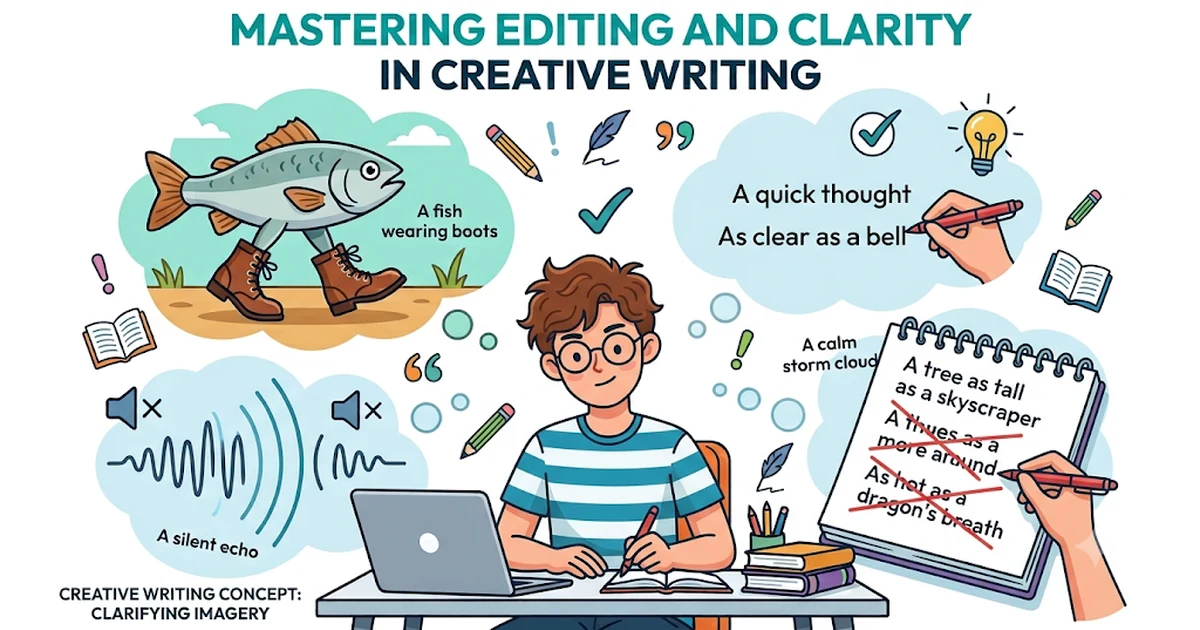
Making It Too Confusing
Readers should understand the intended meaning.
Using Too Many in One Paragraph
Too many unusual comparisons can make writing difficult to follow.
Forgetting the Purpose
A confused simile should support the story, not distract from it.
Confused Similes vs Mixed Metaphors
Many people confuse these two terms.
Confused Simile
Uses like or as.
Example:
“He was busy like a sleeping storm.”
Mixed Metaphor
Combines unrelated metaphors.
Example:
“We’ll burn that bridge when we cross it.”
A confused simile creates an odd comparison. A mixed metaphor combines multiple figurative images incorrectly.
Practice Exercise
Turn these regular similes into confused similes.
- As busy as a bee
- As bright as the sun
- As strong as steel
- As quiet as a mouse
- Like a fish in water
Sample Answers
- As busy as a sleeping bee
- As bright as the sun behind dark clouds
- As strong as weak steel
- As quiet as a mouse at a concert
- Like a fish in water wearing boots
Conclusion
A confused simile may sound like a mistake, but it can be a valuable creative tool when used intentionally. By blending conflicting ideas, writers can create humor, reveal emotional complexity, and make their writing more memorable. The key is to balance creativity with clarity. If readers can still understand your message, a confused simile can become one of the most effective ways to add personality and originality to your writing.

FAQs
What is a confused simile?
A confused simile is a comparison that uses like or as but combines ideas that seem contradictory or unclear.
Are confused similes grammatically incorrect?
Not necessarily. Many writers use them intentionally for humor or creative effect.
Why do confused similes sound funny?
They create unexpected images by combining ideas that do not normally belong together.
Can confused similes improve creative writing?
Yes. They can add originality, emotion, and humor when used correctly.
What is the difference between a simile and a confused simile?
A regular simile creates a clear comparison, while a confused simile mixes conflicting ideas.
Author writing imaginative comparisons with thought bubbles showing humorous and contradictory image
Confused Simile Examples
Collection of funny confused similes visualized, including a fish with boots and a mouse at a concert.
How to Create Your Own Confused Simile
Step-by-step visual guide showing a simple simile transformed into a confused simile, educational design.
