
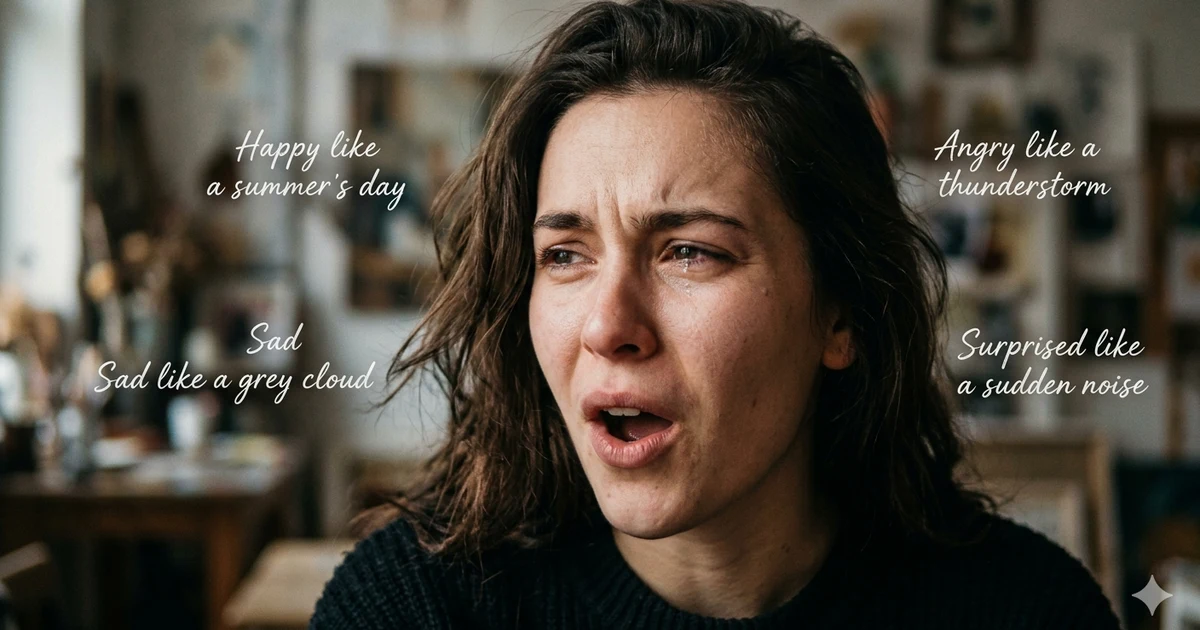
Quick Answer Box
A simile for face compares a person’s face to something familiar using words like “like” or “as.” Writers use these similes to describe beauty, emotions, expressions, and personality in a more vivid way.
Introduction
A face tells stories before words ever begin. Joy, fear, anger, love, and surprise often appear through facial expressions first. Writers use similes to make those expressions feel vivid and memorable. A strong simile for face can turn a plain sentence into a powerful image readers instantly understand.
Whether you write essays, poetry, stories, captions, or creative assignments, face similes can improve your descriptions and make your writing more emotional. In this guide, you will learn what face similes mean, how to create them naturally, and how to use them in different types of writing with real examples.
What Does Simile for Face Mean in Writing
A simile compares two different things using words like “as” or “like.” A simile for face describes a person’s face by comparing it to something familiar.
Examples:
- Her face shone like the morning sun.
- His face looked as pale as snow.
- The child’s face glowed like a lantern.
These comparisons help readers imagine emotions, beauty, and expressions more clearly.
Why Writers Use Similes to Describe Faces
Faces reveal emotion faster than dialogue. Writers use similes because they create stronger mental pictures.
A sentence like “She looked happy” sounds plain. Compare that to:
- Her face bloomed like a flower after rain.
The second sentence feels more alive and emotional.
Writers also use face similes to:
- Build character personality
- Create mood
- Add beauty to descriptions
- Make scenes memorable
- Help readers connect emotionally
Simple Simile for Face Examples for Beginners
Beginners often struggle with creative descriptions. Simple face similes make writing easier.
Examples:
- His face turned red like a tomato.
- Her face felt cold as ice.
- The baby’s face looked soft like cotton.
- His face shined like polished glass.
- Her face wrinkled like dry paper.
These examples work well in school writing and beginner creative work.
Beautiful Similes for a Smiling Face
A smile changes the entire mood of a scene. Writers often compare smiling faces to bright or beautiful things.
Examples:
- Her smiling face glowed like sunshine.
- His smile spread across his face like warm light.
- Her face opened like a blooming rose.
- The child’s smiling face sparkled like stars.
- His cheerful face looked like spring after winter.
These similes fit romance, poetry, and emotional storytelling.
Simile for Face That Shows Sadness and Emotion
Sadness often appears through tired eyes and weak expressions. Emotional similes help readers feel the pain.
Examples:
- Her face looked as empty as a deserted street.
- His face drooped like a dying flower.
- Her pale face resembled a cloudy sky.
- His face fell like broken glass.
- The old man’s face looked worn like an ancient map.
These descriptions add emotional depth without long explanations.
Funny Similes for Face Descriptions
Humor makes writing entertaining and relatable. Funny face similes work well in casual stories and social media.
Examples:
- His face turned red like spicy ketchup.
- She stared at me like a confused owl.
- His shocked face looked like a frozen cartoon character.
- Her face puffed up like rising bread dough.
- He smiled like a kid near free candy.
Funny comparisons keep readers engaged and create memorable moments.
Similes for an Angry Face in Stories
Anger changes facial expressions quickly. Writers often compare angry faces to heat, storms, or dangerous objects.
Examples:
- His face burned like fire.
- Her angry face looked sharp like a knife.
- His face darkened like a thundercloud.
- She glared like a hunting tiger.
- His jaw tightened like a locked gate.
These similes create tension and intensity in scenes.
Simile for Face in Romantic Writing
Romantic writing often focuses on beauty and emotional attraction. Face similes help create charm and warmth.
Examples:
- Her face glowed like moonlight.
- His face looked calm like the sea at sunset.
- Her cheeks turned pink like rose petals.
- His smile spread like soft music.
- Her face shined like a pearl under light.
These descriptions feel emotional without sounding exaggerated.
Creative Similes for Face in Poetry
Poetry allows more imaginative comparisons. Poets often use nature, dreams, and art to describe faces.
Examples:
- Her face floated like a silent moon in darkness.
- His face looked fragile like thin glass.
- Her expression changed like shifting tides.
- The child’s face shone like a candle in winter.
- His face rested like still water beneath stars.
Creative similes add rhythm and beauty to poems.
Similes That Compare a Face to Nature
Nature gives writers endless inspiration. Natural images make face descriptions feel vivid and peaceful.
Examples:
- Her face looked fresh like morning dew.
- His face glowed like the sunrise.
- Her smile opened like spring flowers.
- His tired face resembled dry earth.
- Her calm face looked smooth like a quiet lake.
Nature similes work especially well in descriptive writing.
Simile for Face That Shows Fear and Shock
Fear changes the eyes, mouth, and skin tone quickly. Strong similes help readers sense panic immediately.
Examples:
- His face turned white like chalk.
- Her shocked face froze like stone.
- His eyes widened like open gates.
- Her face looked stiff like ice.
- The boy’s frightened face shook like leaves in wind.
These comparisons create suspense in stories.
Best Similes for Describing a Glowing Face
A glowing face often represents happiness, health, or excitement.
Examples:
- Her face glowed like a golden lamp.
- His happy face shined like sunlight on water.
- The bride’s face sparkled like diamonds.
- Her cheeks glowed like burning candles.
- His face looked bright like a summer morning.
These similes fit celebrations and joyful scenes.
Simile for Face in Character Descriptions
Character descriptions help readers picture people clearly. Face similes add personality and uniqueness.
Examples:
- His hard face looked like carved stone.
- Her soft face resembled fresh cream.
- The detective’s face stayed cold like steel.
- His face wrinkled like folded fabric.
- Her sharp expression looked like broken glass.
Good character similes reveal more than physical appearance.
How to Write Original Face Similes Without Sounding Cliché
Many writers repeat overused comparisons. Original similes feel fresh and believable.
Tips for creating better similes:
- Observe real facial expressions
- Compare emotions instead of appearance only
- Use uncommon objects carefully
- Match the tone of your writing
- Keep comparisons simple and clear
Instead of writing:
- Her face looked like the sun.
Try:
- Her face glowed like a window full of morning light.
Specific details create stronger images.
Simile for Face in School Essays and Assignments
Students often need descriptive language in essays. Face similes improve writing quality without making sentences complicated.
Examples:
- The teacher’s face stayed calm like still water.
- My friend’s face turned red like a ripe apple.
- The player’s face shined like gold after victory.
- Her worried face looked like a rainy afternoon.
Teachers usually appreciate clear and creative comparisons.
Common Mistakes When Using Face Similes
Weak similes can confuse readers or sound forced.
Common mistakes include:
- Using too many similes in one paragraph
- Repeating famous clichés
- Comparing unrelated things
- Making comparisons too long
- Ignoring emotional tone
Bad example:
- His face looked like a sandwich flying through space.
The comparison feels random and distracting.
Good similes stay meaningful and easy to imagine.
Difference Between Face Similes and Metaphors
Similes and metaphors both compare things, but they work differently.
Simile example:
- Her face looked like a rose.
Metaphor example:
- Her face was a rose.
Similes use words like “as” or “like.” Metaphors speak more directly. Similes usually feel easier for beginners.
Emotional Similes for Face Expressions
Strong emotional writing often depends on facial descriptions.
Examples:
Happiness
- Her face glowed like festival lights.
Fear
- His face looked pale like winter fog.
Anger
- Her expression burned like hot coal.
Confusion
- His face twisted like tangled rope.
Pride
- Her face shined like a trophy under light.
Matching similes to emotions improves storytelling naturally.
Short Similes for Face Captions and Social Media
Short similes work best for captions because readers scan quickly online.
Examples:
- Bright as sunshine
- Soft like clouds
- Sharp like lightning
- Calm like water
- Sweet like honey
- Cold as ice
- Fresh like spring
- Red like roses
These quick comparisons suit captions, bios, and short quotes.
How Famous Writers Describe Faces With Similes
Great writers often use simple but powerful comparisons.
Many classic authors compare faces to:
- Weather
- Light
- Nature
- Precious objects
- Animals
- Art
They focus on emotion instead of complicated vocabulary. Readers remember vivid images more than difficult words.
Strong writers also keep similes natural inside the story rather than forcing them into every sentence.
Conclusion
A good simile for face can completely change how readers experience your writing. Simple comparisons help people picture emotions, expressions, and personalities more clearly. Whether you write poetry, stories, essays, or social captions, face similes add color and emotion without making sentences difficult.
The best similes feel natural, specific, and easy to imagine. Focus on real emotions, clear images, and meaningful comparisons. With practice, you can create face descriptions that stay in readers’ minds long after they finish reading.
FAQs
What is a simile for face?
A simile for face compares a face to another object or image using words like “like” or “as.”
Why do writers use similes for faces?
Writers use them to create vivid emotional descriptions and stronger imagery.
What is an example of a face simile?
“Her face glowed like the morning sun” is a common example.
Can students use face similes in essays?
Yes. Face similes improve descriptive writing in school assignments.
What makes a good face simile?
A good simile feels natural, clear, and connected to emotion or appearance.
Are similes and metaphors the same?
No. Similes use comparison words like “as” or “like,” while metaphors do not.
How can I create original face similes?
Observe real expressions and compare them to meaningful everyday images.
What are funny similes for face descriptions?
“His face turned red like spicy ketchup” is one example.
Can face similes work in poetry?
Yes. Poets often use creative face similes for emotional and visual impact.
Should I use many similes in one paragraph?
No. Too many similes can make writing feel crowded and repetitive.
