

Quick Answer
A simile in Spanish compares two things using words like como which means like or as. Common examples include rápido como un rayo meaning fast like lightning and dulce como la miel meaning sweet like honey.
Introduction
Spanish becomes more colorful and expressive when people use similes in everyday speech. A simple comparison can transform an ordinary sentence into something vivid, memorable, and full of emotion. Native speakers use similes in conversations, songs, stories, and even jokes to make their language more engaging.
Learning Spanish similes can help you sound more natural and confident. They improve your speaking, writing, and listening skills by teaching you how emotions and ideas are expressed in real situations. In this guide, you will discover what Spanish similes mean, how they are formed, and when to use them correctly. You will also explore funny, romantic, emotional, and regional examples that native speakers use in daily life.
What is a simile in Spanish with simple examples
A simile compares one thing to another to make an idea clearer or stronger. In Spanish, people often use words like como which means like or as.
Examples:
- Corre como el viento
He runs like the wind. - Fría como el hielo
Cold like ice. - Fuerte como un toro
Strong like a bull.
These comparisons create a strong image in the listener’s mind.
Why Spanish similes make conversations more expressive
Similes add emotion and personality to speech. Instead of using plain descriptions, speakers create images people can easily imagine.
For example:
- Está feliz como un niño en Navidad
He is happy like a child at Christmas.
This sounds warmer and more emotional than simply saying someone feels happy.
Spanish conversations often sound lively because speakers use comparisons naturally. Similes also help learners understand humor, emotion, and cultural expressions.
How similes work in Spanish grammar and sentence structure
Most Spanish similes follow a simple pattern:
Subject + verb + como + comparison
Examples:
- Nada como un pez
She swims like a fish. - Habla como un profesor
He speaks like a teacher.
Sometimes adjectives appear before the comparison.
Examples:
- Blanco como la nieve
White as snow. - Lento como una tortuga
Slow like a turtle.
Spanish grammar keeps similes simple, which makes them easy for beginners to learn.
Difference between a simile and a metaphor in Spanish
A simile compares two things directly using words like como.
Example:
- Tus ojos brillan como estrellas
Your eyes shine like stars.
A metaphor says one thing actually is another thing.
Example:
- Tus ojos son estrellas
Your eyes are stars.
Spanish speakers use both forms often, but similes usually sound clearer for beginners.
Most common Spanish words used to create similes
Several Spanish words help build similes naturally.
Common comparison words include:
- Como meaning like or as
- Parecer meaning to seem
- Igual que meaning just like
- Tal como meaning exactly like
Examples:
- Come como un caballo
He eats like a horse. - Parece un ángel
She seems like an angel.
These words appear often in both formal and casual Spanish.
Easy simile examples in Spanish with English translation
Here are simple examples beginners can practice every day.
- Rápido como un rayo
Fast like lightning. - Duerme como un bebé
Sleeps like a baby. - Brilla como el sol
Shines like the sun. - Terco como una mula
Stubborn like a mule. - Suave como la seda
Soft like silk.
These examples sound natural and easy to remember.
Famous Spanish similes used in everyday conversation
Native speakers use some similes so often that they become part of daily speech.
Examples include:
- Más claro que el agua
Clearer than water. - Loco como una cabra
Crazy like a goat. - Más lento que una tortuga
Slower than a turtle.
You may hear these expressions in movies, music, and family conversations.
Funny Spanish similes that native speakers actually use
Funny similes make conversations entertaining.
Examples:
- Habla como una radio vieja
Talks like an old radio. - Corre como pollo sin cabeza
Runs like a chicken without a head. - Duerme como un oso en invierno
Sleeps like a bear in winter.
Humor helps language learners remember phrases faster.
Romantic similes in Spanish for love and relationships
Spanish has many beautiful romantic comparisons.
Examples:
- Tus labios son suaves como rosas
Your lips are soft like roses. - Te extraño como el desierto extraña la lluvia
I miss you like the desert misses rain. - Tu sonrisa brilla como la luna
Your smile shines like the moon.
These similes appear often in songs and poetry.
Spanish similes that describe beauty and appearance
People commonly use similes to describe physical beauty.
Examples:
- Bella como una flor
Beautiful like a flower. - Ojos brillantes como diamantes
Eyes bright like diamonds. - Cabello negro como la noche
Hair black like the night.
These phrases sound elegant and expressive.
Simile examples in Spanish for emotions and feelings
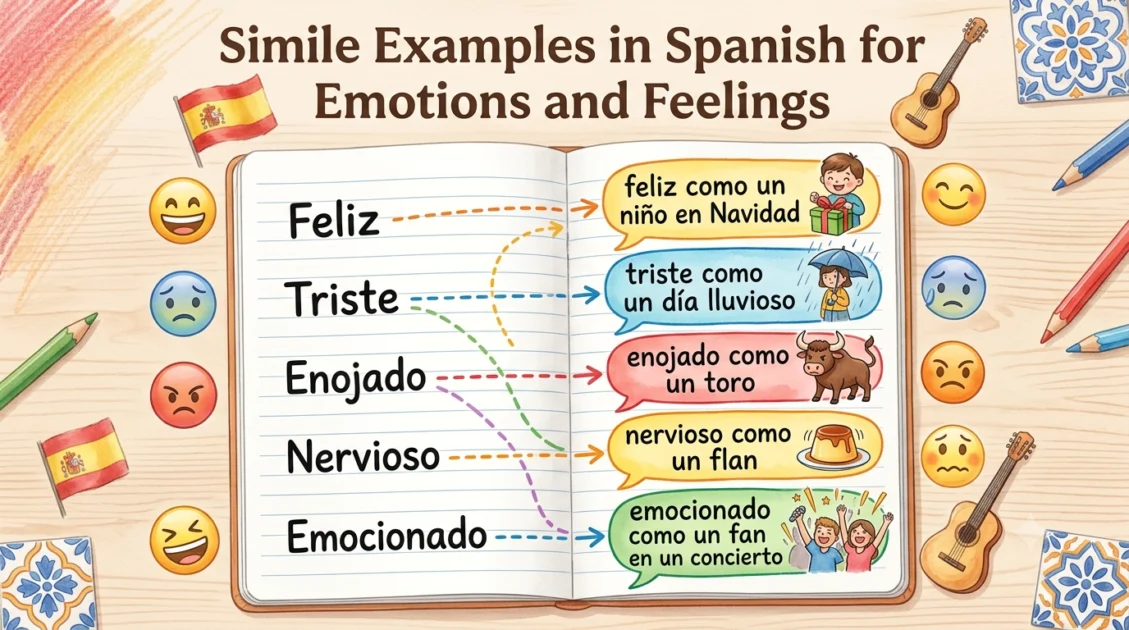
Spanish similes help speakers describe emotions clearly.
Examples:
- Triste como un día lluvioso
Sad like a rainy day. - Feliz como un niño
Happy like a child. - Nervioso como un gato en el agua
Nervous like a cat in water.
Emotional similes create stronger communication.
Animal based similes in Spanish with meanings
Animals appear often in Spanish comparisons because they reflect personality traits.
Examples:
- Trabaja como una hormiga
Works like an ant. - Valiente como un león
Brave like a lion. - Astuto como un zorro
Clever like a fox.
These similes help describe behavior quickly and vividly.
Food related similes commonly used in Spanish speaking countries
Food inspired similes appear in many Spanish speaking cultures.
Examples:
- Dulce como la miel
Sweet like honey. - Rojo como un tomate
Red like a tomato. - Caliente como una sopa
Hot like soup.
These expressions sound warm and familiar.
Spanish similes students can use in writing assignments
Students can improve essays and stories with simple similes.
Useful examples include:
- Silencioso como la noche
Quiet like the night. - Fuerte como una roca
Strong like a rock. - Ligero como una pluma
Light as a feather.
Teachers often encourage similes because they make writing more descriptive.
How to create your own similes in Spanish naturally
You can create similes easily by comparing qualities.
Think about:
- Speed
- Beauty
- Strength
- Emotion
- Sound
Then choose something famous for that quality.
Examples:
- Fast like lightning
- Quiet like snow
- Bright like the sun
In Spanish:
- Rápido como un rayo
- Silencioso como la nieve
- Brillante como el sol
Practice with daily objects and emotions to sound more natural.
Common mistakes people make when using Spanish similes
Many learners translate directly from English, which sometimes sounds unnatural.
Common mistakes include:
- Using the wrong gender
- Forgetting como
- Choosing comparisons Spanish speakers never use
Incorrect:
- Fuerte como un carro
Better:
- Fuerte como un toro
Listening to native speakers helps avoid awkward comparisons.
Spanish similes that sound natural in casual speech
Some similes work especially well in friendly conversation.
Examples:
- Come como loco
Eats like crazy. - Corre como viento
Runs like wind. - Está ocupado como una abeja
Busy like a bee.
These phrases help learners sound more fluent.
Regional Spanish similes that change by country
Spanish changes across regions, and similes change too.
In Mexico, some people say:
- Más feliz que una lombriz
Happier than a worm.
In Spain, you may hear:
- Más pesado que una vaca en brazos
Heavier than carrying a cow.
Regional expressions reveal local humor and culture.
Short Spanish similes perfect for beginners
Beginners should start with short and simple examples.
- Alto como una torre
Tall like a tower. - Frío como hielo
Cold like ice. - Libre como un pájaro
Free like a bird.
These easy phrases improve vocabulary quickly.
Practice exercises to learn Spanish similes faster
Practice helps you remember similes naturally.
Try these exercises:
Match the comparison
- Brave like a lion
- Sweet like honey
- Fast like lightning
Complete the sentence
- Fuerte como un _____
- Dulce como la _____
Create your own examples
Describe:
- A friend
- A pet
- Your favorite food
Daily practice builds confidence fast.
Conclusion
Spanish similes make communication more vivid, emotional, and natural. They help learners describe people, feelings, beauty, humor, and everyday situations with more personality. Simple comparisons such as rápido como un rayo or dulce como la miel can instantly improve speaking and writing.
The best way to master Spanish similes is through regular practice and real conversation. Learn common expressions first, then create your own naturally over time. With enough exposure, these comparisons will become part of your everyday Spanish.
FAQs
What is a simile in Spanish?
A simile compares two things using words like como to create a clearer image.
What word usually introduces similes in Spanish?
The word como appears most often in Spanish similes.
Are similes common in Spanish conversations?
Yes. Native speakers use similes daily in casual speech and storytelling.
What is an easy Spanish simile for beginners?
Fuerte como un toro is simple and popular.
What is the difference between a simile and a metaphor in Spanish?
A simile compares things directly while a metaphor states one thing is another.
Can Spanish similes improve writing?
Yes. Similes make writing more descriptive and engaging.
Do Spanish songs use similes?
Yes. Many Spanish songs use romantic and emotional similes.
Are animal similes popular in Spanish?
Yes. Animals often represent personality traits and behaviors.
How can I practice Spanish similes?
Read examples, repeat them aloud, and create your own comparisons.
Why should language learners study Spanish similes?
Similes help learners sound more natural and expressive in real conversations.
