
Quick Answer Box
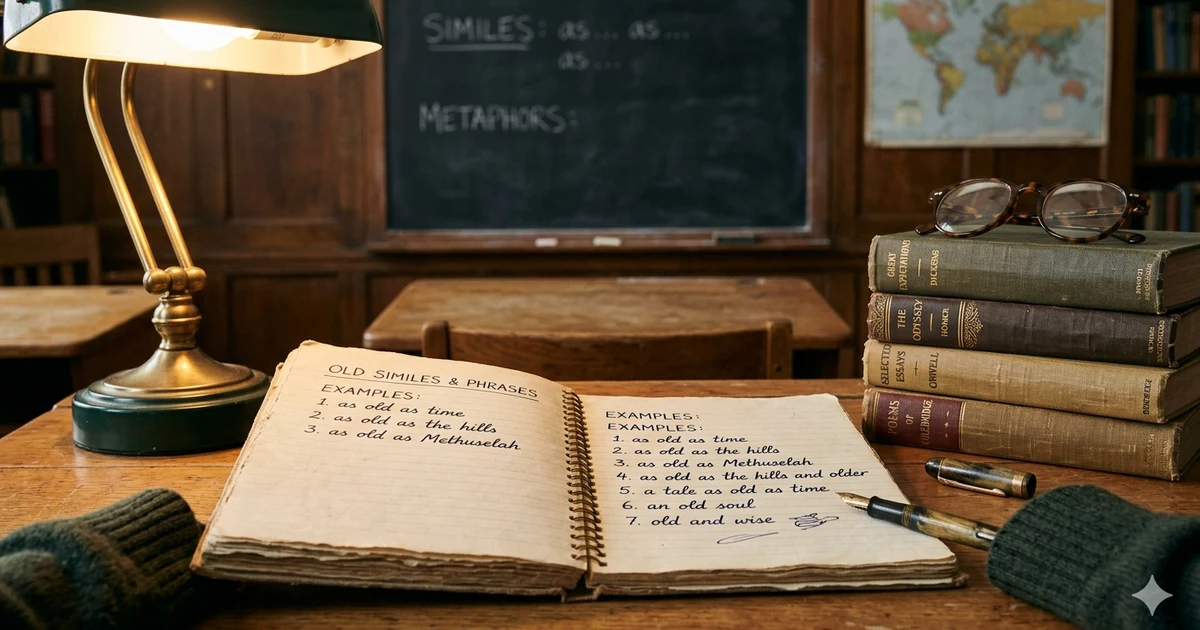
An old simile compares someone or something to age using words like “as” or “like” to create a stronger image. Common examples include “as old as the hills,” “as old as time,” and “like an ancient tree.” Writers use old similes to describe wisdom, experience, tiredness, strength, or history in a simple and memorable way.
Introduction
Words become stronger when they create clear pictures in the reader’s mind. That is exactly what a simile does. It helps compare one thing to another using words like “as” or “like” so the meaning feels more vivid and easy to understand.
An old simile helps describe age, wisdom, experience, weakness, or even humor. Writers use these comparisons to make people, places, and emotions feel more real. Phrases like “as old as the hills” or “as old as time” instantly create a strong image.
In this guide, you will learn what an old simile means, how to use it in writing, simple examples for students, and tips for creating your own powerful comparisons.
What is an old simile in simple words
An old simile compares something to age using “like” or “as.”
It helps explain that a person, object, or idea feels very old, experienced, or ancient.
Examples include:
- As old as the hills
- As old as time
- Like an ancient tree
- As old as the stars
These comparisons make writing more colorful and memorable.
For example:
“My grandfather is as old as the hills.”
This does not mean he is truly that old. It simply shows he feels very old and wise.
Why writers use old similes in descriptive writing
Writers use old similes to create strong mental pictures.
Instead of saying someone is old, they can write:
“She looked as old as time.”
This sounds more powerful and emotional.
Old similes help writers:
- Show wisdom
- Describe tiredness
- Add humor
- Create respect
- Build stronger characters
Simple descriptions often feel flat. Similes make them feel alive.
How old similes help describe age and wisdom
Age often connects with knowledge and life experience.
When writers use old similes, they can show both physical age and emotional wisdom.
Example:
“He was as old as the mountains and just as patient.”
This line suggests experience, calmness, and deep understanding.
Another example:
“Her advice felt as old as history itself.”
This shows wisdom without directly saying it.
These comparisons help readers feel the meaning instead of just reading it.
Old simile vs old metaphor with easy examples
A simile uses “like” or “as.”
A metaphor compares directly without those words.
Simile
“He was as old as the sea.”
Metaphor
“He was an ancient ocean of wisdom.”
Both create strong images, but similes feel clearer for beginners.
Students often start with similes because they are easier to identify.
Common emotions expressed through old similes
Old similes often express more than age.
They can show:
- Respect
- Sadness
- Loneliness
- Strength
- Peace
- Tiredness
- Humor
Example of respect:
“She was as old as the stars and just as bright.”
Example of sadness:
“The house stood there like an old forgotten memory.”
The emotional meaning depends on the comparison.
Simple old simile examples for beginners
Here are easy examples students can understand quickly:
- As old as the hills
- As old as time
- As old as the moon
- Like an ancient book
- As old as history
- Like a worn out clock
- As old as the trees
- Like a forgotten song
Sentence examples:
“My shoes look as old as history.”
“That story is as old as time.”
These work well in school writing.
Old similes that describe people clearly
Writers often use old similes to describe characters.
Examples:
- He looked as old as winter
- She smiled like an old wise owl
- His hands were like ancient branches
- Her face looked as old as a faded map
These lines help readers imagine the person better.
Strong character description makes stories stronger.
Old similes for grandparents and elderly characters
Grandparents often represent love, wisdom, and experience.
Respectful similes work best here.
Examples:
- Grandma was as wise as an old oak tree
- Grandpa was as old as the village clock
- Her voice felt like an old comforting song
- His stories were as old as the mountains
These comparisons show warmth instead of insult.
Good writing respects elderly characters.
Funny old similes used in daily conversation
Some old similes add humor to casual speech.
Examples:
- He is as old as my internet password
- That joke is as old as my school bag
- You move like an ancient turtle
- This phone feels as old as dinosaurs
Funny similes work well in friendly conversations.
They make everyday language more playful.
Beautiful old similes for creative writing
Creative writing needs emotional and visual detail.
Beautiful old similes add elegance.
Examples:
- The castle stood like an old sleeping giant
- Her memories were as old as moonlight
- The road stretched like an ancient promise
- His eyes carried stories as old as the sea
These comparisons create atmosphere and mood.
They work especially well in fiction and poetry.
Old similes that show strength and experience
Age can represent power and resilience.
Examples:
- He stood like an old mountain in the storm
- She was as strong as an ancient oak
- His mind was as steady as old stone
- Her courage felt as old as the earth
These similes show respect and endurance.
They help create powerful characters.
Old similes that describe weakness and tiredness
Not every old simile feels positive.
Some show exhaustion or decline.
Examples:
- He moved like an old rusty machine
- She looked as tired as an ancient road
- His voice sounded like an old broken radio
- The chair creaked like an old tired man
These comparisons should be used carefully.
They work best when they fit the scene naturally.
How poets use old similes in literature
Poets use old similes to create mood and deeper meaning.
They often connect age with nature.
Examples:
- As old as rivers
- Like forgotten autumn leaves
- As ancient as silence
Poetry depends on emotion and imagery.
Old similes help readers feel memory, time, and loss in a stronger way.
Old similes used in school writing tasks
Students often use similes in essays and story writing.
Teachers like them because they improve description.
Useful school examples:
- The classroom clock looked as old as history
- My grandfather is as wise as an owl
- Our school building stood like an old giant
Simple similes make writing more interesting without becoming confusing.
Old similes for storytelling and fiction writing
Stories need believable people and places.
Old similes help build both.
Example:
“The village stood there like an old secret.”
This creates mystery.
Another example:
“The king looked as old as the kingdom itself.”
This builds character quickly.
Good fiction uses small details that create strong images.
Positive old similes that show respect
Respectful similes focus on wisdom and value.
Examples:
- As wise as an old tree
- Like a book full of history
- As calm as an ancient river
- As valuable as old gold
These work well when writing about teachers, elders, or mentors.
They create admiration instead of criticism.
Negative old similes and when to avoid them
Some similes can sound rude.
Examples:
- As old as dirt
- Like a broken old chair
- As slow as an ancient snail
These may hurt feelings if used carelessly.
Avoid negative similes when writing about real people unless humor clearly fits the situation.
Respect matters in strong writing.
Famous old simile examples from books and poems
Some classic comparisons appear often in literature.
Popular examples include:
- As old as time
- As old as the hills
- As old as the sea
- As ancient as the stars
These phrases stay popular because readers understand them instantly.
Simple familiar similes often work better than complicated ones.
Tips for creating your own old simile
A good simile feels natural and clear.
Try these steps:
- Choose the feeling first
- Think of something old that matches it
- Keep the image simple
- Make sure readers understand it quickly
Example:
Instead of saying “very old”
Write:
“He looked as old as the village church.”
This creates a stronger image.
Mistakes to avoid when writing old similes
Many writers make similes too confusing.
Avoid these mistakes:
- Using comparisons nobody understands
- Repeating the same simile too often
- Making insulting comparisons by accident
- Choosing images that do not match the emotion
- Overloading every sentence with similes
A few strong similes work better than too many weak ones.
Conclusion
Old similes make writing richer, clearer, and more memorable. They help describe age, wisdom, strength, weakness, and emotion in ways that plain words cannot.
Simple phrases like “as old as the hills” or “like an ancient tree” create instant images that readers understand quickly. Whether you write school essays, poetry, stories, or daily conversations, old similes can make your words stronger.
The best similes feel natural, respectful, and easy to picture. Choose comparisons that match your meaning, and your writing will always feel more alive.
FAQs
1. What is an old simile?
An old simile compares something to age using words like “as” or “like.”
2. What is an example of an old simile?
“As old as the hills” is one of the most common examples.
3. Is “as old as time” a simile?
Yes, it is a simile because it uses “as” to compare age.
4. Why do writers use old similes?
They use them to create stronger descriptions and emotional meaning.
5. Can old similes be funny?
Yes, funny examples like “as old as my school bag” work in casual writing.
6. Are old similes good for students?
Yes, they help students improve creative and descriptive writing.
7. What is the difference between simile and metaphor?
A simile uses “like” or “as,” while a metaphor compares directly.
8. Can old similes sound rude?
Yes, negative comparisons can sound disrespectful if used carelessly.
9. What are positive old similes?
Examples include “as wise as an old oak” and “as calm as an ancient river.”
10. How do I create my own old simile?
Choose a feeling, connect it to something old, and keep the comparison simple and clear.
