
Quick Answer Box
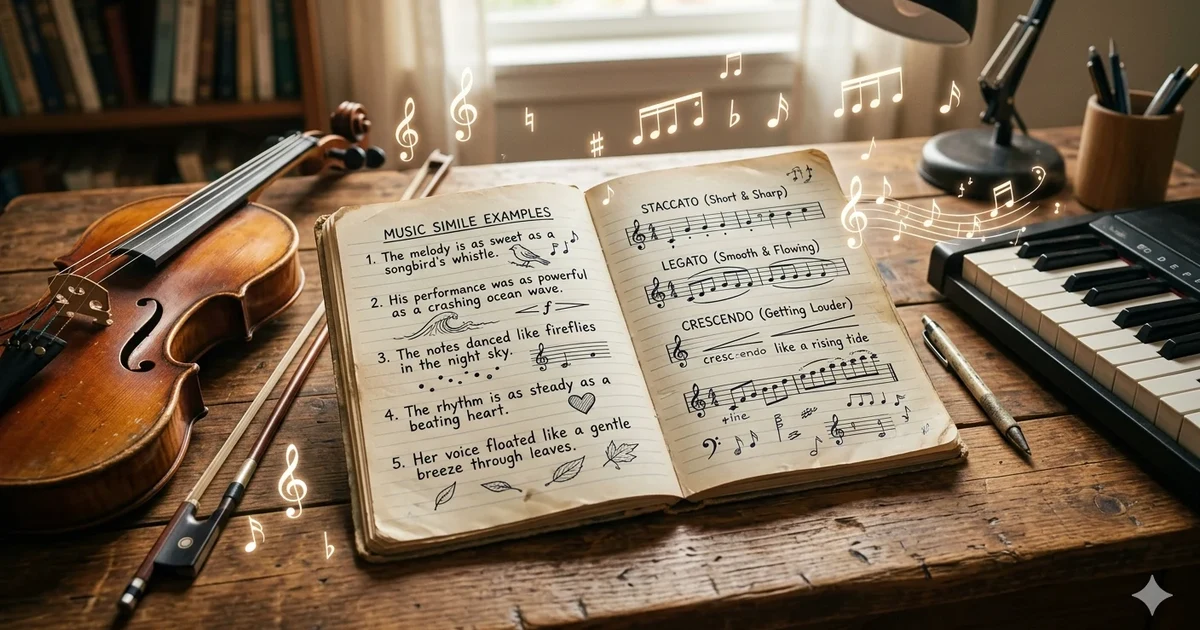
A music simile compares something to music using words like “like” or “as” to create stronger descriptions. For example, “Her voice was like soft piano music” or “The rain sounded like gentle drumbeats.” Music similes help writers express emotions, improve imagery, and make writing more engaging.
Introduction
Music touches emotions in a way that simple words often cannot. That is why writers use music similes to make descriptions feel stronger, deeper, and more memorable. A good music simile helps readers hear emotion, feel rhythm, and imagine scenes more clearly.
When someone says, “Her voice was as soft as a lullaby,” they create a picture that feels alive. This is the power of a music simile.
In this guide, you will learn what a music simile is, how it works, and how to use it in writing. You will also find simple examples, poetry ideas, school writing help, and practical exercises to improve your own creative skills.
What is a music simile in simple words
A music simile compares something to music using words like “like” or “as.”
It helps describe feelings, sounds, people, or situations by connecting them with musical ideas.
Examples:
- Her laughter was like a cheerful song
- His words flowed as smoothly as piano notes
- The rain sounded like soft drumbeats
These comparisons make writing more vivid and easier to imagine.
A music simile does not say something is music. It says something is like music.
Why writers use music similes in creative writing
Writers use music similes because music creates emotion quickly.
People connect music with happiness, sadness, love, peace, and memories. When writers use musical comparisons, readers understand feelings faster.
Reasons writers use them:
- To create stronger emotions
- To improve imagery
- To make scenes feel alive
- To help readers connect with characters
- To add beauty to poetry and stories
For example:
“The wind whispered like a flute in the trees.”
This feels stronger than simply saying the wind was soft.
How music similes make descriptions more powerful
Music similes turn plain writing into expressive writing.
Instead of writing:
“She spoke softly.”
You can write:
“She spoke as softly as a quiet violin.”
The second sentence creates a clearer picture.
Music similes help with:
- Character descriptions
- Nature writing
- Romantic scenes
- Emotional storytelling
- Poetry and lyrics
They add sound, feeling, and movement to simple sentences.
Music simile vs music metaphor with easy examples
Many people confuse similes and metaphors.
A simile uses “like” or “as.”
Example:
“His voice was like thunder.”
A metaphor makes a direct statement without “like” or “as.”
Example:
“His voice was thunder.”
Both compare things, but similes feel softer and easier for beginners.
Quick difference:
- Simile = comparison with like or as
- Metaphor = direct comparison
For learning creative writing, similes often feel simpler to use.
Common emotions expressed through music similes
Music similes often show emotions clearly.
Common emotions include:
Happiness
“Her smile was like a bright morning song.”
Sadness
“The silence felt like a broken piano.”
Love
“His words were as sweet as a love song.”
Fear
“The storm sounded like angry drums.”
Peace
“The night rested like a soft lullaby.”
These examples help readers feel emotion instead of just reading about it.
Simple music simile examples for beginners
Beginners should start with short and clear comparisons.
Examples:
- Her voice was like honey and music
- The baby slept like a calm lullaby
- His laugh sounded like bells
- The river moved like a slow song
- The classroom buzzed like a marching band
- Her heart raced like fast drumbeats
- The birds sang like morning music
Simple examples build confidence and improve writing naturally.
Beautiful music simile examples for students
Students often need strong examples for essays and assignments.
Examples:
- The sunset spread across the sky like a peaceful symphony
- Her kindness felt like soft piano music
- The leaves danced like a happy melody
- His thoughts moved like jazz, free and unexpected
- The ocean waves sounded like a timeless song
These examples work well in descriptive and creative writing.
Romantic music simile examples in poetry
Love poetry often uses music because both connect deeply with emotion.
Examples:
- Your voice is like my favorite love song
- Her smile flowed like sweet violin music
- His touch felt as gentle as a quiet melody
- Their love grew like a song that never ends
- Her eyes shined like notes in moonlight
Romantic similes help poetry feel personal and emotional.
Sad music simile examples for emotional writing
Sad writing needs soft but powerful comparisons.
Examples:
- His goodbye felt like the end of a sad song
- Her tears fell like broken piano notes
- The empty room sounded like silent music
- My heart ached like a forgotten melody
- The rain cried like a lonely violin
These images help sadness feel real and relatable.
Happy music simile examples for joyful descriptions
Joyful writing becomes brighter with musical comparisons.
Examples:
- Her laughter was like sunshine in a song
- The party moved like a dancing rhythm
- His success felt like a victory anthem
- Children played like cheerful tambourines
- Spring arrived like a happy chorus
Happy similes create warmth and energy.
Music similes used in songs and lyrics
Songwriters use similes to make lyrics memorable.
Examples:
- Love hit me like a drumbeat
- Your smile shines like a melody
- My heart runs like wild rhythm
Lyrics need strong emotion in few words. Similes help achieve that quickly.
That is why many famous songs use comparisons related to sound, rhythm, and harmony.
How to write your own music simile step by step
Writing your own music simile is simple.
Step 1: Choose what you want to describe
Example: voice, rain, love, fear
Step 2: Choose a musical image
Example: piano, drum, violin, melody
Step 3: Connect them with like or as
Example:
“Her voice was like soft piano music.”
Step 4: Check if it feels natural
Avoid forced comparisons.
Good similes feel easy and clear.
Strong words to use in a music simile
Better word choices create better similes.
Useful words:
- melody
- rhythm
- harmony
- symphony
- violin
- piano
- drumbeat
- chorus
- lullaby
- anthem
- whisper
- echo
- tune
- note
- song
Example:
“The city moved with the rhythm of endless drumbeats.”
Strong words improve image and emotion.
Classroom music simile examples for school essays
Teachers often ask for similes in school writing.
Examples for essays:
- The school bell rang like a loud trumpet
- Our teacher’s voice was as calm as soft piano notes
- The playground sounded like a joyful concert
- My best friend laughed like a happy song
- Exam stress beat in my chest like fast drums
These examples feel natural and easy for students to use.
Music similes for storytelling and fiction writing
Stories become stronger when readers can hear the world.
Examples:
- The castle gates opened like the start of a grand opera
- Her footsteps tapped like light piano keys
- The forest hummed like hidden music
- His anger rose like crashing cymbals
- The city lights flashed like dancing concert lights
These details help readers enter the scene.
Nature and music simile combinations with examples
Nature and music work beautifully together.
Examples:
- The river sang like a silver flute
- Thunder rolled like giant drums
- Birds welcomed dawn like a choir
- Autumn leaves fell like slow violin notes
- The wind moved like a gentle lullaby
Nature already has rhythm, so music comparisons feel natural.
Funny music simile examples for light writing
Funny similes make writing entertaining.
Examples:
- His singing sounded like a cat at karaoke
- My alarm clock screams like an angry rock band
- Dad dances like confused drumsticks
- My stomach growled like a hungry trumpet
- The old car started like a tired accordion
Humor makes writing more memorable.
Mistakes to avoid when writing a music simile
Some similes sound weak because they feel forced.
Avoid these mistakes:
Using common clichés too much
Example:
“Sweet as a song” feels too basic if repeated often.
Making unclear comparisons
Readers should understand the image quickly.
Using too many similes
Too many comparisons make writing heavy.
Choosing the wrong emotion
A joyful piano simile should not describe fear.
Strong similes feel natural and fit the moment.
Practice exercises to improve music simile writing
Practice helps you write better similes faster.
Try these exercises:
Describe emotions
Write one simile for happiness, sadness, and fear.
Describe nature
Compare rain, wind, and birds to music.
Describe people
Write similes for voice, laughter, and personality.
Rewrite plain sentences
Change:
“She walked slowly”
Into:
“She walked like a slow evening melody.”
Small daily practice improves creative writing fast.
Final tips for using music similes naturally
Keep your similes simple and clear.
Focus on emotion first, then choose the musical image.
Remember:
- Use familiar comparisons
- Match the emotion correctly
- Avoid overcomplicating
- Read your sentence aloud
- Keep it natural
The best similes sound effortless.
If readers can feel the image instantly, your simile works.
Conclusion
Music similes bring writing to life by adding sound, emotion, and imagination. They help readers connect with your words in a deeper way.
Whether you write poetry, school essays, stories, or song lyrics, music similes can make your ideas stronger and more memorable.
Start with simple comparisons. Practice often. Listen to how words sound together.
A single strong simile can turn an ordinary sentence into something beautiful.
Writing should feel like music, and the right simile helps create that magic.
FAQs
What is a music simile?
A music simile compares something to music using words like like or as.
Can music similes be used in essays?
Yes, they work well in descriptive and creative essays.
What is an example of a music simile?
“Her voice was like soft piano music” is a simple example.
Are music similes only used in poetry?
No, they also work in stories, essays, speeches, and lyrics.
What is the difference between a simile and a metaphor?
A simile uses like or as, while a metaphor makes a direct comparison.
Why do writers use music similes?
They help create emotion, imagery, and stronger descriptions.
Can students use music similes in school writing?
Yes, teachers often encourage similes in creative assignments.
How do I make my own music simile?
Choose something to describe, pick a musical image, and connect them with like or as.
Are funny music similes useful?
Yes, they make writing more engaging and memorable.
What words help create strong music similes?
Words like melody, rhythm, harmony, violin, piano, and drumbeat work very well.
