
Similes for Tired: 30 Creative and Relatable Ways to Describe Exhaustion
Quick Answer
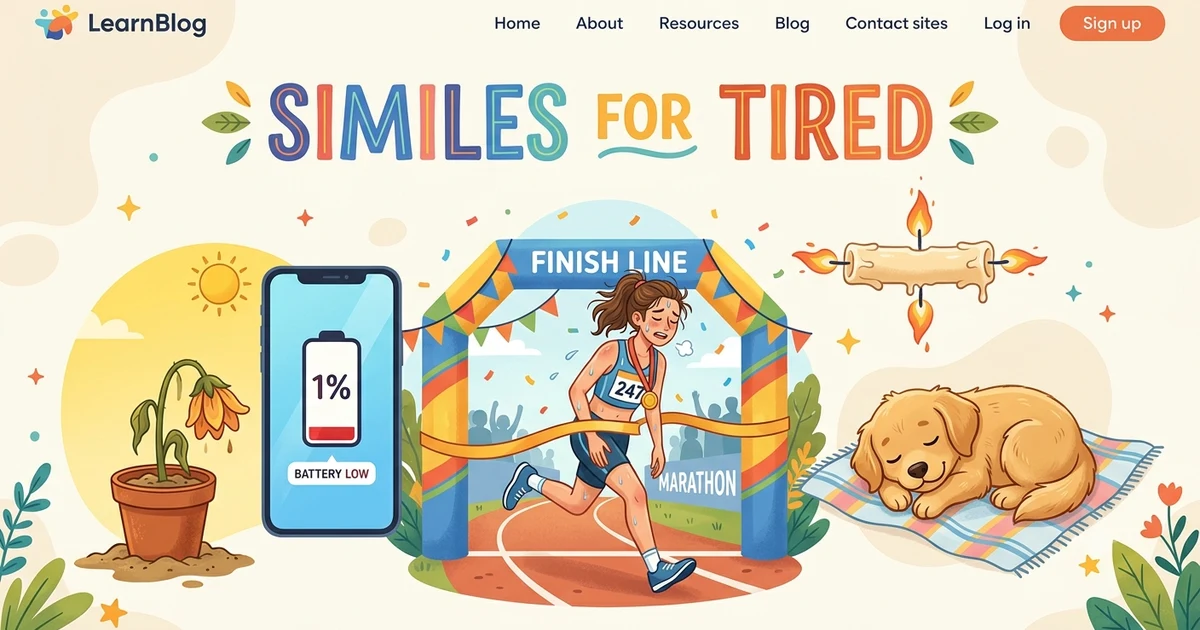
A simile for tired is a comparison that uses the words “like” or “as” to describe exhaustion in a more vivid and memorable way. Instead of saying, “I am tired,” you can say, “I am as tired as a marathon runner at the finish line” or “I feel like a phone with one percent battery.” Similes make your writing more engaging, help readers understand emotions better, and add creativity to everyday language.
Introduction
Everyone gets tired. Whether it comes from a long day at work, studying late for exams, taking care of family, or simply not getting enough sleep, exhaustion is a universal experience. However, saying “I’m tired” repeatedly can make your writing feel flat and uninteresting.
That’s where similes come in.
Similes are one of the easiest ways to make your writing more expressive. They compare one thing to another using words like as and like, helping readers picture exactly how someone feels. A good simile transforms an ordinary sentence into something vivid, relatable, and memorable.
For example, saying, “I felt as tired as a runner after a marathon,” creates a much stronger image than simply saying, “I felt tired.”
In this guide, you’ll discover creative, funny, emotional, and practical similes for tiredness. You’ll also learn how to use them effectively, create your own, and find examples for everyday conversations, storytelling, poetry, and professional writing.
What Is a Simile for Tired?
A simile is a figure of speech that compares two different things using the words like or as.
A simile for tired compares feelings of exhaustion to something familiar. This makes it easier for readers to understand the intensity of the emotion.
Examples:
- As tired as a marathon runner at the finish line
- Like a phone with one percent battery
- As tired as a sleepy puppy
- Like a candle burning at both ends
These comparisons add color and personality to your writing while making emotions easier to relate to.
Why Use Similes to Describe Tiredness?
Similes make writing more interesting because they:
- Create vivid mental images.
- Add emotion and personality.
- Improve storytelling.
- Help readers connect with your experiences.
- Make descriptions more memorable.
Compare these two sentences:
I was tired.
I was as tired as a worker bee after a long day in the hive.
The second sentence instantly paints a picture in the reader’s mind.
30 Best Similes for Tired
| Simile | Meaning |
|---|---|
| As tired as a marathon runner at the finish line | Completely exhausted |
| Like a phone with one percent battery | Almost out of energy |
| As tired as a sleepy puppy | Pleasantly exhausted |
| Like a wilted flower in the sun | Drained and weak |
| As tired as a sloth after climbing a tree | Extremely sluggish |
| Like a car running on empty | Low on energy |
| As tired as a worker bee after a long day | Worn out from work |
| Like a balloon losing air | Feeling deflated |
| As tired as a student during exam week | Mentally exhausted |
| Like a zombie before coffee | Barely functioning |
| As tired as a horse after a long race | Physically exhausted |
| Like a candle burning at both ends | Overworked and stressed |
| As tired as a mouse after a cat chase | Completely worn out |
| Like a clock winding down | Losing energy slowly |
| As tired as a fish swimming against the current | Struggling to keep going |
| Like a ship without wind | Lacking motivation |
| As tired as a squirrel gathering nuts all day | Busy and exhausted |
| Like a plant without water | Depleted of energy |
| As tired as the last leaf on a tree | Weak and fading |
| Like a fading echo | Quietly exhausted |
| As tired as a long journey | Emotionally drained |
| Like a dim lamp at midnight | Running out of strength |
| As tired as a brain full of notes | Mentally overloaded |
| Like an empty cup | Completely drained |
| As tired as a bear after fishing all day | Physically tired |
| Like a worn-out shoe | Used up and exhausted |
| As tired as a long week | Burned out |
| Like a slow-moving cloud | Moving without energy |
| As tired as the end of a long song | Emotionally spent |
| Like a fading star before sunrise | Near complete exhaustion |
Funny Similes for Tired
Sometimes, a little humor is the best way to describe exhaustion.
- As tired as a sloth on Monday morning.
- Like a zombie before its first cup of coffee.
- As tired as a dad assembling furniture at midnight.
- Like a cat after its tenth nap.
- As tired as a student after final exams.
Similes for Mental Exhaustion
Mental fatigue can feel very different from physical tiredness.
- My mind felt like a computer with too many tabs open.
- I was as tired as a brain full of notes.
- My thoughts moved like traffic during rush hour.
- My head felt like an overheated engine.
- I felt like a cluttered room that needed organizing.
Similes for Physical Exhaustion
Physical tiredness often comes after hard work or exercise.
- As tired as a runner after a race.
- Like a worker after a double shift.
- As tired as someone who lifted weights all day.
- Like a hiker reaching the end of a mountain trail.
- As tired as a swimmer after crossing a lake.
Similes for Being Tired After No Sleep
Sleep deprivation has its own kind of exhaustion.
- As tired as someone awake for two days.
- Like eyes refusing to stay open.
- As tired as a night that never ended.
- Like a clock that forgot to stop ticking.
- As tired as the moon before sunrise.
How to Create Your Own Similes for Tired
Creating your own similes is easy:
- Think about how tired you feel.
- Choose something that represents that feeling.
- Connect the two using “like” or “as.”
Examples:
- Feeling drained → “I felt like an empty glass.”
- Feeling sleepy → “I was as tired as a bear in winter.”
- Feeling overwhelmed → “My mind was like a crowded highway.”
The best similes are simple, clear, and easy to understand.
Common Mistakes to Avoid
Avoid these mistakes when writing similes:
- Using too many similes in one paragraph.
- Repeating overused clichés.
- Making comparisons too complicated.
- Using unrelated objects or ideas.
Remember: the goal is to help readers understand your feelings, not confuse them.
Practice Exercise
Fill in the blanks with suitable similes:
- After soccer practice, Jake was as tired as ___________.
- Sarah felt like ___________ after staying up all night.
- After moving furniture, Tom was as tired as ___________.
- Emily looked like ___________ after her exams.
- After the hike, I felt like ___________.
Answers
- A marathon runner at the finish line.
- A phone with one percent battery.
- A horse after a long race.
- A wilted flower.
- A worn-out shoe.
FAQs
1. What is a simile for tired?
A simile for tired compares exhaustion to something familiar using the words like or as, such as “as tired as a marathon runner.”
2. Why are similes useful in writing?
They make writing more vivid, relatable, and memorable by helping readers visualize emotions.
3. What is the most common simile for tired?
“As tired as a marathon runner at the finish line” is one of the most popular examples.
4. Can I use tired similes in formal writing?
Yes, but choose simple and professional comparisons that suit the tone of your writing.
5. What is a funny simile for tired?
“Like a zombie before coffee” is a popular humorous simile for tiredness.
6. Can similes describe mental exhaustion?
Absolutely. For example, “My mind felt like a computer with too many tabs open.”
7. What is the difference between a simile and a metaphor?
A simile uses like or as, while a metaphor makes a direct comparison.
8. Are similes good for storytelling?
Yes. They add imagery, emotion, and depth to stories and creative writing.
9. How can I create my own simile?
Think about how you feel, find something similar, and connect them with like or as.
10. How many similes should I use in an article?
Use them naturally. Too many similes can make writing feel repetitive.
Conclusion
Feeling tired is something everyone experiences, but describing it doesn’t have to be boring. Similes help transform simple emotions into vivid images that readers can instantly understand.
Whether you feel like a phone with one percent battery, a candle burning at both ends, or a marathon runner crossing the finish line, the right simile can make your writing more expressive and memorable.
Start using these similes in your conversations, stories, and social media posts, and you’ll never have to settle for saying, “I’m tired,” again.
