

Family relationships can be full of love, support, laughter, disagreements, memories, and change. Sometimes simple words are not enough to describe everything we feel about the people closest to us. This is where family similes can make writing more vivid and meaningful.
A simile compares one thing to another using words such as like or as. When you compare a family to a garden, a strong tree, a warm blanket, or a team, you give readers an image they can easily understand.
For example, saying, “My family supports me” is clear, but saying, “My family supports me like a strong tree supports its branches” creates a stronger picture.
Family similes can be used in essays, stories, poems, speeches, classroom assignments, journals, and everyday conversations. They can describe family love, sibling relationships, parental support, disagreements, memories, and the feeling of belonging.
In this guide, you will find family simile examples with simple meanings, practical sentences, writing tips, common mistakes, and easy ways to create your own comparisons.
What Is a Family Simile?
A family simile is a comparison that describes a family, family member, relationship, or family experience by using like or as.

For example:
My mother is like sunshine on a cloudy day.
A mother is not literally sunshine. The comparison shows that her presence brings warmth, comfort, and happiness.
Another example is:
My family is like a sturdy tree with deep roots.
The tree represents strength, connection, stability, and family history.
A good family simile connects a familiar image with a feeling or relationship. The comparison should make the idea easier to picture instead of making the sentence confusing.
Why Do Writers Use Family Similes?
Family relationships can involve emotions that are difficult to explain directly. A simile gives those emotions a clear image.
Instead of writing:
My family makes me feel safe.
You could write:
My family is like a warm blanket on a cold night.
The second sentence gives readers something they can picture.
Family similes can help you:
- Make writing more vivid
- Explain emotions clearly
- Describe relationships
- Show love and support
- Add personality to stories
- Make essays more interesting
- Create memorable descriptions
- Express complicated feelings simply
The best similes do not make writing harder to understand. They make the meaning clearer.
Easy Family Simile Examples
If you are new to similes, begin with familiar objects, places, and experiences.
- My family is like a warm blanket.
It provides comfort and security. - My mother is like sunshine in my life.
She brings warmth and happiness. - My father is like a strong tree.
He provides strength and support. - My brother is like a shadow that follows me.
He is almost always nearby. - My sister is like a bright star.
She brings light and happiness to the family. - Our home is like a safe nest.
It gives us protection and comfort. - My family sticks together like glue.
The family shares a strong bond. - Our family is like a team.
Everyone works together and supports one another.
These examples are simple enough for beginners and can easily be changed to fit your own experiences.
Family Similes About Love and Care
Family love often appears through small everyday actions. A parent may prepare a meal, a sibling may help with homework, or a grandparent may offer advice. Similes can make these moments more meaningful.
Family Is Like a Warm Blanket
Meaning: A family can provide comfort, warmth, and security during difficult moments.
Example:
“Coming home after a difficult day feels like wrapping myself in a warm blanket.”
Family Is Like a Garden
Meaning: Families need patience, care, attention, and time to grow.
Example:
“Our family is like a garden because love and patience help everyone grow.”
Family Is Like Sunshine
Meaning: Family can bring happiness and hope during difficult times.
Example:
“Her kindness was like sunshine after a week of rain.”
Family Is Like a Gentle River
Meaning: Family love can continue even when life changes.
Example:
“Our family love is like a river, always moving forward despite the obstacles.”
Family Is Like a Safe Harbor
Meaning: A family can provide a safe place when life becomes difficult.
Example:
“When everything went wrong, my family was like a safe harbor where I could rest.”
Family Similes About Strength and Support
Some families are best described through images of strength. These comparisons work well when writing about people who help each other through difficult situations.
Family Is Like a Sturdy Oak Tree
Meaning: A strong family can have deep roots and provide shelter and support.
Example:
“Our family is like an old oak tree, with deep roots and branches that shelter everyone.”
Family Is Like a Strong Foundation
Meaning: Family support can give people stability as they grow.
Example:
“My parents are like a strong foundation beneath everything I achieve.”
A Father Can Be Like a Shield
Meaning: This comparison can show protection, strength, and support.
Example:
“My father stood beside me like a shield when I faced a difficult situation.”
A Mother Can Be Like a Compass
Meaning: A mother or caregiver can guide someone when the right direction is unclear.
Example:
“My mother is like a compass, always helping me find my way.”
Family Is Like a Safety Net
Meaning: Family can catch and support someone when they struggle.
Example:
“When I failed, my family was like a safety net that helped me get back up.”
Family Similes About Siblings
Sibling relationships can be complicated. Brothers and sisters may argue one moment and help each other the next. Similes can capture both sides of the relationship.

Siblings Are Like Two Sides of a Coin
Meaning: They may be very different while still being closely connected.
Example:
“My sister and I are like two sides of a coin. We are different, but we belong together.”
We Fight Like Cats and Dogs
Meaning: This describes siblings who argue often.
Example:
“My brother and I fight like cats and dogs, but we always make up.”
Siblings Are Like Branches on the Same Tree
Meaning: Each sibling can have a different personality and life while sharing the same family roots.
Example:
“We are like branches on the same tree, growing in different directions but connected at the roots.”
My Brother Is Like a Storm
Meaning: This can describe someone who is energetic, loud, or difficult to ignore.
Example:
“My little brother is like a storm when he gets excited.”
My Sister Is Like a Bright Star
Meaning: This comparison shows that she is special or brings happiness.
Example:
“My sister is like a bright star in our home.”
Family Similes About Parents and Children
Parent-child relationships often include guidance, protection, learning, and growth.
Here are some natural examples:
- A mother guides her child like a compass.
- A father protects his child like a shield.
- Parents are like gardeners helping children grow.
- Children learn from parents like young birds learn from their parents.
- A parent’s advice can be like a light in the dark.
- A child can be like a new branch growing from an old tree.
These comparisons can be adjusted depending on the relationship you want to describe.
For example, if you want to focus on patience, you could write:
“My mother cares for me like a gardener patiently tending a young plant.”
If you want to focus on guidance, you could write:
“My father guides me like a lighthouse guiding ships through the darkness.”
Family Similes About Unity
Some comparisons focus on how different people become stronger when they work together.
Family Is Like a Team
Meaning: Everyone has a role and helps others succeed.
Example:
“Our family is like a team because we celebrate victories and face problems together.”
Family Is Like a Symphony
Meaning: Each person has a different role, but together they create harmony.
Example:
“Our family is like a symphony, with every person adding a different sound.”
Family Is Like a Mosaic
Meaning: Different personalities and experiences come together to create one complete picture.
Example:
“Our family is like a mosaic because every person adds a different piece.”
Family Is Like a Quilt
Meaning: Different people and experiences can be joined together to create something warm and meaningful.
Example:
“Our blended family is like a quilt, made from different pieces stitched together with love.”
Family Is Like a Circle
Meaning: A circle can represent connection, unity, and continuity.
Example:
“Our family bond is like a circle because everyone has a place in it.”
Nature-Inspired Family Similes
Nature gives writers many simple images for describing family relationships.
Family Is Like a Flock of Birds
Meaning: Family members can move through life together while still remaining individuals.
Example:
“We are like a flock of birds, traveling together while each finding our own path.”
Family Is Like a River
Meaning: Families change over time while continuing to move forward.
Example:
“Our family is like a river, changing direction when necessary but continuing to flow.”
Family Is Like a Mountain Range
Meaning: Each person can be different while remaining connected to the same foundation.
Example:
“My siblings are like a mountain range, each one different but connected at the base.”
Family Is Like an Old Tree
Meaning: This image suggests history, roots, growth, and generations.
Example:
“Our family is like an old tree whose roots reach back through many generations.”
Family Is Like the Ocean
Meaning: Family relationships can be deep and powerful, with both calm and difficult moments.
Example:
“Our family is like the ocean, sometimes calm and sometimes rough, but always deep.”
Family Similes From Everyday Life
You do not always need nature or traditional symbols. Everyday objects can create fresh and relatable comparisons.
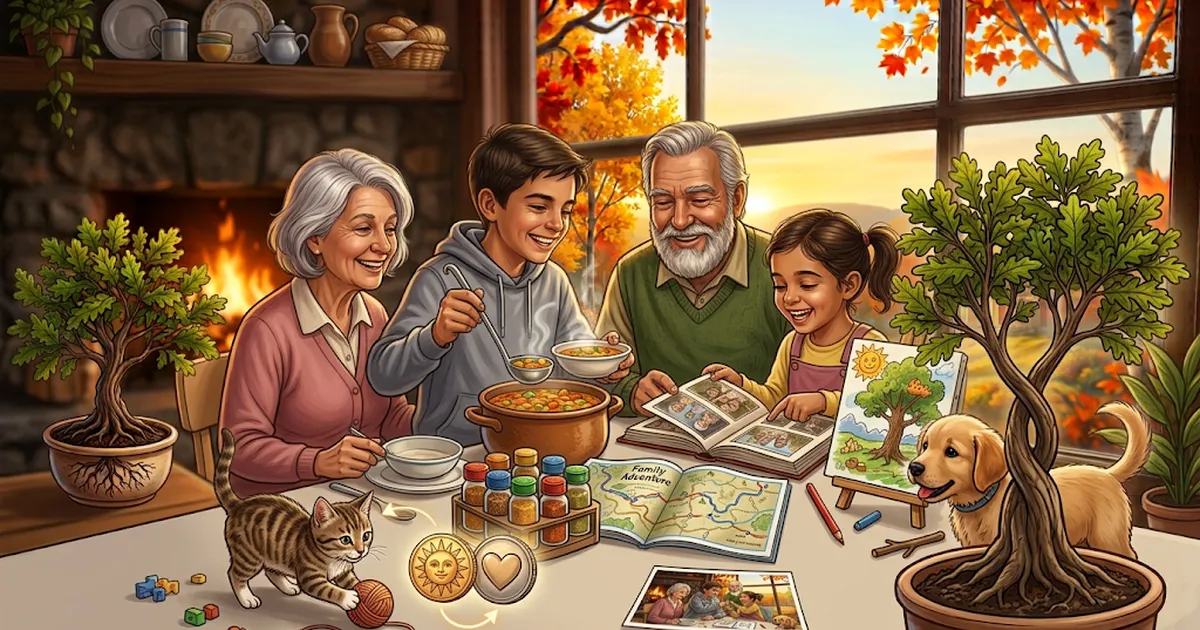
Family Is Like a Pot of Soup
Meaning: Different people bring different qualities together to create something special.
Example:
“Our family is like a pot of soup because everyone adds a different flavor.”
Family Is Like a Spice Rack
Meaning: Each person adds a unique personality to the family.
Example:
“Our family is like a spice rack, and everyone brings a different flavor.”
Family Is Like a Road Trip
Meaning: Family life can include adventures, unexpected problems, wrong turns, and shared memories.
Example:
“Life with my family is like a road trip. We take wrong turns sometimes, but we keep going together.”
Family Is Like a Book
Meaning: Family life contains many chapters, memories, changes, and new experiences.
Example:
“Our family is like a book, and every year adds another chapter.”
Family Is Like a Photograph Album
Meaning: Families collect memories and experiences over time.
Example:
“Every holiday adds another page to our family photo album.”
Family Is Like a Canvas
Meaning: Family life is continually shaped by new experiences.
Example:
“Every birthday and holiday adds another brushstroke to our family canvas.”
Family Similes for Difficult Relationships
Not every family relationship is easy. Some families experience arguments, distance, misunderstandings, or emotional changes. Similes can describe these situations without making the writing too direct.
Our arguments are like thunderstorms that eventually pass.
This shows conflict without suggesting that the conflict lasts forever.
Our relationship felt like a bridge with cracks in it.
This can describe a relationship that still exists but has been damaged.
The silence between us was like a closed door.
This shows emotional distance.
Our family went through hard times like a ship moving through rough water.
This shows that the family faced difficulties together.
Their relationship was like a thread that had become stretched but had not completely broken.
This can describe a connection that is under pressure.
These comparisons can be useful in personal narratives and reflective writing.
Emotional Family Similes
Some family relationships are difficult to explain because the feelings are strong. Similes can help express both positive and painful emotions.
Family Love Is Like a Steady Flame
Meaning: Love can remain present even during difficult periods.
Example:
“Her love was like a steady flame that never completely went out.”
Family Memories Are Like Echoes
Meaning: Memories can continue to stay with us long after an event has ended.
Example:
“Grandpa’s stories are like echoes that remain in our minds.”
Missing Family Feels Like an Empty Room
Meaning: This comparison expresses loneliness and absence.
Example:
“Being away from home felt like sitting alone in an empty room.”
Family Support Is Like Air
Meaning: Support can be essential even when people do not always notice it.
Example:
“My family’s support is like air. I may not think about it every day, but I need it.”
A Family Memory Can Be Like an Old Photograph
Meaning: Memories preserve moments that have already passed.
Example:
“That summer with my cousins is like an old photograph that I still keep in my mind.”
Short Family Similes for Daily Sentences
Sometimes you only need a short comparison.
- Like a second home
- Like a guiding light
- Like a warm hug
- Like a safe place
- Like branches of one tree
- Like pieces of a puzzle
- Like a team
- Like a protective shield
- Like sunshine
- Like a steady flame
These short comparisons can be expanded into complete sentences when needed.
For example:
My grandmother’s house feels like a second home.
My parents are like a guiding light when I feel lost.
Our family dinners are like a warm hug after a long day.
Funny Family Similes
Family writing does not always have to be serious. Funny comparisons can make stories more personal and entertaining.
- My little brother eats like a vacuum cleaner.
- Our house sounds like a busy market on Saturday morning.
- My dad snores like an old engine.
- My sister talks like a radio that never needs batteries.
- Our family dinner is like a comedy show.
- My cousins run around like squirrels.
- Our living room becomes like a stadium during football games.
Funny similes work especially well in personal stories, casual writing, and conversations.
How to Create Your Own Family Simile
Creating a family simile becomes easier when you follow a few simple steps.

Step 1: Choose the Feeling or Relationship
First decide what you want to describe.
It could be:
- Love
- Safety
- Happiness
- Trust
- Support
- Conflict
- Belonging
- Growth
- Loneliness
- Friendship
Step 2: Think of a Familiar Image
Choose an object, animal, place, activity, or natural element that matches the feeling.
For example:
Feeling: Safety
Image: Strong walls
Step 3: Connect the Two Ideas
Use like or as.
My family protects me like strong walls around a home.
Step 4: Make the Comparison Specific
Avoid vague comparisons such as:
My family is like something wonderful.
Instead, explain the exact quality you are comparing.
My family is like a lighthouse because they help me find my way when life feels confusing.
Step 5: Add a Personal Detail
Personal details can make an ordinary simile feel original.
Instead of:
My family is like a garden.
Try:
Our family is like Grandma’s backyard garden, where everyone grows differently but still shares the same roots.
Step 6: Read It Aloud
If the sentence sounds awkward, simplify it. A strong simile should sound natural when you say it.
Common Mistakes With Family Similes
A family simile does not need to be complicated to be effective. Avoid these common problems.
Using an Unclear Comparison
Weak:
“My family is like a very good thing.”
The reader does not know what “very good” means.
Better:
“My family is like a warm blanket because they make me feel safe.”
Making the Simile Too Long
A comparison can lose its impact if it becomes overloaded with explanations.
Keep the main image clear and easy to follow.
Choosing an Image That Does Not Match
Make sure the image fits the feeling.
For example, comparing a peaceful family relationship to a thunderstorm may confuse readers unless you are intentionally describing excitement or conflict.
Mixing Two Different Comparisons
Avoid combining unrelated images in one sentence.
Confusing:
“My family is like a tree and a rushing river that flies through the sky.”
The reader cannot easily understand the main comparison.
Choose one clear image instead.
Better:
“My family is like a strong tree with deep roots.”
Repeating the Same Comparison
Using “family is like a tree” several times in one article or essay can become repetitive.
Try different images such as a team, quilt, garden, compass, or road trip.
Using Too Many Clichés
Common comparisons can work, but using too many predictable phrases can make writing feel ordinary.
Adding a personal detail makes the comparison more original.
How to Use Family Similes in Essays
Family similes can add depth to personal essays and school assignments.
A simile works especially well when you are introducing an important family member, describing a family memory, explaining a relationship, or ending a personal reflection.
For example:
My family supports me like a strong foundation beneath a house. Even when life becomes difficult, I know I have something solid beneath me.
The simile gives the reader a clear image of stability.
Try not to add a simile to every sentence. One strong comparison can have more impact than five weak ones.
How Family Similes Improve Storytelling
Stories become stronger when readers can picture relationships instead of simply being told about them.
Consider this sentence:
The family sat together at dinner.
Now compare it with:
The family gathered around the table like birds returning to a familiar nest.
The second sentence creates a stronger image. It gives the reader a sense of belonging and familiarity.
Similes can also show how relationships change.
For example:
When we were young, my brother and I were like two peas in a pod. As we grew older, we became more like two branches of the same tree.
This shows that the relationship changed while the family connection remained.
Family Similes in Everyday Conversations
Similes are not limited to school assignments or creative writing. They can sound natural in everyday conversations too.
For example:
“My grandmother’s kitchen is like a second home to me.”
“My little brother is like a tornado when he gets excited.”
“Our family gatherings are like a small festival.”
“My parents are like my personal cheerleaders.”
These comparisons add personality without making the conversation sound overly formal.
Family Similes and Cultural Meaning
The way people describe family can also depend on their background, traditions, and experiences.
For one person, family may feel like a strong tree with deep roots because they associate family with generations and tradition.
For another person, family may feel like a team because they think about cooperation and shared responsibilities.
Someone else might compare family to a home, a garden, a circle, or a road trip.
There is no single correct image for every family. The best comparison is one that honestly reflects the relationship or feeling you want to describe.
Family Similes vs Family Metaphors
Similes and metaphors both make comparisons, but they use different structures.
| Simile | Metaphor |
|---|---|
| Uses like or as | Makes a direct comparison |
| My family is like a team | My family is a team |
| Her love is like sunshine | Her love is sunshine |
| My father is like a shield | My father is a shield |
| Our home is like a safe harbor | Our home is a safe harbor |
A simile usually makes the comparison more obvious, which can make it easier for beginners and younger students to understand.
Tips for Making Family Similes Sound Natural
Keep these tips in mind when creating your own comparisons:
- Use simple and familiar images
- Match the image to the emotion
- Keep the sentence easy to understand
- Add personal details
- Avoid forced comparisons
- Do not use a simile in every sentence
- Avoid repeating the same image
- Read your sentence aloud
- Choose one strong comparison instead of several weak ones
The goal is not to make every sentence sound poetic. The goal is to help the reader see and feel what you mean.
Practice Exercises for Family Similes
Try these simple exercises to improve your writing.
Exercise 1: Describe a Parent
Choose one parent or caregiver and compare them with something that provides warmth, protection, or guidance.
Exercise 2: Describe a Sibling
Think about your relationship with a brother or sister. Is it playful, competitive, supportive, or complicated?
Exercise 3: Describe Your Home
Think about how your home makes you feel. Is it like a nest, harbor, shelter, castle, or something else?
Exercise 4: Describe a Family Memory
Choose a special memory and compare it with a photograph, song, book, season, or another familiar image.
Exercise 5: Write a Funny Simile
Think about something funny a family member does regularly and compare it with an animal, object, or everyday activity.
Exercise 6: Write an Emotional Simile
Choose a strong emotion such as love, loneliness, gratitude, or missing someone. Find an image that captures that feeling.
Practice helps you discover comparisons that sound personal instead of copied or forced.
35 Family Similes You Can Use
Here is a quick collection of family similes from different situations:
- My family is like a warm blanket.
- My family is like a sturdy oak tree.
- My family is like a garden.
- My family is like a safe harbor.
- My family is like a strong foundation.
- My family is like a team.
- My family is like a symphony.
- My family is like a quilt.
- My family is like a mosaic.
- My family is like a circle.
- My family is like a river.
- My family is like the ocean.
- My family is like a mountain range.
- My family is like a flock of birds.
- My family is like a road trip.
- My family is like a book.
- My family is like a photograph album.
- My family is like a canvas.
- My family is like a pot of soup.
- My family is like a spice rack.
- My mother is like sunshine.
- My father is like a shield.
- My mother is like a compass.
- My siblings are like branches on the same tree.
- My brother is like a storm.
- My sister is like a bright star.
- We stick together like glue.
- We fight like cats and dogs.
- Our home is like a safe nest.
- Family love is like a steady flame.
- Family support is like air.
- Our memories are like echoes.
- Our family gatherings are like a festival.
- My parents are like my personal cheerleaders.
- Our family is like a puzzle, with every person adding an important piece.
Conclusion
Family relationships are complicated, personal, and different for everyone. A few simple words cannot always describe the love, support, conflict, memories, and connection that exist within a family. This is why family similes can be so useful.
The strongest family similes are not necessarily the fanciest ones. They are the comparisons that feel true to the relationship you are describing.
When writing about your own family, think about real moments. Remember the sound of laughter around the dinner table, the comfort of coming home after a difficult day, the arguments between siblings, or the advice you received from someone you love.
Then find an everyday image that captures that feeling.
That is where a simple simile can become powerful.
FAQs About Family Similes
What is a family simile?
A family simile compares a family relationship, person, feeling, or experience with something familiar by using like or as.
What is an example of a family simile?
“My family is like a strong tree with deep roots.” This comparison shows strength, connection, and stability.
How do I write a family simile?
Start with a family member or feeling. Then think of a familiar object, place, animal, or natural element that matches it. Connect the two ideas with like or as.
Can family similes be funny?
Yes. Funny comparisons can make family stories more personal and entertaining. For example, “My little brother runs around like a squirrel.”
Can I use family similes in an essay?
Yes. Family similes can make personal essays, narratives, and descriptive writing more vivid. Use them where they support the main idea.
Are family similes and family metaphors the same?
No. A simile uses like or as, while a metaphor makes a direct comparison. For example, “My family is like a team” is a simile, while “My family is a team” is a metaphor.
What makes a good family simile?
A good family simile is clear, relevant, natural, and easy to picture. It should help the reader understand the relationship or emotion better.
How many family similes should I use?
There is no fixed number. A few strong and meaningful comparisons are usually better than filling every sentence with a simile.
Can children create family similes?
Absolutely. Family relationships are a great topic for beginner writers because children can use familiar people, objects, animals, and experiences to create simple comparisons.
What is the best way to practice family similes?
Start by describing real family experiences. Choose one feeling, find a familiar image that matches it, and connect the two with like or as. Reading your examples aloud can also help you make them sound more natural.
