
Quick Answer
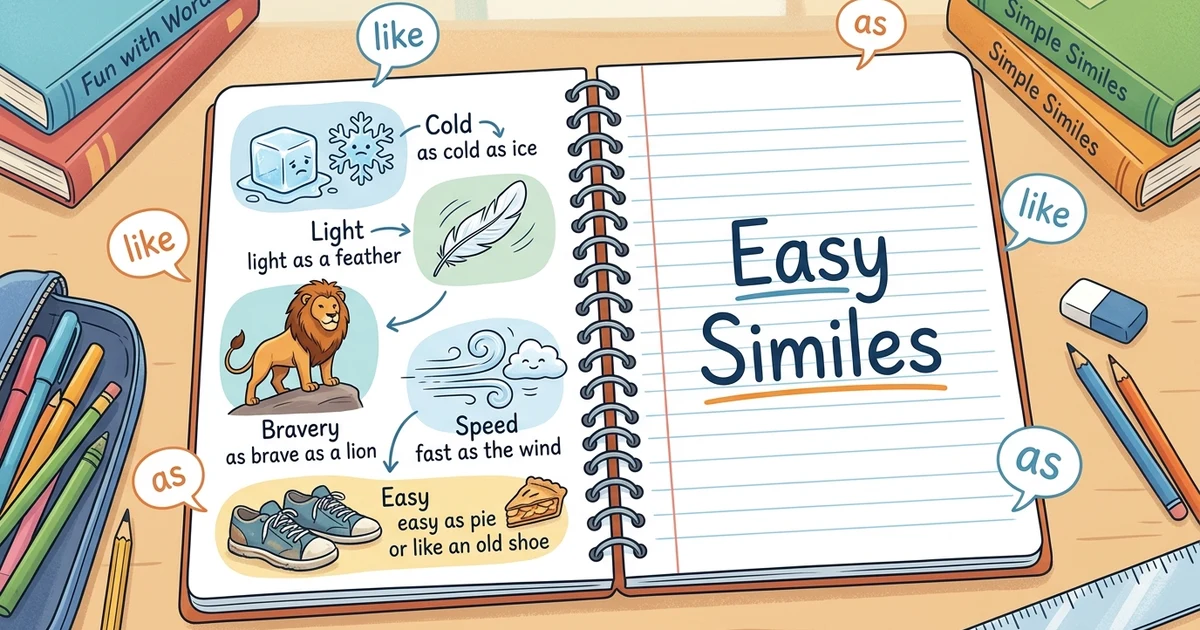
An easy simile is a simple comparison that uses like or as to describe something clearly. Similes for easy often compare a simple task or effortless action to something familiar, such as tying your shoes, taking a walk, or eating pie. For example, “The homework was as easy as pie” tells the reader that the homework required very little effort. Easy similes can make school assignments, stories, conversations, and everyday writing more colorful and easier to understand.
What Is a Simile?
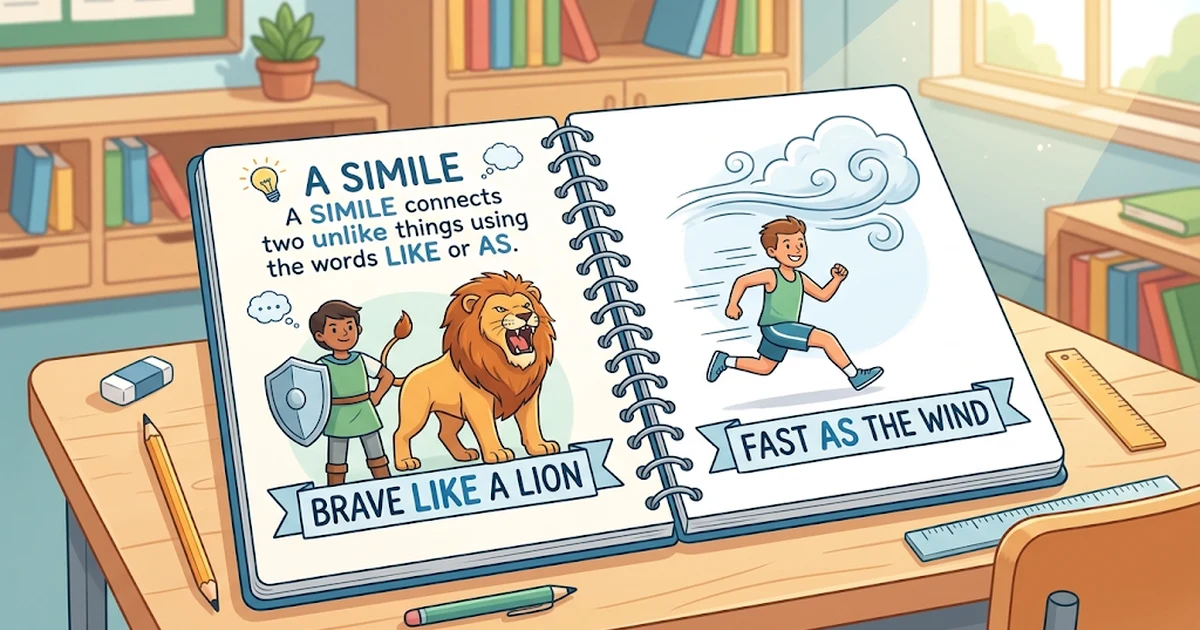
A simile is a figure of speech that compares two different things using the words like or as. Writers and speakers use similes to help people picture an idea, feeling, person, object, or action.
For example:
- She was as brave as a lion.
- He ran like the wind.
- The pillow was as soft as cotton.
- The water was as cold as ice.
The comparison gives the reader a familiar image. Instead of simply saying that something is cold, soft, fast, or brave, a simile gives the reader something concrete to imagine.
A simile is different from a metaphor. A simile openly shows the comparison with words such as like or as. A metaphor makes the comparison more directly.
For example:
Simile: He is as strong as a lion.
Metaphor: He is a lion.
Both sentences compare the person to a lion, but they use different structures.
What Does Easy Mean?
The word easy describes something that does not require much effort, skill, or difficulty.
You might call a task easy when you can finish it without much trouble. For example, opening a door, following a simple recipe, or answering a basic question may feel easy.
When you use a simile for easy, you compare that lack of difficulty with something familiar.
For example:
The assignment was as easy as pie.
This tells the reader that the assignment was very simple.
Easy can also describe something that feels natural, smooth, comfortable, or effortless. That is why some similes focus on ideas such as natural movement, a familiar skill, or a smooth process.
50 Similes for Easy
Here are 50 simple similes and comparisons that can help you describe something easy, simple, natural, smooth, or effortless.
1. As easy as pie
Meaning: Very easy to do.
Example: The homework was as easy as pie.
This is one of the most familiar expressions used to describe something that requires little effort.
2. As simple as tying your shoes
Meaning: Extremely familiar and easy.
Example: Setting up the account was as simple as tying your shoes.
3. As easy as counting to ten
Meaning: Very simple.
Example: Learning the basic rules was as easy as counting to ten.
4. As easy as turning a page
Meaning: Simple and quick.
Example: Changing the setting was as easy as turning a page.
5. As easy as opening a door
Meaning: Requires very little effort.
Example: Getting started was as easy as opening a door.
6. As easy as pressing a button
Meaning: Very simple to accomplish.
Example: Ordering the tickets was as easy as pressing a button.
7. As easy as flipping a switch
Meaning: Something can be done quickly and easily.
Example: Changing the screen mode was as easy as flipping a switch.
8. As easy as following a recipe
Meaning: Simple when you follow clear instructions.
Example: Making this dish was as easy as following a recipe.
9. Like a walk in the park
Meaning: Very easy and pleasant.
Example: The final assignment was like a walk in the park.
10. As natural as breathing
Meaning: So familiar that it requires little effort.
Example: After years of practice, typing became as natural as breathing.
11. Like second nature
Meaning: Something is so familiar that it feels automatic.
Example: After enough practice, using the software became like second nature.
12. As smooth as silk
Meaning: Happening easily and without problems.
Example: The presentation went as smooth as silk.
13. As smooth as butter
Meaning: Moving or happening without difficulty.
Example: The new system worked as smooth as butter.
14. As smooth as flowing water
Meaning: Natural and uninterrupted.
Example: Her speech was as smooth as flowing water.
15. As clear as daylight
Meaning: Very easy to understand.
Example: The teacher’s instructions were as clear as daylight.
16. As light as a feather
Meaning: Easy to carry or handle.
Example: The small package was as light as a feather.
17. As quick as a blink
Meaning: Happening extremely fast.
Example: The update finished as quick as a blink.
18. As effortless as floating
Meaning: Requiring almost no visible effort.
Example: After months of practice, the routine looked as effortless as floating.
19. As simple as a straight line
Meaning: Direct and uncomplicated.
Example: The route was as simple as a straight line.
20. As simple as counting on your fingers
Meaning: Very basic and easy to understand.
Example: The calculation was as simple as counting on your fingers.
21. As calm as still water
Meaning: Peaceful and relaxed.
Example: She remained as calm as still water during the interview.
22. As gentle as a breeze
Meaning: Soft and pleasant.
Example: The new routine felt as gentle as a breeze.
23. As quiet as a whisper
Meaning: Very quiet and gentle.
Example: The room was as quiet as a whisper.
24. As soft as cotton
Meaning: Gentle and pleasant to touch.
Example: The blanket was as soft as cotton.
25. As gentle as falling leaves
Meaning: Soft and peaceful.
Example: Her movements were as gentle as falling leaves.
26. As steady as a heartbeat
Meaning: Consistent and reliable.
Example: His progress was as steady as a heartbeat.
27. As steady as a ticking clock
Meaning: Regular and dependable.
Example: Her work continued as steadily as a ticking clock.
28. As relaxed as a lazy afternoon
Meaning: Free from stress or pressure.
Example: The weekend felt as relaxed as a lazy afternoon.
29. As easy as falling asleep
Meaning: Requiring almost no effort.
Example: Once I understood the instructions, the task was as easy as falling asleep.
30. As easy as picking a flower
Meaning: Very simple.
Example: Choosing the right answer was as easy as picking a flower.
31. As easy as finding a seat
Meaning: Simple to accomplish.
Example: Finding a place to park was as easy as finding a seat.
32. As easy as riding a bike
Meaning: Easy to remember or do again after learning it.
Example: Once I remembered the steps, the exercise was as easy as riding a bike.
33. As easy as a child’s game
Meaning: Very simple.
Example: The beginner puzzle was as easy as a child’s game.
34. As easy as a Sunday morning
Meaning: Relaxed and effortless.
Example: The whole morning felt as easy as a Sunday morning.
35. As free as the wind
Meaning: Unrestricted and relaxed.
Example: Once the work was finished, he felt as free as the wind.
36. As open as the sky
Meaning: Flexible and unrestricted.
Example: We had choices as open as the sky.
37. As bright as morning light
Meaning: Clear, positive, or uplifting.
Example: Her explanation was as bright as morning light.
This comparison describes clarity or mood more than difficulty, so it works best when the idea of easy is connected with something positive or clear.
38. As natural as daylight
Meaning: Obvious or natural.
Example: His reaction seemed as natural as daylight.
39. As free as open space
Meaning: Unrestricted and flexible.
Example: The creative process felt as free as open space.
40. As smooth as a calm lake
Meaning: Peaceful and free from trouble.
Example: The conversation went as smoothly as a calm lake.
41. Like clockwork
Meaning: Happening smoothly and predictably.
Example: Once the routine was established, everything worked like clockwork.
This phrase does not directly mean easy. It is useful when something happens reliably without problems.
42. Like a breeze
Meaning: Easy and effortless in casual language.
Example: The short assignment felt like a breeze.
For natural everyday English, “It was a breeze” is often better than “It went like a breeze.”
43. As easy as making toast
Meaning: Very simple to do.
Example: Preparing breakfast was as easy as making toast.
44. As easy as pouring a glass of water
Meaning: Requires almost no effort.
Example: The change was as easy as pouring a glass of water.
45. As easy as putting on a jacket
Meaning: Very simple and familiar.
Example: The setup was as easy as putting on a jacket.
46. As easy as opening a book
Meaning: Simple and straightforward.
Example: Finding the information was as easy as opening a book.
47. As easy as following directions
Meaning: Simple when clear steps are provided.
Example: Building the shelf was as easy as following directions.
48. As easy as picking up a pen
Meaning: Extremely simple.
Example: Starting the exercise was as easy as picking up a pen.
49. As easy as turning a key
Meaning: Quick and uncomplicated.
Example: Starting the machine was as easy as turning a key.
50. As easy as taking a short walk
Meaning: Simple and manageable.
Example: Finishing the small task was as easy as taking a short walk.
Best Similes for Easy at a Glance
| Simile | Main Meaning | Best Context |
|---|---|---|
| As easy as pie | Very easy | Everyday conversation |
| As simple as tying your shoes | Familiar and easy | Casual writing |
| Like a walk in the park | Easy and pleasant | Informal speech |
| As natural as breathing | Effortless | Skills and habits |
| Like second nature | Very familiar | Learning and experience |
| As smooth as silk | Smooth and polished | Work and presentations |
| As clear as daylight | Easy to understand | School and explanations |
| As quick as a blink | Very fast | Actions and technology |
| As easy as following a recipe | Simple with clear steps | Instructions |
| Like clockwork | Smooth and predictable | Routines and processes |
Easy Similes for Everyday Conversation
Similes do not belong only in poems and essays. Many natural expressions are useful in ordinary conversation.
You can say:
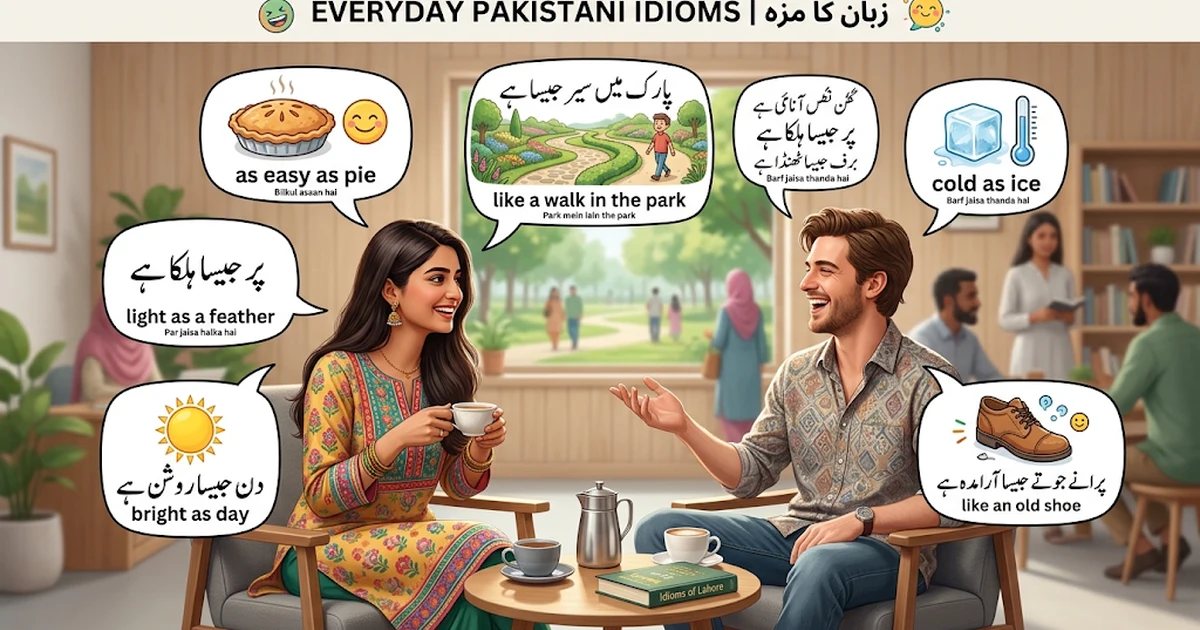
The homework was as easy as pie.
The whole thing was like a walk in the park.
After a few weeks, using the program became like second nature.
The process worked like clockwork.
The instructions were as clear as daylight.
These examples sound natural because they connect an idea with something familiar.
Easy Similes for Students
Students can use simple similes to make their writing more descriptive.
Here are some examples:
- The classroom was as quiet as a library.
- The answer was as clear as daylight.
- The homework was as easy as pie.
- Her explanation was as smooth as silk.
- The teacher’s voice was as gentle as a breeze.
- The school hallway was as busy as a bee’s hive.
- His handwriting was as neat as printed words.
A good simile should add something to your sentence. You do not need to use one in every line.
Easy Similes for Describing People
Similes can quickly show someone’s personality or behavior.
Some common examples are:
- As brave as a lion
- As gentle as a lamb
- As wise as an owl
- As busy as a bee
- As quiet as a mouse
- As stubborn as a mule
- As calm as still water
- As quick as a fox
For example:
She stayed as calm as still water while everyone else was worried.
This gives the reader a clearer picture of her behavior.
Easy Similes for Feelings
Emotions can be hard to explain with plain words. A simile can make them easier to picture.
Examples include:
- Happy like a child on a holiday
- Sad like a rainy day
- Angry like a storm
- Calm as a still lake
- Nervous like a bird in a cage
- Excited like a kid on Christmas morning
- Lonely like a single star in the sky
For example:
He was as excited as a kid on Christmas morning.
The comparison shows that his excitement was strong.
Easy Similes for Storytelling
Similes can make a story feel more alive.
Plain sentence:
The rain was heavy.
With a simile:
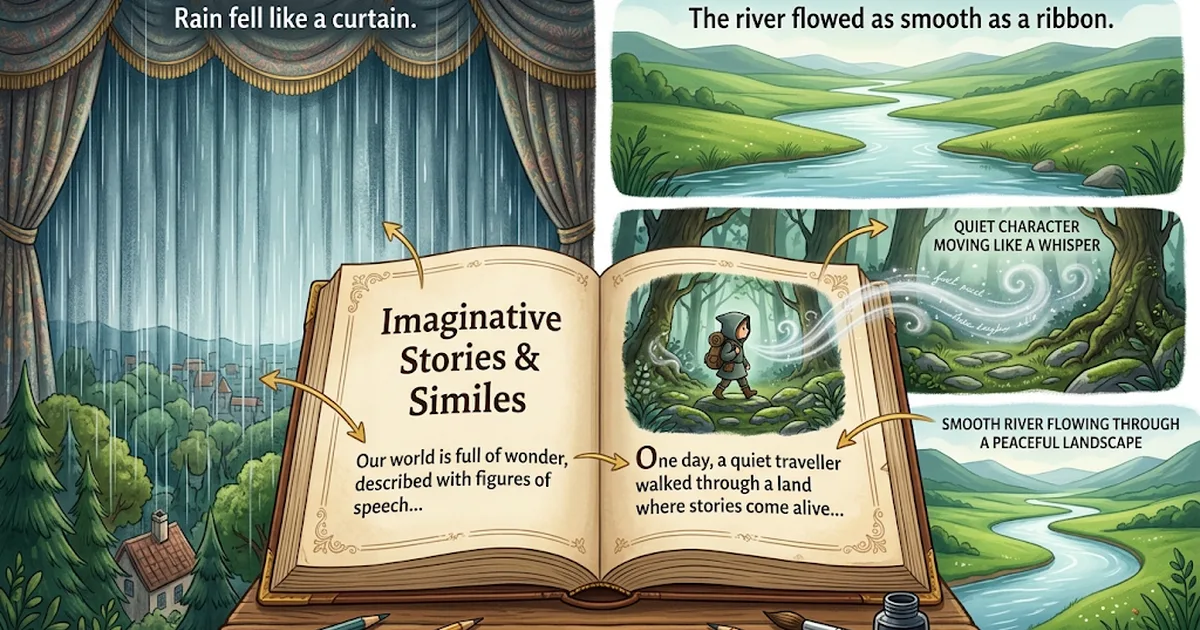
The rain fell like a curtain across the street.
Plain sentence:
She walked quietly.
With a simile:
She moved as quietly as a whisper.
Plain sentence:
The river moved smoothly.
With a simile:
The river flowed as smoothly as silk.
These comparisons give readers something to see in their imagination.
Easy Similes for Nature and Weather
Nature provides many familiar images for comparisons.
- The sky was as blue as the ocean.
- The snow was as white as cotton.
- The wind moved like a whisper.
- The rain fell like silver threads.
- The sun was as bright as a lamp.
- The clouds moved like ships across the sky.
- The leaves fell like tiny boats.
You can also create your own nature similes by looking at colors, sounds, movement, shapes, and textures.
Easy Similes for Food
Similes can make food descriptions more appealing.
- Sweet as honey
- Hot like fire
- Soft as butter
- Cold as ice
- Smooth as cream
- Fresh as morning air
- Crunchy like dry leaves
For example:
The ice cream was as cold as ice and as smooth as cream.
The reader can imagine both the temperature and texture.
How to Create Your Own Easy Simile
Making a simile becomes easier when you follow a few simple steps.
Step 1: Choose something to describe
Start with a simple idea.
The student was nervous.
Step 2: Think about its strongest quality
Nervousness can make someone shaky, restless, or uncertain.
Step 3: Find something familiar with a similar quality
You might think about a bird trapped in a cage.
Step 4: Connect the two
The student was as nervous as a bird in a cage.
That is your simile.
You can use the same method for almost anything.
The car was fast.
Think of something fast.
The car was as fast as lightning.
The blanket was soft.
Think of something soft.
The blanket was as soft as cotton.
How to Turn Boring Sentences Into Similes
This is one of the easiest ways for beginners to practice.
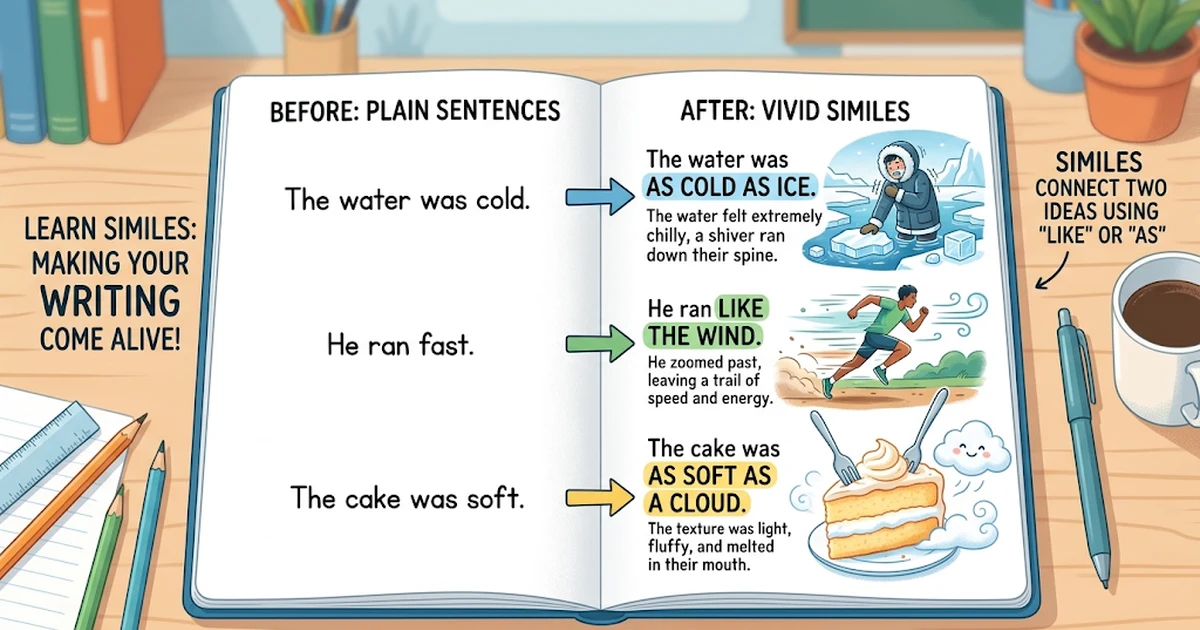
Plain: The water was cold.
Simile: The water was as cold as ice.
Plain: He ran very fast.
Simile: He ran like the wind.
Plain: The room was quiet.
Simile: The room was as quiet as a library.
Plain: The task was easy.
Simile: The task was as easy as pie.
Plain: She spoke softly.
Simile: She spoke as softly as a whisper.
The basic sentence tells the reader what happened. The simile adds an image.
Simile vs Metaphor
Similes and metaphors both compare things, but their structures are different.
| Simile | Metaphor |
| Uses like or as | Makes a direct comparison |
| He is as brave as a lion | He is a lion |
| She runs like the wind | She is the wind |
| The room was as quiet as a library | The room was a library of silence |
If you are just learning figurative language, similes are usually easier to identify because the comparison is clearly marked.
Common Mistakes When Using Similes
Using an unrelated comparison
A simile should make sense in its context.
For example:
The rocket launch was as easy as tying your shoes.
This sounds strange if the writer is seriously describing a real rocket launch because the two activities are completely different in difficulty.
Using too many similes
A paragraph filled with comparisons can become distracting. Choose the strongest ones.
Choosing an unclear comparison
Your reader should understand the connection without having to stop and figure it out.
Mixing two similes together
Avoid combining unrelated comparisons in one sentence.
Using a cliché when you need originality
As easy as pie is common and useful, but it may not feel creative in a poem or story. In creative writing, try making a fresh comparison.
Why Similes Make Writing Better
Similes can make ordinary writing more interesting.
They create mental pictures. A reader can imagine what you mean instead of simply receiving a fact.
They can also make abstract ideas easier to understand. A feeling such as nervousness or excitement becomes clearer when you compare it with something familiar.
Compare these sentences:
The process was easy.
The process was as smooth as silk.
The first sentence gives a basic fact. The second gives the reader an image of something moving smoothly and without difficulty.
Good similes also add personality to writing. A creative comparison can make a sentence sound more memorable.
How to Practice Similes Every Day
You do not need a long writing session to practice.
Choose one ordinary thing each day and describe it with a simile.
For example:
Object: Coffee
Quality: Hot
Simile: The coffee was as hot as fire.
Try another:
Object: Car
Quality: Fast
Simile: The car moved like lightning.
You can also take five plain sentences and turn them into similes.
Reading is another useful way to practice. When you see a simile in a book, article, or story, stop and ask yourself what two things are being compared and why the writer chose that comparison.
Quick Simile Practice Quiz
1. Which simile describes something very familiar?
A. Like second nature
B. As bright as the sun
C. As cold as snow
2. Which expression describes something that happens smoothly and predictably?
A. Like clockwork
B. As white as snow
C. As brave as a lion
Answers:
- A
- A
- A
- A
- A
Tips for Using Similes Effectively
Choose comparisons that your readers can understand.
Match the comparison to your subject. A playful simile may work well in a story but sound out of place in a formal report.
Do not use a simile just to make a sentence longer. It should add a useful image or feeling.
Use familiar comparisons when writing for beginners or younger readers.
Try original comparisons when you want your creative writing to stand out.
Most importantly, keep the meaning clear. A simple simile that fits the sentence is better than a complicated comparison that confuses the reader.
Conclusion
Easy similes give beginners a simple way to make ordinary writing more vivid and interesting. Instead of saying that something is simply easy, fast, quiet, soft, or natural, you can compare it with something familiar.
Expressions such as “as easy as pie,” “like a walk in the park,” “as natural as breathing,” and “like second nature” are useful because they help readers understand the idea quickly.
You can also create your own similes. Start with something you want to describe, think about its main quality, and find a familiar object or experience that shares that quality. Then connect the two with like or as.
The best similes are not complicated. They are clear, natural, and relevant to the situation. Start with simple comparisons, practice turning plain sentences into similes, and gradually experiment with your own ideas. With regular practice, using similes can become as zas breathing.
FAQs
What is a simile for something easy?
A common simile for something easy is “as easy as pie.” Other examples include “like a walk in the park” and “as simple as tying your shoes.”
What is the most common simile for easy?
“As easy as pie” is one of the most common expressions used to describe something that requires very little effort.
Is “as easy as pie” a simile?
Yes. It uses the word as to compare the difficulty of an activity with something that is considered very easy.
What are some easy simile examples?
Some simple examples are as cold as ice, as soft as cotton, as easy as pie, as clear as daylight, and runs like the wind.
What is the difference between a simile and a metaphor?
A simile uses like or as to make a comparison. A metaphor makes a direct comparison without using those words.
Can I use easy similes in school writing?
Yes. Simple similes can make school writing more descriptive. Just make sure the comparison fits the subject and does not make the writing sound forced.
Can similes be used in everyday conversation?
Yes. Expressions such as “as busy as a bee,” “as quiet as a mouse,” and “like a walk in the park” are commonly understood in casual speech.
How many similes should I use in one paragraph?
There is no fixed number. Use similes when they add meaning or create a useful image. A few strong comparisons are usually better than using one in every sentence.
What makes a simile effective?
An effective simile is clear, relevant, natural, and easy for the intended reader to understand. It should make the sentence stronger rather than distract from the main idea.
