

Introduction
Strong writing does more than share information—it helps readers see, feel, and imagine what you are describing. One of the easiest ways to make your writing more expressive is by using similes. These simple comparisons add detail, emotion, and clarity to ordinary sentences.
You will find similes everywhere. Authors use them in novels. Teachers encourage them in school assignments. Speakers use them in conversations. Even songwriters and advertisers rely on similes to make their messages memorable.
The best part is that similes are easy to learn. You do not need advanced writing skills to use them effectively. A well-chosen simile can instantly transform a plain sentence into one that paints a clear picture in the reader’s mind.
In this guide, you will discover what similes are, why they matter, and how to use them naturally. You will also find a comprehensive common simile list with meanings, examples, and practical tips to improve your everyday writing in 2026 and beyond.
Quick Answer
A simile is a figure of speech that compares two different things using the words “like” or “as.” Similes make writing more colorful, easier to understand, and more memorable. Common examples include “as busy as a bee,” “as cold as ice,” and “runs like the wind.” Whether you are writing a school essay, a story, a blog post, or simply speaking in everyday conversation, similes help create vivid images that readers and listeners can easily understand.
What Is a Simile?
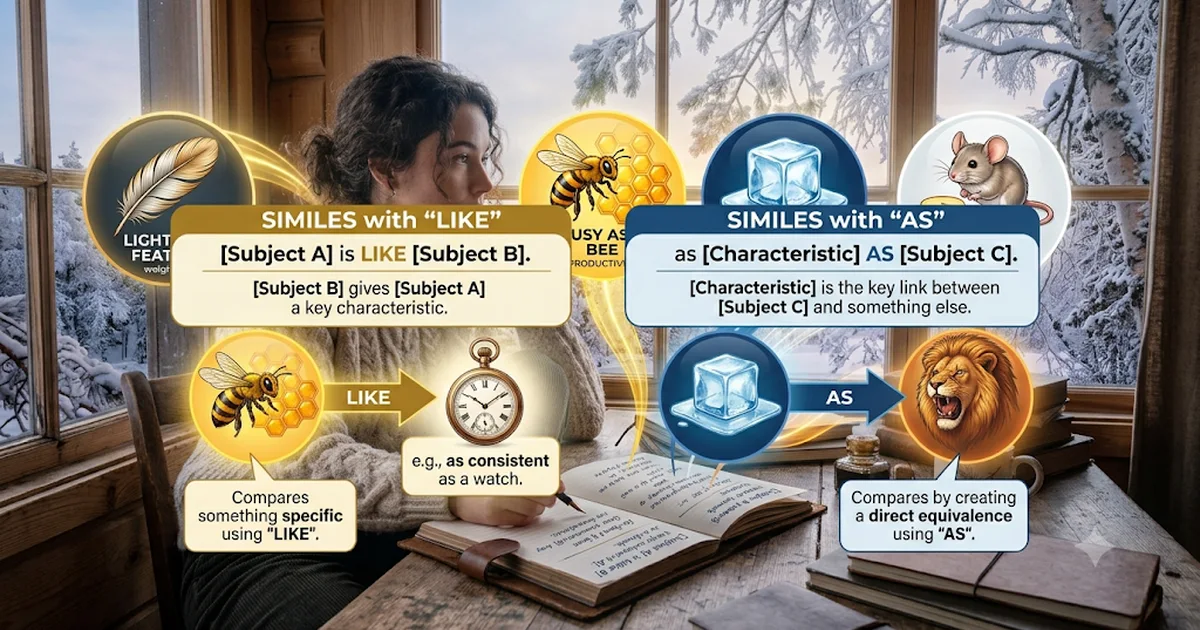
A simile is a comparison between two unlike things using the words like or as. The purpose is to help readers understand a quality, feeling, or action by connecting it to something familiar.
Quick Examples
- As busy as a bee
- As cold as ice
- Runs like the wind
- As bright as the sun
- As quiet as a mouse
These comparisons instantly create mental images, making descriptions more effective and engaging.
Why Writers Use Similes
Similes help writers communicate ideas in a way that feels natural and memorable.
Benefits of Using Similes
- Create vivid imagery
- Improve reader engagement
- Explain ideas quickly
- Add emotion and personality
- Make descriptions easier to visualize
For example:
❌ He is very fast.
✅ He runs like the wind.
The second sentence creates a much stronger image.
Common Simile List With Meanings and Examples
| Simile | Meaning | Example Sentence |
|---|---|---|
| As busy as a bee | Very active | She was as busy as a bee preparing for the event. |
| As cold as ice | Extremely cold | His hands were as cold as ice. |
| As brave as a lion | Very courageous | The firefighter was as brave as a lion. |
| As light as a feather | Very light | The scarf felt as light as a feather. |
| As quiet as a mouse | Very silent | The classroom became as quiet as a mouse. |
| As strong as an ox | Very strong | He was as strong as an ox. |
| As blind as a bat | Unable to see well | Without glasses, I am as blind as a bat. |
| As sweet as sugar | Very kind or pleasant | She is as sweet as sugar. |
| As slow as a snail | Extremely slow | Traffic moved as slow as a snail. |
| As sharp as a knife | Very intelligent or sharp | Her mind is as sharp as a knife. |
| Sleeps like a baby | Sleeps peacefully | After the trip, he slept like a baby. |
| Eats like a horse | Eats a lot | My brother eats like a horse after practice. |
| Sings like an angel | Sings beautifully | She sings like an angel. |
| As hot as fire | Extremely hot | The pavement was as hot as fire. |
| As dark as night | Very dark | The cave was as dark as night. |
Easy Similes for Beginners
If you are new to similes, start with simple comparisons.
Examples
- As soft as cotton
- As sweet as honey
- As tall as a tree
- As white as snow
- As round as a ball
These similes use familiar objects, making them easy to understand and remember.
Common Similes Used in Everyday Conversations
Many similes appear naturally in daily speech.
Examples
- I slept like a baby.
- He works like a machine.
- She shines like a star.
- They fought like cats and dogs.
- He swims like a fish.
Using these expressions can make conversations more lively and relatable.
Similes for Emotions
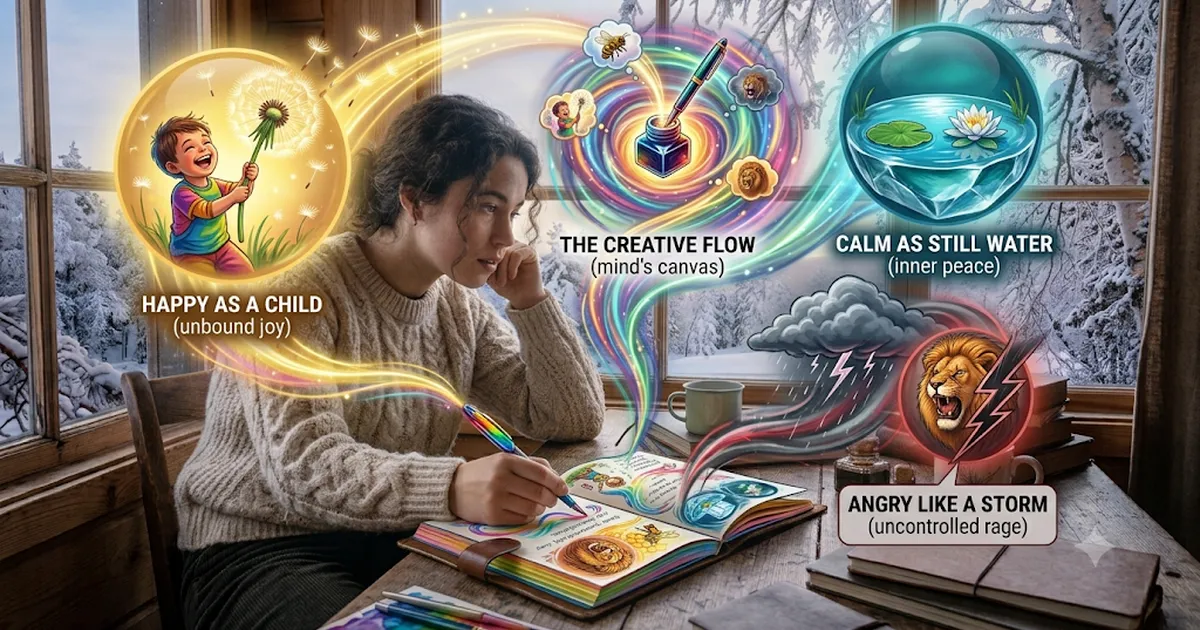
Emotions can be difficult to describe. Similes make them easier to understand.
Examples
| Simile | Emotion |
|---|---|
| Happy as a child | Happiness |
| Angry like a storm | Anger |
| Sad as a rainy day | Sadness |
| Calm as still water | Calmness |
| Excited like a kid on Christmas morning | Excitement |
Example Sentences
- She was happy as a child after hearing the news.
- His anger spread like a storm across the room.
- After meditation, she felt as calm as still water.
Similes for Describing People
These similes help describe personality traits quickly.
Examples
- Brave as a lion
- Gentle as a lamb
- Clever as a fox
- Stubborn as a mule
- Wise as an owl
Example
“Despite the danger, he remained as brave as a lion.”
Similes for Speed and Movement
Movement becomes easier to picture when compared to something familiar.
Examples
- Runs like the wind
- Fast as lightning
- Flies like a bird
- Jumps like a kangaroo
- Crawls like a snail
Example
“The athlete sprinted like the wind toward the finish line.”
Similes for Weather and Nature
Nature provides countless comparisons for descriptive writing.
Examples
- As hot as fire
- As cold as ice
- As bright as the sun
- As dark as night
- As clear as crystal
Example
“The mountain lake was as clear as crystal.”
Similes for Size and Appearance
These similes help readers understand dimensions quickly.
Examples
- As big as an elephant
- As small as an ant
- As tall as a tower
- As thin as a stick
- As round as the moon
Example
“The tiny insect looked as small as an ant from a distance.”
Funny Similes That Add Personality
Humorous similes can make writing more entertaining.
Examples
- As clumsy as a dancing bear
- Snores like a train
- Eats like a machine
- Talks like a radio
- Laughs like a hyena
These comparisons add humor while creating memorable images.
Creative Similes for Storytelling
Creative writing often benefits from fresh and imaginative similes.
Examples
- The sky glowed like a painted canvas.
- Her thoughts raced like wild horses.
- The wind whispered like a secret.
- The city sparkled like scattered diamonds.
- The river twisted like a silver ribbon.
These comparisons help readers visualize scenes more clearly.
How to Create Your Own Similes
Creating original similes is easier than many people think.
Step 1: Identify the Quality
What are you describing?
Example: Fast
Step 2: Think of Something Similar
What else is known for being fast?
Example: Wind
Step 3: Connect Them
Example:
“Runs like the wind.”
More Examples
- Bright → sun → As bright as the sun
- Quiet → mouse → As quiet as a mouse
- Strong → ox → As strong as an ox
Simile vs Metaphor
Many beginners confuse similes and metaphors.
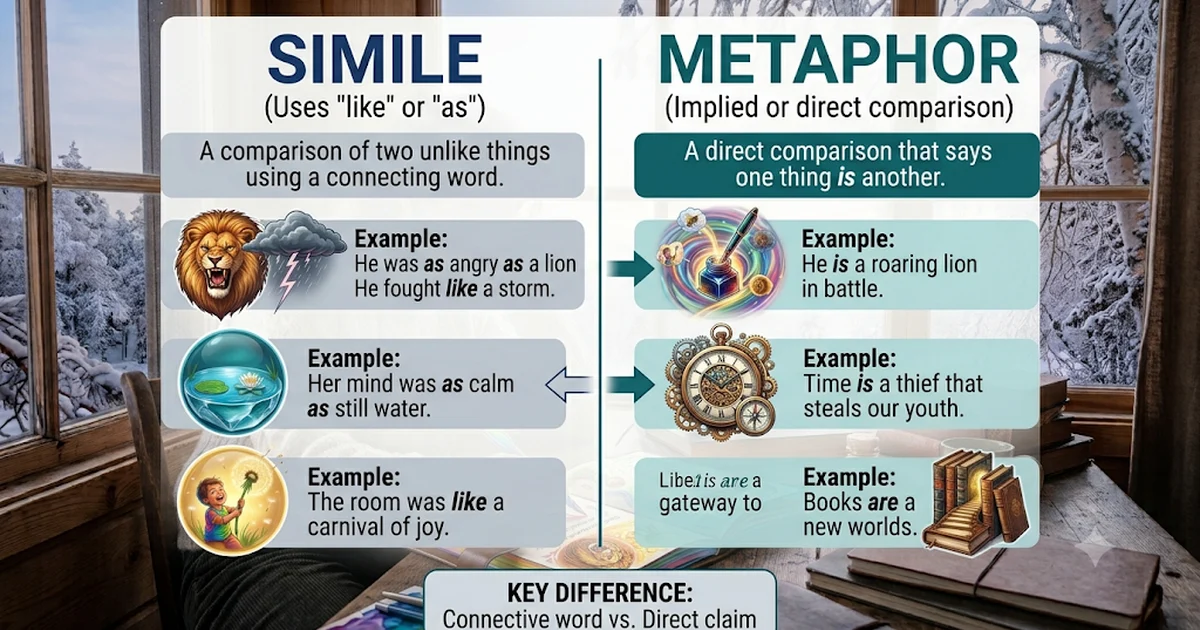
| Simile | Metaphor |
|---|---|
| Uses like or as | Does not use like or as |
| Direct comparison | Implied comparison |
| Easier to recognize | More figurative |
| Example: As brave as a lion | Example: He is a lion |
Examples
Simile: She is as graceful as a swan.
Metaphor: She is a swan on the dance floor.
Common Mistakes to Avoid
1. Overusing Similes
Too many comparisons can make writing feel crowded.
2. Using Unclear Comparisons
Readers should instantly understand the image.
3. Relying Only on Clichés
Try creating fresh similes when possible.
4. Mixing Similes and Metaphors Incorrectly
Keep your comparisons clear and consistent.
Practice Exercises
Try these activities to improve your skills.
Exercise 1
Complete the sentence:
“As fast as ________”
Exercise 2
Write three similes about weather.
Exercise 3
Describe your best friend using three similes.
Exercise 4
Replace plain descriptions with similes.
Example:
Plain: The water was clear.
Simile: The water was as clear as crystal.
Conclusion
Similes are one of the simplest yet most effective tools in writing. They transform ordinary descriptions into vivid images that readers can easily understand and remember. Whether you are writing a school assignment, a story, a blog post, or simply having a conversation, similes help bring your words to life.
Start by learning common similes such as as busy as a bee, as cold as ice, and as brave as a lion. As your confidence grows, experiment with creating your own unique comparisons. With regular practice, similes will become a natural part of your writing, helping you communicate ideas with greater clarity, creativity, and impact.
Frequently Asked Questions
What is a simile in simple words?
A simile is a comparison between two different things using the words like or as to make a description clearer.
What are the most common similes?
Common similes include as busy as a bee, as cold as ice, as brave as a lion, and as quiet as a mouse.
Why are similes important in writing?
Similes make writing more vivid, engaging, and easier for readers to visualize.
What is the difference between a simile and a metaphor?
A simile uses like or as, while a metaphor makes a direct comparison without those words.
Can similes be used in formal writing?
Yes. Similes can strengthen formal writing when used carefully and appropriately.
How can students improve their use of similes?
Students can improve by reading examples, practicing comparisons, and writing their own original similes regularly.
Are similes used in everyday speech?
Yes. Many common expressions people use every day are actually similes.
Can similes improve storytelling?
Absolutely. Similes help readers imagine scenes, emotions, and characters more clearly.
