
Introduction
Some things are so large that the word big simply does not do them justice. A towering building, an endless ocean, or a person’s larger-than-life dreams deserve descriptions that readers can actually picture.
That is where similes come in.
A simile compares two things using like or as. It turns ordinary writing into something visual and engaging. Instead of saying, “The building was big,” you can say, “The building was as big as a mountain.” Suddenly, readers can see exactly what you mean.
Great writers know that strong comparisons make writing unforgettable. They use similes to add color, emotion, and depth. Whether you are a student, a teacher, a blogger, or someone who loves creative writing, learning similes for big can instantly improve your vocabulary and writing style.
In this guide, you’ll discover 25 of the best similes for big, learn how to use them effectively, understand the difference between simple and detailed similes, and pick up practical tips for creating your own.
Quick Answer
Similes for big are comparisons that use the words “like” or “as” to describe something large, enormous, or impressive. Popular examples include “as big as a mountain,” “as big as a house,” and “as big as the universe.” These similes help writers create vivid images, add emotion, and make descriptions more memorable in stories, essays, and everyday conversations.
What Are Similes for Big?
Similes for big are expressions that compare something to another object known for its size or importance.
For example:
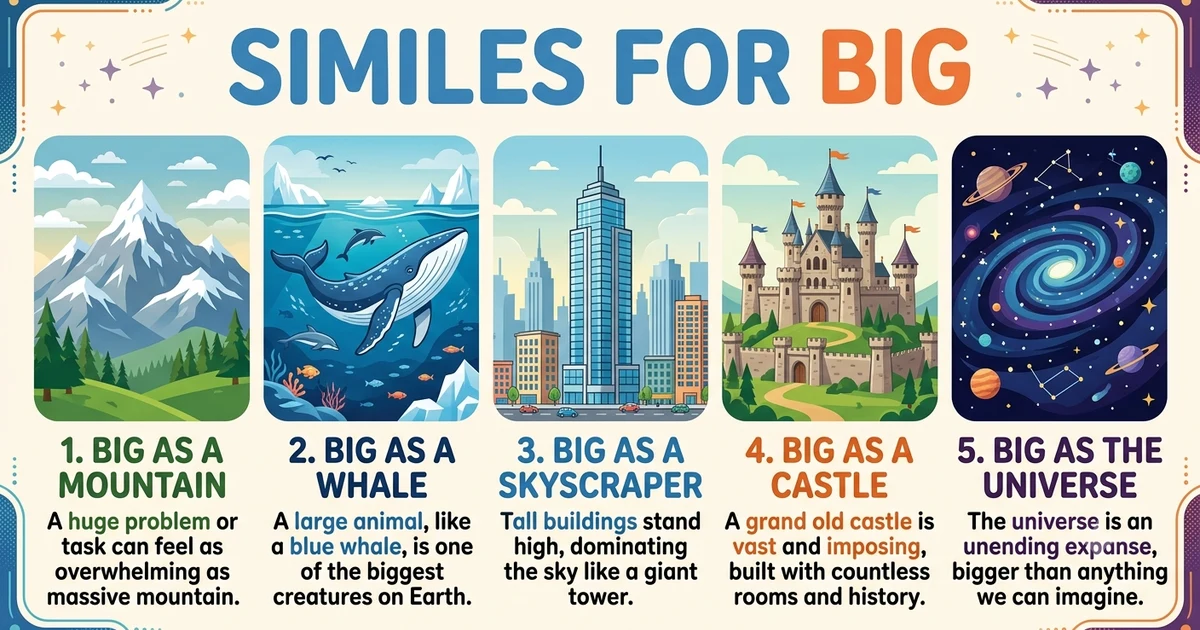
- As big as a whale
- As big as a mountain
- As big as a castle
- As big as the universe
These comparisons make it easier for readers to imagine size, scale, and impact.
Simple Simile vs. Detailed Simile
A simple simile is short and direct:
Her smile was as bright as the sun.
A detailed simile adds imagery and emotion:
Her smile was like the warm morning sun spreading light across a sleepy town.
Both are useful, but detailed similes often leave a stronger impression on readers.
Why Writers Use Similes for Big
Writers use similes because they:
- Create vivid mental images.
- Add emotion and personality.
- Make descriptions easier to understand.
- Keep readers engaged.
- Improve storytelling and creative writing.
A well-written simile can transform an ordinary sentence into something memorable.
25 Similes for Big With Meanings and Examples
1. As Big as a Whale
Meaning: Extremely large.
Example: The parade balloon was as big as a whale floating through the sky.
2. As Big as a Mountain
Meaning: Massive and impressive.
Example: The pile of homework looked as big as a mountain.
3. As Big as an Elephant
Meaning: Remarkably large.
Example: The statue outside the museum was as big as an elephant.
4. As Big as a Bear
Meaning: Large and powerful.
Example: The old dog looked as big as a bear when it stood up.
5. As Big as a Tree
Meaning: Tall and noticeable.
Example: The snowman was as big as a tree by sunset.
6. As Big as a Bus
Meaning: Very large.
Example: The giant pumpkin was as big as a bus.
7. As Big as a House
Meaning: Extremely large.
Example: The cave entrance appeared as big as a house.
8. As Big as a Football Field
Meaning: Vast and spacious.
Example: The warehouse seemed as big as a football field.
9. As Big as a Boulder
Meaning: Massive and heavy.
Example: The gemstone was as big as a boulder in his imagination.
10. As Big as a Castle
Meaning: Grand and impressive.
Example: The hotel lobby was as big as a castle.
11. As Big as a Ship
Meaning: Enormous.
Example: The cruise liner was as big as a floating city.
12. As Big as a Dinosaur
Meaning: Gigantic.
Example: The movie monster was as big as a dinosaur.
13. As Big as a Truck
Meaning: Huge and sturdy.
Example: The stack of boxes was as big as a truck.
14. As Big as a Lake
Meaning: Wide and expansive.
Example: The garden stretched out as big as a lake.
15. As Big as a Planet
Meaning: Extremely large.
Example: His dreams were as big as a planet.
16. As Big as a Balloon
Meaning: Large or inflated.
Example: Her excitement grew as big as a balloon on her birthday.
17. As Big as a Housecat
Meaning: Larger than expected.
Example: The puppy’s paws were as big as a housecat’s.
18. As Big as a Basketball
Meaning: Large and round.
Example: His eyes became as big as basketballs when he saw the surprise.
19. As Big as a Planetarium
Meaning: Immensely spacious.
Example: The science center felt as big as a planetarium.
20. As Big as a Skyscraper
Meaning: Exceptionally tall.
Example: The giant robot stood as big as a skyscraper.
21. As Big as a Cloud
Meaning: Large and fluffy.
Example: Her wedding dress floated behind her, as big as a cloud.
22. As Big as a Stadium
Meaning: Extremely spacious.
Example: The arena was as big as a stadium filled with cheering fans.
23. As Big as a Giant
Meaning: Towering and enormous.
Example: The sunflower grew as big as a giant.
24. As Big as a Canyon
Meaning: Vast and impressive.
Example: His appetite was as big as a canyon.
25. As Big as the Universe
Meaning: Limitless and boundless.
Example: Her imagination was as big as the universe itself.
How to Write Your Own Big Similes
Creating a powerful simile is easier than you think.
- Start with a simple idea.
- Choose an object people recognize.
- Add sensory details.
- Focus on one emotion or image.
- Keep it natural.
Example
Basic Sentence: The night was dark.
Simple Simile: The night was as dark as ink.
Detailed Simile: The night was like thick black ink spilling across the sky in complete silence.
Common Mistakes to Avoid
Avoid these common problems:
- Overusing clichés.
- Adding too many details.
- Mixing unrelated ideas.
- Using similes that do not fit the context.
Good similes feel natural and help readers understand your message instantly.
Simile vs. Metaphor
| Simile | Metaphor |
|---|---|
| Uses “like” or “as” | Does not use “like” or “as” |
| He fought like a lion. | He was a lion in battle. |
| More descriptive | More direct |
Practice Exercise
Complete the following:
- The mountain stood as big as __________.
- The classroom felt as big as __________.
- Her dreams were as big as __________.
- The whale looked as big as __________.
- The building rose as big as __________.
Suggested Answers
- the city skyline
- a football field
- the universe
- a submarine
- a skyscraper
Conclusion
Similes for big do more than describe size. They bring your writing to life. Whether you compare something to a mountain, a whale, or the universe, the right simile helps readers see exactly what you mean.
The best similes are simple, vivid, and memorable. Start with familiar comparisons, add meaningful details, and practice regularly. Before long, your writing will feel bigger, brighter, and far more engaging.
The next time something seems enormous, skip the word big and choose a simile your readers will never forget.
FAQs
What is a simile for big?
A simile for big compares something large to another object using “like” or “as,” such as “as big as a mountain.”
What is the most popular simile for big?
“As big as a house” and “as big as a mountain” are among the most common examples.
Why are similes important?
They make writing more descriptive, engaging, and easier to visualize.
What is the difference between a simile and a metaphor?
A simile uses “like” or “as,” while a metaphor makes a direct comparison.
Can students use similes in essays?
Yes. Similes are excellent for descriptive and creative writing assignments.
How can I create better similes?
Focus on familiar comparisons, clear imagery, and natural language.
