
Introduction
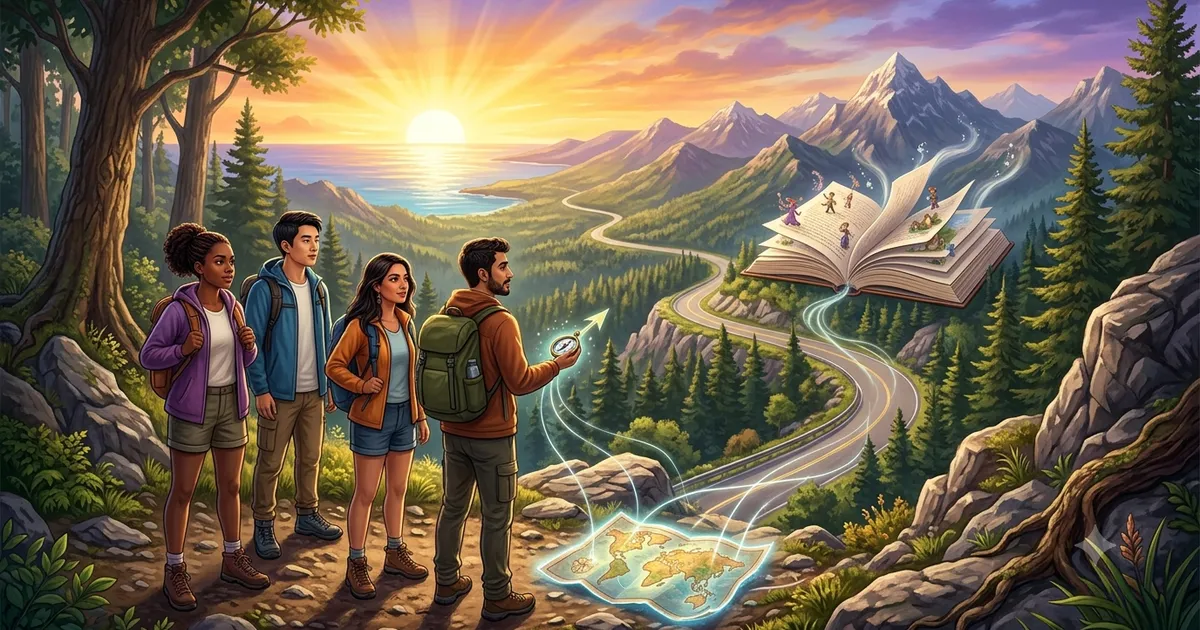
Adventure is more than traveling to a new place or facing a difficult challenge. It is the feeling of stepping beyond the familiar and discovering what might be waiting ahead. An adventure can be exciting, mysterious, funny, dangerous, or even life-changing. Writers often use similes to help readers imagine these experiences more clearly.
A simile for adventure compares a journey, challenge, discovery, or emotion to something familiar by using words such as “like” or “as.” A strong comparison can make a simple scene feel vivid and memorable. Instead of saying that a journey was exciting, a writer might say, “The journey felt like opening a door to a world no one had seen before.”
In this guide, you will learn what an adventure simile means, why writers use it, and how to create one. You will also find more than 50 creative examples for travel, mountains, oceans, jungles, fantasy stories, action scenes, and everyday adventures.
Quick Answer
A simile for adventure is a comparison that describes the excitement, danger, mystery, challenge, or discovery of an adventure by using words such as “like” or “as.” For example, “The journey felt like opening a map to a hidden world.” Adventure similes help writers create clear mental pictures, express emotions, and make stories more engaging. They can be used in creative writing, travel blogs, school essays, journals, fiction, and storytelling.
What Does Simile for Adventure Mean?
A simile for adventure compares an adventurous experience with something familiar. The comparison helps readers understand what the journey feels like rather than simply telling them what happened.
For example:
Plain sentence:
The explorers entered an unknown place.
With a simile:
The explorers entered the unknown land like travelers stepping into a forgotten dream.
The second sentence creates a stronger image. It suggests mystery, curiosity, and discovery without explaining every emotion directly.
Adventure similes can describe:
- Excitement
- Curiosity
- Risk
- Speed
- Fear
- Freedom
- Discovery
- Determination
- Surprise
- Wonder
A good simile connects the adventure to an image that readers can quickly understand.
Why Writers Use Similes for Adventure
Adventure stories often contain movement, unfamiliar places, difficult challenges, and strong emotions. Similes make these moments easier to picture.
Writers use adventure similes to:
- Make scenes more vivid
- Show emotions without overexplaining them
- Add energy to action scenes
- Create mystery and suspense
- Make descriptions more memorable
- Help readers feel involved in the journey
- Turn ordinary events into engaging experiences
For example:
Without a simile:
The road was long and difficult.
With a simile:
The road stretched ahead like a ribbon disappearing into the clouds.
The simile gives the road shape and creates a sense of distance and mystery.
Simple Similes for Adventure
Simple comparisons are useful for beginners, students, and anyone learning creative writing.
- The adventure felt like opening a surprise gift.
- The journey was like stepping into a new world.
- Exploring the town felt like reading an unfinished story.
- The trip was as exciting as the first day of summer.
- The path looked like a doorway into the unknown.
- Our adventure moved like a dream filled with surprises.
- The journey felt like turning the first page of a mystery.
- Every new place was like a hidden treasure waiting to be found.
- The road called to us like an invitation.
- The adventure felt as fresh as a new beginning.
These examples are clear and easy to adapt. You can change the setting or emotion to create your own
version.
Powerful Similes for Exciting Adventure Journeys
Powerful similes add movement, energy, and emotion.
- The adventure raced forward like a storm across open land.
- Our journey moved like a river breaking through stone.
- The expedition felt like chasing the horizon.
- Each discovery struck us like a flash of lightning.
- The road pulled us onward like a powerful current.
- The adventure unfolded like a legend coming to life.
- We moved through the wilderness like arrows flying toward a distant target.
- The journey felt like riding a wave that would not slow down.
- Every challenge rose before us like a mountain.
- The adventure burned inside us like a bright fire.
These similes work well in action stories, adventure novels, personal narratives, and travel writing.
Similes for Adventure Travel
Travel introduces new places, people, sounds, and experiences. These comparisons can make travel writing feel more personal and vivid.
- Traveling felt like flipping through the pages of an unknown book.
- The highway stretched like a silver ribbon across the land.
- Each city opened before us like a new chapter.
- The airport buzzed like a busy beehive.
- The old streets twisted like lines in a forgotten map.
- The journey felt like collecting pieces of a larger story.
- The train moved through the countryside like a brush painting across a canvas.
- Every stop was like opening a door to a different world.
- The road connected our memories like a thread.
- The trip felt like a puzzle becoming clearer with every mile.
Mountain Adventure Similes
Mountains often represent challenge, courage, strength, and achievement.
- The mountain stood like a giant watching over the valley.
- The climb felt like reaching for the sky with both hands.
- The trail twisted like a giant staircase.
- The peak rose like a crown above the clouds.
- Our determination was as steady as the mountain beneath us.
- The wind rushed past like an invisible river.
- The narrow path looked like a thread sewn into the mountain.
- Reaching the summit felt like touching the edge of the sky.
- The cliffs stood like stone walls guarding the land.
- The mountain challenge felt like a test written by nature.
Ocean and Sea Adventure Similes
The ocean can create feelings of freedom, mystery, power, and uncertainty.
- The sea stretched like an endless blue road.
- The waves rolled like moving hills.
- The ocean breathed like a sleeping giant.
- Our boat moved like a leaf across the water.
- Diving felt like entering a silent world beneath the surface.
- The waves crashed like drums against the shore.
- The horizon looked like a line drawn between two worlds.
- The sea adventure unfolded like a secret beneath the waves.
- The current pulled us like an invisible hand.
- The ocean was as mysterious as a locked room.
Jungle Adventure Similes
Jungles are full of movement, sound, color, and hidden surprises.
- The jungle felt like a maze created by nature.
- The trees stood like ancient guardians.
- The vines hung like ropes from a giant ceiling.
- The jungle sounds blended like an orchestra.
- The path disappeared like a secret being hidden.
- The leaves formed a green roof above us.
- The air wrapped around us like a warm blanket.
- The forest floor felt like a living carpet.
- Every shadow looked like a mystery waiting to move.
- The jungle seemed as alive as a crowded city.
Fantasy Adventure Similes
Fantasy stories allow writers to create imaginative worlds filled with magic and wonder.
- The magic flowed like starlight through the air.
- The castle stood like a dream carved from stone.
- The enchanted forest glowed like a world beneath the stars.
- The spell moved like invisible fire.
- The dragon flew like a shadow across the moon.
- The magical door opened like a secret coming alive.
- The kingdom shone like a jewel beyond the mountains.
- The hero’s journey unfolded like an ancient prophecy.
- The sword flashed like captured lightning.
- The hidden world appeared like a dream becoming real.
Similes for Dangerous Adventure Moments
Adventure can include uncertainty and risk. These similes create tension without giving too much detail.
- The danger followed us like a shadow.
- The moment felt like standing beside a storm.
- The path ahead was as uncertain as a road covered in fog.
- The silence hung like a warning.
- The ground trembled like a giant waking beneath us.
- Fear moved through the group like cold wind.
- The unknown waited like a locked door.
- Every step felt like a question without an answer.
- The storm approached like a dark wall.
- The situation tightened around us like a knot.
Fast-Paced Similes for Action and Adventure
Action scenes need clear movement and strong energy.
- The chase moved like lightning across the field.
- The explorer ran like the wind.
- The vehicle sped forward like an arrow.
- The river rushed like a wild animal.
- The team moved as quickly as a flock of birds taking flight.
- The escape felt like racing against time.
- The action unfolded like a storm breaking loose.
- The riders crossed the valley like shadows.
- The adventure surged forward like a rushing wave.
- The group moved through the forest like a fast-moving current.
Emotional Similes for Adventure
Adventure often combines excitement, uncertainty, courage, and wonder.
- Excitement rose inside me like sunlight after a long night.
- Curiosity pulled me forward like a magnet.
- My courage stood as strong as a mountain.
- Wonder spread through me like light filling a room.
- Anticipation buzzed inside me like a busy beehive.
- My confidence grew like a tree reaching toward the sun.
- The surprise hit me like a sudden gust of wind.
- Hope shone like a distant light on the road.
- The memory stayed with me like a song I could not forget.
- The adventure filled me with energy like fresh air after rain.
Funny Similes for Adventure
Funny similes can make an adventure story feel more relatable.
- The journey felt like chasing a chicken on roller skates.
- Finding the trail was like solving a puzzle with missing pieces.
- My backpack felt as heavy as a small elephant.
- We followed the map like detectives who had forgotten their glasses.
- The hike made my legs feel like cooked spaghetti.
- The tent went up like a puzzle designed by a mischievous wizard.
- We moved through the mud like ducks wearing boots.
- The trail twisted like a bowl of tangled noodles.
- Our plan changed like a weather forecast with too many surprises.
- I looked as lost as a penguin in the desert.
How to Create Your Own Simile for Adventure
Creating an original adventure simile is easier when you follow a simple process.
1. Choose the adventure moment
Think about what is happening.
Examples:
- Climbing a mountain
- Exploring a city
- Crossing a river
- Discovering a hidden place
- Starting a journey
2. Identify the strongest feeling
Ask what the moment feels like.
It may feel:
- Exciting
- Scary
- Fast
- Mysterious
- Difficult
- Free
3. Choose a familiar comparison
Pick something readers can picture.
For example:
Feeling: Excitement
Comparison: Opening a gift
Simile:
The adventure felt like opening a surprise gift.
4. Use “like” or “as”
A simile usually uses one of these words.
Examples:
- The road looked like a ribbon.
- The explorers were as determined as climbers reaching a summit.
5. Keep the comparison clear
Avoid adding too many unrelated images.
Weak:
The journey was like a storm, a puzzle, a dragon, and a river.
Stronger:
The journey moved like a river cutting through unfamiliar land.
One focused image usually creates a stronger effect.
Common Mistakes When Using Adventure Similes
Using unclear comparisons
A simile should help readers understand the scene.
Unclear:
The adventure was like a purple clock.
Better:
The adventure felt like a clock racing toward an unknown moment.
Using too many similes
Too many comparisons can make writing feel crowded.
Instead of adding a simile to every sentence, use them at important moments.
Repeating the same image
Avoid using “like a storm” repeatedly. Try different images from nature, travel, objects, emotions, or everyday life.
Forcing a comparison
A simile should fit the scene naturally.
Weak:
The mountain was like a sandwich.
Better:
The mountain stood like a giant above the valley.
Explaining the simile too much
Trust the image when it is clear.
Less effective:
The road looked like a ribbon because it was long, thin, and curved.
Stronger:
The road curled like a ribbon through the hills.
Advanced Similes for Adventure Writing
Advanced similes can create deeper meaning and atmosphere.
- The journey unfolded like a forgotten legend returning to life.
- The silence felt like the world was holding its breath.
- The path revealed itself like a memory returning piece by piece.
- The horizon called to us like a promise we could not ignore.
- The wilderness opened before us like a story without an ending.
- Each discovery felt like finding a missing piece of history.
- The road carried us forward like time moving toward the future.
- The unknown waited like a question written across the sky.
- The journey changed us like a river slowly shaping stone.
- The final destination appeared like a dream becoming clear at sunrise.
Practice Exercises for Adventure Similes
Try these activities to improve your writing.
Exercise 1: Improve a plain sentence
Plain:
The journey was exciting.
Write a simile:
The journey was as exciting as __________________.
Exercise 2: Describe an unknown path
Complete this sentence:
The unknown path looked like __________________.
Exercise 3: Create a mountain simile
Complete:
The mountain stood like __________________.
Exercise 4: Describe adventure emotions
Write one simile for each emotion:
- Excitement
- Curiosity
- Courage
- Fear
- Wonder
Exercise 5: Write a short adventure paragraph
Write three or four sentences about an adventure. Include one simile for the setting, one for movement, and one for emotion.
Conclusion
A simile for adventure can turn an ordinary journey into a vivid and memorable experience. It helps writers describe excitement, danger, discovery, movement, courage, and wonder through clear comparisons. Whether you are writing about a mountain climb, a road trip, an ocean journey, a jungle expedition, or a magical quest, the right simile can make the scene feel more alive.
The best adventure similes are easy to understand, connected to the moment, and rich in imagery. Start with simple comparisons, experiment with new ideas, and use similes where they add real value. With regular practice, you can create adventure writing that allows readers to see the path, feel the excitement, and imagine the journey for themselves.
Frequently Asked Questions
What is a simile for adventure?
A simile for adventure is a comparison that describes an adventurous journey, experience, challenge, or emotion using words such as “like” or “as.”
What is an example of a simile for adventure?
A simple example is:
“The adventure felt like opening a door to an unknown world.”
Why do writers use adventure similes?
Writers use them to create vivid images, express emotions, add energy, and help readers imagine the experience.
Can beginners use adventure similes?
Yes. Beginners can start with simple comparisons, such as:
“The journey felt like opening a surprise gift.”
Where can I use adventure similes?
You can use them in stories, essays, novels, travel blogs, journals, school assignments, poems, and creative writing.
How do similes improve adventure writing?
Similes make descriptions more visual and emotional. They help readers experience the journey rather than only read about it.
Can a simile describe fear during an adventure?
Yes. For example:
“Fear moved through the group like cold wind.”
Can adventure similes be funny?
Yes. Funny comparisons can make stories more entertaining and relatable.
Example:
“My backpack felt as heavy as a small elephant.”
What makes a good adventure simile?
A good adventure simile is clear, relevant, imaginative, and natural. It should match the mood of the scene.
How can I create original adventure similes?
Start with an emotion or action, choose a familiar image, and connect them using “like” or “as.” Keep the comparison focused and easy to understand.
