
Introduction
Many students believe that every sentence containing the word like is a simile. This is understandable because similes often use like or as. However, the presence of the word alone does not make a sentence figurative.
The key difference is the purpose of the comparison. A simile compares things in a creative or descriptive way to help readers imagine an idea more clearly. Other uses of like may express preference, resemblance, or a normal comparison without creating imagery.
Understanding simile vs like can improve reading, writing, grammar, and figurative language skills. Once you learn how to look beyond the word like, it becomes much easier to identify real similes and use them naturally in your own writing.
Quick Answer
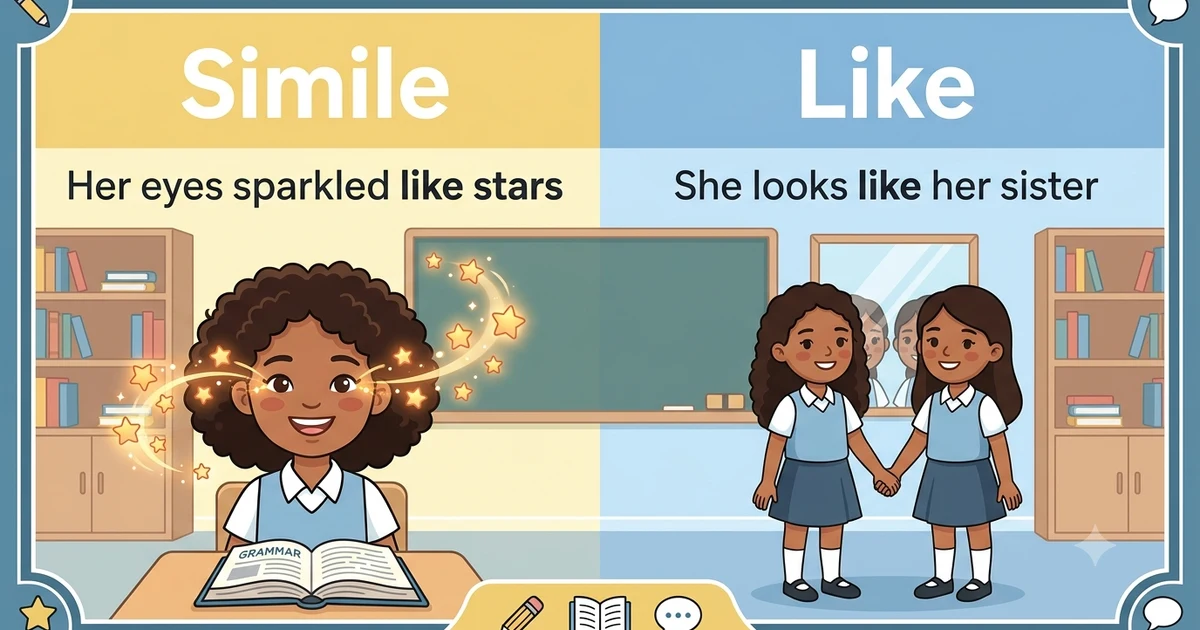
A simile is a type of figurative language that compares two different things in a creative way. It often uses the words like or as to create a clear mental picture. However, the word like by itself does not always make a sentence a simile. Sometimes, like simply shows preference, similarity, or an ordinary comparison.
For example, “Her eyes sparkled like stars” is a simile because it creates imagery. In contrast, “She looks like her mother” is a literal comparison, not a simile.
What Is a Simile?
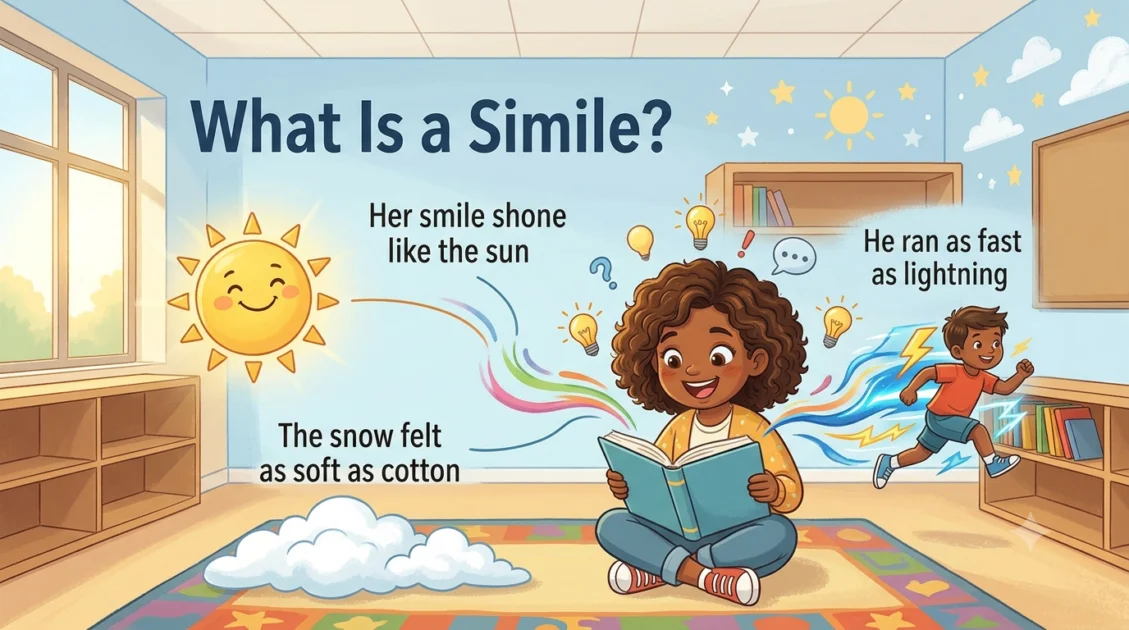
A simile is a figure of speech that compares one thing with another to make a description more vivid, interesting, or memorable. Similes usually use like or as.
Consider these examples:
- Her smile shone like the sun.
- He ran as fast as lightning.
- The baby slept like a log.
- The snow felt as soft as cotton.
Each sentence compares two different things. The comparison helps the reader create a picture in their mind.
For example, saying “He ran as fast as lightning” does not mean the person was actually lightning. It emphasizes that he ran very quickly.
A good simile adds meaning and imagery without confusing the reader.
How Does the Word Like Work?
The word like has several uses in English. It can express a preference, show similarity, introduce examples, or create a figurative comparison.
Like to Show Preference
- I like pizza.
- She likes reading books.
- They like playing soccer.
In these sentences, like means “enjoy.” There is no comparison, so these are not similes.
Like to Show Similarity
- She looks like her mother.
- He sounds like his brother.
- This tastes like chicken.
These sentences describe a real or literal resemblance. They do not create figurative imagery.
Like to Give Examples
- Animals like dogs and cats can be friendly.
- Cities like New York attract many visitors.
Here, like means “such as.” It introduces examples rather than creating a simile.
Like in a Simile
- Her hair flowed like silk.
- The stars shone like tiny diamonds.
- The child moved like a butterfly.
In these examples, like creates imaginative comparisons. These are similes.
Main Difference Between Simile and Like
A simile is a type of figurative language. Like is simply a word that can be used in several ways.
A sentence becomes a simile when like or as creates a meaningful comparison between different things.
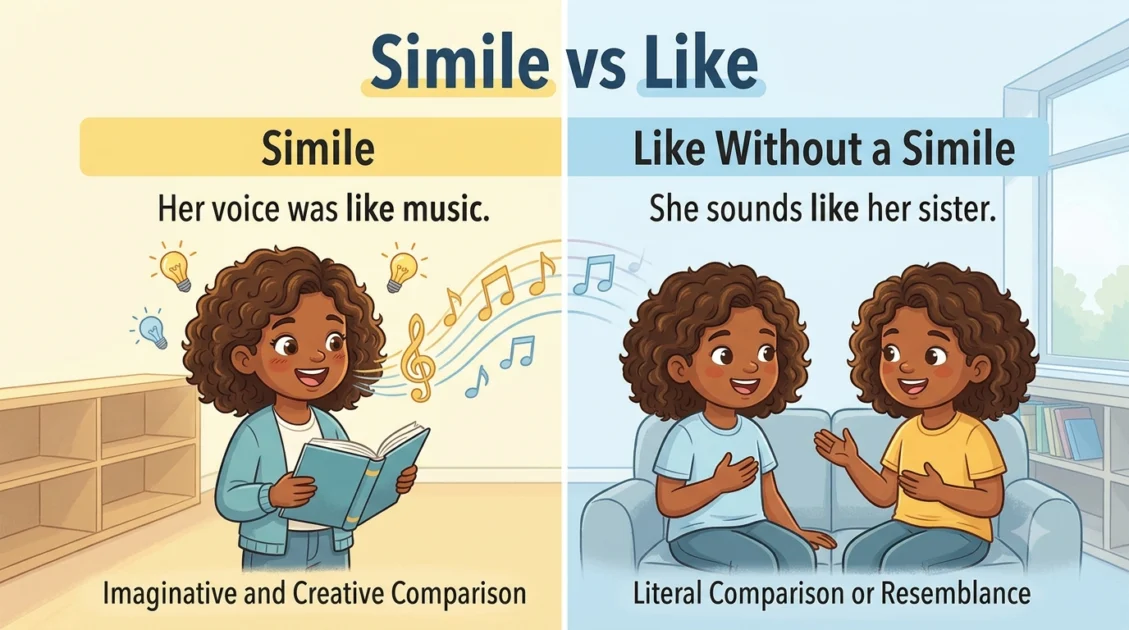
| Simile | Like Without a Simile |
|---|---|
| Creates imagery | Gives a literal meaning |
| Uses a creative comparison | Shows preference or similarity |
| Helps readers imagine something | States information directly |
| Often compares unlike things | Often compares similar things |
| “Her voice was like music.” | “She sounds like her sister.” |
The most important point is this:
Not every sentence with like is a simile, but many similes use like.
When Does Like Create a Simile?
The word like creates a simile when it compares things in a descriptive or imaginative way.
Examples:
- The lake was like a mirror.
- Her voice was like warm honey.
- The leaves danced like butterflies.
- The classroom was like a zoo after the teacher left.
These comparisons add imagery. They help readers imagine the scene, sound, feeling, or action.
For example:
The lake was calm.
This sentence gives basic information.
The lake was like a mirror.
This simile creates a stronger picture by suggesting that the water was smooth and reflective.
When Is Like Not a Simile?
The word like does not create a simile when it is used literally.
Examples:
- I like chocolate cake.
- She looks like her sister.
- He acts like his father.
- This smells like perfume.
- Students like online learning.
These sentences do not use imaginative comparisons. They express preferences, resemblance, behavior, or ordinary descriptions.
Compare these two sentences:
He eats like his brother.
This means he eats in a similar way to his brother. It is a literal comparison.
He eats like a hungry wolf.
This creates a vivid image of someone eating eagerly or quickly. It works as a simile.
Easy Simile vs Like Examples
The following examples show the difference clearly.
Similes
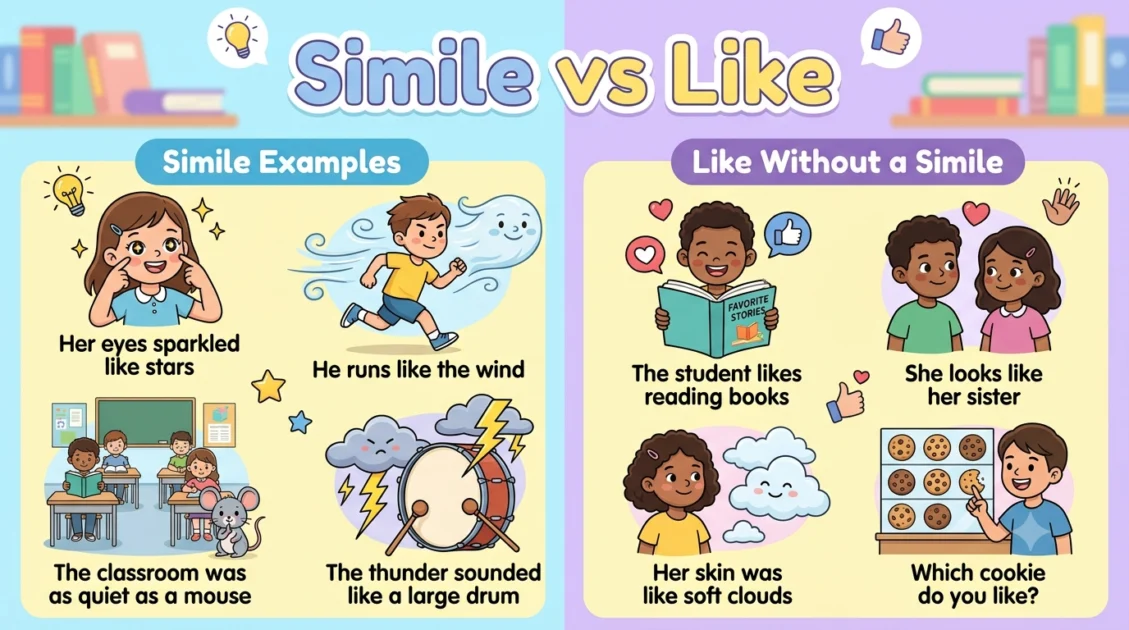
- Her eyes sparkled like stars.
- The boy ran like the wind.
- The room was as quiet as a mouse.
- The baby’s skin felt as soft as a cloud.
- The thunder sounded like a giant drum.
Sentences With Like but No Simile
- I like coffee in the morning.
- She looks like her aunt.
- He sings like his brother.
- This tastes like vanilla.
- Children like funny stories.
The first group uses creative comparisons. The second group uses like literally.
Why Do People Confuse Similes With Like?
Many school lessons explain that similes use like or as. Students may then assume that every sentence containing like must be a simile.
However, like is a common English word with many meanings. It can express enjoyment, similarity, examples, or figurative comparison.
For example:
- I like music.
- She looks like her mother.
- The clouds looked like cotton candy.
Only the third sentence is clearly a simile because it creates an imaginative visual comparison.
The best way to avoid confusion is to focus on the meaning of the sentence, not only on the word like.
Can Every Sentence With Like Be a Simile?
No. A sentence needs more than the word like to become a simile.
A real simile usually does three things:
- It compares two things.
- It creates imagery or adds description.
- It uses the comparison to explain an idea in a creative way.
Example:
The clouds looked like cotton candy.
This is a simile because clouds and cotton candy are compared based on their soft, fluffy appearance.
Now consider:
She likes cotton candy.
This is not a simile because likes means “enjoys.”
How to Identify a Simile Quickly
Use these simple questions while reading:
- Does the sentence compare two things?
- Does it use like or as?
- Is the comparison creative or descriptive?
- Does it create a picture in your mind?
Example:
The moon hung like a silver lantern.
The sentence compares the moon with a lantern. It creates a visual image, so it is a simile.
Another example:
The moon looks like a circle.
This may simply describe the moon’s shape. It is a direct or literal comparison rather than a strong figurative simile.
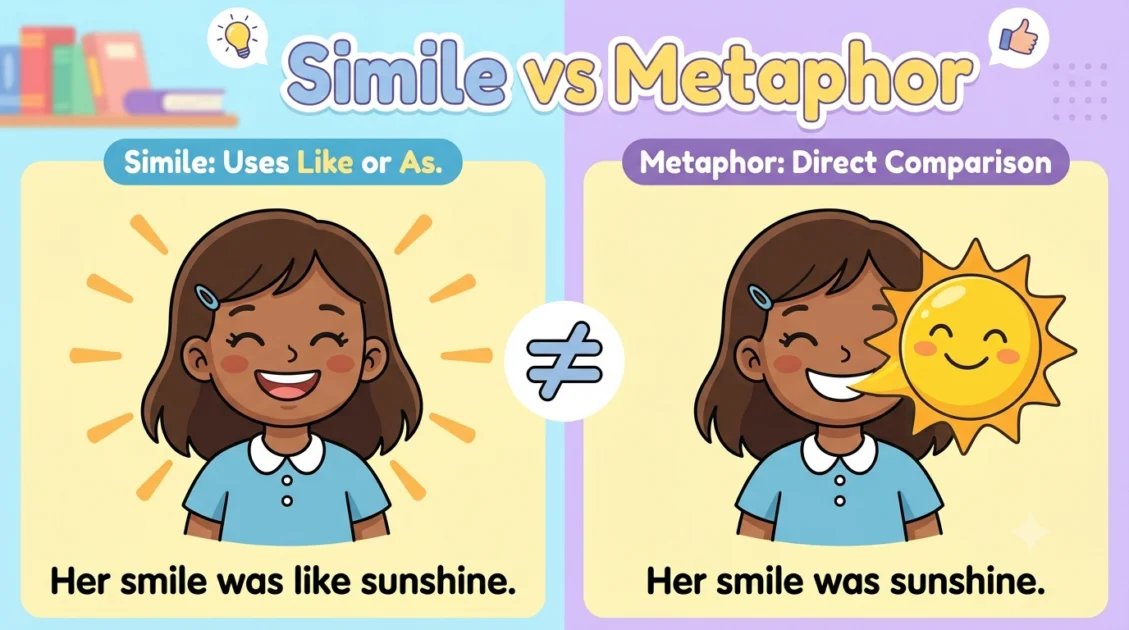
Simile vs Metaphor
Similes and metaphors both compare things, but they use different structures.
| Simile | Metaphor |
|---|---|
| Uses like or as | Does not use like or as |
| Makes an indirect comparison | Makes a direct comparison |
| “Her smile was like sunshine.” | “Her smile was sunshine.” |
| “He fought like a lion.” | “He was a lion in battle.” |
A simile says that one thing is like another thing.
A metaphor says that one thing is another thing.
Both can make writing more vivid and expressive.
Common Simile Patterns
Many English similes follow simple patterns.
Like a or Like an
Subject + verb + like + noun
Examples:
- The baby cried like a kitten.
- The crowd moved like a wave.
- Her face shone like the sun.
As Adjective As
As + adjective + as + noun
Examples:
- As busy as a bee
- As light as a feather
- As brave as a lion
- As quiet as a mouse
These patterns make similes easy for students and beginners to recognize.
How Writers Use Similes
Writers use similes to make descriptions stronger and more memorable.
Simple sentence:
The room was messy.
Sentence with a simile:
The room looked like a storm had passed through it.
The simile gives readers a clearer picture of the mess.
Similes can help writers:
- Create strong mental images
- Describe emotions
- Add detail
- Improve storytelling
- Make writing more memorable
- Create a particular mood
A well-chosen simile can explain a complex idea in only a few words.
Best Simile Examples for Students
These common similes are easy to understand:
- As brave as a lion
- As busy as a bee
- As light as a feather
- As quiet as a mouse
- As cold as ice
- As bright as the sun
- Slept like a baby
- Ran like the wind
- Sparkled like stars
- Soft like velvet
These examples are useful for learning, but students should also practice creating original comparisons.
For example:
Instead of:
Cold as ice
You could write:
Cold like winter rain.
Original similes can make writing feel fresh and personal.
Common Mistakes With Similes and Like
Students often make a few common mistakes.
Calling Every Use of Like a Simile
Incorrect idea:
“I like pizza” is a simile.
Why it is incorrect:
The word like means “enjoy.” It does not compare two things.
Confusing Literal and Figurative Comparisons
Literal:
She looks like her mother.
Figurative:
Her face shone like the morning sun.
The first describes resemblance. The second creates imagery.
Confusing Similes With Metaphors
Simile:
The child was as happy as a bird.
Metaphor:
The child was a ray of sunshine.
Using Too Many Similes
Similes can improve writing, but too many comparisons may make a paragraph difficult to read. Use them when they add useful meaning.
Fun Practice: Is It a Simile?
Read each sentence and decide whether it contains a simile.
- She floated like a butterfly.
- I like swimming at the beach.
- The blanket felt like a cloud.
- He sounds like his uncle.
- The car moved as fast as lightning.
- Her laughter rang like bells.
Answers
- Simile — It creates an imaginative comparison.
- Not a simile — Like means “enjoy.”
- Simile — The blanket is compared with a cloud to describe softness.
- Not a simile — It describes a literal resemblance.
- Simile — The car is compared with lightning to show speed.
- Simile — The sound of laughter is compared with bells.
Tips for Using Similes Naturally
Good similes should feel clear and meaningful.
Follow these tips:
- Choose comparisons readers can understand.
- Match the comparison to the subject.
- Keep the simile simple.
- Use similes only when they add meaning.
- Avoid confusing or unrelated comparisons.
- Try creating original examples.
For example:
Weak:
Her smile was like a chair.
The comparison is unclear because a chair does not explain the smile.
Better:
Her smile was like sunshine after a rainy day.
This comparison suggests warmth, happiness, and comfort.
Quick Summary of Simile vs Like
Remember these simple rules:
- A simile is a creative comparison.
- Similes often use like or as.
- The word like alone does not create a simile.
- Like can express preference, similarity, or examples.
- A simile creates imagery or helps readers imagine something.
- Literal comparisons are not always similes.
- Metaphors compare things directly without using like or as.
The easiest rule is:
Look at the meaning, not only at the word like.
Conclusion
The difference between simile vs like becomes easy to understand when you focus on the purpose of the sentence. A simile uses comparison to create imagery, describe an idea, or make writing more vivid. The word like can help create a simile, but it also has many ordinary uses.
For example, “Her eyes sparkled like stars” is a simile because it creates a vivid image. However, “She looks like her sister” is a literal comparison and does not use figurative language.
When reading, ask whether the comparison is creative and whether it creates a picture in your mind. With regular practice, you will be able to identify similes quickly and use them naturally in your own writing.
FAQs
Is every sentence with like a simile?
No. Many sentences use like to express preference, similarity, or examples without creating figurative language.
What makes a sentence a simile?
A simile compares two different things in a creative or descriptive way. It usually uses like or as.
Can similes use as instead of like?
Yes. Many common similes use the pattern as + adjective + as.
Example:
As bright as the sun.
What is the easiest way to identify a simile?
Look for a creative comparison that creates a mental image. Do not decide based only on the presence of like or as.
Is like always figurative language?
No. The word like is often used literally.
Example:
I like music.
Here, like means “enjoy.”
What is the difference between a simile and a metaphor?
A simile uses like or as to compare things. A metaphor makes a direct comparison without using those words.
Can a literal comparison be a simile?
Not usually. A simile generally adds figurative meaning or imagery, while a literal comparison describes a real similarity.
Why do writers use similes?
Writers use similes to create vivid descriptions, explain ideas, express emotions, and make writing more memorable.
Can children learn similes easily?
Yes. Simple examples and short practice activities can help children understand how similes work.
What are common simile examples?
Common examples include:
- As brave as a lion
- As quiet as a mouse
- As busy as a bee
- Ran like the wind
- Slept like a baby
wide landscape format, and no watermark.
