
Quick Answer Box
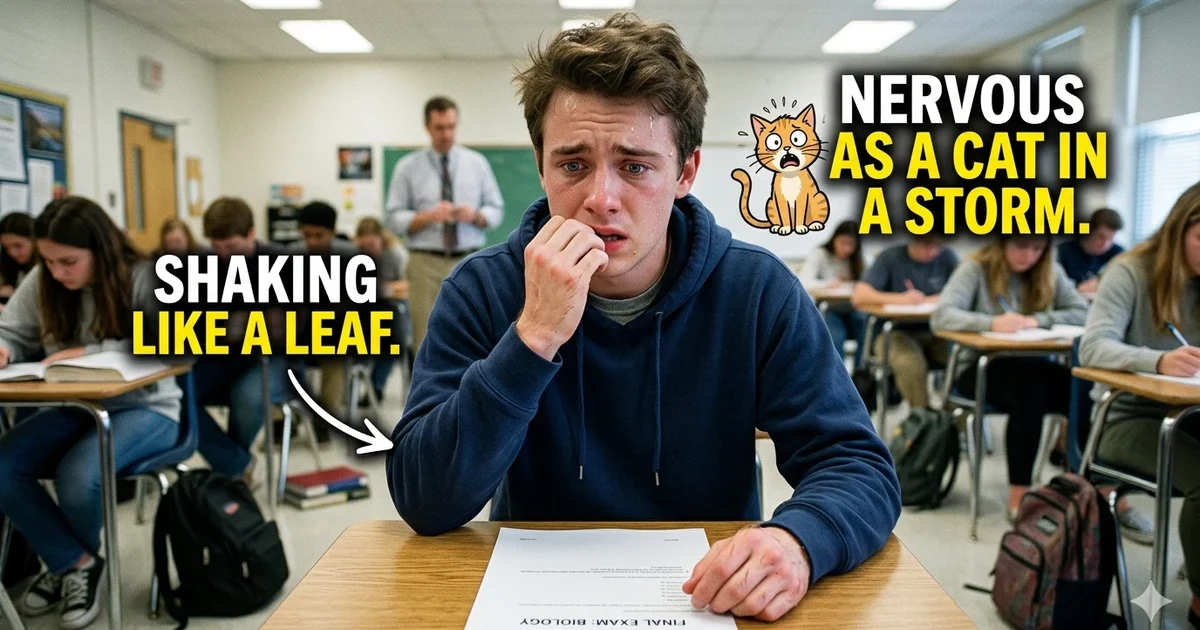
A nervous simile is a comparison that describes fear, anxiety, or worry using words like like or as. It helps readers understand emotions more clearly by comparing nervous feelings to familiar things. For example, “She was shaking like a leaf” and “He felt as nervous as a cat in a room full of rocking chairs” are common nervous similes.
Introduction
Everyone feels nervous at some point. You may feel it before an exam, during a job interview, or while speaking in front of a crowd. Writers often use similes to describe that nervous feeling in a stronger and clearer way.
A nervous simile compares nervousness to something familiar so readers can picture the emotion better. Instead of saying someone felt nervous, you can say they were shaking like a leaf or quiet as a mouse before speaking.
In this guide, you will learn what a nervous simile means, how to use it in writing, and many useful examples for school essays, stories, and daily conversation. You will also learn how nervous similes differ from metaphors and how to create your own naturally.
What is a nervous simile in simple words
A nervous simile is a comparison that helps describe anxiety, fear, or worry using the words like or as.
It makes emotions easier to understand by connecting them to something familiar.
Examples:
- She was shaking like a leaf before the presentation.
- He felt as nervous as a cat in a room full of rocking chairs.
- I stood there as stiff as a statue during the interview.
These comparisons create a stronger image than simply saying someone felt nervous.
Why writers use nervous similes in descriptive writing
Writers use nervous similes because emotions become more vivid when readers can imagine them clearly.
Instead of writing:
She was nervous.
You can write:
She trembled like a leaf in the wind.
The second sentence helps readers feel the emotion.
Nervous similes also:
- add emotion to scenes
- improve storytelling
- make characters feel real
- help students write better essays
They turn plain writing into memorable writing.
How nervous similes make emotions easier to understand
People understand emotions better when they connect them to everyday experiences.
Everyone has seen a leaf shake in the wind. That image helps explain nervousness quickly.
Example:
He waited outside the principal’s office like a rabbit near a fox.
This gives a stronger emotional picture than saying he was worried.
Good similes help readers feel the moment instead of just reading about it.
Nervous simile vs nervous metaphor with clear examples
A simile uses like or as.
A metaphor makes a direct comparison without like or as.
Simile Example
She was as nervous as a bird trapped indoors.
Metaphor Example
She was a trapped bird before the speech.
Both describe the same feeling, but similes often feel easier for beginners because the comparison is clearer.
Common signs of nervousness used in similes
Writers often use physical signs of nervousness to build similes.
Common signs include:
- shaking hands
- fast heartbeat
- sweating
- dry mouth
- stuttering
- avoiding eye contact
- nail biting
- frozen body language
Example:
His hands shook like loose branches in a storm.
These details make writing more believable.
Simple nervous simile examples for beginners
Beginners should start with short and clear comparisons.
Examples:
- Nervous as a cat near water
- Shaking like a leaf
- Quiet as a mouse
- Sweating like ice under the sun
- Frozen like a deer in headlights
These are easy to understand and simple to use in school writing.
Example sentence:
I felt as nervous as a cat before my first class speech.
Nervous similes used in school essays
School essays often need emotional detail, especially in personal writing.
Example topics:
- first day at school
- giving a speech
- meeting the principal
- taking an exam
Example sentence:
On my first day at school, I stood at the classroom door shaking like a leaf.
This sounds stronger than saying I was nervous.
Teachers often notice clear descriptive writing like this.
Funny nervous simile examples for creative writing
Funny similes make writing more entertaining.
Examples:
- Nervous as a chicken at a cooking contest
- Shaking like jelly on a plate
- Sweating like a snowman in summer
- Nervous as a goat in a tiger’s garden
These work well in stories, blogs, and playful essays.
They keep the reader smiling while still showing emotion.
Deep emotional nervous similes for storytelling
Serious stories often need emotional depth.
Examples:
- Her heart raced like thunder before the storm
- He stood there like glass ready to shatter
- She felt as fragile as paper in heavy rain
These similes add emotional weight and help readers connect with characters.
They work well in novels, personal stories, and reflective writing.
Romantic nervous similes for love scenes
Love scenes often include nervous excitement.
Examples:
- My heart fluttered like butterflies in spring
- He smiled and I froze like winter air
- She felt as nervous as the moon meeting the sunrise
These comparisons create soft emotional tension and romantic feeling.
They work well in poems, messages, and fiction writing.
Nervous similes for public speaking situations
Public speaking causes strong nervous feelings.
Examples:
- I stood on stage like a deer in bright lights
- My voice shook like a weak radio signal
- My heart pounded like drums before battle
These help describe fear before speeches, presentations, and performances.
They make the moment feel real.
Nervous similes for interview and exam stress
Exams and interviews create pressure and uncertainty.
Examples:
- I waited outside the interview room like a soldier before battle
- She held her exam paper like it might explode
- He sat there as tense as a rope pulled too tight
These examples fit student and professional writing.
They show both fear and pressure clearly.
Nervous similes for students and young writers
Young writers need simple examples they can remember.
Good choices include:
- shaking like a leaf
- nervous as a kitten
- quiet as a mouse
- stiff as a statue
Example:
Before reading my answer aloud, I felt as nervous as a kitten in the rain.
Simple similes help students improve quickly.
How to write your own nervous simile step by step
Creating your own simile is easy when you follow a few steps.
Step 1: Identify the feeling
Ask what kind of nervousness you want to show.
Fear
Embarrassment
Excitement
Stress
Step 2: Think of a strong image
Choose something people easily understand.
Leaf
Rabbit
Glass
Bird
Step 3: Connect them naturally
Use like or as.
Example:
I felt as nervous as a rabbit near a barking dog.
Keep it simple and clear.
Best words to use when creating a nervous simile
Strong descriptive words improve similes.
Helpful words include:
- trembling
- shaking
- frozen
- restless
- tense
- pale
- weak
- breathless
- uneasy
- fragile
Example:
She stood there trembling like thin glass in the wind.
Specific words create stronger images.
Short nervous similes for daily conversation
Short similes work well in speaking and casual writing.
Examples:
- I was shaking like a leaf
- He looked stiff as a board
- She was nervous as a kitten
- I felt like my heart would jump out
These sound natural in daily life and help express feelings quickly.
Powerful nervous similes in literature examples
Many writers use nervous similes to create memorable scenes.
Example style:
He waited in silence like a prisoner hearing footsteps.
She stood there like a candle fighting the wind.
These examples create emotion and atmosphere.
Strong literature often uses simple comparisons with deep meaning.
Mistakes to avoid when writing nervous similes
Some similes sound weak because they are too confusing or too dramatic.
Avoid:
- comparisons people cannot understand
- too many similes in one paragraph
- repeating the same example often
- unnatural comparisons that distract readers
Bad example:
He was nervous like a broken television.
This feels unclear.
Good writing needs clear and meaningful images.
Practice exercises for creating nervous similes
Practice helps you improve faster.
Try these exercises:
Exercise 1
Write a simile for exam fear.
Example:
I felt like a bird trapped in a small cage.
Exercise 2
Write a simile for first love nervousness.
Example:
My heart fluttered like a butterfly near a flower.
Exercise 3
Write a simile for stage fear.
Example:
I stood there like ice under bright sunlight.
Short daily practice builds strong writing skills.
Final thoughts on using nervous similes effectively
Nervous similes help writing feel alive.
They turn simple emotions into clear pictures readers can understand and remember. Whether you write essays, stories, poems, or daily messages, these comparisons make your words stronger.
The best nervous similes feel natural, simple, and meaningful. Start with easy examples, practice often, and soon your writing will sound more vivid and confident.
Conclusion
A nervous simile gives life to emotions that many people struggle to explain. Instead of saying someone felt scared or anxious, you can show that feeling through images readers instantly understand.
From school essays to romantic stories, nervous similes improve clarity and emotional depth. They help writers connect with readers in a stronger way.
The key is simple writing and clear comparison. Choose familiar images, use natural language, and focus on the exact feeling you want to describe.
Good writing often starts with one strong sentence. A great nervous simile can be that sentence.
FAQs
What is a nervous simile?
A nervous simile compares nervousness to something familiar using like or as.
What is an example of a nervous simile?
She was shaking like a leaf before the exam.
Why do writers use nervous similes?
They help readers understand emotions more clearly and make writing stronger.
Is shaking like a leaf a simile?
Yes, because it compares a person to a leaf using like.
What is the difference between simile and metaphor?
A simile uses like or as. A metaphor makes a direct comparison without them.
Can I use nervous similes in essays?
Yes, they improve descriptive writing in personal and school essays.
Are nervous similes good for stories?
Yes, they help create emotional scenes and realistic characters.
What are short nervous similes for students?
Examples include nervous as a kitten and quiet as a mouse.
How do I create my own nervous simile?
Choose the feeling, think of a strong image, and connect them using like or as.
Can nervous similes be funny?
Yes, funny similes like shaking like jelly can make writing more entertaining.
