
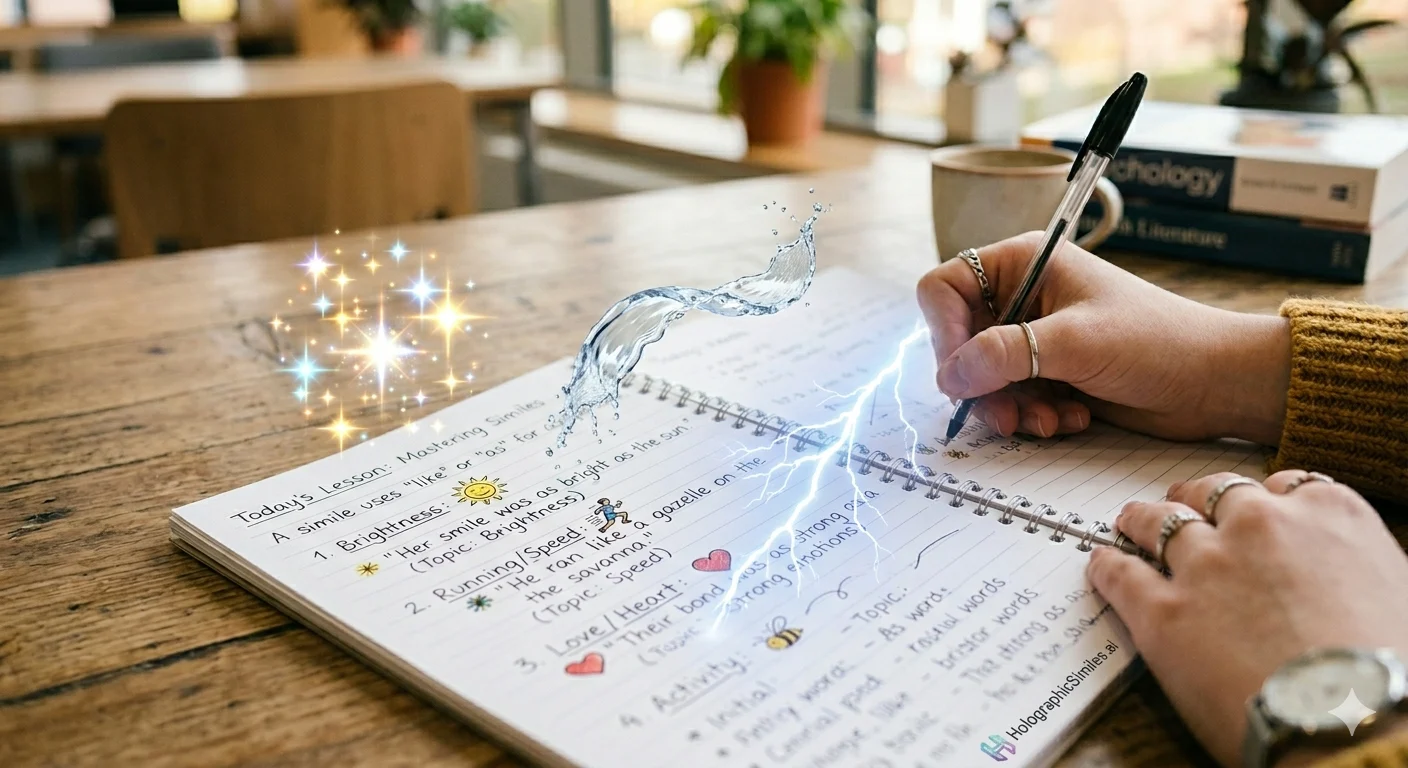
Flat writing loses readers fast because it lacks vivid detail and emotional connection. People want words that help them see, feel, and imagine clearly. A good simile brings life to your sentences by comparing one thing to another in a simple and natural way.
It helps you explain ideas with clarity and makes your message more memorable. Instead of plain descriptions, you create images that stay in the reader’s mind. In this guide, you will learn how to write strong and effective similes that improve your overall writing. You will explore practical tips, clear examples, and easy steps that you can apply in daily writing, school work, or creative projects.
Each section focuses on helping you understand how similes work and how to use them with confidence. By the end, you will know how to turn basic sentences into engaging lines that capture attention and leave a lasting impression on your readers.
What makes a simile good and effective in writing
A good simile feels natural and easy to understand. It connects two things that share a clear trait.
Strong similes:
- Use familiar comparisons
- Create a clear image
- Fit the context of the sentence
Example:
Her smile was like sunshine.
You instantly picture warmth and brightness. That makes the sentence work.
Simple definition of a good simile with clear examples
A simile compares two things using words like “as” or “like”.
A good simile makes the meaning clearer.
Examples:
- He ran like the wind
- The water was as cold as ice
- Her voice sounded like music
Each example gives a clear and simple image.
Why strong similes improve clarity and reader engagement
Readers understand ideas faster when they see them.
A strong simile:
- Turns abstract ideas into visuals
- Adds emotion
- Keeps readers interested
Example:
Without simile: He felt nervous
With simile: He felt as nervous as a cat in a room full of dogs
The second version feels more alive.
Key elements that turn a basic simile into a good one
A good simile needs three things:
- A clear subject
- A strong comparison
- A shared quality
Weak: He was fast like something
Strong: He was fast like a racing car
The second example gives a clear image and works better.
Common mistakes that weaken a simile and how to fix them
Many writers use similes that feel forced or unclear.
Common mistakes:
- Using overused comparisons
- Choosing unrelated ideas
- Making comparisons too long
Weak: Busy like a machine
Better: Busy like a bee
Fix your similes by keeping them simple and relatable.
How to create a good simile step by step
Follow this simple process:
- Pick what you want to describe
- Think about its main quality
- Find something that shares that quality
- Connect them with “like” or “as”
Example:
Object: City at night
Quality: Bright
Simile: The city glowed like a sky full of stars
Good simile examples for everyday conversation
You can use similes in daily speech to sound more expressive.
Examples:
- I slept like a baby
- He eats like a horse
- She talks like a radio
These feel natural and easy to understand.
Good similes for students and academic writing
Students can use similes to explain ideas clearly.
Examples:
- The process worked like a chain reaction
- The structure stood firm like a rock
- The system functioned like a well oiled machine
These help explain complex ideas in simple ways.
Creative good similes for storytelling and fiction
Stories need vivid images.
Examples:
- The forest stood silent like a watching guard
- His anger burned like fire in dry grass
- The moon floated like a lonely ship
These create strong scenes in the reader’s mind.
Good similes that describe emotions with clarity
Emotions feel abstract. Similes make them real.
Examples:
- She felt as light as air
- His heart felt heavy like stone
- Fear spread like cold water through his body
These help readers connect emotionally.
Good similes for describing people and personality
Similes can bring characters to life.
Examples:
- He was as brave as a lion
- She was gentle like a breeze
- He was stubborn like a mule
These give quick and clear impressions.
Good similes that explain abstract ideas in simple ways
Some ideas feel hard to explain. Similes simplify them.
Examples:
- Time moves like a river
- Memory fades like an old photograph
- Knowledge grows like a tree
These make complex ideas easier to grasp.
Short and powerful good similes for quick writing
Short similes work best when you need speed.
Examples:
- Cold as ice
- Bright like the sun
- Sharp like a knife
These deliver impact in very few words.
How to choose the right comparison for a strong simile
Pick comparisons your reader knows.
Ask yourself:
- Will people understand this image
- Does it match the context
- Does it feel natural
Avoid rare or confusing comparisons. Simple works best.
Real life examples of good similes used in writing
Writers use similes to add power to their words.
Examples:
- Her words cut like a knife
- The crowd roared like thunder
- His mind worked like a machine
These lines stay memorable because they feel vivid.
How good similes improve SEO content readability
Online readers scan fast. Similes help hold attention.
Benefits:
- Break monotony
- Add clarity
- Improve engagement
Example:
Instead of “The product is fast”
Write “The product works like lightning”
That line feels stronger and clearer.
Practice exercises to help you write better similes
Try these exercises:
- Describe weather using three similes
- Write five similes about emotions
- Turn plain sentences into similes
Example:
Plain: The room was quiet
Simile: The room was quiet like a closed library
Practice builds skill quickly.
Tips to make your similes sound natural not forced
Keep your writing smooth.
Tips:
- Use simple comparisons
- Avoid overthinking
- Match tone with context
Bad: Happy like a flying diamond
Good: Happy like a child at a fair
Natural always wins.
Difference between a good simile and a weak comparison
A good simile feels clear and relevant.
A weak one feels confusing or random.
Weak: Bright like a book
Strong: Bright like the sun
Always focus on shared qualities.
How to edit and improve your similes for better impact
Editing makes similes stronger.
Check:
- Does it make sense
- Does it feel natural
- Can it be shorter
Example:
Original: Loud like a very big storm in the sky
Better: Loud like thunder
Simple edits create strong results.
Conclusion
A good simile turns plain writing into something vivid and memorable. It helps readers see your ideas instead of just reading them. You do not need complex words or rare comparisons. You need clarity, relevance, and simplicity.
Practice often, keep your comparisons natural, and focus on clear images. With time, your writing will feel sharper, stronger, and more engaging.
FAQs
1. What is a good simile in simple words
A good simile compares two things in a clear and relatable way.
2. How can I write better similes
Focus on simple ideas and choose comparisons people understand.
3. What words are used in similes
Similes often use “like” and “as”.
4. Can similes improve my writing
Yes, they make your writing more vivid and engaging.
5. What makes a simile weak
Unclear or unrelated comparisons weaken a simile.
6. Are similes useful in academic writing
Yes, they help explain complex ideas clearly.
7. How long should a simile be
Keep it short and simple for better impact.
8. Can I use similes in daily conversation
Yes, they make your speech more expressive.
9. Should I avoid common similes
Use them carefully. Too many can feel repetitive.
10. How do I practice simile writing
Write daily examples and improve them through editing.
