
Introduction
Courage is one of the most admired human qualities, yet it can be difficult to describe in a way that truly captures its power. Simply saying someone is brave often feels plain and forgettable. This is where similes become useful.
A simile compares one thing to another using words like “as” or “like.” When you compare bravery to a lion, a warrior, or a storm, readers instantly form a mental picture. The result is stronger, more engaging writing.
Whether you are writing a school essay, creating a story, preparing a speech, or improving your creative writing skills, brave similes can help you express courage with clarity and emotion. In this guide, you will learn what brave similes are, why they work, and how to use them effectively. You will also discover dozens of examples that can make your writing stand out.
Quick Answer
A brave simile compares courage to something strong, fearless, or determined using words like “as” or “like.” Examples such as “as brave as a lion” or “like a soldier standing his ground” help readers picture bravery instead of simply reading about it. Brave similes make writing more vivid, emotional, and memorable in stories, essays, speeches, and everyday communication.
What Is a Brave Simile?
A brave simile is a comparison that describes courage by linking it to something known for strength, fearlessness, or determination.
Examples
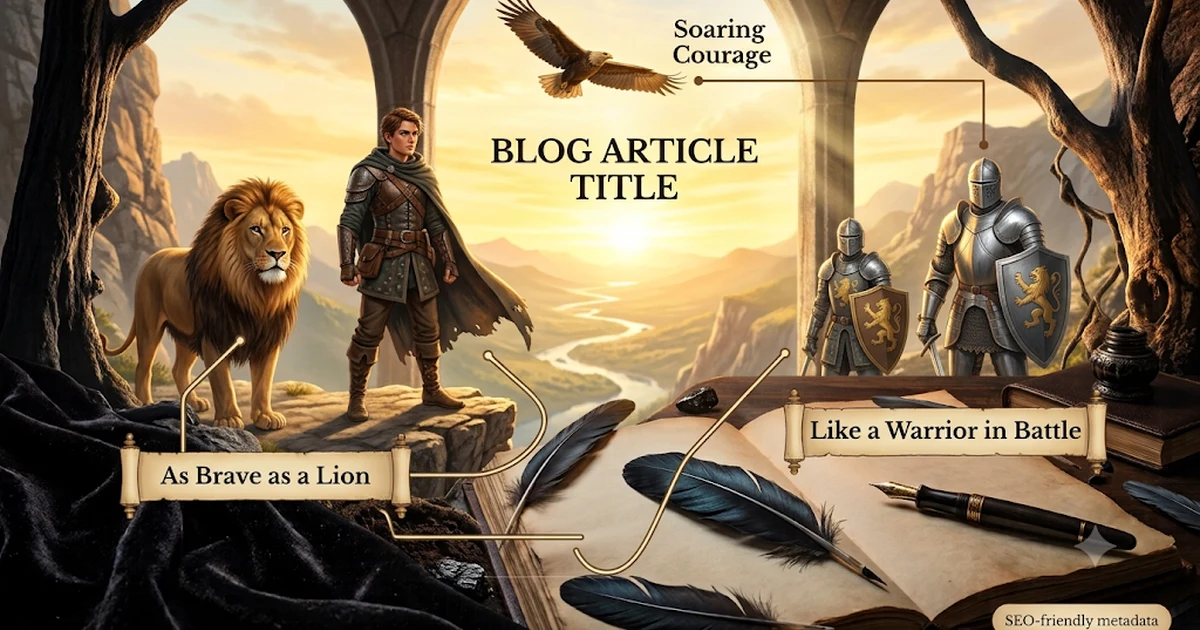
- As brave as a lion
- Like a soldier facing battle
- As fearless as an eagle
- Like a knight defending a kingdom
These comparisons help readers understand bravery through familiar images.
Why Writers Use Brave Similes
Bravery is an abstract idea. People cannot see courage directly, but they can understand it through vivid comparisons.
Instead of writing:
He was brave.
You can write:
He stood like a rock in a storm.
The second sentence creates a stronger image and emotional impact.
25 Brave Simile Examples
| Brave Simile | Meaning |
|---|---|
| As brave as a lion | Extremely courageous |
| As brave as a soldier | Courage under pressure |
| Like a knight in shining armor | Heroic and protective |
| As fearless as an eagle | Bold and confident |
| Like a firefighter entering danger | Selfless bravery |
| As brave as a warrior in battle | Determined and strong |
| Like a mountain climber scaling a peak | Courage despite challenges |
| As bold as a tiger | Powerful confidence |
| Like a superhero facing a villain | Fearless action |
| As steady as a lighthouse in a storm | Calm courage |
| Like a sailor navigating rough seas | Resilient under pressure |
| As brave as a police officer facing danger | Protective courage |
| Like a gladiator in the arena | Fearless determination |
| As courageous as a pioneer exploring new lands | Adventurous bravery |
| Like a tightrope walker without a net | Confidence despite risk |
| As brave as a marathon runner at the finish line | Endurance and determination |
| Like a quarterback leading a team | Leadership under pressure |
| As fearless as a surfer riding a giant wave | Daring courage |
| Like a cowboy riding a bucking bronco | Resilience and boldness |
| As brave as a samurai warrior | Honor and courage |
| Like a rock in a stormy sea | Unshakable strength |
| As bold as thunder | Powerful confidence |
| Like a flame that refuses to die | Persistent courage |
| As strong as steel under pressure | Mental toughness |
| Like a shield protecting others | Selfless bravery |
Brave Similes in Sentences
- Sarah was as brave as a lion when she stood up to the bully.
- Jake acted like a firefighter rushing into danger when he helped his injured friend.
- Emma walked onto the stage like a warrior entering battle before giving her speech.
- The captain remained as steady as a lighthouse in a storm during the crisis.
- He faced criticism like a rock in a stormy sea, refusing to give up.
Brave Similes for Stories and Fiction
Writers often use similes to make characters feel more heroic.
Examples
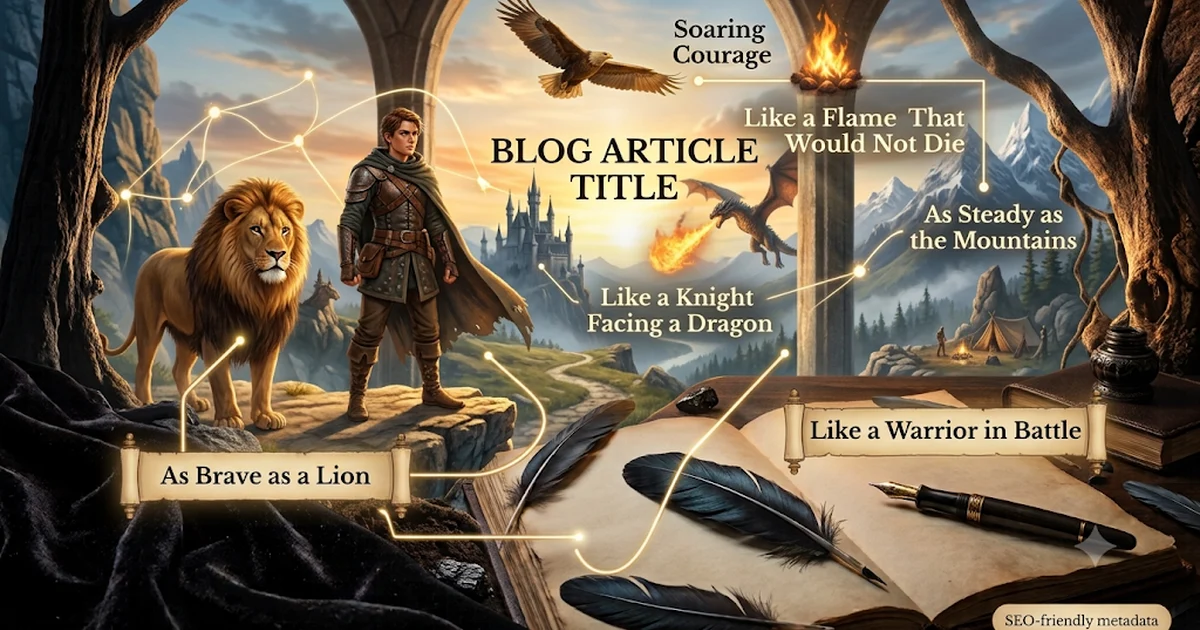
- The hero charged forward like a knight facing a dragon.
- She stood before the crowd like a flame that could not be extinguished.
- He moved through danger like an eagle soaring above a storm.
These comparisons instantly create stronger imagery.
Brave Similes for Students
Students can use these simple similes in essays and assignments:
- As brave as a lion
- As brave as a soldier
- Like a superhero saving the day
- As fearless as an eagle
- Like a firefighter helping others
These are easy to understand and appropriate for school writing.
Funny Brave Similes
Not every simile has to sound serious.
Examples
- As brave as a cat facing a cucumber.
- Like a kid pretending to be a superhero.
- As bold as someone ordering the spiciest food on the menu.
- Like a squirrel defending its favorite snack.
Funny similes add personality and humor.
Brave Simile vs Metaphor
Many writers confuse similes and metaphors.
| Simile | Metaphor |
| He fought like a lion. | He was a lion in battle. |
| She stood like a wall. | She was a wall against fear. |
| He moved like a warrior. | He was a warrior. |
A simile uses like or as, while a metaphor makes a direct comparison.
How to Create Your Own Brave Simile
Follow these steps:
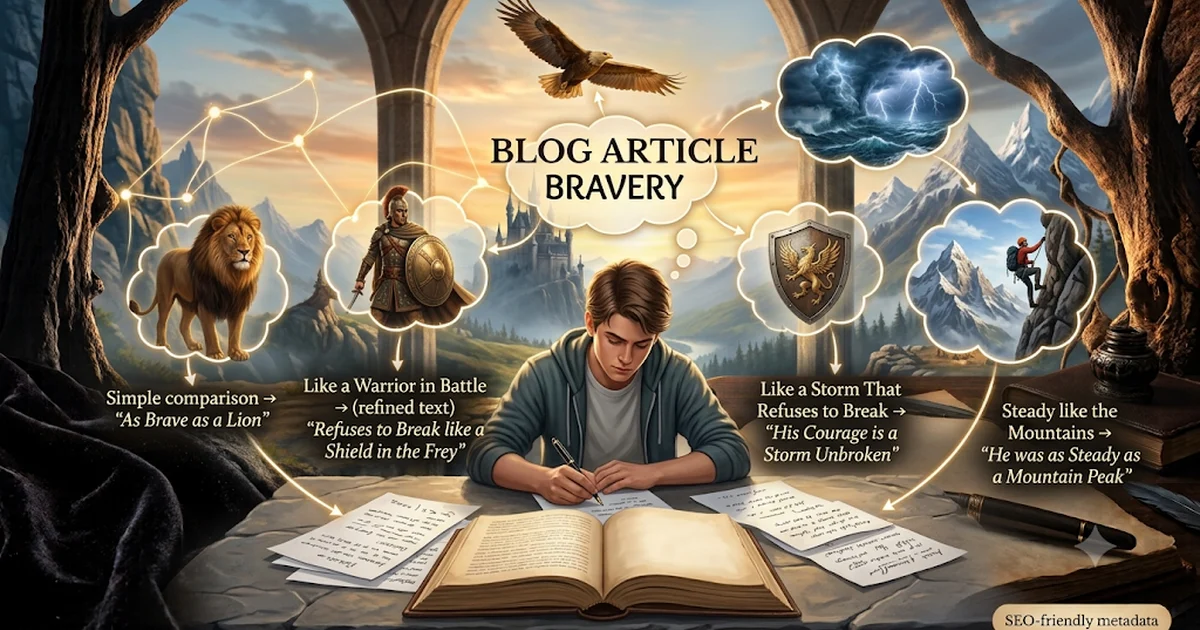
- Think about bravery.
- Choose something that represents courage.
- Connect them with like or as.
Example
Bravery → Storm
Final simile:
He stood like a storm that refused to break.
Common Mistakes to Avoid
- Using the same simile repeatedly.
- Making comparisons that do not fit the situation.
- Creating overly long similes.
- Using confusing imagery.
The best similes are simple, clear, and meaningful.
Practice Exercise
Complete these sentences:
- Sally felt as brave as __________ when she stood up to the bully.
- During the camping trip, Tom was as brave as __________ exploring the dark woods.
- Sarah felt as fearless as __________ when she spoke in front of the class.
- Jake stood like __________ during the thunderstorm.
- Emma walked onto the stage like __________ before her performance.
Sample Answers
- a lion
- a mountain climber
- an eagle
- a rock in a stormy sea
- a warrior entering battle
Why Brave Similes Improve Writing
Brave similes help writers:
- Show instead of tell
- Create stronger imagery
- Add emotion to descriptions
- Make stories more memorable
- Improve creative writing skills
They transform ordinary sentences into powerful ones.
Conclusion
Brave similes are one of the easiest ways to make writing stronger and more engaging. Instead of simply saying someone is courageous, you can compare them to lions, warriors, eagles, firefighters, or storms. These vivid comparisons help readers feel the courage being described.
Start with simple similes and gradually create your own. With practice, you will develop a unique writing style that captures bravery in a memorable and meaningful way.
FAQs
What is a brave simile?
A brave simile compares courage to something strong or fearless using words like as or like.
What is the most common brave simile?
The most common example is “as brave as a lion.”
Why are similes useful in writing?
They help readers visualize ideas and make writing more engaging.
Can students use brave similes in essays?
Yes. Similes improve descriptive writing and make essays more interesting.
What words are commonly used in similes?
The words like and as are most commonly used.
What is the difference between a simile and a metaphor?
A simile uses like or as, while a metaphor makes a direct comparison.
Can brave similes be funny?
Yes. Humorous similes can make writing more relatable and entertaining.
How do I write a unique brave simile?
Choose an image that represents courage and connect it with like or as.
Are brave similes useful in speeches?
Yes. They make speeches more memorable and inspiring.
How can I improve my simile-writing skills?
Read widely, observe strong comparisons, and practice creating your own similes regularly.
